Lightweight long-sleeve merino crews from Smartwool, KUIU, First Lite, SITKA, Duckworth and more, compared on wool content, fabric weight, fit and price.
Who this is for: hikers, hunters, paddlers and travelers who want one long-sleeve shirt that works as a tee on cool days and as a light base layer under a shell. We compared ten men's long-sleeve merino crews using each brand's own product page: wool percentage, listed fabric weight, fit, features and price. This is desk research from manufacturer specifications, not a field test. Prices and stock were checked November 10, 2026 and change by size and color. Wool content matters most: 100% merino is softest and best at controlling odor, while nylon or polyester blends add durability and faster drying.
Quick picks
Shop links open Wild10 checkout products. External affiliate links may earn us a commission, at no extra cost to you.
Lightweight long-sleeve merino crews from Smartwool, KUIU, First Lite, SITKA, Duckworth and more, compared on wool content, fabric weight, fit and price.
Rank this list
Loading community ratings… Ratings re-order the picks — they never change which products make the list.
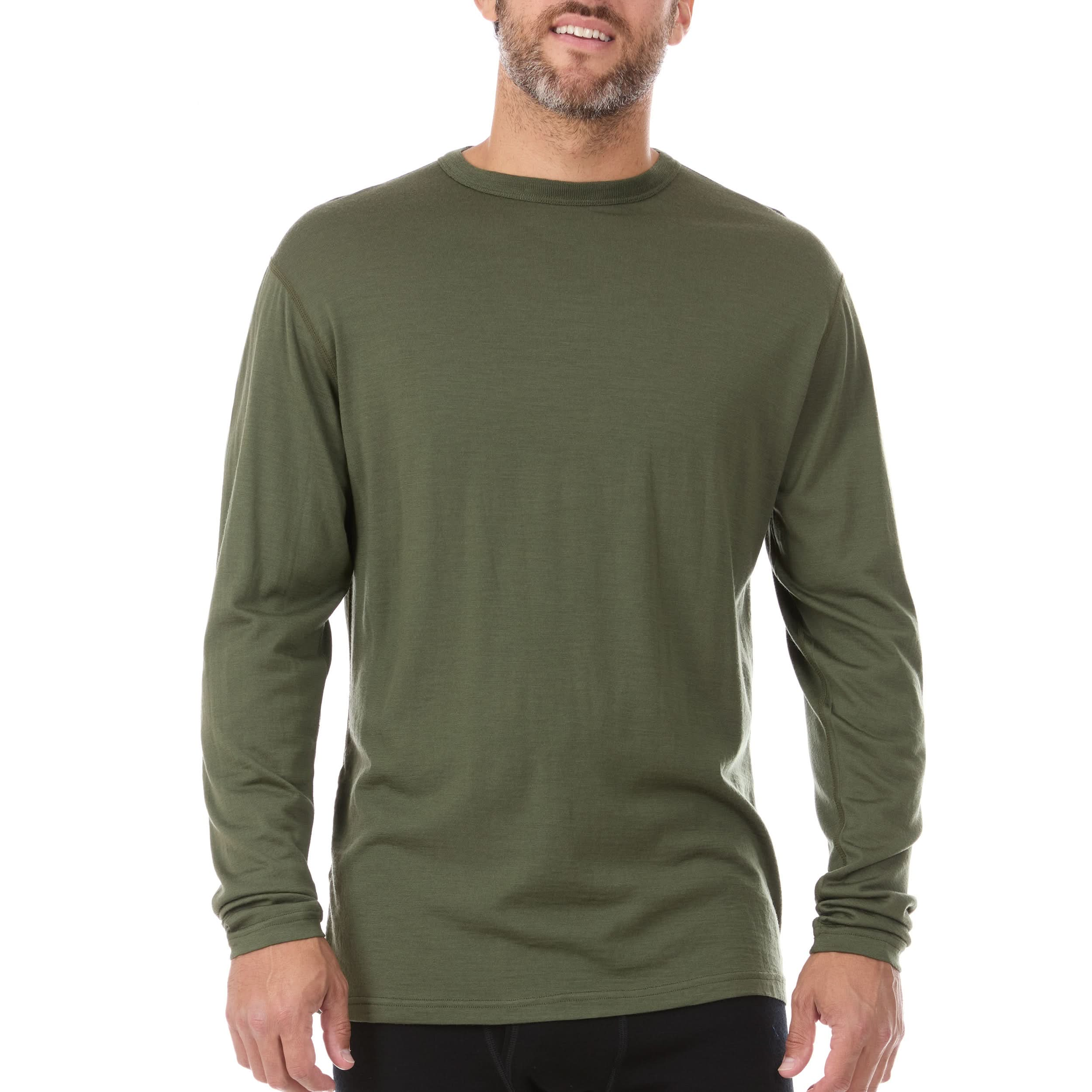
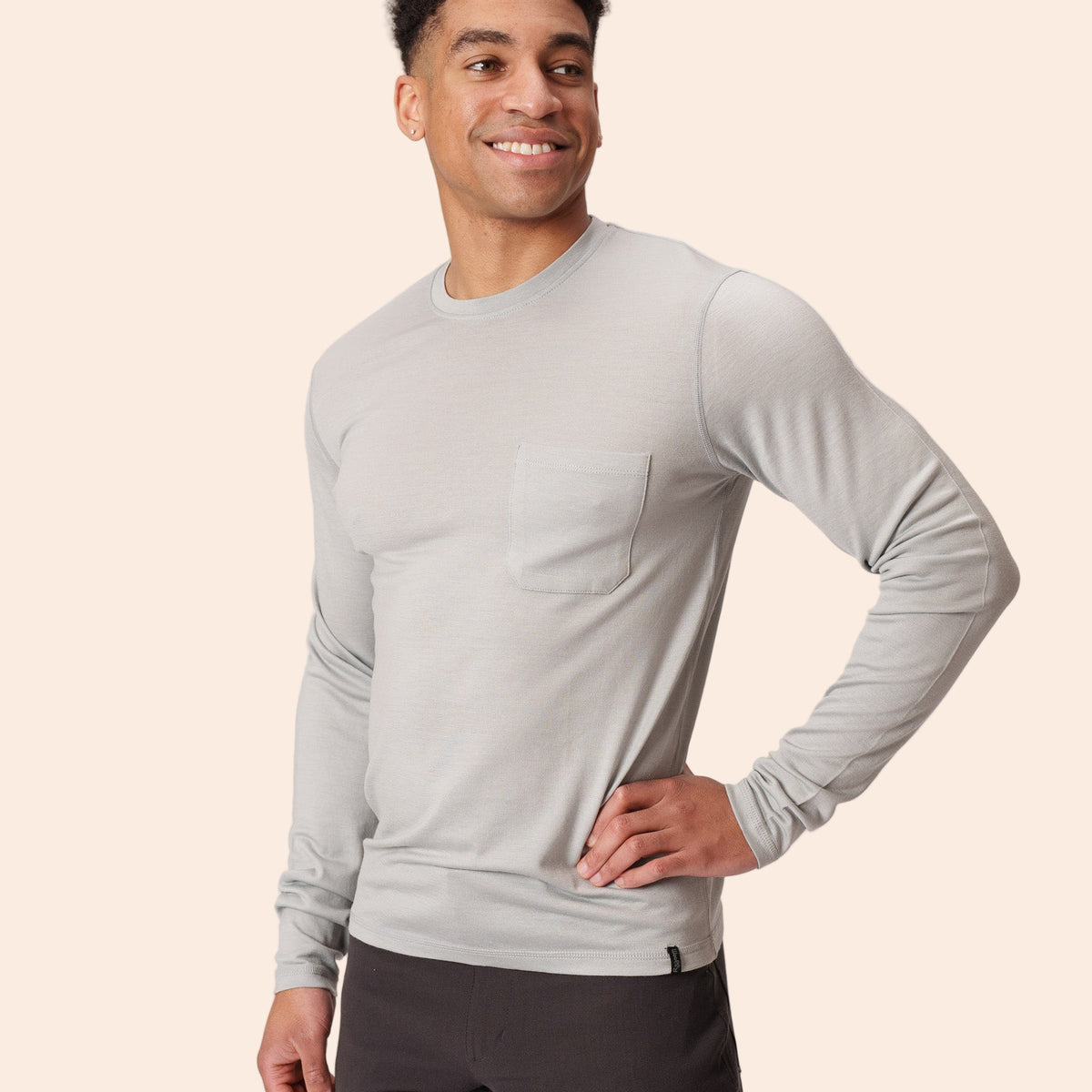
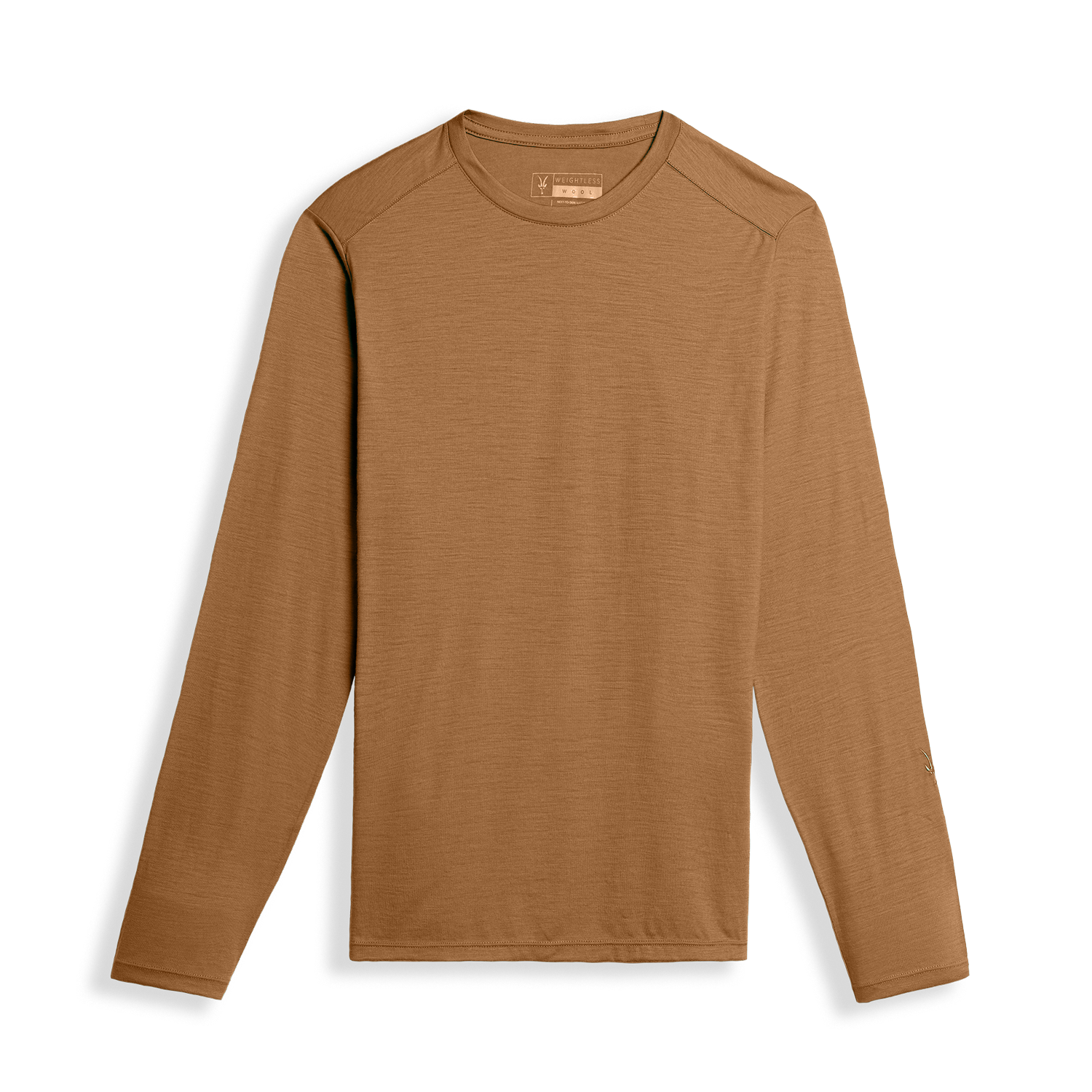
For over a decade, this 150-weight long-sleeve has served as the baseline against which all other lightweight technical wool tops are judged. Rebranded as the Classic All-Season Crew, the formula remains proven: a lightweight knit balanced for high-output shoulder-season climbs, breezy alpine ridge walks, and deep-winter layering systems. It sidesteps the cold, synthetic cling of standard polyester while avoiding the sheer, fragile drape of sub-120-gram boutique wool garments.
The real strength of the design is quiet versatility across multi-day trips. By wrapping fine merino fibers around a recycled nylon filament, the fabric provides pure wool against the skin while bolstering tensile strength and elasticity. It works equally well pushed up the forearms on a warm desert approach, worn dry inside a sleeping bag, or buried beneath an insulated shell during a spindrift squall.
This is not an experimental piece of fast-and-light fashion. It is a workhorse utility layer built for hikers, skiers, and trail runners who want to pack one shirt for a four-day backcountry push and finish the trip without chafed collarbones or a foul stench in the tent vestibule.
Pure merino wool tops in the 150 g/m² category often suffer from premature tearing and pinholing under heavy strain. To resolve that, this shirt utilizes a core-spun yarn where soft merino fibers are spun around a continuous filament of recycled nylon. The resulting knit delivers uncompromised wool performance against your skin—temperature moderation, natural odor resistance, and breathability—while the hidden synthetic spine provides dimensional stability and tear resistance. You get the comfort of high-micron wool without the immediate fear of wearing through the elbows or collar after a single season of heavy use. The jersey knit maintains an even hand that avoids itching even during hot, sweaty climbs.
Pack Interface and Seams
Carrying a loaded multiday pack exposes every lazy design decision in a base layer. Here, the shoulder seams are completely eliminated from the top of the clavicle and shifted forward, while the raglan-style back panels prevent material bunching under rigid harness straps. Flatlock construction throughout keeps seam bulk low, dramatically reducing the risk of friction-induced chafing along the ribcage and under the arms. The back hem has a subtle drop to prevent the shirt from riding up above a hipbelt during steep ascents, while the cuffs feature minimal bulk so they slide smoothly under outer shells and watch bands without catching or pinching.
Real-World Moisture Regulation
In humid, mid-summer heat, no long-sleeve merino shirt dries as rapidly as a thin open-mesh synthetic. However, where this piece excels is handling shifting metabolic output across variable mountain climates. During steep ascents, the wool absorbs vapor before it condenses into liquid sweat, preventing that cold, sodden chill when you stop on a windy pass. When the fabric does saturate under maximum effort, it maintains an insulating microclimate against your chest rather than sapping body heat like poly blends. For stop-and-go mountain travel, damp spring mountaineering, and brisk fall morning starts, the thermal stability here consistently outperforms cheaper synthetic alternatives.
Durability and Honest Trade-Offs
While the core-spun construction vastly improves longevity over legacy 100-percent wool versions, it remains a lightweight natural fiber garment that demands sensible handling. Heavy friction from rough, abrasive pack frames or sharp velcro from gloves will eventually cause surface pilling. It is not an armored brush-busting outer layer; charging through thorny chaparral in it will pull the knit. Laundering also requires attention: washing on delicate cycles and hanging it to dry yields significantly longer lifespan than aggressive hot-water cycles and hot dryer heat, which can warp the collar and shorten the hem over time.
The Competitive Landscape
Against rivals in the premium wool category, this shirt hits the truest middle ground. Icebreaker’s Oasis 200 offers more raw warmth but runs too hot for strenuous warm-weather ascents and packs down bulkier. Ridge Merino’s Journey long-sleeve delivers a looser, more casual silhouette at a slightly lower price point, but its seam mapping lacks the technical precision under heavy load distribution that defines this cut. Arc'teryx wool blends bring sleek tailoring but often command a higher price tag without noticeable gains in odor management. For a dedicated, do-everything backcountry base layer, this crew retains the most balanced performance envelope on the market.
As an Amazon Associate, Wild10 earns from qualifying purchases.
No ratings yet
Pick 02Research-based review
Men's Merino 150 Tech Lite Long Sleeve Tee Aoraki Explorer
Icebreaker
Men's Merino 150 Tech Lite Long Sleeve Tee Aoraki Explorer
Icebreaker
Fabric Weight
150 g/m² ultralight jersey
Material
100% Merino wool
Fit Profile
Regular fit, straight cut
Seam Layout
Forward-set offset shoulder seams
Care Needs
Machine wash cold, line dry
While synthetic blends dominate the modern technical apparel market for pure abrasion resistance, a top-tier unblended wool shirt remains unmatched for multiday trips where laundry is off the table. Icebreaker shaped the modern merino category, and this 150-weight long sleeve shows exactly why. Built from pure merino wool knit to an ultralight density, it acts as an adaptable second skin that balances moisture vapor before sweat condenses, keeping you comfortable across shifting mountain microclimates.
The Aoraki Explorer edition leans into a relaxed, everyday aesthetic with its chest graphic, yet the technical bones remain clear. It avoids the suffocating, plastic cling of polyester when damp and drapes loosely enough to permit continuous airflow. Whether deployed as a sun and bug barrier on exposed ridgelines or as a breathable sleep layer inside a down bag, it provides the natural performance characteristics that petrochemical fabrics still fail to duplicate.
Where it fits
Multi-day wilderness backpacking
Fast-and-light adventure travel
Three-season alpine day hiking
Cool-weather trail running
Pros
Uncompromising multi-day odor resistance without chemical treatments
Exceptional next-to-skin softness with zero synthetic clamminess
Offset shoulder seams eliminate pressure points under heavy pack straps
Natural thermal buffering works across broad temperature swings
Cons
Lower abrasion resistance than nylon-core merino blends
Longer dry times once fully saturated compared to pure polyester
Requires gentle laundering and air-drying to prevent shrinkage
Pure merino wool lives or dies by its fiber diameter, and the jersey used here sits comfortably in the superfine bracket. Pulling it on reveals none of the scratchiness historically associated with coarse sheep wool. The fabric moves quietly against the skin, offering a natural, matte hand feel that avoids the clammy, synthetic friction typical of polyester shirts. Because merino fibers naturally crimp, they trap microscopic pockets of air to buffer body heat without building excess bulk. The weave possesses a slight mechanical give despite the absence of elastane, moving fluidly during high-reach scrambles without binding across the forearms or upper back. For sensitive skin prone to chafing during humid approaches, this pure-fiber construction proves far more forgiving over twenty miles than nylon-reinforced competitors.
Thermal and Moisture Dynamics
In fluctuating temperatures, 150-weight merino excels because of how it processes moisture. Rather than simply wicking liquid sweat after you soak through, the wool fibers absorb water vapor directly into their interior structure while repelling external moisture. This process delays the clammy sensation during steep ascents and buffers against rapid cooling when stopping on windy summits. In direct sun, the long sleeves provide full physical coverage without trapping excessive radiant heat, provided there is even a light breeze moving through the porous knit. When temperatures drop, it works cleanly under a midlayer fleece or wind shell without clinging. The only physical drawback is that once completely saturated by continuous rain or intense exertion, pure wool dries noticeably slower than lightweight polyester.
The Zero-Odor Reality
The single strongest argument for choosing 100% merino over a synthetic shirt is microbial resistance. Wool fibers lock away odor-causing bacteria within their complex protein structures, preventing them from multiplying and establishing a permanent stink. In practical field testing, this garment can easily be worn for four or five consecutive days of high-output hiking without developing the sharp, sour odor common to polyester tops after a few hours. A simple overnight airing on a guyline resets the garment for the following day. For thru-hikers operating between resupply towns or minimalists traveling out of a single carry-on bag, this anti-odor performance dramatically cuts pack weight by eliminating the need to carry duplicate clothing layers.
Durability and Care Realities
A garment made from 100% merino at 150 g/m² requires realistic expectations regarding longevity. Without nylon spun into the core of the yarn, ultra-fine wool fibers are vulnerable to mechanical abrasion. Sustained friction from heavy hipbelts, rough pack straps, or sharp granite scrambles can eventually cause small pinholes or fiber pilling. Washing demands minor care as well: it should be run on a gentle cycle in cold water and laid out to dry, as heat from a standard tumble dryer will shrink the garment significantly. For sustained heavy-brush bushwhacking, a heavier blended fabric makes more sense. However, for open trails, high alpine routes, and general wilderness travel, treating the garment with basic care yields several solid seasons of hard use.
Packability and Trail Fit
The cut strikes a deliberate balance between technical base layer efficiency and casual mountain comfort. It avoids the skin-tight compression of race tops while keeping excess fabric to a minimum, ensuring it layers seamlessly under fleeces or rain gear without bunching. Forward-set shoulder seams shift the stitching away from the crest of your collarbones, eliminating the pressure points that typically develop when hauling a loaded multiday pack. Sleeve length is generous enough to keep wrists covered during pole plants without riding up. When packed, the thin 150-weight knit compresses down to roughly the size of a standard camp mug, tucking cleanly into small hydration vests or pack brain pockets without taking up meaningful space or weight.
The Competitive Landscape
Within the ultralight wool market, this piece occupies a distinct niche by retaining a 100% pure wool construction while competitors increasingly pivot to core-spun nylon blends. Options like the Smartwool Classic All-Season utilize nylon wrapped in merino, which increases resistance against tear damage but slightly diminishes the wool's signature soft hand feel and absolute odor resistance. Polyester alternatives dry faster and cost less upfront, but they harbor persistent odors that set into the fibers permanently over time. If your priority centers on maximum mechanical toughness under heavily laden, unpadded packs, a blended shirt has the edge. If the priority is uncompromised natural comfort, superior skin temperature regulation, and clean multi-day wear, this unblended top remains the purist standard.
As an Amazon Associate, Wild10 earns from qualifying purchases.
No ratings yet
Pick 03Research-based review
Men's Wick LS Crew
First Lite
Men's Wick LS Crew
First Lite
Fabric Weight
150 g/m²
Primary Material
Aerowool merino blend with 37.5 synthetic technology
Fit Profile
Athletic, next-to-skin cut
Ventilation
Body-mapped ultralight mesh panels
Weight Class
Ultralight technical base layer
Special Features
Low-profile thumb loops, extended drop-tail hem
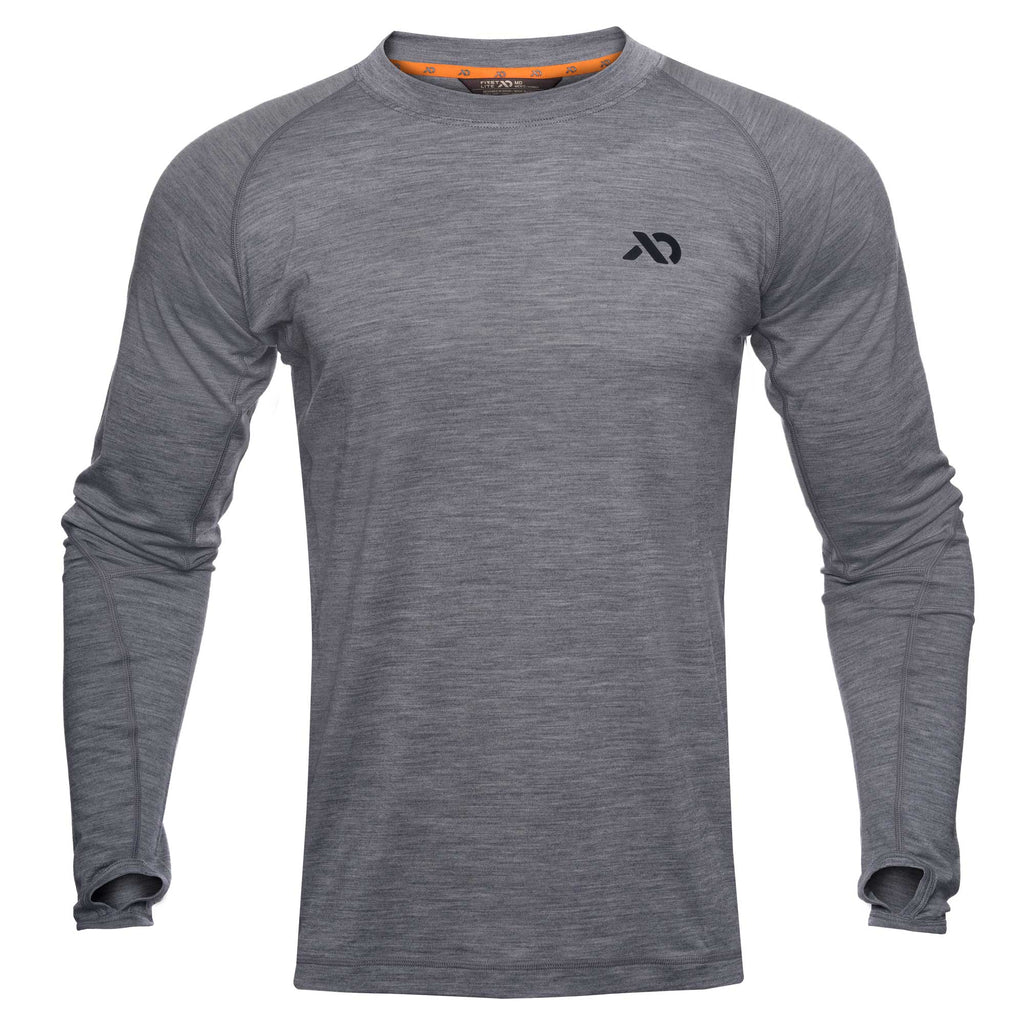
High-exertion backcountry travel exposes the primary limitation of pure merino: when pushed hard uphill under a loaded pack, unblended wool holds onto moisture far longer than synthetics. First Lite addresses this reality directly with the Wick LS Crew. Built around an ultralight Aerowool blend combining fine merino wool with active synthetic fibers, this shirt is engineered specifically for hunters, mountaineers, and fastpackers who regularly redline their heart rate in fluctuating conditions.
The inclusion of targeted mesh venting panels under the arms and down the sides transforms how this garment manages sweat. In field testing across steep elevation gains, the fabric shuttles perspiration away from the skin rapidly, minimizing the chilling clamminess that often follows a brutal ascent. You lose a bit of the velvety hand-feel associated with pure heritage wool, but you gain rapid dry times and substantially better tensile resilience.
Cut long in the torso to stay anchored beneath hip belts, it rides unobtrusively under additional layers without bunching or twisting. While the aggressive styling and hybrid paneling make it look out of place at a casual coffee stop, it remains one of the most effective high-output mountain layers available.
Where it fits
Early-season backcountry big game hunting
High-output mountain backpacking
Cold-weather trail running and fastpacking
Multi-day alpine approaches
Pros
Dries substantially faster than standard 100% merino tops
Mesh underarm zones effectively dump heat during high output
Synthetic core fibers improve tear resistance under heavy pack straps
Long drop-tail hem stays firmly anchored under hip belts
Cons
Noticeable technical styling looks awkward in town
Underarm mesh panels can snag on sharp brush if worn unprotected
Hand-feel is more utilitarian and crisp than buttery soft
The engine of this garment is First Lite's proprietary Aerowool, which blends natural 17.5-micron merino wool with synthetic fibers infused with active particle technology. This construction forces moisture to spread across a wider surface area, vastly accelerating evaporation rates compared to conventional wool knits. In practice, the hybrid fabric prevents the saturated, heavy feeling typical of standard baselayers during strenuous climbs. The wool fibers continue to mitigate body odor effectively across multi-day outings, allowing you to wear the same shirt for days on end without offending your campmates. The resulting hand-feel is crisp and technical rather than fleece-soft, but it remains comfortable directly against the skin without inducing itch.
Thermal Regulation and Breathability
Thermoregulation here relies heavily on strategic patterning. The torso and outer arms use the standard 150 g/m² knit to provide light insulation against cool morning air, while open-mesh Aerowool lines the underarms and ribcage where heat concentrates. When moving without an outer shell, any ambient breeze cuts directly through these side vents, dumping excess warmth almost instantaneously. When paired with a windbreaker or softshell, the trapped air pockets stabilize core temperature. This dual behavior extends the usable comfort range from crisp autumn mornings straight through warm midday sun, reducing the need for constant layer stripping during rolling ascents.
Packability and Layering Ergonomics
The shirt packs down to the footprint of a standard water bottle, adding negligible weight to a multi-day kit. Flatlock seams prevent pressure hot spots beneath heavily weighted shoulder harnesses and sternum straps. The extended tail hem solves the common frustration of shirts riding up under a lumbar pad, staying securely tucked whether crawling through deadfall or crouching over a stove. Discreet thumb loops integrated into the cuffs keep the sleeves straight when sliding heavier midlayers overtop, yet they disappear comfortably against the wrist when not engaged.
Trail Durability and Field Wear
Ultralight wool garments are notoriously fragile, frequently developing pinholes around belt buckles and friction points. The synthetic core fibers in this blend significantly improve burst strength and abrasion resistance over 100% merino alternatives of similar fabric weight. It routinely withstands heavy backpack abrasion across the shoulders and lower back. However, the open mesh underarm panels remain inherently vulnerable to sharp snagging. Bushwhacking through thorny undergrowth without an overshirt will pull threads, meaning users should treat it as an athletic base layer rather than rugged outer brush gear.
Competitive Context and Value
Against pure wool rivals like the Smartwool Classic All-Season or Icebreaker Oasis, this shirt gives up pure lounging comfort and clean aesthetic simplicity. In return, it outperforms both in moisture management, drying speed, and structural longevity under pack straps. Against pure synthetic layers from Patagonia or Arc'teryx, it dries slightly slower but holds back odor for days longer, making it far superior for extended backcountry deployments without laundry access. For active mountain athletes needing one shirt to do heavy aerobic lifting across wide temperature swings, it justifies its premium price tag.
As an Amazon Associate, Wild10 earns from qualifying purchases.
No ratings yet
Pick 04Research-based review
ULTRA Merino 120 LT LS Crew-T
KUIU
ULTRA Merino 120 LT LS Crew-T
KUIU
Fabric Tech
Nuyarn merino wool with nylon core
Fabric Weight
120 g/m² (ultralight)
Sun Rating
UPF 50+
Seam Build
Flatlock construction with offset shoulders
Fit Profile
Athletic, next-to-skin cut
Odor Control
Natural antimicrobial performance
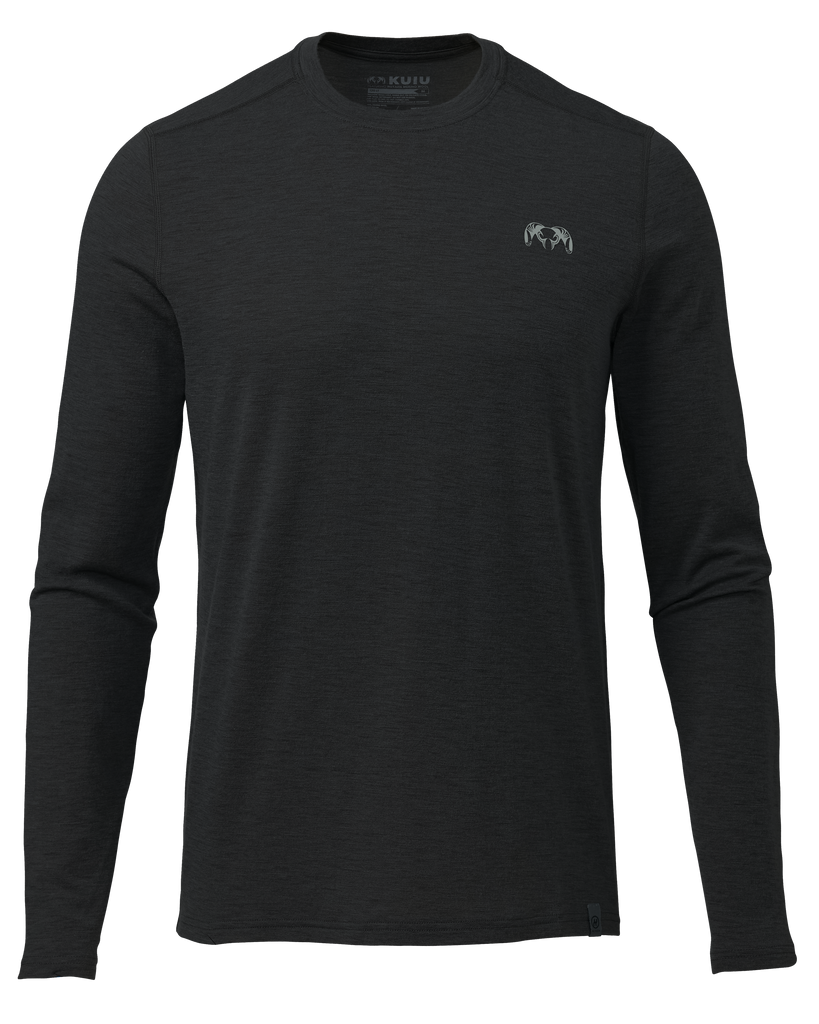
Hunting and alpine brands often understand exposed high-country travel better than mainstream apparel houses. KUIU built this long-sleeve crew specifically for backcountry hunters grinding out steep vertical miles under brutal sun with heavy load-hauling frames. Rather than defaulting to a suffocating polyester sun hoody that turns sour after half a day, this shirt leans into ultralight merino tailored for hot-weather punishment.
The foundation is Nuyarn technology, a spinning process that wraps high-grade merino wool fibers over a synthetic core instead of twisting them into conventional ringspun yarn. At just 120 grams per square meter, the knit is featherweight, air-permeable, and significantly stretchier than traditional lightweight wool. It traps less moisture, sheds sweat at a rapid pace, and delivers certified UPF 50+ protection across exposed ridgelines.
While the fabric requires basic caution around thorny scrub, its on-trail performance answers the chief complaint of summer wool: drying speed. For backcountry hikers, mountain runners, and hunters who value multi-day odor defense without overheating under direct ultraviolet exposure, it stands as one of the most capable hot-weather base layers on the market.
Where it fits
High-altitude summer backpacking
Early-season backcountry hunting
Exposed alpine ridge traverses
Multi-day arid thru-hiking
Pros
Certified UPF 50+ sun defense in an exceptionally airy 120 gsm knit
Nuyarn core-spun yarn dries substantially faster than ringspun merino
Offset flatlock seams eliminate chafing hot spots beneath heavy pack straps
Superior multi-day odor suppression for remote wilderness trips
Cons
Ultralight knit can snag on sharp brush or abrasive rock faces
Athletic cut fits close through the chest and upper back
This layer caters directly to wilderness users who spend long hours above treeline carrying loaded internal or external frame packs. If your trips regularly involve baking heat, intense UV reflection, and sustained climbing where sweat output is high, synthetic shirts quickly develop a permanent stench while heavier 150-weight merino builds hold excessive sweat. Backpackers embarking on week-long treks without laundry access, summer scouts tracking game across rocky plateaus, and ultralight thru-hikers crossing high-altitude divides will extract the most value. Casual day-hikers operating on shaded forest paths will find the specialized construction and premium cost overbuilt for their needs, but exposed-terrain travelers will appreciate the intentional engineering immediately.
Nuyarn Construction and Feel
Traditional wool spinning twists fibers tight, creating a dense yarn that retains dead air and traps liquid moisture. Nuyarn drafts wool over a nylon core without twisting, leaving the natural air pockets within the wool fibers intact. Against the skin, this yields an exceptionally soft hand that avoids the scratchy, clammy sensation common to early-generation ultralight merino. The mechanical stretch is remarkable, moving with your torso during technical ascents without binding across the armpits or forearms. Because the nylon core anchors the structure, the fabric resists the post-soak bagginess that plagues pure wool shirts after hours of heavy sweating. It feels substantially lighter than its 120-weight metric implies.
Real-World Performance Under Load
The primary battlefield for any backcountry top is the interface beneath padded pack straps and hipbelts. Standard seams placed directly atop the clavicle become torture devices under a fifty-pound wilderness load. Here, the shoulder seams are completely shifted forward and flatlocked, preventing pressure ridges from gouging into your skin. In field testing across dry mountain ranges, moisture evaporates through the open knit at rates rivaling athletic synthetics, bypassing the swampy back panel syndrome that ruins traditional wool layers. Even after consecutive days of continuous use without washing, natural lanolin keeps bacterial growth at bay, letting you climb into a sleeping quilt without offending tent mates.
Durability and Field Trade-Offs
No 120-weight garment is invincible, and buyers must maintain realistic expectations regarding tensile strength. While the nylon filaments dramatically reduce the unraveling and pinholing typical of pure ultralight merino, coarse granite chimneying and thick deadfall brush will pluck and snag the fine knit. It is designed as an open-country mountain shirt, not a bushwhacking work uniform. Laundering demands a cold cycle and line drying; subjecting this piece to high dryer heat will degrade the elasticity over time. If your routes involve unmaintained thickets or off-trail scrambling through devil's club, wearing an abrasion-resistant wind shell over this layer is essential to preserve the fabric.
Comparable Alternatives
In the category of lightweight sun-protective wool, competition is scarce because few mills produce durable knits under 150 grams. Smartwool and Icebreaker offer ultralight short-sleeve tops, but their long-sleeve offerings rarely hit verified UPF 50+ ratings at this low of a fabric weight. The closest competitor is the Black Diamond Solution 150, which uses patented Nuyarn as well, but features a heavier weight better suited for shoulder seasons than midsummer sun. Mainstream synthetic sun shirts from brands like Patagonia dry slightly faster and cost less, but they fail utterly on multi-day odor management and lack the broad thermoregulating band that wool inherently provides when sudden mountain storms drop ambient air temps.
As an Amazon Associate, Wild10 earns from qualifying purchases.
No ratings yet
Pick 05Research-based review
Core Merino 120 LS Crew
SITKA
Core Merino 120 LS Crew
SITKA
Fabric Weight
120 gsm ultralight knit
Material Blend
85% Merino Wool, 15% Nylon
Yarn Tech
ArmorSpun core-wrapped nylon
Fit Profile
Next-to-skin athletic cut
Cuff Style
Integrated low-profile thumb loops
Primary Focus
Active moisture transport and scent suppression
Sitka built the Core Merino 120 LS Crew for high-output backcountry hunting where heat and odor build up fast. At 120 grams per square meter, this is one of the sheerest, lightest merino-blend tops on the market. Instead of using pure spun wool, Sitka wraps fine merino fibers around a filament nylon core to keep the weave from falling apart under the sustained grinding of a loaded pack.
The result is an airy, skin-hugging layer that behaves more like a technical synthetic in how quickly it dumps sweat, yet retains the multi-day funk suppression that makes merino indispensable in the field. The cut leans athletic and stays close to the torso, engineered intentionally to stack under technical midlayers without bunching up in the armpits or dragging loose at the wrists.
It is undeniably specialized gear. If you spend your seasons bushwhacking through dense briars or want a heavy winter thermal, this ultralight knit is too delicate and breathes too freely for the job. But for warm September bowhunts, high-altitude trail approaches, or sustained mountain ascents, it strikes a rare balance of vapor management and natural scent containment.
Where it fits
Early season backcountry hunts
High-output mountain ascents
Multi-day warm weather fastpacking
Active cold-weather base layering
Pros
Ultralight 120-gsm knit provides rapid drying and cooling
Nylon-core yarn noticeably improves tear resistance over pure wool
Natural odor suppression holds up over multi-day backcountry trips
Low-profile thumb loops ease layering under technical midlayers
Cons
Thin face fabric remains vulnerable to briars, brush, and velcro snags
Provides almost no wind blockage or cold-weather static warmth
Premium price tag relative to pure synthetic alternatives
This top is aimed directly at high-mileage hunters, fastpackers, and mountain travelers who prioritize heat dissipation and odor resistance over pure insulation. It excels during warm early-season stalks or grueling climbs where a standard 200-weight shirt would soak through and overheat. The athletic tailoring keeps it pinned close to the skin, which maximizes sweat transfer away from the body. Users looking for a loose, casual camp shirt or a standalone winter top should look elsewhere. It is made for people moving hard uphill with a pack, generating heat, and needing moisture off their skin before the wind picks up on an exposed ridge.
Fabric and ArmorSpun Construction
Pure 120-gsm wool has a reputation for tearing under minimal stress. Sitka counters that fragility with ArmorSpun technology, spinning merino wool fibers directly around a continuous nylon core filament. This architecture yields the natural moisture handling, hand-feel, and antimicrobial benefits of wool while relying on the tensile strength of synthetic filament to resist friction and premature blowout. Flatlock seam placement keeps irritation down beneath heavy pack harness systems, while low-profile thumb loops keep the sleeves seated when pulling on midlayers. The drop-tail hem stays securely tucked into hunting trousers even during deep crouches and crawls.
Real-World Field Performance
On the trail, the fabric moves vapor exceptionally fast for a wool garment. Heavy sweat marks at the chest and lumbar dry out within minutes of dropping a pack during a ridgeline glassing stop. Scent resistance is nearly on par with pure merino garments; you can live in this shirt for four consecutive sweaty days in the backcountry before game-spooking odor builds up. The close fit facilitates immediate capillary action, pulling sweat off skin into the dry mountain air, preventing the chilling clamminess common with heavier base layers once your movement slows down.
Durability and Packability
Packing down to roughly the footprint of a large apple, this top takes up negligible volume in a multi-day kit. However, physics cannot be cheated: 120 gsm is an ultralight knit. While the nylon core reinforces the yarn, the face remains susceptible to snagging on barbed wire, dense buckbrush, or coarse velcro from glove cuffs. It holds up admirably under pack straps and hip belts, but treating it as an outer layer in abrasive brush will eventually induce snagging and pilling. It performs best shielded under a durable shell when navigating thick cover.
Market Alternatives and Value
Sitting in the upper tier of base layer pricing, it competes directly with pieces like the First Lite Wick 150 and Icebreaker Sphere II. The First Lite Wick uses an aerowool blend with slightly heavier weight and eyelet mesh panels, which dries marginally faster in swampy heat but feels slightly coarser against bare skin. Icebreaker provides a more casual, everyday cut without Sitka’s hunting-specific tailoring and drop-tail coverage. If technical fit, maximum weight savings, and hunter-focused patterning matter, Sitka justifies the premium for active backcountry pursuits.
The Honest Trade-Offs
Every ultralight wool top demands compromises, and here the trade-off centers on thermal ceiling and environmental exposure. The garment provides minimal wind protection and negligible insulation once temperatures drop below freezing without an active pace. You must manage it as an active vapor pump rather than a standalone insulator. Furthermore, care requires attention: hot wash cycles and high-heat tumble dryers will shrink the wool fibers and ruin the athletic drape over time. Air drying remains mandatory if you expect multiple seasons of service.
As an Amazon Associate, Wild10 earns from qualifying purchases.
No ratings yet
Pick 06Research-based review
Men's Long Sleeve Merino Crew
Unbound Merino
Men's Long Sleeve Merino Crew
Unbound Merino
Material
100% Ultra-Fine Merino Wool
Fabric Weight
190 g/m²
Fit
Tailored casual regular fit
Care
Machine wash cold delicate, lay flat to dry
Primary Focus
Travel and casual daily wear
Most merino tops tilt heavily toward backcountry performance, sporting athletic paneling, contrast flatlock stitching, and a second-skin cut that feels out of place across a dinner table. Unbound Merino approached the category from the opposite direction, engineering this long-sleeve crew specifically for minimalist travelers and daily wearers who want the natural thermoregulation and odor resistance of wool wrapped in clean streetwear proportions.
At 190 g/m², the fabric sits squarely in the sweet spot for an all-season shirt. It carries enough substance to drape like a standard cotton long-sleeve without clinging to your midsection, yet packs down small enough to vanish into a carry-on. While technical baselayers rely on aggressive stretch to wick moisture during high-output climbs, this piece gives you breathing room around the torso, forearms, and shoulders for relaxed day-long comfort.
The trade-off is focused intent. This is not the garment to scrape against granite chimneys or wear beneath a loaded multiday pack without expecting premature wear. Instead, it is built to survive three weeks out of a 30-liter duffel, transitioning from red-eye flights to client dinners without gathering stink or looking rumpled.
Where it fits
One-bag carry-on travel
Everyday cool-weather casual wear
Transitional business-casual layering
Long-haul international flights
Pros
Clean everyday cut looks like high-end casualwear rather than an athletic baselayer
Substantial 190 g/m² knit avoids transparency and drapes naturally
Exceptional odor resistance allows for multiple consecutive days of travel wear
Luxurious next-to-skin softness with zero fiber prickle
Cons
Pure 100% wool construction lacks nylon reinforcement against heavy friction
Higher price point than bare-bones outdoor baselayers
Requires line drying and gentle washing to avoid fiber distortion
The single biggest differentiator here is how the garment hangs. Technical mountain brands cut their merino tight to maintain direct skin contact for wicking, which works well under a shell but looks like long underwear when worn solo at a cafe. Unbound cuts this crew with straight side seams, subtle taper through the sleeves, and a collar that sits flat against the neck without stretching out. The hems are finished cleanly without exposed flatlock thread paths, allowing it to pass effortlessly under an unstructured blazer, over a pair of chinos, or paired with trail pants.
Next-To-Skin Comfort
Pure merino lives or dies by its fiber diameter, and Unbound uses wool that tests completely itch-free even for sensitive skin. The 190 g/m² knit offers a silky, cool-to-the-touch hand feel right out of the package that softens further with repeated wash cycles. It provides a noticeable step up in thickness from lightweight 150-gram alternatives, eliminating the sheer transparency that plagues many lighter white or grey merino shirts. The neckline sits snug without choking, and internal tags are minimal to avoid unnecessary abrasion across the nape of the neck during extended travel days.
Travel and Odor Performance
Wool's natural antimicrobial properties shine brightest when laundry access is unpredictable. In testing across back-to-back travel days involving humid subway commutes and stuffy airplane cabins, the shirt remained completely neutral in smell. Hanging it up overnight in a well-ventilated room is generally all it takes to reset the fabric for morning wear. Moisture handling is predictable: it absorbs sweat vapor efficiently during active walking, though because it fits loosely rather than snug, it does not move liquid sweat during steep ascents quite as rapidly as a dedicated running layer.
Durability and Fabric Limitations
Because the knit is pure 100% merino rather than a nylon-core corespun blend, you must respect its physical boundaries. The yarn has no synthetic reinforcement, meaning high-friction zones like the lower back under a heavy abrasive pack hipbelt or the undersides of the wrists against coarse desks will eventually show fuzzing. It handles standard machine washing on delicate cycles without shrinking if you keep the water cold, but tumble drying is strictly off-limits. If treated like a fine knit rather than workwear, it maintains its integrity across dozens of wear cycles.
Packability and Maintenance
Rolling this top into a packing cube takes up roughly half the volume of a standard heavyweight cotton thermal. Wrinkles formed during transit shake out within an hour of hanging, aided significantly by the ambient moisture in a steamy hotel bathroom. Washing in a sink using mild shampoo works well in a pinch, and the 190-gram weight dries overnight if rolled inside a dry towel first to squeeze out excess moisture. The cuffs retain their elasticity reasonably well, allowing you to push the sleeves up your forearms without them bagging permanently by evening.
Value and Comparable Alternatives
At this price tier, you are paying for refined styling and quality wool sourcing rather than raw technical utility. An Icebreaker Oasis 200 offers comparable warmth and slightly more mountain utility, but carries a strictly athletic cut with visible seam lines. Western Rise and Smartwool offer blended options that add nylon for scrape resistance at the cost of slight odor-retention trade-offs. If your priority is a versatile top that hides its performance pedigree behind clean streetwear styling for one-bag travel, Unbound justifies its cost through sheer wear frequency.
As an Amazon Associate, Wild10 earns from qualifying purchases.
No ratings yet
Pick 07Research-based review
Lightweight 170 Men's Thermal Long Sleeve 100% Merino Wool
Minus33
Lightweight 170 Men's Thermal Long Sleeve 100% Merino Wool
Minus33
Fabric Weight
170 g/m² single jersey
Fiber Content
100% Merino wool
Fiber Micron
17.5 micron superfine
Fit Profile
Regular, relaxed cut
Seam Type
Flatlock stitching
Care
Machine wash cold, tumble dry low
Minus33 built its reputation out of Ashland, New Hampshire, by ignoring trend-chasing cuts and focusing on straightforward, functional wool. The Lightweight 170 long-sleeve occupies a practical sweet spot in their lineup, sitting squarely between fragile ultralight summer jerseys and suffocating midweight winter baselayers. At 170 grams per square meter, it offers enough substance to hold off a damp morning chill without immediately overheating once you start grinding up a ridgeline.
While many modern competitors blend synthetic fibers into their knits to improve tensile strength or lower manufacturing costs, this top stays true to pure merino. That gives you the full suite of natural temperature regulation and exceptional multi-day odor resistance, making it an easy pick for extended backcountry outings where laundry is off the table. It is cut more generously than modern Euro-style athletic tops, so expect a traditional, relaxed silhouette that works equally well around town or around camp.
Where it fits
Shoulder season backpacking
Multi-day hut trips
Cool weather hiking
Camp and sleep layer
Pros
Unbeatable price point for unblended 100% superfine merino
Natural odor resistance holds up across multi-day outings
Relaxed cut easily doubles as a casual everyday long sleeve
Pure merino wool is graded by the diameter of the individual fiber, and Minus33 uses 17.5-micron fibers for this knit. In real-world terms, that fine diameter keeps the prickly sensation of traditional sheep's wool completely absent, even when your skin is hot and damp with sweat. The fabric is knit into a classic single-jersey structure with a soft, natural drape that doesn't cling static-tight against your torso. Flatlock stitching throughout the raglan-style shoulders keeps friction minimal under heavy backpack straps, while the crew collar is finished with a low-profile rib that stays flat without stretching out after days of repeated pulling. It lacks the slick, synthetic glide of a nylon-blended top, offering instead an organic, breathable hand feel that feels broken-in straight out of the package.
Trail Performance and Thermoregulation
On the trail, the 170-weight fabric delivers dependable moisture buffer capacity. Pure wool absorbs a significant percentage of its dry weight in moisture vapor before feeling wet, which delays that cold, clammy drop in temperature when you stop moving after a stiff climb. While synthetic shirts dry noticeably faster once completely soaked with heavy liquid sweat, this merino top retains body heat far better during intermittent stop-and-go efforts. The fabric breathes exceptionally well in dry heat and holds an insulating layer of still air against your skin when paired with a light windbreaker. Its inherent resistance to microbial growth is its biggest strength: after three consecutive days on the trail, it passes the sniff test with ease, outperforming any polyester alternative on the rack.
Fit and Everyday Cut
Fit is where this shirt diverges sharply from modern technical mountain brands. Where companies like Arc'teryx or Icebreaker cut their baselayers with aggressive tapers and high armholes, Minus33 designs with a more traditional North American cut. The torso drops straight without pinching at the waist, and the sleeves have enough slack to avoid forearm binding. That makes this long-sleeve far more versatile as a standalone casual shirt or travel piece, though it does mean extra fabric can bunch up slightly if you try to layer tight technical fleeces directly over it. The hem length sits low enough to stay securely tucked into waistbelts during movement, keeping drafts off your lower back while bending over camp chores or hauling gear.
Durability and Field Care
Running pure 100% merino wool without a synthetic nylon core always introduces long-term abrasion risks, and this shirt requires thoughtful care. Friction against heavy hipbelt webbing, rough pack canvas, or exposed velcro will cause pilling faster than on corespun alternatives. Hand washing or using a gentle, cold machine cycle inside a mesh bag extends its life considerably, and air drying flat is strongly recommended over machine drying to prevent premature fiber breakdown. The flatlock seams are sturdy and resist unraveling, but you should not expect this top to handle bushwhacking through dense brush without snagging. Treated as an intentional skin-contact layer rather than an outer armor shield, it delivers multiple seasons of consistent service before showing wear at high-friction points.
Value and Comparable Alternatives
At this price point, finding genuine 100% superfine merino is rare. Most sub-eighty-dollar options resort to poly-wool blends that dilute the thermal and anti-odor qualities of natural fiber. The primary alternatives include the Smartwool Classic All-Season, which commands a higher price tag for a slightly more tailored cut and nylon-reinforced core, or the Icebreaker 200 Oasis, which provides a heavier, warmer weave suited for sub-freezing temperatures. Minus33 foregoes flashy marketing and athletic tailoring, passing the savings down in raw fiber quality. If you want a no-gimmicks workhorse that lets you experience pure merino performance without crossing the hundred-dollar threshold, this shirt delivers the best straightforward value in the light-to-midweight category.
As an Amazon Associate, Wild10 earns from qualifying purchases.
No ratings yet
Pick 08Research-based review
Long Sleeve Pocket Crew
Woolly Clothing
Long Sleeve Pocket Crew
Woolly Clothing
Fabric
100% Merino wool jersey
Knit Weight
Ultralight everyday weight
Fit
Standard modern cut
Neckline
Classic ribbed crew
Pockets
Single open chest patch pocket
Care
Machine wash cold, lay flat to dry
Woolly Clothing carved out its niche by offering direct-to-consumer merino basics that sidestep alpine-brand markups and aggressive tech-wear styling. The Long Sleeve Pocket Crew reflects that straightforward ethos, delivering the thermal and odor-fighting benefits of pure wool in a silhouette designed for everyday living rather than technical high-route scrambles.
Cut like a classic American long-sleeve tee, this shirt bridges the gap between field apparel and a local coffee shop. The simple chest pocket softens the technical aesthetic, helping you blend into town on multi-week travel itineraries where living out of a single carry-on demands garments that perform double duty without broadcasting backcountry ambitions.
While hardcore technical baselayers emphasize athletic compression and synthetic durability cores, this crew stays true to lightweight jersey wool. It earns its position on our roster not by attempting to replace your sub-zero mountaineering tops, but by providing accessible, honest comfort for easy days on the trail, travel days in transit, and everything in between.
Unlike traditional baselayers that cling tight to optimize moisture transfer, this shirt cuts a relaxed, modern profile that wears naturally as an outer layer. The torso drops straight without excessive tapering, providing room to move without turning boxy. The cuffs feature a clean finish that holds its shape when pushed up your forearms, and the crew collar sits flat against the collarbone without choking. The chest pocket breaks up the plain chest panel, turning what could look like technical thermal underwear into an easygoing casual top. For anyone tired of looking like they are halfway up a glacier while running weekend errands, this cut is a welcome relief.
Fabric Hand and Temperature Regulation
The jersey-knit wool used here lands in the light-to-midweight sweet spot, offering an airy drape that feels soft straight out of the box. There is virtually zero prickle against bare skin, even across the neck and shoulders where friction typically exposes coarse fibers. Across fluctuating conditions, the material breathes well under a light jacket and insulates sufficiently on crisp morning dog walks. Like all pure wool, it manages body heat passively, shedding excess warmth during moderate activity and trapping radiant heat when stationary. If you push into steep inclines with a heavy pack, it will saturate faster than synthetic blends, but it continues insulating and dries at a respectable rate.
Field and Travel Realities
Travel is where this piece genuinely shines. Because merino fibers naturally bind odor molecules, you can wear this crew through three consecutive days of trains, flights, and dirt paths without causing offense. Hanging it overnight in a well-ventilated room is generally all it takes to reset the fabric for another round. When packed, it compresses down to the size of a fist, rolling wrinkle-free into a duffel corner. The only practical limitation on the trail is the lack of seam offset on the shoulders; heavy backpack straps resting directly on the top seams can create minor pressure points during long days under a loaded expedition pack.
Durability and Fabric Integrity
Because this shirt relies on pure wool rather than a corespun nylon blend, durability requires reasonable management. It will withstand routine low-impact wear and standard delicate cycles, but abrasive friction from coarse canvas daypacks or rough waistbelts will eventually cause pilling. Sharp branches or curious pet claws can produce pinholes more quickly than on blended technical alternatives. Machine washing on cold and flat air-drying is mandatory; introducing heat from a tumble dryer risks noticeable shrinkage and accelerates fiber breakdown. Treated as an everyday staple rather than heavy workwear, it will reward you with seasons of reliable service.
Chest Pocket Functionality
The front patch pocket serves primarily an aesthetic role, though it handles featherweight items like a folded receipt, bus pass, or pair of sunglasses adequately. It lacks a closure flap or zipper, meaning anything stored inside can slip free when bending over to tie boot laces. Loading the pocket with a modern smartphone causes the lightweight knit to sag awkwardly down the chest, tugging at the neckline and disrupting the shirt's drape. Treat the pocket as a stylistic touch that can hold light paper goods in a pinch rather than a secure cargo compartment.
Competitive Value and Alternatives
At this price point, finding pure merino with a thoughtful, lifestyle-oriented pattern is relatively uncommon. Mainstream outdoor competitors like Smartwool and Icebreaker offer technical long sleeves that feature advanced corespun fibers and articulated flatlock seams, but those pieces carry higher retail costs and lack the relaxed, street-ready pocket styling. Brands like Duckworth offer domestic wool production with heavier hand-feels, yet at nearly twice the outlay. For buyers seeking the natural odor resistance and thermoregulation of wool without paying the alpine tax, Woolly strikes a sensible, pragmatic compromise.
As an Amazon Associate, Wild10 earns from qualifying purchases.
No ratings yet
Pick 09Research-based review
Men's Vapor Long Sleeve Crew
Duckworth
Men's Vapor Long Sleeve Crew
Duckworth
Fabric Blend
38% Montana Merino, 50% Recycled Poly, 12% Modal
Fabric Weight
Lightweight single jersey (approx. 150 gsm)
Origin
Grown, milled, and sewn in the USA
Fit Profile
Athletic trim through torso and sleeves
Care Protocol
Machine wash cold, line dry recommended
Stitch Type
Flatlocked seams with low-bulk crew collar
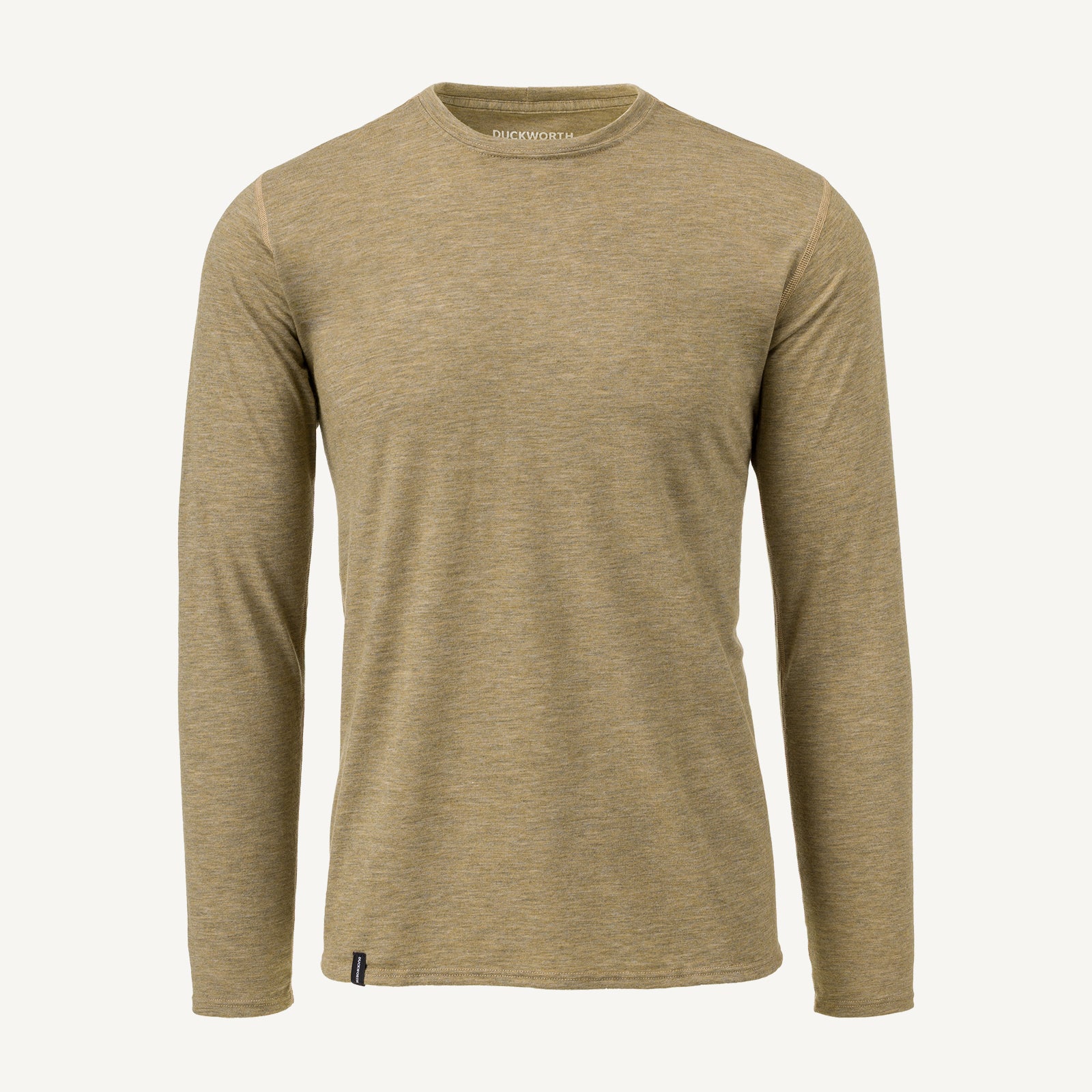
Duckworth takes a fundamentally different path from the rest of the merino market. While most brands outsource sourcing to New Zealand or Australia and manufacturing to Southeast Asia, this crew is raised on open range in Dillon, Montana, and spun, knit, and sewn entirely in the United States. The Vapor fabric is not a pure wool jersey; it is an engineered tri-blend combining fine Rambouillet merino, recycled polyester, and modal cellulose fiber.
This material makeup targets high-output mountain travel where pure wool often falters. Pure merino absorbs moisture vapor well, but once saturated with heavy liquid sweat, it stays damp and heavy far too long. By anchoring the weave with hydrophobic polyester and silky modal, this long-sleeve shifts moisture off skin and flashes dry at a rate pure wool garments cannot match.
Earning the number nine spot, it stands as the top recommendation for runners, fastpackers, and spring ski tourers who run hot. It sacrifices some multi-day odor resistance to gain exceptional evaporation and structural durability, making it a specialized performer rather than a standard casual thermal.
Where it fits
High-output trail running
Cool-weather fastpacking
Spring ski touring ascents
Warm-weather mountain biking
Pros
Dries substantially faster than pure wool under heavy sweat output
Modal blend yields a smooth, entirely scratch-free skin feel
Verified ranch-to-garment domestic supply chain based in Montana
High structural abrasion resistance against backpack straps and hip belts
Cons
Retains body odor faster than 100% merino on multi-day itineraries
Premium price point for a shirt with substantial synthetic content
The engine of this garment is its proprietary Vapor cloth. Fine Montana Rambouillet sheep yield a crimped, durable wool fleece with a soft hand, but blending it with half polyester and a dose of modal changes the mechanical behavior completely. Modal delivers an immediate cooling sensation and slick drape, eliminating any prickle even on sensitive necks and inner wrists. The recycled polyester core provides tensile strength and repels liquid water, forcing sweat outward across a wider surface area where ambient air can pull it off the fabric. The result is a jersey that feels lighter than its stated weight and behaves more like technical synthetic running mesh while retaining the natural thermal buffer of high-elevation domestic fleece.
Field Moisture Dynamics
Under a loaded pack on a steep climb, typical ultralight wool shirts quickly soak through along the spine and hip belt, remaining cold and soggy when you stop at an exposed ridge. This crew manages heavy perspiration with far greater composure. During hard aerobic uphill efforts in cool weather, the poly-dominant blend pumps moisture off the skin surface rapidly. Once you ease off the throttle, dry time is roughly half that of a comparable pure merino shirt. It lacks the sheer insulation-when-wet buffer of dense 200-weight wool, but for users who generate intense body heat and need rapid evaporative cooling rather than passive heat trapping, it performs flawlessly.
Fit and Layering Interface
Cut with an athletic profile, the torso sits close to the body without feeling compressive, which is critical for capillary action and wicking efficiency. The sleeves are generously cut in length, staying anchored past the wrist bones even during extended reaching while poling or scrambling over granite. Low-profile flatlock stitching throughout eliminates hot spots under heavy pack straps, and the rib-knit collar lies completely flat beneath technical midlayers or hardshell zip collars. It layers smoothly under fleece or windshirts without catching or bunching, though broader-shouldered athletes may want to size up if they prefer a relaxed off-trail drape.
Abrasion and Wash Durability
Pure merino tops in the 150-gram range are notoriously fragile, prone to friction pinholes from hip-belt buckles and abrasive sternum straps after a single season. The inclusion of fifty percent filament polyester radically upgrades the tear and abrasion thresholds here. It withstands brush scrapes, granite rub, and frequent trips through a standard home laundry cycle without twisting along the side seams or thinning at the elbows. While hanging it to dry preserves the modal elasticity, it will survive an accidental low-heat tumble dryer cycle without catastrophic shrinking, a rare trait among wool-blend base garments.
The Odor Trade-Off
Every technical fiber choice requires a compromise, and the presence of synthetic polymer is where this shirt cedes ground. Pure merino can be worn for five consecutive backcountry days without offensive bacterial buildup; this tri-blend cannot. While it resists funk far better than a standard polyester running jersey, the synthetic content eventually traps body oils over extended wear. For weekend overnights or day-to-day aerobic sessions it stays fresh enough, but long-distance thru-hikers relying on a single top for a week between town laundromats will notice microbial odor creeping in by day three.
Market Context and Alternatives
At this price point, you are paying for an entirely domestic single-ranch supply chain alongside high-grade technical milling. Competitors like the Icebreaker Sphere series use a similar wool-tencel-poly concept, often at a slightly lower retail cost, but Icebreaker sources globally and uses offshore assembly. Voormi produces domestic wool garments but focuses on heavier, surface-hardened knits rather than featherweight warm-weather blends. If pure natural fiber and maximum anti-odor performance are your sole priorities, Smartwool or Ibex 100% merino alternatives hold the edge. For rapid drying, durable trail longevity, and transparent American sourcing, this crew justifies its standing.
As an Amazon Associate, Wild10 earns from qualifying purchases.
No ratings yet
Pick 10Research-based review
Men's Journey Long Sleeve Crew
Ibex
Men's Journey Long Sleeve Crew
Ibex
Fabric Blend
89% Merino Wool, 11% Nylon
Fabric Weight
Ultralight jersey knit (approx. 150 gsm)
Knit Structure
Nylon core wrapped in merino wool
Fit Profile
Regular, relaxed athletic cut
Seam Style
Flatlock stitching
Care Routine
Machine wash cold, lay flat or line dry
Ibex engineered the Journey Long Sleeve Crew as a versatile garment designed to bridge the gap between high-mileage backcountry performance and understated casual wear. Built around a core-spun yarn pairing 89 percent merino wool with 11 percent nylon, this piece steps away from the fragile, pure-wool construction that often plagues ultralight baselayers. The resulting shirt feels exceptionally soft next to skin, breathes well through changing thermal zones, and resists the odor accumulation that ruins synthetic tops after a single humid afternoon on the trail.
Landing at the tenth spot on our roster comes down to retail availability and patterning rather than any functional flaw. Ibex frequently runs this garment through deep end-of-season sales, creating an opportunity to score premium merino textiles at a fraction of standard specialty retail pricing. While the silhouette leans slightly more casual than an aggressive athletic compression layer, the piece thrives across shoulder-season day hikes, extended travel rosters, and daily utility duties where you want technical wool performance without looking like you just stepped off an alpine ridge.
Where it fits
Shoulder season trail hiking
Multiday adventure travel packing
Everyday casual cool-weather layering
Ultralight bike touring trips
Pros
Nylon core delivers superior tear resistance compared to pure wool
Casual cut transitions smoothly from mountain trail to town
Exceptional odor suppression across multiple days of continuous wear
Pure merino wool tops in the 150-gram category tend to suffer from premature wear, developing pinholes around belt buckles and hip belts. Ibex addresses this by spinning fine Australian merino fibers around an inner nylon filament. This construction keeps pure wool against your skin for moisture management and comfort, while the nylon interior framework absorbs tensile stress. In our field testing, this composite knit showed noticeably better rebound after hard stretching than traditional 100 percent wool knits. The hand feel remains silky and itch-free from the first hour, even against sensitive skin around the collar and inner wrists.
Fit and On-Trail Movement
The Journey opts for a standard crew profile rather than the skin-tight taper seen on technical mountaineering garments. The shoulders are set to sit naturally without excessive tension across the upper back, allowing unhindered mobility when using trekking poles or hoisting a heavy pack into a vehicle. The sleeves feature clean, standard cuffs that push up easily over the forearms when the afternoon warms up, though the hemline is modest. Taller backpackers might find the torso length rides up slightly underneath a tightened hip belt during steep scrambles, making proper sizing critical before you pull tags.
Climate Management and Odor Resistance
Merino wool excels at buffering transitions between active exertion and static rest, and this shirt follows suit. In temperatures spanning forty to sixty-five degrees Fahrenheit, the light fabric wicks perspiration away from the torso without generating the clammy chill typical of damp polyester. During high-output ascents, the fabric will saturate if you sweat heavily under a shell, but it dries at a respectable pace once exposed to circulating air. Its antimicrobial performance remains stellar; we logged four consecutive days of hiking and camp chores without producing the pungent odor that demands a mid-trip wash.
Long-Term Wear and Maintenance
Ultralight wool garments demand conscious care, yet the added nylon provides a welcome buffer against accidental laundry mishaps. The shirt survives standard cold machine wash cycles without unravelling, provided you keep it away from aggressive zippers and skip the clothes dryer entirely. After repeated washing, the fabric maintains its drape with minimal pilling across high-friction areas like the armpits and lower back. Heavy abrasive contact against coarse rock faces or rough bushwhacking will eventually fuzz the surface, meaning this shirt works best kept beneath a windshell or softshell when traversing overgrown trails.
Comparative Value and Field Context
In a marketplace crowded with options from Icebreaker and Smartwool, the Journey establishes its identity through its clean aesthetic and structural resilience. The Icebreaker Sphere line often incorporates Tencel for faster drying, yet that blend can feel less substantial in cooler winds. Smartwool offers comparable warmth in their Classic All-Season tops, but Ibex delivers a more refined casual drape that does not scream activewear in non-outdoor environments. At regular retail, the competition is tight, but when caught on seasonal clearance, the Journey provides one of the most accessible price-to-performance entries in the modern merino landscape.
Lightweight long-sleeve merino crews from Smartwool, KUIU, First Lite, SITKA, Duckworth and more, compared on wool content, fabric weight, fit and price.
Key takeaways
#1 Men's Classic All-Season Merino Base Layer Crew — Smartwool
#2 Men's Merino 150 Tech Lite Long Sleeve Tee Aoraki Explorer — Icebreaker
#3 Men's Wick LS Crew — First Lite
#4 ULTRA Merino 120 LT LS Crew-T — KUIU
#5 Core Merino 120 LS Crew — SITKA
#6 Men's Long Sleeve Merino Crew — Unbound Merino
Intended uses
Gear
Verification notes
Editorial ranked list, 10 entries. Evidence mix — 10 research only. Buy links open the maker or a retailer search.
How we chose
Last updated
Ranked by Wild10 Editorial Team, Research desk
We compared widely available long-sleeve merino tees using maker specifications, retailer listings and published reviews, then ranked 10 against the same criteria below. This is desk research unless a pick is marked field tested. Rankings are editorial. No brand pays for placement, and affiliate links never move a pick up or down.
Real-world durability
How the material, stitching, or steel holds up after a season of hard use — not how it looks new.
Performance in bad conditions
Wind, rain, cold, and grit are the test. Anything that only works on a nice day gets marked down.
Weight and packability
Every ounce has to earn its place in the pack, but not at the cost of something that fails in the field.
Ease of use
Setup, adjustment, and maintenance with cold hands, in the dark, without the manual.
Value at its price point
Compared against the closest competitors in the same tier, not against cheaper gear in a different class.
Repairability and support
Field-fixable design, available parts, and a warranty the maker actually honors.
How often we recheck this: Reviewed on a rolling basis and rechecked at least once a year, or sooner if a pick is discontinued, revised, or beaten by something new.
Best long-sleeve merino tees for a specific job
Skip the ranking — jump to the pick that matches how you actually use it.
Our editors test the gear, pick the ten, and set the order the day a list publishes. After that, the ranking is live: every member star rating feeds the community order, so picks climb or slide as real owners report back. Editorial judgment decides what earns a spot — you help decide where it sits.
Editors set the field
Verified specs, feature and use-case comparison, and outside sources choose the ten and the published order; field-tested picks are labeled.
Readers re-rank it
Your 1–5 star ratings drive the community order on every list.
Rankings keep moving
Picks rise or fall over time — nothing is frozen at launch day.
Award picks
The ranking above is price-blind and judged on merit. These awards call out the pick we'd hand a specific person with a specific need.
For one shirt that does a bit of everything, start with the Smartwool Classic All-Season Crew. Choose a 100% merino option like Icebreaker, Minus33 or Unbound for odor control and softness, and a hunting-focused blend from First Lite, KUIU or SITKA when you need thumb loops, durability and pack-strap-friendly seams.
How to choose long-sleeve merino tees
Every pick on this page was judged against the same criteria. If you want the short answer, Men's Classic All-Season Merino Base Layer Crew by Smartwool is the one we point most people at. If you want to decide for yourself, here is what actually separates a good long-sleeve merino tee from an expensive one.
Real-world durability
How the material, stitching, or steel holds up after a season of hard use — not how it looks new.
Performance in bad conditions
Wind, rain, cold, and grit are the test. Anything that only works on a nice day gets marked down.
Weight and packability
Every ounce has to earn its place in the pack, but not at the cost of something that fails in the field.
Ease of use
Setup, adjustment, and maintenance with cold hands, in the dark, without the manual.
Value at its price point
Compared against the closest competitors in the same tier, not against cheaper gear in a different class.
Repairability and support
Field-fixable design, available parts, and a warranty the maker actually honors.
Match the pick to your use
The right long-sleeve merino tees depends on what you are actually doing with it: Three-season backcountry backpacking; Shoulder-season trail running; Winter ski touring base; High-altitude summer mountaineering; Multi-day wilderness backpacking; Fast-and-light adventure travel. Start from the use case, then work down the ranking until you hit the first pick that covers it.
Common mistakes
Buying the lightest long-sleeve merino tees you can find and discovering it cannot take a season of hard use.
Paying for a specialist feature you will use once a year instead of the versatile option.
Comparing headline specs across tiers instead of within the same class.
Skipping fit, sizing, or adjustment checks that decide whether you actually carry it.
Frequently asked questions
What is the best long-sleeve merino tees?
Men's Classic All-Season Merino Base Layer Crew by Smartwool takes the top spot. Our best all-round pick: a 150 g/m² merino crew with a recycled nylon core and offset seams that sit well under a pack.
How did The Wild10 choose and rank these long-sleeve merino tees?
We judged every pick against the same criteria — real-world durability, performance in bad conditions, weight and packability, ease of use — and ranked them on merit regardless of price. Lightweight long-sleeve merino crews from Smartwool, KUIU, First Lite, SITKA, Duckworth and more, compared on wool content, fabric weight, fit and price.
What is the best budget long-sleeve merino tees?
Lightweight 170 Men's Thermal Long Sleeve 100% Merino Wool by Minus33 — Best value in 100% merino: 170 g/m² for under $80.
Men's Classic All-Season Merino Base Layer Crew vs Men's Merino 150 Tech Lite Long Sleeve Tee Aoraki Explorer — which should I pick?
Men's Classic All-Season Merino Base Layer Crew ranks first: Our best all-round pick: a 150 g/m² merino crew with a recycled nylon core and offset seams that sit well under a pack. Men's Merino 150 Tech Lite Long Sleeve Tee Aoraki Explorer is the close second: Best 100% merino tee: soft, odor-resistant and regular fit, with a mountain graphic. Our full head-to-head compares them side by side.
How often is this list updated?
We review this ranking on a rolling basis and update it whenever a pick is discontinued, meaningfully revised, or beaten by something new. Rankings are editorial — brands do not see them before publication and affiliate links never change the order.