


Reader rating
Rate it and you move it. Community ratings re-rank this product inside its Top 10 list.
Expert-picked, reader-ranked. Our editors choose the products and the launch order; member star ratings move picks up or down over time.
Best USA-made option
Pros
- Complete sheep-to-shelf domestic supply chain
- Dual-surface knit keeps wet wool off your bare skin during hard exertion
- Outer face resists abrasion far better than traditional pure wool midlayers
- Deep front zipper enables rapid venting on steep ascents
Cons
- Synthetic inner face lacks the luxurious hand feel of pure virgin wool
- Bulkier in a pack than minimalist pure-merino baselayers
- Premium domestic manufacturing carries a noticeably high retail price
Best uses
- Backcountry ski touring ascents
- Cold-weather big game hunting
- Winter trail running in sub-freezing temps
- Shoulder-season camp layering
Specifications
- Origin
- 100% sourced and manufactured in the USA
- Primary Material
- Montana-grown Merino wool and polyester blend
- Knit Style
- Dual-surface bi-component knit
- Collar
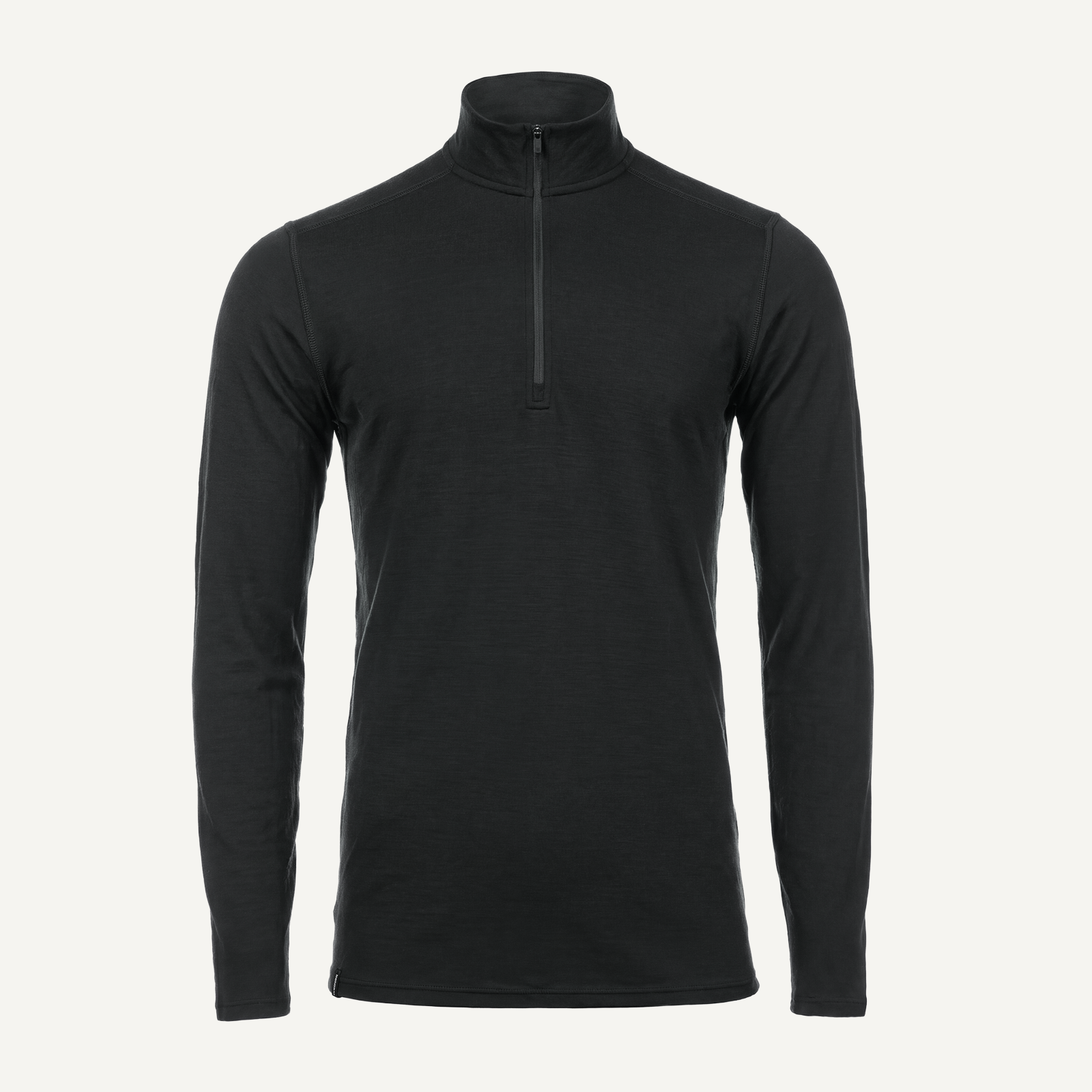
- Quarter-zip stand collar with zipper garage
- Fit Profile
- Athletic, next-to-skin or close-to-body
- Care
- Machine wash cold, line dry
Pricing
We don't publish a price we haven't verified. The retailer links below open the live listing for this exact model.
Best for
Backcountry ski touring ascents, Cold-weather big game hunting, Winter trail running in sub-freezing temps, Shoulder-season camp layering
Where to buy the Men's Comet Quarter Zip
We don't have a direct Amazon listing on file yet — this opens an Amazon search for the exact make and model.
Some links are affiliate links. Buying through them supports our testing at no extra cost to you.
Finding technical garments built from an entirely domestic supply chain is vanishingly rare in modern outdoor apparel. Duckworth manages this by raising Rambouillet Merino sheep on open range in southwestern Montana, then spinning, knitting, and sewing the fabric entirely within the United States. The Comet Quarter Zip serves as the brand's engineered workhorse for high-output cold-weather pursuits, sitting right on the border between a heavy baselayer and a low-profile midlayer. Rather than spinning a traditional pure wool yarn, the garment utilizes a proprietary bi-component knit. A hydrophobic synthetic lining rests directly against the skin, while natural Montana wool forms the face fabric. This specific architecture addresses the classic drawback of pure wool in stop-and-go winter sports: saturation. Sweat gets pushed off the skin by the polyester interior and wicked outward into the wool layer, where body heat evaporates it into the cold air. This piece shines brightest when ambient temperatures hover below freezing and your heart rate spikes. Backcountry skiers, late-season hunters, and winter trail runners will appreciate the tailored cut, deep venting zipper, and robust build that treats jagged branch snags as minor inconveniences.
Who It Is Built For
This layer is tailored for people who generate serious heat in sub-freezing conditions and refuse to tolerate cold, clammy fabric plastered against their spine on a windy ridge. If your winter outings involve sustained uphill grunts followed by exposed breaks—such as skinning up a pass, snowshoeing steep drainage, or glassing open basins—the hybrid knit handles that moisture swing better than traditional hundred-percent wool. It also appeals directly to gear users who want full traceability in their supply chain, knowing the exact ranch where the fleece was harvested and trusting the domestic manufacturing quality.
Bi-Component Fabric Mechanics
The core strength of the Comet fabric lies in how it arranges its fibers. Pure wool is phenomenal at retaining thermal efficiency while damp, but it absorbs a substantial amount of liquid water before it begins passing moisture into the atmosphere. Duckworth avoids saturation by pairing an inner face of soft synthetic filament against the body with spun Merino on the exterior. The synthetic yarns do not absorb water; they mechanically push sweat outward. Once moisture hits the wool exterior, it spreads across the wider surface area of the crimped natural fibers to evaporate. You get the odor control and natural heat retention of wool on the outside without the heavy, wet-sponge feel on bare skin.
Real-World Field Performance
On the trail, the garment behaves like a climate control valve. The quarter-length front zip drops well below the sternum, providing instant mechanical venting during steep ascents when heat threatens to turn into sweat. Zipped up to the chin, the collar seals out drafts without choking, and the zipper garage prevents frozen metal hardware from biting your neck. The exterior wool has enough loft to trap warming air pockets beneath a hard shell, while remaining breathable enough on its own to dump vapor in dry, calm winter conditions. It consistently resists the sharp funk typical of pure synthetics, making it reliable for multiday hut trips without washing.
Packability and Bulk
Because of its dense bi-component knit, this garment does not compress down as small as a wispy 150-gram ultralight base. It behaves more like a trim grid fleece in your pack, taking up moderate real estate in a winter daypack. However, the versatility compensates for the extra ounces. Because it effectively covers the operational roles of both an expedition-weight baselayer and a light midlayer, you can often leave a redundant fleece at home. For ultralight fastpackers counting single cubic inches, the bulk might be noticeable, but for true winter utility, the warmth-to-weight ratio remains solidly practical.
Durability and Hard Use
Fine Merino wool has a well-earned reputation for tearing easily around pack straps and hip belts, but the dual-surface weave here alters that equation. The outer wool face is spun with a tight, resilient structure that stands up to heavy cordura pack harnesses, brush scrapes, and repeated washing cycles without developing pinholes. Seam stitching is reinforced across high-stress zones, including the underarms and shoulder flats. As long as you keep it away from hot dryers and aggressive detergents, the fabric maintains its elasticity and surface texture over several hard seasons without thinning out.
Comparable Rivals and Value
At this price point, the piece goes head-to-head with heavyweights like the Icebreaker 260 Tech and the Smartwool Classic Thermal Quarter Zip. Both competitors rely on pure wool builds that deliver a silkier, fully natural next-to-skin touch. However, both of those options will hold moisture against your ribs far longer during hard efforts than Duckworth's bi-component weave. Another alternative is a synthetic grid fleece like the Patagonia R1, which wicks exceptionally well and dries faster but lacks natural wool odor resistance. The Comet effectively bridges that chasm, justifying its premium through technical moisture dynamics and verified American production.
How we chose
We compared widely available merino quarter-zip midlayers using maker specifications, retailer listings and published reviews, then ranked 10 against the same criteria below. This is desk research unless a pick is marked field tested. Rankings are editorial. No brand pays for placement, and affiliate links never move a pick up or down.
- Fabric behavior over time
- Breathability, DWR life, loft retention, and how the piece performs after repeated washing.
- Real-world durability
- How the material, stitching, or steel holds up after a season of hard use — not how it looks new.
- Performance in bad conditions
- Wind, rain, cold, and grit are the test. Anything that only works on a nice day gets marked down.
- Weight and packability
- Every ounce has to earn its place in the pack, but not at the cost of something that fails in the field.
- Ease of use
- Setup, adjustment, and maintenance with cold hands, in the dark, without the manual.
- Value at its price point
- Compared against the closest competitors in the same tier, not against cheaper gear in a different class.
Men's Comet Quarter Zip — frequently asked questions
- Is the Men's Comet Quarter Zip worth it?
- We rank it #7 in Merino Quarter-Zip Midlayers. Best USA-made option
- What is the Men's Comet Quarter Zip best for?
- Best for backcountry ski touring ascents, cold-weather big game hunting, winter trail running in sub-freezing temps and shoulder-season camp layering. Standouts: complete sheep-to-shelf domestic supply chain and dual-surface knit keeps wet wool off your bare skin during hard exertion.
- What are the downsides of the Men's Comet Quarter Zip?
- Synthetic inner face lacks the luxurious hand feel of pure virgin wool, Bulkier in a pack than minimalist pure-merino baselayers and Premium domestic manufacturing carries a noticeably high retail price.
- What are the key specs of the Men's Comet Quarter Zip?
- Origin: 100% sourced and manufactured in the USA · Primary Material: Montana-grown Merino wool and polyester blend · Knit Style: Dual-surface bi-component knit · Collar: Quarter-zip stand collar with zipper garage · Fit Profile: Athletic, next-to-skin or close-to-body
- Who It Is Built For?
- This layer is tailored for people who generate serious heat in sub-freezing conditions and refuse to tolerate cold, clammy fabric plastered against their spine on a windy ridge. If your winter outings involve sustained uphill grunts followed by exposed breaks—such as skinning up a pass, snowshoeing steep drainage, or…
- Bi-Component Fabric Mechanics — what should I know about the Men's Comet Quarter Zip?
- The core strength of the Comet fabric lies in how it arranges its fibers. Pure wool is phenomenal at retaining thermal efficiency while damp, but it absorbs a substantial amount of liquid water before it begins passing moisture into the atmosphere.
Compare side by side
Put the Men's Comet Quarter Zip against any other pick on this list — specs, price, pros, cons and reader ratings.