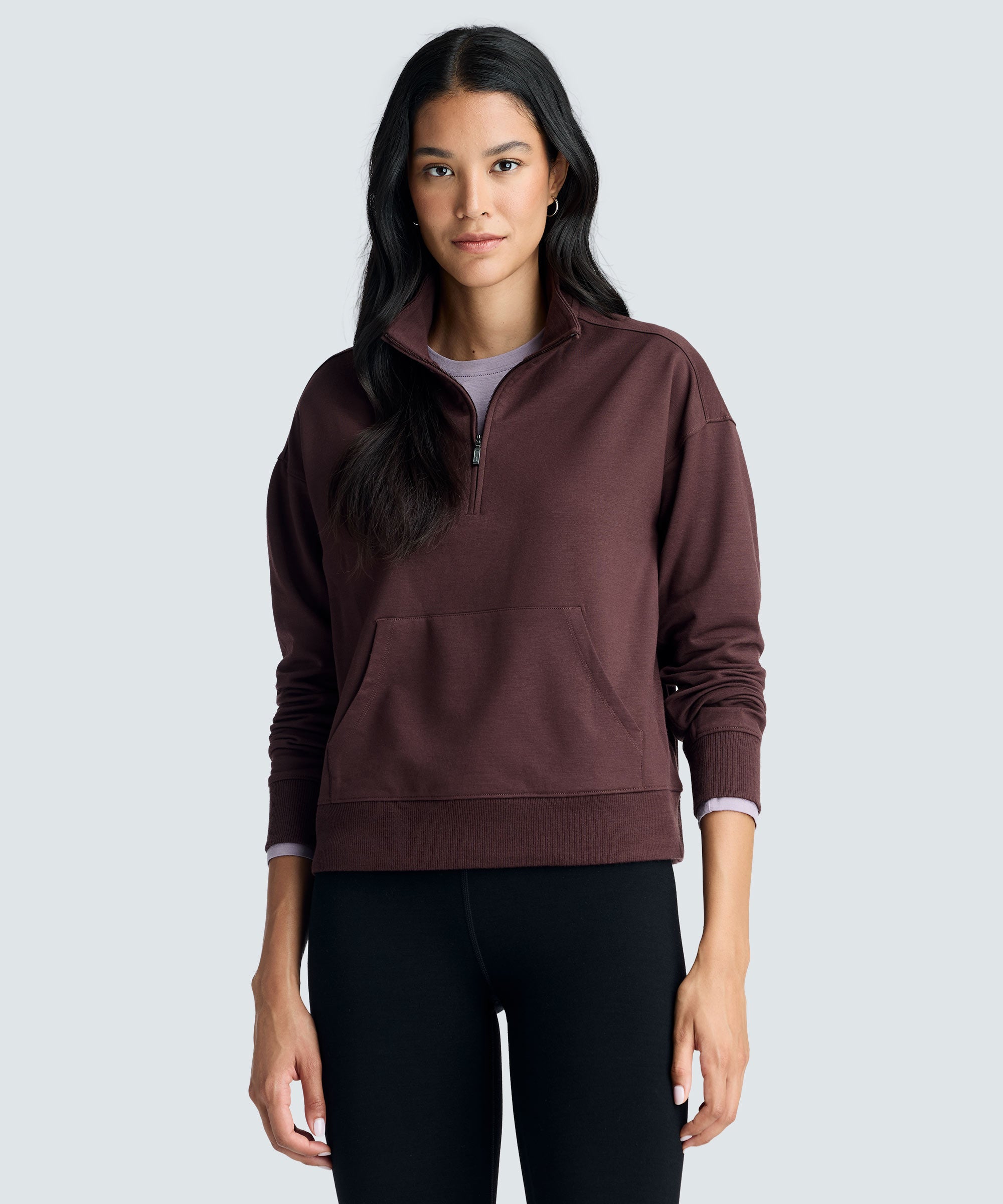
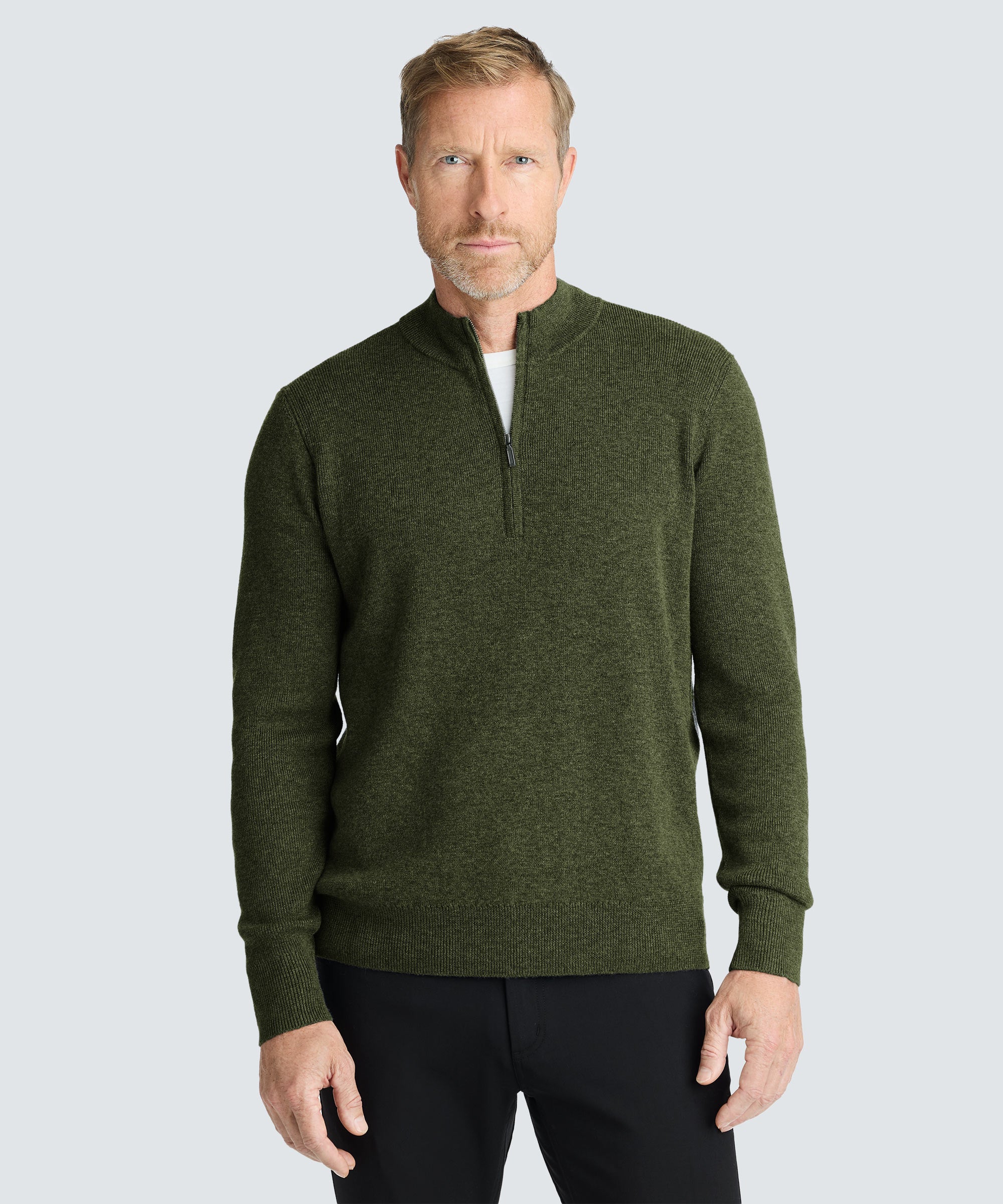
Who this is for: hikers, hunters, skiers, and travelers seeking merino-rich insulating tops with venting collars. We prioritized genuine quarter-zips, more than 50% merino, and roughly 180–300 gsm fabric, using official maker pages rather than customer reviews. This is desk research, not a field test. Prices were checked November 10, 2026. The brief cannot be fully satisfied by the verified products: required-brand KUIU and SITKA options are explicitly half-zips, and SITKA does not disclose percentages on the fetched page. Duckworth Comet is 315 gsm, Ibex Shak is 375 gsm, and Unbound’s men’s knit has no published gsm. These are labeled alternatives, not undisclosed substitutes. Prices are listed USD before tax and shipping; Smartwool uses the $130 full price rather than color-dependent sale pricing.
Quick picks
Shop links open Wild10 checkout products. External affiliate links may earn us a commission, at no extra cost to you.
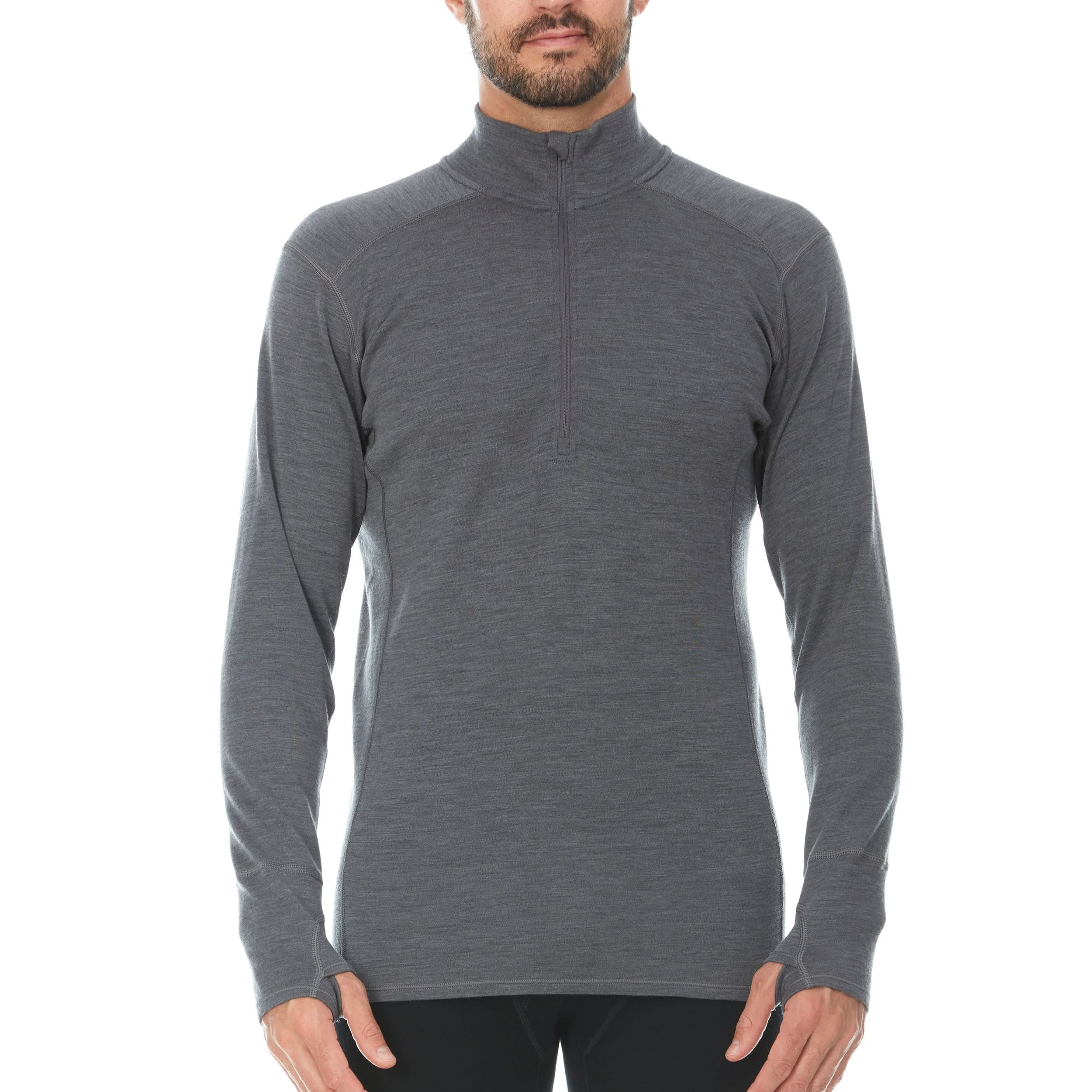
Formerly cataloged as the Merino 250, this quarter-zip has anchored mountain layering systems for well over a decade because it consistently nails the elusive balance between warmth and breathability. Though Smartwool markets it primarily as a heavyweight base layer, the dense interlock knit carries enough structural body to function effortlessly as an athletic midlayer over an ultralight tee or directly against bare skin.
The cut strikes a deliberate balance: close enough to slide cleanly under hardshells or technical puffies without bunching up, yet relaxed enough to avoid feeling restrictive during high-output trail scrambles. It shines across variable alpine conditions, absorbing internal moisture vapor before it condenses into sweat while preserving insulating loft when the wind kicks up on exposed ridgelines. The generous chest zipper functions as an immediate mechanical dump valve whenever sustained uphill pitches demand sudden ventilation.
While modern synthetic fleeces dry faster and core-spun wool blends offer marginal improvements in abrasion resistance, few garments rival the enduring comfort, quiet hand feel, and multi-day odor resistance that this top delivers. It remains the gold standard for cold-weather mountain sports where reliability matters above all else.
Where it fits
Backcountry ski touring
Cold weather alpine hiking
Multi-day winter backpacking
Resort skiing midlayer
Pros
Superb warmth-to-weight balance for sub-freezing layering
Naturally suppresses bacterial odor over multi-day trips
Offset shoulder seams eliminate chafing under pack straps
Deep 10-inch front zipper dumps excess heat rapidly
Cons
Pure wool knit is prone to snagging on trail brush and velcro
Takes longer to dry once saturated compared to synthetic fleece
Requires gentle cycle washing and flat drying to prevent shrinking
This piece is engineered for backcountry skiers, alpine hikers, and late-season hunters who need substantial insulation without synthetic stink. If your outings involve sustained movement in freezing environments followed by extended static stops—like transitioning skins on a wind-whipped pass—this layer serves your system well. It targets users who prioritize natural fiber performance, skin-soft feel, and broad comfort bandwidth over pure ultralight speed. Fast-packers in wet maritime climates might prefer synthetic fleece that wrings out dry, but anyone building an alpine kit for dry cold will find this cut precisely dialed. It is an investment for those who value multi-day wearability and hate washing gear after a single tough day outside.
Materials and Build Quality
Smartwool builds this shirt with 100% merino wool knit in an interlocking pattern, resulting in a soft face on both the exterior and interior surfaces. The interlock weave creates tiny pockets of dead space that trap radiant body heat while giving the fabric a gentle natural mechanical stretch without added elastane. The brand thoughtfully shifted the shoulder seams back and away from the top edge, eliminating friction points directly underneath heavy internal-frame backpack harness straps. Flatlock seam stitching throughout keeps the interior completely smooth against bare skin, preventing hot spots on long trail days. At the neck, an integrated fabric garage encases the zipper pull, shielding sensitive throat tissue from freezing metal when buttoned up tight against harsh mountain winds.
Real-World Thermal Performance
Merino wool excels in variable mountain weather because it buffers moisture while it is still in vapor form, meaning you stay dry longer before liquid sweat starts soaking through the fabric. On cold skin tracks, the knit breaths evenly, moving moisture out toward your shell without chilling your core. Once you stop moving, wool retains its insulating loft far better than cheap fleece, preventing the violent post-exertion chill common with pure synthetics. When your body temperature climbs rapidly during a steep bootpack, the deep 10-inch zipper lets you dump huge amounts of heat directly from the chest. The collar stands upright on its own, providing immediate wind protection to the neck without needing an extra gaiter until the weather turns truly foul.
Weight and Pack Space
Weighing in around ten and a half ounces, this layer carries a bit more mass than minimalist synthetic grid layers, but it compresses down tight into the dead spaces of a pack. Pure wool lacks the bulky loft of high-pile fleeces, which allows it to slide cleanly into a stuff sack alongside emergency down gear. Because it functions with equal poise as a heavy base layer or a standalone midlayer, carrying it often eliminates the need to haul a secondary thermal shirt on weekend outings. For ultralight thru-hikers counting single grams, the numbers may feel slightly high, but the sheer versatility and warmth-per-ounce equation makes the weight penalty negligible on cold-weather mountain itineraries.
Durability and Maintenance
Pure wool delivers exceptional comfort, but it demands more respect than rugged nylon-faced synthetics. Without a synthetic core filament, the interlock knit will show wear if exposed to harsh friction from coarse pack straps, branch snags, or aggressive velcro closures on gloves and outerwear. Pilling can develop along high-friction zones over a season of heavy use, though it rarely compromises the garment's thermal capacity. Laundering requires mindfulness: washing on cold gentle cycles and laying the garment flat to dry will preserve the original torso dimensions and wrist cuffs. Tumble drying or aggressive agitation can shrink the fibers and warp the zipper track, so users who demand toss-and-forget laundry care should look toward synthetic alternatives instead.
Market Alternatives and Trade-offs
In the heavyweight merino category, the primary direct competitor is the Icebreaker 260 Tech quarter-zip, which utilizes a slightly heavier fabric weight and a marginally tighter athletic cut, though Smartwool generally offers a softer out-of-the-box hand feel. Ridge Merino's Aspect midlayer is another capable contender that weaves synthetic nylon into the core of the yarn for boosted durability at a friendlier price, though it lacks the all-natural purity some wool purists demand. Compared to a high-end synthetic like the Patagonia R1 Air, this merino layer will dry noticeably slower when thoroughly saturated, but it will not develop lingering body odors after multiple consecutive sweat sessions. The trade-off comes down to dry times versus natural temperature regulation and multi-day freshness.
As an Amazon Associate, Wild10 earns from qualifying purchases.
No ratings yet
Pick 02Research-based review
Men's Kiln Quarter Zip
First Lite
Men's Kiln Quarter Zip
First Lite
Fabric Weight
250 g/m² midweight knit
Fiber Content
95% Merino wool, 5% Spandex
Fiber Fineness
18.5-micron fine wool
Collar Style
Stand-up zip neck with chin guard
Cuff Style
Low-profile thumb loops
Intended Fit
Fitted midlayer or heavy baselayer
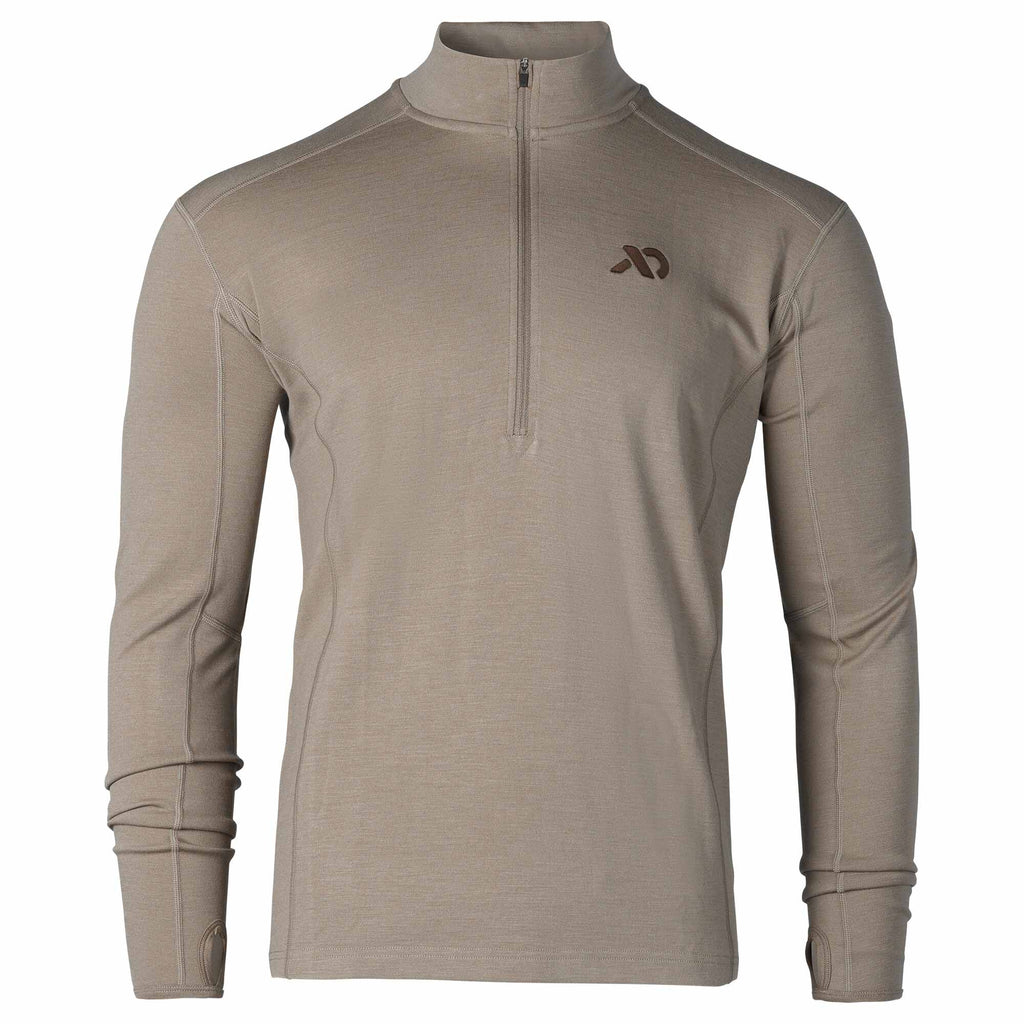
Backcountry hunters demand a different standard from their insulation than resort skiers or casual trail hikers. The Kiln Quarter Zip steps into that gap with an emphasis on stop-and-go thermal management. Replacing the brand's long-running Chama, this midweight merino top is built to handle the severe temperature swings of predawn ridgeline glassing followed immediately by hard, vertical ascents with a loaded pack.
What sets it apart from standard outdoor merino is the deliberate balance of density and cut. First Lite crafts the garment from a 250g midweight wool knit blended with a touch of elastane, producing an athletic fit that moves cleanly over a thin next-to-skin baselayer without binding across the shoulders or forearms. It breathes well enough during steep climbs, holds onto dead air when stationary, and resists deep stench across a seven-day wilderness hunt.
It is not a minimalist piece for ultralight hikers watching every fractional ounce, nor does it cut the wind on its own. Instead, it serves as a reliable thermal engine for cold-weather mountain travel where silent movement, sustained warmth even when damp, and durable stretch are non-negotiable requirements.
Where it fits
Late-season big game hunting
Cold-weather backcountry snowshoeing
Stop-and-go mountain travel
Winter glassing sessions
Pros
Deep front zipper dumps core heat rapidly during heavy exertion
Elastane blend provides excellent stretch recovery and shape retention
Generous underarm gussets prevent hem from lifting under heavy packs
Brushed interior traps warm air exceptionally well for its bulk
Cons
Spandex content slightly extends drying time compared to 100% merino
Knit exterior can snag if worn unprotected through dense briars
Heavier and less packable than modern synthetic grid fleece options
The foundation of the Kiln is an 18.5-micron merino wool knit blended with five percent spandex. Pure wool often sags and bags out after days of heavy perspiration, but the addition of synthetic stretch keeps the cuffs tight at the wrists and prevents the elbows from blowing out over extended expeditions. The interior face features a brushed micro-loop texture that creates small air pockets against the body, maximizing insulation without packing on unnecessary bulk. Flatlock stitching runs throughout the entire garment, positioned off the crest of the shoulders to prevent friction under heavy haul packs. The collar is tall and structured, offering genuine draft protection for the neck without choking, and the front zipper is backed by a full-length fabric baffle that keeps cold metal from directly contacting bare skin.
Field Performance and Thermals
In cold-weather field testing, this layer shines brightest during fluctuating output. When climbing steep timber, dumping heat is critical before sweat saturates your system; the extra-long chest zipper opens nearly down to the solar plexus, allowing an immediate chimney effect that cools the core rapidly. Once you drop onto a windy knob to glass, zipping up immediately seals the warm air inside. The 250-weight knit traps a substantial amount of body heat under a quiet wind shell or softshell jacket, making it suitable down into freezing temperatures as an active layer. Even when soaked from sustained exertion, the high percentage of natural wool maintains its loft and prevents the rapid, dangerous flash-cooling typical of synthetic fleece tops.
Packability and Mobility
Because of the dense knit and the elastane content, the garment does not compress as small as a dedicated grid fleece or an ultralight down sweater. Rolled up, it takes up roughly the space of a one-liter water bottle in a pack lid. However, the four-way mechanical stretch pays dividends when traversing deadfall or drawing a bow. The underarm gussets are cut generously, meaning the hem remains firmly tucked inside waistband systems even during high-reach movements. Integrated thumb loops at the cuffs sit flush when not in use, but deploy easily to keep sleeves from riding up when pulling on an outer softshell or rain shell, eliminating bunching around the wrists and elbows.
Abrasion and Timber Durability
Merino wool is naturally more fragile than nylon or polyester, and wearing this piece as an outer shell through heavy oak brush or dense berry briars will eventually cause snagging. That said, the tight interlocking knit holds up considerably better than standard 200-weight backpacking wool. Pack harness friction across the collarbones and hips shows minimal pilling after dozens of miles under 50-pound loads. As long as it is treated as a true midlayer beneath a durable face fabric when pushing through thick blowdowns, the structural integrity holds up across multiple seasons of heavy mountain use. Gentle washing and air drying remain mandatory to keep the wool fibers from degrading prematurely.
Market Alternatives and Comparisons
The midweight quarter-zip market is crowded, with the Smartwool Classic Thermal (formerly the 250) and Icebreaker 260 Tech standing as the primary legacy competitors. Both of those alternatives use 100% merino, which yields slightly faster drying times and marginally better pure odor resistance than this piece. However, both Smartwool and Icebreaker lack the technical hunting cut, functional stretch recovery, and extended zipper length found here. Sitka offers the Core Merino 220, which blends wool around an armor-spun nylon core for better puncture resistance, but the Kiln delivers noticeably higher warmth-to-thickness loft and a softer, more comfortable interior feel against bare skin on freezing mornings.
The Practical Trade-offs
Choosing this top involves accepting a few definite compromises. The spandex blend, while great for athletic mobility, holds moisture slightly longer than pure unblended wool or modern hydrophobic synthetics like Polartec Alpha. If you saturate it completely during a high-sweat march, drying it out next to a campfire or inside a sleeping bag takes patience. It also carries a dedicated mountain-hunting price tag that outpaces generic outdoor midlayers. For trail runners or day hikers moving fast in mild conditions, this piece is likely overkill in both warmth and weight. It is engineered specifically for hunters and backcountry travellers who endure bitter cold, extended stationary periods, and high physical strain.
As an Amazon Associate, Wild10 earns from qualifying purchases.
No ratings yet
Pick 03Research-based review
Midweight 245 Men's 1/4 Zip (Isolation)
Minus33
Midweight 245 Men's 1/4 Zip (Isolation)
Minus33
Material
100% 18.5-Micron Merino Wool
Fabric Weight
245 g/m² (Midweight Interlock Knit)
Fit Profile
Regular, relaxed cut
Zipper Style
Quarter-length front zip with chin guard
Seams
Flatlock anti-chafing construction
UPF Rating
UPF 50+
Minus33 built its reputation out of Ashland, New Hampshire, catering to hunters, winter tradespeople, and cold-weather hikers who care far more about thermal efficiency per dollar than sleek alpine branding. The Isolation sits squarely in that sweet spot with its 245-gram-per-square-meter interlock knit. Using 100 percent Australian merino wool spun to an 18.5-micron fiber diameter, it delivers a traditional, substantial hand feel that avoids the scratch of vintage wool while remaining noticeably sturdier than delicate ultralight layers.
Out on the trail, this piece functions as a dependable thermal workhorse. It eschews the skintight European cut common among high-end mountain brands in favor of a relaxed fit that slips easily over a light t-shirt or sits beneath a heavy winter shell without binding your shoulders. The deep chest zipper lets you dump heat fast on steep ascents, while the tall mock collar seals out drafts when the wind picks up across frozen ridges.
If you demand featherweight packability or technical thumb loops, look elsewhere. But for winter adventurers wanting reliable, naturally odor-resistant warmth without spending north of two hundred dollars, this midlayer remains the reigning benchmark for pure value.
Where it fits
Cold-weather day hikes
Winter hunting and scouting
Backcountry snowshoe treks
Cold-season cabin chores
Pros
Exceptional thermal warmth and value for 100 percent merino wool
Dense 245 g/m² knit resists pilling better than lighter fabrics
Comfortable regular fit accommodates easy base layering underneath
Deep front zip provides effective venting during high-output climbs
Cons
Heavier and bulkier to pack than synthetic grid fleece or hybrid blends
Dries slower than technical synthetics once saturated with perspiration
Boxier cut lacks the sleek ergonomics of alpine-specific competitors
This top targets outdoorspeople who prioritize dependable thermal regulation and ruggedness over cutting-edge minimalism. It is designed for hunters, winter trail hikers, snowshoers, and campsite workers who spend extended periods moving at a moderate pace in sub-freezing temperatures. Unlike cut-to-the-bone skimo pieces, the silhouette is cut with enough ease to accommodate standard athletic bodies without clinging uncomfortably around the midsection. If you split your time between splitting firewood at a winter cabin, hauling gear on a backcountry sled, and tracking game through frozen brush, the utility-first construction makes practical sense. It favors durable everyday utility rather than shaving single grams off your pack list.
Fabric and Construction Quality
Built from 100 percent merino wool with an 18.5-micron rating, the 245-gram interlock knit delivers a soft, dense surface that immediately inspires confidence against abrasion. The interlock weave creates a natural barrier against wind penetration while maintaining the inherent elasticity of pure wool, avoiding the need for synthetic elastane additives. Flatlock seams run throughout the chassis, preventing the hot spots and friction chafing that often plague wearers under heavy backpack hip belts or shoulder straps. The collar retains its structure after multiple washes, and the zipper track is backed with an interior chin guard to prevent cold metal from biting into your neck on bitter mornings.
Warmth and Moisture Management
Operating at 245 g/m², this layer generates considerable insulation while retaining wool's signature ability to manage vapor before it condenses into chilling perspiration. During heavy exertion on steep climbs, opening the deep chest zipper creates rapid airflow around the chest and neck, cooling your core before sweat builds up. Once you stop moving at a windy overlook, zipping up traps dead air immediately. Because it uses untreated, natural wool fibers, it absorbs a substantial amount of moisture without feeling clammy against bare skin. It does dry noticeably slower than synthetic grid fleeces or ultra-thin blends, so pace management remains critical in damp, freezing conditions.
Packability and Real-World Weight
At nearly a pound depending on the size, this garment leans heavier than minimalist technical layers and demands dedicated space inside a backpack. The dense interlock knit rolls down cleanly, but it occupies roughly the same pack volume as a lightweight compressible down vest. When you pack it as a reserve layer for summit stops, you will notice the bulk in a streamlined fast-and-light pack. However, its balanced temperature regulation means it rarely stays stowed for long. In temperatures below freezing, you will likely put it on at the trailhead and keep it on all day, neutralizing packability concerns for single-day cold-weather outings.
Durability and Care Realities
Pure merino wool always requires more careful maintenance than synthetic polyester, yet the heavier yarn used here holds up far better than fragile ultralight knit alternatives. It tolerates friction from pack straps and rough jacket linings without premature pilling, provided you wash it on a gentle cycle in cold water and lay it flat to dry. Skipping harsh detergents and fabric softeners protects the natural lanolin and keeps the fibers from degrading prematurely. The collar and cuffs hold their shape through months of hard use without sagging, making it resilient enough to survive multi-season abuse as long as you keep it away from hot dryers.
Market Alternatives and Value
When stacked against market giants like Smartwool or Icebreaker, this garment delivers comparable thermal performance at a fraction of the cost. Competitor midlayers in the 250-weight class frequently carry premium price tags while offering only marginally refined seam placements or slimmer cuts. While technical specialists like Ortovox offer hybrid zone-mapped synthetics, they sacrifice the pure, natural odor resistance and soft drape that only untreated wool provides. If you need razor-sharp alpine tailoring or extreme moisture-shedding speeds, specialized alternatives make sense. But for raw thermal density, robust stitching, and unpretentious durability per dollar spent, nothing on the market touches Minus33 in this tier.
Flatlock stitching and offset seams accompany a raised collar. The page calls it 250 gsm in the header but 240 gsm in its field notes, so the exact density remains unresolved.
Best for
Wear it next to skin or over a very thin layer for cold-weather activities.
Trade-offs
The page marks it final sale, and its conflicting density figures deserve attention before purchase.
As an Amazon Associate, Wild10 earns from qualifying purchases.
No ratings yet
Pick 05Research-based review
PRO Merino 200 Zip-T
KUIU
PRO Merino 200 Zip-T
KUIU
Fabric Weight
200 g/m² Nuyarn merino blend
Fiber Blend
Merino wool wrapped on nylon filament core
Fit Profile
Athletic, close-to-body contour
Closure Style
Deep venting center-front quarter zip
Collar Style
Fitted stand-up collar with chin guard
Primary Focus
High-output backcountry thermoregulation
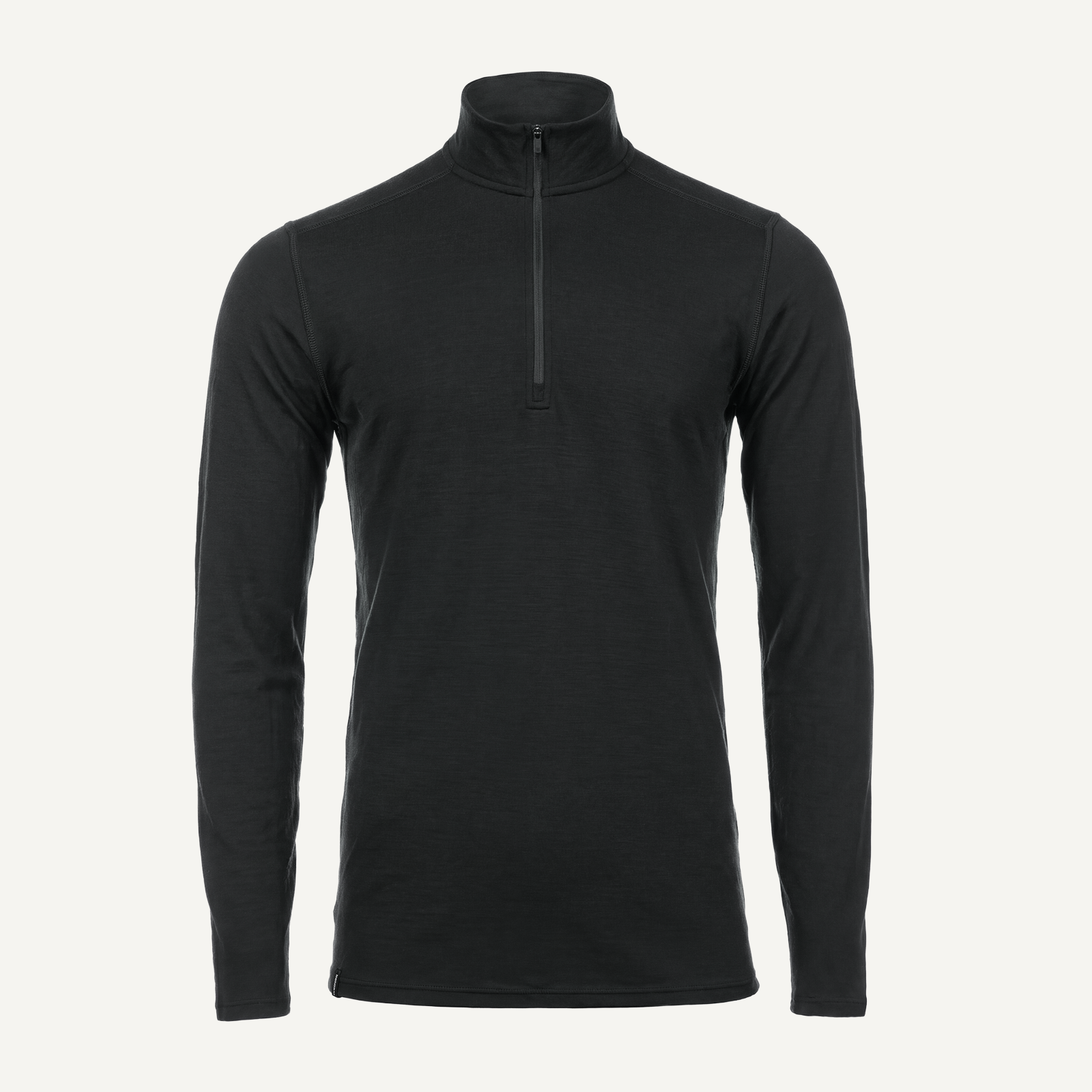
KUIU designed this layer specifically to resolve the central dilemma of mountain hunting: moving fast uphill builds immense heat, while sitting stationary on an exposed ridge triggers rapid chilling. Traditional pure merino wool manages odor and buffers temperature swings well, but it suffers under the shearing forces of heavy load-hauling frames and absorbs excess moisture when pushed hard.
The solution here lies in Nuyarn technology. Instead of ring-spinning short wool fibers, Nuyarn wraps fine merino wool around a synthetic filament core. This engineering retains wool's natural thermoregulation and odor resistance while unlocking significant mechanical stretch, five-fold faster dry times, and vastly improved tensile strength.
At 200 grams per square meter, the garment straddles the boundary between a heavy next-to-skin baselayer and a stripped-down active midlayer. Cut close to eliminate dead air space, it slips cleanly underneath high-loft down jackets or hardshells without bunching up in the armpits or riding above a pack waistbelt.
Where it fits
Late-season backcountry hunts
High-output cold-weather ski touring
Multi-day alpine backpacking
Extended shoulder-season wilderness treks
Pros
Dries substantially faster than traditionally spun wool midlayers
Nylon core prevents premature wear under heavy backpack straps
Maintains elastic stretch and sleeve recovery across multi-day wear
Deep front zipper dumps excess heat rapidly during steep climbs
Cons
Athletic patterning can feel restrictive on broad or non-standard builds
Premium price point compared to standard ring-spun merino alternatives
Colorways skew heavily toward hunting camo and muted earth tones
This top targets hunters and wilderness travelers who demand the continuous odor resistance of sheep's wool without its typical fragility. If your trips involve bushwhacking, scrambling with eighty-pound packouts, or pushing vertical terrain for ten straight days without a wash cycle, standard tissue-thin merino will fail prematurely. The cut is deliberately athletic, drafted for active bodies wearing harness straps or internal frame packs. It appeals less to casual front-country day hikers who prefer loose-fitting loungewear and more to endurance-focused mountain travelers who build their layering system around strict moisture management. It functions equally well for cold-weather mountaineers and backcountry ski tourers who run warm on ascents but cannot afford sweat-soaked layers once they transition.
Fabric Architecture and Nuyarn
Standard merino yarns rely on twist to keep short fibers bound together, which creates a dense thread that traps moisture and breaks under direct friction. Nuyarn skips the twist, laying high-micron wool fibers parallel over a continuous nylon filament. The result is a loftier fabric structure with tiny air pockets that insulate more effectively per unit of weight. Because the wool fibers remain straight rather than coiled, moisture moves along the fiber length and evaporates into the air column far faster than standard knits allow. You get the skin-soft hand feel of genuine wool without the scratchy prickle of coarse fibers, combined with the structural backbone and elastic memory of a technical synthetic knit.
On-Trail Climate Control
In freezing morning temperatures, the 200-weight knit traps sufficient body warmth beneath a simple windshirt to keep you moving comfortably without bulky outerwear. When terrain steepens and sweat begins to pool, the extended quarter-length zipper provides immediate mechanical venting down to the sternum, allowing trapped chest heat to billow out rapidly. Unlike polyester baselayers that chill down the moment you stop moving, this blend continues to insulate damp fibers, preventing the post-exertion flash-freeze common on wind-scoured ridgelines. Over a week-long trial without laundering, bacterial colonization remains suppressed, meaning your shelter does not reek of sour sweat after long pushes.
Durability and Pack Friction
The single most vulnerable zone on any merino top sits right where contoured pack straps and lumber pads grind fabric against moving bone. Pure wool typically thins, pills, and tears into holes along these friction points within a season of hard hauling. The nylon core inside this yarn stops that breakdown cold by handling the abrasive load. Flatlock seams throughout the chassis are offset away from the shoulder crests, preventing raw pressure sores under heavy loads. The cuffs retain their shape after being pushed up the forearms repeatedly, unlike conventional wool sleeves that stretch out into loose, sloppy cuffs by midday.
Weight and Field Packability
Given its warmth-to-weight ratio, this top packs down to roughly the size of a standard water bottle, slipping easily into an exterior pack pocket or lid for quick transitions. It adds negligible bulk to a multiday kit, serving multiple roles as sleepwear, an uphill climbing shirt, or an insulating midlayer under bad weather shells. The fabric recovers cleanly from tight compression inside dry bags without holding deep wrinkles or losing its loft. For trips where every ounce must justify its inclusion across diverse thermal conditions, this piece covers a broader comfort envelope than either pure synthetic fleeces or fragile lightweight wools.
Honest Trade-Offs
No piece of technical apparel operates without compromises. The trim, hunting-specific athletic cut means users with broad shoulders or thicker middles will need to size up, particularly if they intend to run a thin crewneck underneath. Furthermore, while Nuyarn resists friction far better than typical wool, it still cannot match the impenetrable bushwhacking durability of a dense nylon-face woven softshell; brush against barbed wire or dense scrub oak and you will pull small snags. Pricing also sits well above mass-market wool options. Finally, the brand's aesthetic leans unapologetically into technical hunting, meaning color selections outside of earth tones and proprietary camouflage patterns remain sparse.
As an Amazon Associate, Wild10 earns from qualifying purchases.
No ratings yet
Pick 06Research-based review
Core Merino 220 Half-Zip
SITKA
Core Merino 220 Half-Zip
SITKA
Fabric Weight
220 gsm midweight knit
Yarn Build
Corespun merino wool wrapped on nylon
Closure
Deep front center half-zip
Cuff Design
Low-profile integrated thumb loops
Fit Profile
Athletic with drop-tail hem
Seam Build
Low-bulk flatlock stitching
SITKA designed this layer primarily for the demanding stop-and-go rhythms of backcountry big-game hunting, but cold-weather hikers and off-trail navigators have adopted it for good reason. Sitting at 220 grams per square meter, the garment occupies a reliable sweet spot between a heavy cold-weather base and a dedicated active midlayer. It provides enough thermal retention to cut a biting wind on an exposed ridge while dumping excess vapor quickly when breaking trail uphill.
Rather than relying on pure wool, the fabric utilizes a corespun construction where fine merino fibers wrap around a synthetic filament core. This gives you the natural microclimate management, wet-warmth retention, and multi-day odor resistance of traditional merino without the notorious vulnerability to snagging and thinning. It is a no-nonsense, hard-wearing layer built for remote country where gear failure is not an option.
Where it fits
Cold-weather mountain hunting
Late-season backcountry backpacking
Winter ridge scrambling
Multi-day off-trail bushwhacking
Pros
Corespun yarn significantly outlasts standard all-wool knits under heavy pack straps
Generously deep center zip dumps massive amounts of core heat on steep climbs
Naturally odor-resistant wool allows for week-long backcountry use without stink
Tailored drop-tail hem stays securely tucked under climbing harnesses and hipbelts
Cons
Athletic, close-to-body cut limits casual layering over heavier garments
Commanding price point sits near the upper limit for midweight wool tops
Minimalist zipper pull can be awkward to grab with heavy mountaineering gloves
Traditional pure merino wool garments often fail in the same predictable spots: across the clavicles beneath heavy shoulder straps, along the hipbelt line, and around high-friction forearm zones. SITKA mitigates this vulnerability by wrapping genuine merino wool around a continuous synthetic core. This mechanical architecture ensures that only soft, temperature-regulating wool touches your skin while the inner filament provides structural tensile strength and stretch recovery. The seams are entirely flat-locked to avoid hot spots under a loaded expedition pack, and the collar holds its shape without collapsing or bunching under shell jackets. After extended brush-bashing and continuous pack friction, the fabric exhibits markedly less pilling and fabric thinning than standard non-blended knits in the same weight class.
Thermal Regulation and Venting
The real measure of a midlayer is how well it balances passive insulation against sudden bursts of exertion. At 220 gsm, this half-zip handles crisp autumn mornings without requiring an immediate shell, yet it breathes freely once your core temperature climbs. The centerpiece of its ventilation system is a deep half-length zipper that cuts well into the chest, letting you expose skin and dump substantial body heat instantly on sustained climbs. When temperatures plummet or crosswinds pick up, the collar zips up high and snug against the neck without chafing the throat or chin. The natural moisture-buffering capacity of the wool absorbs perspiration as vapor before it condenses into chill-inducing sweat, keeping you considerably drier than a high-loft synthetic fleece.
Tailored Movement and Articulation
Unlike boxy lifestyle sweaters, this garment is cut with an aggressive, streamlined silhouette engineered for active mountain travel. Gusseted underarms and articulated sleeves eliminate hem creep when reaching overhead or scrambling up talus slopes. The extended drop-tail hem stays reliably tucked into your waistband, preventing cold drafts from hitting your lower back when leaning forward under the weight of a pack. The cuffs terminate in low-profile, integrated thumb loops that anchor the sleeves securely when pulling on a tight-fitting hardshell or insulating puffy. These thumb slots lie flat against the wrist when unused, avoiding the bulky, bunched fabric that often interferes with the closure tabs of outer technical gloves.
Packability and Field Weight
While heavier and slightly bulkier than an ultralight 150-weight base shirt, this piece packs down tight enough to earn a permanent place in a cold-weather kit. It compresses down to roughly the size of a standard one-liter wide-mouth bottle inside a stuff sack, sliding cleanly into internal pack baffles without taking up unnecessary volume. The synthetic core sheds a modest amount of absorbed water weight faster than 100 percent wool garments, meaning it dries out quicker when hung from a branch during a sunny lunch stop or inside a well-ventilated tent. For shoulder-season hunts or winter ski tours, the warmth-to-weight ratio remains exceptionally competitive against classic grid fleece alternatives.
Landscape of Alternatives
At this price point, the market is crowded with strong midweight merino offerings, notably the Smartwool Classic Thermal 250 and the First Lite Kiln series. Smartwool delivers a slightly warmer, denser all-wool weave that feels softer against bare skin, but it lacks the abrasion resistance and structural backbone provided by SITKA's corespun reinforcement. First Lite's Kiln offers comparable backcountry intent and hunting-specific tailoring, but SITKA's cut runs slightly more athletic and less prone to wet-weather sagging over consecutive days. If you prioritize maximum durability over pure, unadulterated wool hand-feel, the corespun engineering here gives it a clear working advantage over conventional alternatives.
Honest Trade-Offs
The specialized design choices here won't suit every user. The deep technical cut is decidedly trim; broad-shouldered individuals or those wanting to wear a thick base layer underneath will likely need to size up to avoid restrictive tightness across the chest and forearms. Furthermore, the brand's aesthetic heritage leans heavily into hunting camo patterns, and even their solid colorways carry a muted, utilitarian field appearance that looks out of place in casual settings. The zipper pull is minimalist to save weight, which can make it tricky to operate with thick, insulated winter mitts. Finally, the premium price puts it well above entry-level midlayers, demanding genuine backcountry abuse to justify the investment.
As an Amazon Associate, Wild10 earns from qualifying purchases.
No ratings yet
Pick 07Research-based review
Men's Comet Quarter Zip
Duckworth
Men's Comet Quarter Zip
Duckworth
Material
62% merino wool, 38% recycled polyester; 315 gsm
Price
$165 (maker, Nov 10 2026)
Comet provides a genuine quarter-zip and a verified merino majority. Its 315 gsm fabric is slightly above the preferred range and is better framed as a cold-weather option.
Where it fits
Winter layering
Cold-weather travel
Camp wear
Pros
Made in America
62% merino wool
Bi-ply construction
Cons
At 315 gsm it exceeds the preferred 180–300 gsm window, and the care instructions prohibit tumble drying.
Duckworth describes a bi-ply construction combining a merino outer layer and polyester inner layer. It is made in America with source-verified Rocky Mountain merino wool.
Best for
Choose it for cold-weather layering when domestic manufacture is a priority.
Trade-offs
At 315 gsm it exceeds the preferred 180–300 gsm window, and the care instructions prohibit tumble drying.
As an Amazon Associate, Wild10 earns from qualifying purchases.
No ratings yet
Pick 08Research-based review
Women's Merino Transit Quarter Zip
Unbound Merino
Women's Merino Transit Quarter Zip
Unbound Merino
Material
95% merino wool, 5% elastane; 255 gsm
Price
$170 (maker, Nov 10 2026)
Fit / style
Boxy, relaxed; drop shoulder
This women’s quarter-zip pairs a high merino percentage with a useful 255 gsm fabric weight. Its relaxed sweatshirt shape is a better match for casual midlayer duty than the close-fitting base layers above.
Where it fits
Travel
Everyday layering
Casual cold-weather outings
Pros
95% merino wool
255 gsm fabric
Relaxed layering shape
Cons
The travel-oriented shape is less streamlined than a close-fitting technical layer.
As an Amazon Associate, Wild10 earns from qualifying purchases.
No ratings yet
Pick 09Research-based review
Men's Merino Knit Quarter Zip
Unbound Merino
Men's Merino Knit Quarter Zip
Unbound Merino
Material
100% ultrafine merino wool; 12-gauge knit; gsm not published
Price
$228 (maker, Nov 10 2026)
Fit / style
Classic
Unbound’s knit quarter-zip is the dressier travel-oriented choice here. It has verified wool-only construction, but its fabric density cannot be compared directly with the gsm-rated technical tops.
Where it fits
Travel
Office-to-outdoors layering
Everyday wear
Pros
100% merino wool
17.5-micron fibers
Minimalist styling
Cons
No gsm specification was verified, so compliance with the preferred density range is unknown.
As an Amazon Associate, Wild10 earns from qualifying purchases.
No ratings yet
Pick 10Research-based review
Men's Shak 1/4 Zip
Ibex
Men's Shak 1/4 Zip
Ibex
Fabric Style
Heavyweight Ponte di Roma double knit
Fiber Content
100% Merino wool
Closure
Deep front zipper with chin guard
Fit Profile
Semi-fitted athletic cut
Origin
Imported
Care Instructions
Machine wash cold, lay flat to dry
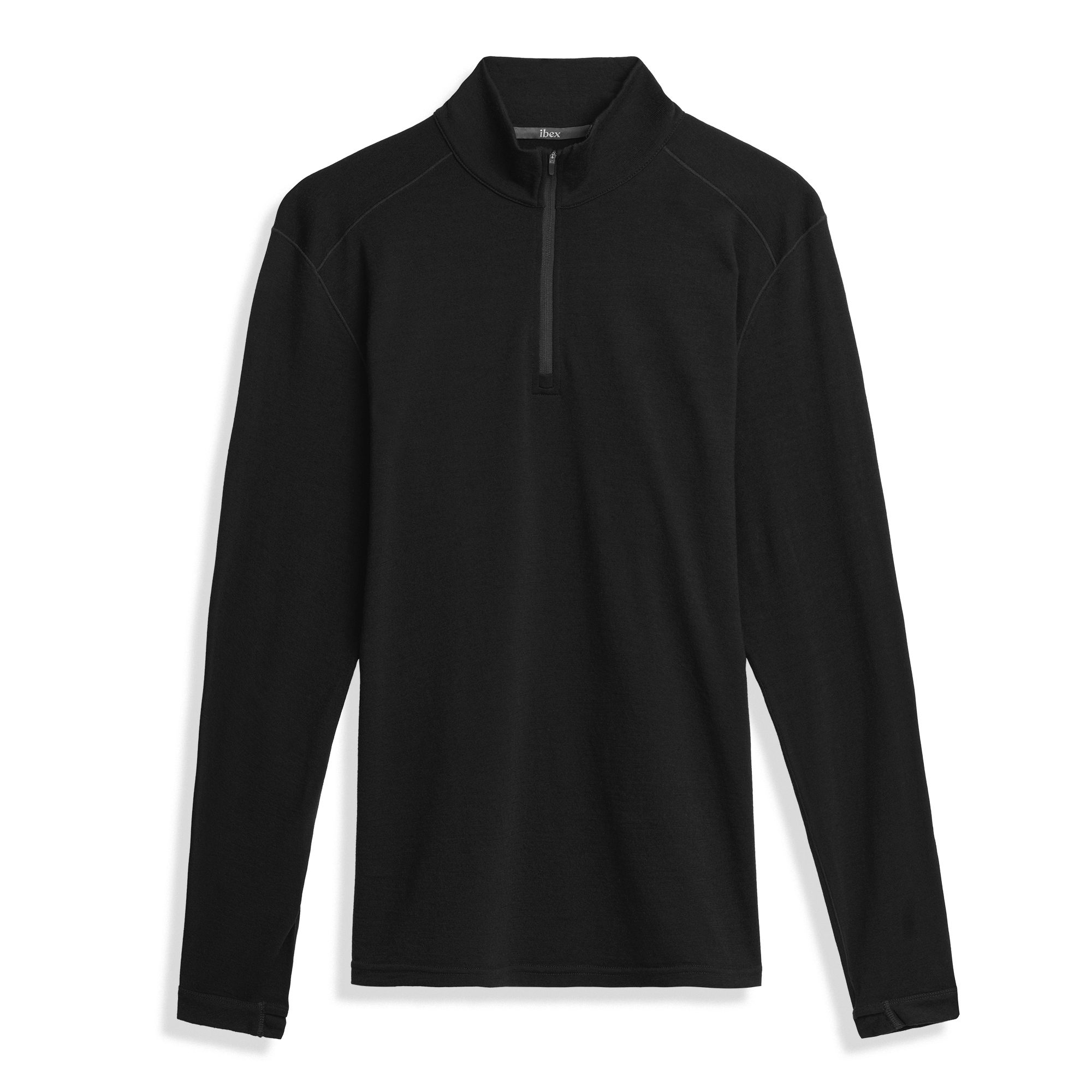
Most modern merino midlayers chase ultralight versatility, shaving grams until the fabric feels closer to an undershirt than real protection against the cold. This garment deliberately cuts against that trend. Constructed from an exceptionally dense Ponte di Roma double knit, it functions more like a rugged wool field sweater than a delicate baselayer hybrid. The cut remains clean and athletic, sitting close enough to slide under a technical shell while maintaining enough standalone structure to wear over a t-shirt on crisp, clear trail days without looking like underwear.
It occupies the final spot on our roster not because of poor craftsmanship, but because its heavyweight profile represents a specialized tool. You will not want this piece stuffed into a crowded twenty-liter daypack for summer fastpacking or high-heart-rate hill sprints in mild weather. Instead, it earns its keep when temperatures hover around freezing, when biting ridge winds penetrate standard open-knit wool, and during steady, cold-weather pursuits where long-term warmth and durability matter more than shaving minimal ounces.
Where it fits
Cold-weather backcountry snowshoeing
Winter ridge hiking
Camp maintenance in freezing air
Sub-freezing bike commuting
Pros
Dense Ponte double-knit blocks modest wind far better than jersey wool
Exceptional thermal security for low-to-moderate output in deep cold
Resists harness and shoulder-strap abrasion without developing pinholes
Maintains structural shape and tailored fit across days of continuous wear
Cons
Significant packed volume makes it cumbersome in small daypacks
Takes substantially longer to dry out once saturated than synthetic fleece
Overheats quickly during high-output climbs in moderate temperatures
This layer is built for mountain athletes and woods travelers who spend extended hours in genuine winter conditions and prioritize thermal consistency over featherweight pack stats. If your cold-weather pursuits involve stop-and-go pacing, such as setting anchors on frozen rock, clearing windfall around camp, or glassing across windy ridgelines, thin 200-gram merino tops leave you shivering the moment motion stops. This dense pullover acts as a steadfast thermal anchor. It also resonates with traditionalists who prefer the quiet, spark-resistant safety of natural wool around campfires over the melt-prone fragility of synthetic fleeces. It is overbuilt for warm-blooded runners, but for freezing days in dry powder or damp coastal snow, it provides a level of dependable insulation that lighter tops simply cannot duplicate.
Fabric and Construction Quality
The defining characteristic of the garment is its dense double-knit Ponte weave. Unlike standard single-jersey wool that stretches thin and translucent under tension, this fabric uses two sets of needles to knit interlocked faces, resulting in a thick, stable textile with remarkable recovery. You will not find bagging at the elbows or a stretched-out hem after days of continuous wear. The flatlock stitching throughout eliminates pressure ridges beneath heavy backpack straps, while the standing collar features an internal draft flap and zipper garage that prevent cold metal from biting into your throat. Ibex cut the pattern with set-in sleeves tailored closely enough to avoid bunching inside a hardshell, yet left enough give through the chest and shoulders for uninhibited pole plants and axe swings.
Field Performance and Thermoregulation
In the field, the double knit creates a surprising defense against moving air. Standard knit sweaters let cold drafts cut straight through to your skin, forcing you to throw on a windbreaker at the slightest breeze. This tight knit cuts that convective cooling significantly, allowing you to hike across exposed benches in steady winds without constantly reaching for an extra layer. Breathability remains respectable because it is unlined pure wool, but there is an upper limit to its comfort range. Break into a heavy sweat during a steep uphill push above freezing, and you will quickly overwhelm its moisture-buffering capacity. The deep front zipper helps dump thermal load, but this piece operates best when the mercury stays firmly locked beneath freezing.
Bulk and Pack Efficiency
Anyone evaluating this piece must confront its physical footprint. This is not a layer you fold down to the size of a water bottle and drop into a lightweight running vest. Rolled tight, it consumes roughly the same interior pack volume as an insulated belay jacket or two standard micro-grid synthetic pullovers. It also brings tangible heft to your pack scale. If your system requires shedding layers into a tightly packed alpine daypack as you heat up, carrying this extra mass feels inefficient. However, experienced winter travelers often work around this limitation by treating it as an outer layer for the entire day, eliminating the need to take it off and stow it away in the first place.
Durability and Service Life
Durability is where this dense build completely outclasses light-to-midweight merino competitors. Fine-gauge wool garments are notorious for developing mystery pinholes around waistbands, thinning at the elbows, and tearing when snagged by granite or dry buckthorn. The Shak fabric resists surface abrasion with stubborn resilience. Friction from heavy hipbelts and shoulder harnesses causes virtually zero surface pilling over seasons of hard hauling. The zipper hardware is stout and smoothly tracks through ice or grit without separating. With occasional cold-water wool washes and flat air-drying, this garment can easily outlast three generations of fragile, high-gauge ultralight midlayers, justifying its initial resource cost through sheer longevity.
Market Competitors and Realities
At this price bracket, you have several distinct alternatives. Modern technical synthetic fleeces like the Patagonia R1 Air or classic Power Dry tops dry three times faster, cost less, and shed heat more effectively during intense aerobic output. Lighter merino options, like Smartwool's Classic Thermal Merino or Icebreaker's 260-weight tops, offer more versatility across spring and fall hiking calendars. Where this piece justifies its purchase is its unique positioning as a heavy, structured natural armor. It is less a fragile technical baselayer and more a modern interpretation of a classic naval watch sweater. You trade away quick drying times and packability in exchange for quiet durability, wind resistance, and unflinching sub-freezing warmth.
Ten merino layering candidates, with true quarter-zips prioritized and required-brand half-zip exceptions clearly identified.
Key takeaways
#1 Men's Classic Thermal Merino Base Layer 1/4 Zip — Smartwool
#2 Men's Kiln Quarter Zip — First Lite
#3 Midweight 245 Men's 1/4 Zip (Isolation) — Minus33
#4 Men's Woolies 250 1/4 Zip — Ibex
#5 PRO Merino 200 Zip-T — KUIU
#6 Core Merino 220 Half-Zip — SITKA
Intended uses
Gear
Verification notes
Editorial ranked list, 10 entries. Evidence mix — 10 research only. Buy links open the maker or a retailer search.
How we chose
Last updated
Ranked by Wild10 Editorial Team, Research desk
We compared widely available merino quarter-zip midlayers using maker specifications, retailer listings and published reviews, then ranked 10 against the same criteria below. This is desk research unless a pick is marked field tested. Rankings are editorial. No brand pays for placement, and affiliate links never move a pick up or down.
Fabric behavior over time
Breathability, DWR life, loft retention, and how the piece performs after repeated washing.
Real-world durability
How the material, stitching, or steel holds up after a season of hard use — not how it looks new.
Performance in bad conditions
Wind, rain, cold, and grit are the test. Anything that only works on a nice day gets marked down.
Weight and packability
Every ounce has to earn its place in the pack, but not at the cost of something that fails in the field.
Ease of use
Setup, adjustment, and maintenance with cold hands, in the dark, without the manual.
Value at its price point
Compared against the closest competitors in the same tier, not against cheaper gear in a different class.
How often we recheck this: Reviewed on a rolling basis and rechecked at least once a year, or sooner if a pick is discontinued, revised, or beaten by something new.
Best merino quarter-zip midlayers for a specific job
Skip the ranking — jump to the pick that matches how you actually use it.
Our editors test the gear, pick the ten, and set the order the day a list publishes. After that, the ranking is live: every member star rating feeds the community order, so picks climb or slide as real owners report back. Editorial judgment decides what earns a spot — you help decide where it sits.
Editors set the field
Verified specs, feature and use-case comparison, and outside sources choose the ten and the published order; field-tested picks are labeled.
Readers re-rank it
Your 1–5 star ratings drive the community order on every list.
Rankings keep moving
Picks rise or fall over time — nothing is frozen at launch day.
Award picks
The ranking above is price-blind and judged on merit. These awards call out the pick we'd hand a specific person with a specific need.
Start with Smartwool for a wool-only all-rounder, First Lite for a genuine hunting quarter-zip, or Minus33 for the lowest verified price. Check fit carefully: several selections are officially base layers and may only fit over a thin tee. If quarter-zip construction and a verified merino majority are non-negotiable, exclude the KUIU and SITKA alternatives. For a strict 180–300 gsm shortlist, also exclude Duckworth Comet and Ibex Shak and treat the men’s Unbound knit as unverified. Ibex Woolies has conflicting 240/250 gsm copy and is marked final sale. Rankings are editorial assessments of published specifications, not measured field-performance results; stock and prices can change.
How to choose merino quarter-zip midlayers
Every pick on this page was judged against the same criteria. If you want the short answer, Men's Classic Thermal Merino Base Layer 1/4 Zip by Smartwool is the one we point most people at. If you want to decide for yourself, here is what actually separates a good merino quarter-zip midlayer from an expensive one.
Fabric behavior over time
Breathability, DWR life, loft retention, and how the piece performs after repeated washing.
Real-world durability
How the material, stitching, or steel holds up after a season of hard use — not how it looks new.
Performance in bad conditions
Wind, rain, cold, and grit are the test. Anything that only works on a nice day gets marked down.
Weight and packability
Every ounce has to earn its place in the pack, but not at the cost of something that fails in the field.
Ease of use
Setup, adjustment, and maintenance with cold hands, in the dark, without the manual.
Value at its price point
Compared against the closest competitors in the same tier, not against cheaper gear in a different class.
Match the pick to your use
The right merino quarter-zip midlayers depends on what you are actually doing with it: Backcountry ski touring; Cold weather alpine hiking; Multi-day winter backpacking; Resort skiing midlayer; Late-season big game hunting; Cold-weather backcountry snowshoeing. Start from the use case, then work down the ranking until you hit the first pick that covers it.
Common mistakes
Buying the lightest merino quarter-zip midlayers you can find and discovering it cannot take a season of hard use.
Paying for a specialist feature you will use once a year instead of the versatile option.
Comparing headline specs across tiers instead of within the same class.
Skipping fit, sizing, or adjustment checks that decide whether you actually carry it.
Frequently asked questions
What is the best merino quarter-zip midlayers?
Men's Classic Thermal Merino Base Layer 1/4 Zip by Smartwool takes the top spot. Best overall
How did The Wild10 choose and rank these merino quarter-zip midlayers?
We judged every pick against the same criteria — fabric behavior over time, real-world durability, performance in bad conditions, weight and packability — and ranked them on merit regardless of price. Ten merino layering candidates, with true quarter-zips prioritized and required-brand half-zip exceptions clearly identified.
What is the best budget merino quarter-zip midlayers?
Midweight 245 Men's 1/4 Zip (Isolation) by Minus33 — Best value
Men's Classic Thermal Merino Base Layer 1/4 Zip vs Men's Kiln Quarter Zip — which should I pick?
Men's Classic Thermal Merino Base Layer 1/4 Zip ranks first: Best overall Men's Kiln Quarter Zip is the close second: Best hunting quarter-zip Our full head-to-head compares them side by side.
How often is this list updated?
We review this ranking on a rolling basis and update it whenever a pick is discontinued, meaningfully revised, or beaten by something new. Rankings are editorial — brands do not see them before publication and affiliate links never change the order.