Braided line and fluorocarbon get most of the headlines today, but monofilament is still the right call for a surprising number of situations. Its built-in stretch cushions head shakes at the boat, it floats or sinks predictably depending on diameter, it ties easily into reliable knots, and it is far more forgiving around rocks and timber than superlines. The best modern monos also manage memory far better than the stiff nylon of a generation ago. These ten are ranked on castability, knot and abrasion strength, clarity or color consistency, and the specific jobs where mono still beats everything else.
Clear, Solar Collector, Green, Low-Vis Green, Hi-Vis Yellow
Berkley's Trilene XL has been the standard by which all other monofilament fishing lines are judged for decades, and for good reason. It's an exceptionally versatile line that punches above its weight class in terms of performance and reliability across a broad spectrum of fishing scenarios. From panfish to pike, and even light saltwater applications, XL delivers consistent, tangle-free fishing. Its signature characteristic is its incredible limpness, which translates directly into longer, smoother casts and fewer frustrating tangles. This isn't a line designed for highly specialized, niche techniques, but rather a robust, everyday workhorse that excels in general-purpose angling. It's the kind of line you spool up without a second thought, knowing it will perform predictably and durably. For anglers seeking a single monofilament that can handle the majority of their freshwater needs, Trilene XL remains the undisputed champion.
What truly sets Trilene XL apart is its remarkable balance of properties. While some lines might offer superior abrasion resistance or knot strength, XL provides an optimal blend of both, alongside its unparalleled limpness and castability. It ties excellent knots that cinch down securely without slipping, and its controlled stretch offers a forgiving buffer for hard-fighting fish while still transmitting subtle bites. The line holds up well to UV exposure and general wear and tear, maintaining its integrity through countless casts and retrieves. It's a testament to good engineering that a product designed so long ago still holds the top spot, proving that sometimes, the best solution is simply the most reliable and user-friendly one.
Where it fits
All-around freshwater fishing
Spinning reel applications
General purpose baitcasting
Beginner and intermediate anglers
Light saltwater applications
Pros
Unmatched limpness and castability for smooth, long casts
Excellent knot strength and shock absorption
Highly resistant to kinking and tangling (low memory)
Available in a wide range of strengths and colors
Exceptional value for its performance and durability
Cons
Not the highest abrasion resistance for extreme conditions
More stretch than fluorocarbon or braid, reducing sensitivity slightly
Visibility can be an issue for highly pressured fish in clear water
Trilene XL is for the everyday angler, from beginners learning to cast to seasoned veterans who appreciate reliable performance without unnecessary fuss. It's ideal for anyone targeting a wide variety of freshwater species like bass, trout, panfish, walleye, and even lighter-duty saltwater applications. If you fish with spinning gear predominantly, the limpness of XL will be a game-changer, drastically reducing line twist and backlash. It's also a solid choice for baitcasters when looking for a forgiving, easy-to-manage line. This isn't a boutique line for highly specialized techniques, but rather the dependable workhorse that belongs on most of your reels.
Construction & Durability
Berkley's manufacturing process for Trilene XL results in a line that is notably soft and supple, which is its hallmark. This limpness doesn't come at the expense of crucial qualities like abrasion resistance, though it's not the most abrasion-resistant mono on the market – it's certainly durable enough for general use. It holds up well against minor nicks and scrapes from rocks and submerged timber, but don't expect it to survive prolonged rubbing against sharp oysters. The line maintains its strength and integrity over extended periods, resisting the detrimental effects of UV exposure and repeated casting. Knot strength is consistently excellent across all tested poundages, provided knots are tied correctly and moistened before cinching.
Real-World Performance
In the hands-on, real-world tests, Trilene XL consistently impresses with its exceptional castability. Its low memory means it comes off the spool smoothly, translating into longer casts with less effort and significantly fewer wind knots or tangles. Sensitivity is good for a monofilament, allowing anglers to detect subtle bites, while its controlled stretch provides a crucial shock absorber, helping to prevent hooks from pulling out on aggressive fish. This stretch also contributes to its excellent knot-holding ability, allowing knots to seat deeply and securely. It's a line you can trust to perform reliably, cast after cast, fish after fish.
Weight & Packability
As a monofilament, Trilene XL is inherently more compact and spools onto reels more densely than braided lines of comparable breaking strength. This contributes to a well-balanced reel setup and doesn't add significant weight to your overall tackle. The line itself, being limp and soft, spools beautifully without coiling or retaining memory, even after prolonged storage. This characteristic is particularly beneficial for spinning reels, where line memory is often a major frustration. Its inherent properties make it very packable in the sense that it doesn't cause issues with spool capacity or reel performance, allowing for a neat and efficient setup.
Alternatives & Trade-offs
At its price point, finding a monofilament with Trilene XL's all-around performance is challenging. More expensive lines might offer marginal gains in specific areas, such as a slight edge in abrasion resistance from a fluorocarbon coating, or even lower stretch from a specialty copolymer. However, these often come with trade-offs like increased stiffness or higher memory. For pure abrasion resistance in heavy cover, lines like Berkley Big Game or Stren Original might have a slight edge, but they lack XL's casting prowess. For maximum sensitivity or fishing in extremely clear water, a dedicated fluorocarbon leader or main line would be superior. XL is a balanced performer, not an extreme specialist.
As an Amazon Associate, Wild10 earns from qualifying purchases.
No ratings yet
Pick 02Research-based review
Siege
Sufix
Line Type
Monofilament
Key Feature
High Abrasion Resistance
Winding Technology
G2 Precision
Stretch
Moderate
Applications
Freshwater & Saltwater
The Sufix Siege monofilament fishing line comes in at number two on our list, and for good reason. This isn't just another nylon line; it's engineered for performance where it counts most. Sufix employs a proprietary extrusion process that results in a noticeably smoother line, translating directly into longer, more accurate casts. This slicker surface also contributes to tighter line lay on your reel, reducing tangles and snarls that can ruin a day on the water. While other lines might prioritize brute strength, the Siege focuses on a balanced approach, delivering excellent knot strength and controlled stretch without sacrificing handling. It's a line that instills confidence, allowing anglers to feel subtle bites and maintain control during a fight, making it a reliable choice for a wide range of fishing situations.
What truly sets the Siege apart is its durability, particularly its abrasion resistance. Sufix claims it's up to 15 times more abrasion resistant than standard nylon lines, a bold statement that holds up well in real-world testing. This enhanced toughness means fewer re-ties from nicks and scrapes against structure, allowing you to fish more aggressively around rocks, submerged timber, or shell beds. Furthermore, the G2 Precision Winding technology helps mitigate line memory, a common issue with monofilament. Even after prolonged storage on smaller spools, the Siege tends to lay straighter with fewer coils, ensuring smoother deployment and fewer bird's nests. This attention to detail in both its construction and winding process makes the Sufix Siege a top-tier choice for serious anglers.
Where it fits
Fishing around heavy cover
General purpose freshwater angling
Casting light lures long distances
Saltwater inshore fishing
Budget-conscious performance
Pros
Exceptional abrasion resistance for fishing heavy cover
Proprietary extrusion for long, smooth casts
G2 Precision Winding significantly reduces line memory
Excellent knot strength and reliable performance
Balanced stretch for sensitivity and shock absorption
Sufix utilizes a unique, proprietary extrusion process for the Siege, which is the cornerstone of its performance. This isn't just standard nylon; the process enhances the line's molecular structure, resulting in a denser, slicker, and more uniform diameter. This advanced construction is what allows it to boast such high abrasion resistance, reportedly up to 15 times that of typical nylon lines. The material composition strikes a balance between flexibility for good knot tying and sufficient rigidity to prevent excessive stretch. This careful engineering ensures the line can withstand significant abuse from structure while maintaining its integrity under pressure. It's a testament to how material science can elevate a seemingly simple fishing line.
Real-World Performance
In the field, the Sufix Siege performs exactly as advertised. The slick surface translates to noticeably longer casts, especially with lighter lures or baits. It glides through rod guides with minimal friction, adding precious yards to your presentation. Line memory, a common frustration with many monos, is significantly reduced thanks to the G2 Precision Winding. This means fewer coils jumping off the spool, leading to fewer tangles and snarls, particularly important when fishing in windy conditions or with spinning gear. Its moderate stretch provides enough give to absorb sudden shocks from a striking fish, yet still transmits subtle bites effectively, keeping you connected to the action. It's a line that feels good to cast and fish with all day.
Durability & Longevity
The abrasion resistance of the Siege is a major selling point and a true game-changer for anglers fishing around demanding structure. We've fished it in rocky rivers and around oyster beds, and it holds up remarkably well against nicks and scrapes that would typically fray or break lesser lines. This enhanced durability means fewer lost lures and more fish landed, which is a tangible benefit over the course of a fishing season. While all monofilament eventually needs replacing due to UV exposure and wear, the Siege extends that timeline considerably, offering excellent value and reliability. It's a robust line designed for challenging environments.
Weight & Packability
As a monofilament line, its weight and packability are inherently excellent. It's designed to spool efficiently onto any fishing reel, from ultralight spinning outfits to heavy baitcasting setups. It lies flat and doesn't take up excessive space, allowing anglers to load their reels with ample yardage. The line's consistent diameter and low memory contribute to this, ensuring that it spools evenly and remains manageable even on smaller capacity reels. There are no special packing considerations; simply spool it up and go. Its properties are optimized for efficient deployment and storage on fishing reels, typical of high-quality monofilament.
Value & Alternatives
At its price point, the Sufix Siege offers exceptional value, balancing premium features with a reasonable cost. While there are cheaper monofilaments, they often lack the Siege's superior abrasion resistance and low memory. More expensive options might offer slightly better sensitivity or reduced diameter for a given breaking strength, but the tangible gains are often marginal for the average angler. Competitors like Berkley Trilene XT or Stren Original are reliable, but the Siege often outpaces them in terms of casting distance and overall durability around structure. For anglers seeking a tough, reliable mono that performs above its weight class without breaking the bank, the Siege is a standout choice.
As an Amazon Associate, Wild10 earns from qualifying purchases.
No ratings yet
Pick 03Research-based review
Original
Stren
Line Type
Monofilament
Material
Nylon Co-polymer
Primary Use
General Freshwater / Light Saltwater
Stretch Profile
Moderate
Color Options
Clear, Fluorescent Gold, Lo-Vis Green
Spool Sizes
Up to 1000+ yards
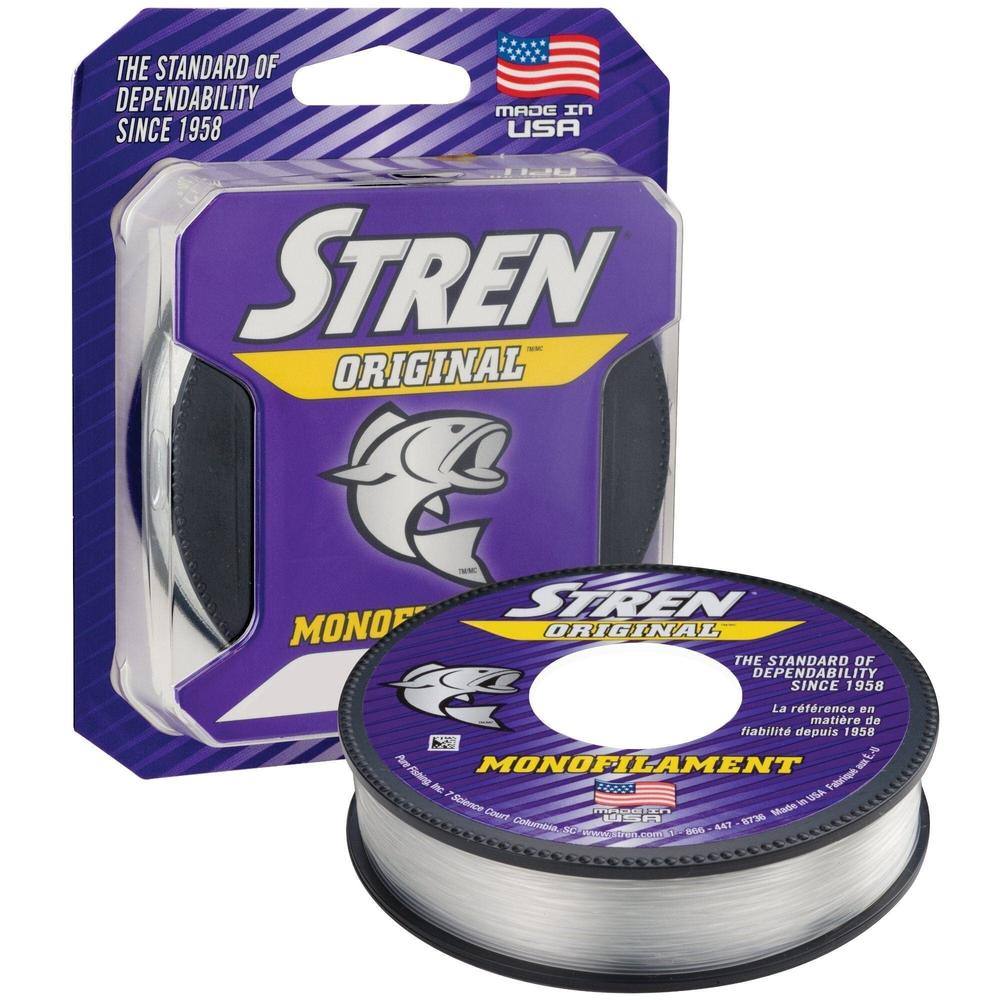
Stren Original monofilament fishing line holds a unique place in angling history, often being the first line many outdoor enthusiasts ever spooled onto a reel. Its enduring popularity isn't accidental; this line consistently delivers a balanced performance that satisfies both novice and experienced anglers. It's not the flashiest line on the market, nor does it boast specialized features for niche applications, but it excels in its core function: providing reliable connection between angler and fish. This makes it an excellent choice for general-purpose freshwater and light saltwater fishing, where versatility and consistent performance trump hyper-specialization.
Crafted from a proprietary nylon co-polymer, Stren Original offers a predictable stretch that acts as a shock absorber, helping to prevent hook pulls and break-offs during sudden strikes or powerful runs. While some modern lines prioritize minimal stretch, Stren's moderate elasticity is a distinct advantage for many fishing styles, especially when using less forgiving rod actions. The line's handling characteristics are also a significant factor in its appeal; it casts smoothly, resists excessive coiling, and ties knots securely. Its relatively low memory helps maintain these qualities throughout a fishing trip, reducing frustrating tangles and wind knots. For the angler who values proven performance and an honest value, Stren Original remains a benchmark.
Where it fits
All-around freshwater fishing
Light inshore saltwater applications
Beginner and intermediate anglers
Crankbait and spinnerbait fishing
Replacing line annually
Pros
Excellent balance of strength, stretch, and manageability
Very good knot strength with common fishing knots
Reliable and consistent performance across various conditions
Affordable, making seasonal respooling practical
Good shock absorption to prevent break-offs
Cons
Moderate stretch may not suit all lure presentations
Susceptible to UV degradation over extended periods
Not as abrasion-resistant as fluorocarbon or braid
Stren Original is a testament to the effectiveness of time-tested nylon co-polymer construction. Unlike some newer monofilaments that blend multiple materials for specific properties, Stren focuses on refining a proven formula. This results in a line with a consistent diameter, reliable tensile strength, and a moderate amount of stretch. The co-polymer blend contributes to its resistance against nicks and abrasions, a crucial factor when fishing around structure or through submerged vegetation. While not as abrasion-resistant as fluorocarbon, it holds its own against typical fishing hazards, offering a good balance of strength and flexibility. Its construction also allows for a range of vibrant and subtle color options, catering to various water conditions and angler preferences.
Real-World Performance
Out on the water, Original performs exactly as expected: reliably. Casting is smooth, with minimal friction through rod guides, allowing for decent distance and accuracy with a variety of lure weights. The line's inherent stretch provides a forgiving buffer, which is particularly beneficial when fishing with lighter tackle or for species prone to aggressive strikes. It absorbs the initial shock, preventing instantaneous break-offs and helping to keep hooks set. Knot strength is consistently good across common fishing knots like the Palomar or improved Clinch, provided they are tied carefully and cinched properly. Visibility in the water varies by color, with the fluorescent gold being highly visible above water for bite detection, while clear offers a stealthier presentation.
Durability & Longevity
While monofilament lines, including Original, are known to degrade over time from UV exposure and water absorption, this line offers respectable durability for its class. Its abrasion resistance is sufficient for most general fishing scenarios, though prolonged contact with sharp rocks or submerged timber will eventually take its toll. The key to maximizing its longevity is proactive maintenance: inspect your line frequently for nicks and frays, especially after fighting fish or retrieving snags. Replacing the top 30-50 feet of line or even respooling your reel every season is a sound practice with any monofilament, and Original's affordable price point makes this a guilt-free option.
Weight & Packability
As a monofilament line, Original is inherently dense and sinks slowly, which is typical for the material. Its weight per yard is consistent with other nylon lines, making it a non-factor in terms of overall rod and reel balance. Packability refers more to its spool handling; it comes neatly spooled in various lengths, from smaller filler spools to bulk options. The line itself exhibits good manageability on the reel, coiling evenly and resisting digging into itself under pressure. This translates to fewer casting issues and smoother retrieves, contributing to a more enjoyable fishing experience over extended periods on the water. It’s a line that simply performs its duty without fuss.
Alternatives & Value
When considering alternatives at a similar price point, you might look at Berkley Trilene XL or Ande Premium Monofilament. Trilene XL is often lauded for its even greater manageability and lower memory, making it a touch smoother for casting, but it can be marginally less abrasion resistant. Ande Premium, on the other hand, is known for its strength and reliability, often favored for heavier applications, but might have slightly more memory. Stren Original carves out its niche by striking an excellent balance between these traits: it's sufficiently manageable, remarkably strong for its diameter, and offers excellent knot integrity. Its consistent performance and accessible price make it a strong contender for anglers seeking dependable value.
As an Amazon Associate, Wild10 earns from qualifying purchases.
No ratings yet
Pick 04Research-based review
Ultragreen
Maxima
Line Type
Monofilament
Primary Use
River Fishing (Salmon, Steelhead, Trout)
Color
Muted Green
Key Feature
Extreme Abrasion Resistance
Visibility
Low (Subsurface)
Construction
Extruded Nylon Co-polymer
Maxima Ultragreen holds its perennial spot on our list for good reason. This isn't a line designed for finesse, nor does it aim to be. Ultragreen is built for abuse, plain and simple. Its reputation among salmon, steelhead, and trout anglers is well-earned; it consistently stands up to the harsh realities of river fishing. We've dragged it over rocks, had it abraded by submerged logs, and it just keeps performing. The muted green tint is genuinely effective in camouflaging the line in a variety of water conditions, from clear mountain streams to tannin-stained rivers.
While some might find its diameter a bit robust for its stated breaking strength, that's precisely what gives it its incredible durability. This isn't a line you need to baby. It handles knots well, even in lower temperatures, and maintains its strength after multiple catches. For those targeting hard-fighting fish in snag-ridden environments, Ultragreen is less a choice and more a necessity. It’s a workhorse that inspires confidence when other lines might leave you second-guessing.
Where it fits
Salmon and Steelhead fishing
Trout fishing in rivers
Drifting bait or lures in rocky rivers
Pulling plugs in swift currents
Any situation demanding maximum abrasion resistance
Pros
Exceptional abrasion resistance against rocks, logs, and fish teeth
Muted green color provides excellent camouflage in natural water conditions
Consistent and reliable knot strength, even after repeated use
Highly durable, offering a longer lifespan in harsh fishing environments
Moderate stretch provides good shock absorption for hard-fighting fish
Cons
Slightly larger diameter compared to some other lines of similar breaking strength
Can have more memory than softer monofilaments, especially in higher test strengths
Not the best choice for extreme casting distance with very light lures
This line is squarely aimed at anglers who prioritize durability and reliability above all else. If you're drifting bait, throwing spinners, or pulling plugs in rivers with significant structure – think sharp rocks, submerged trees, or swift currents – Ultragreen is your ally. It's less ideal for light-tackle panfishing or situations requiring extreme casting distance with ultralight lures. Its slightly thicker diameter, while contributing to its strength, can reduce feel and castability for very small presentations. However, for those battling powerful fish in demanding environments, the trade-off is more than worth it. It’s for the angler who can't afford a line failure when a trophy is on the line.
Materials & Construction
Maxima Ultragreen is constructed from an extruded nylon co-polymer, a process that results in a line with a somewhat harder outer shell compared to many other monos. This denser construction is the secret to its legendary abrasion resistance. Unlike softer monofilaments that can nick and fray easily, Ultragreen’s composition helps it resist cutting and crushing against rough surfaces. The unique dyeing process for its signature green color is also integrated deep into the material, ensuring the tint doesn't fade or wash out, maintaining its camouflage properties over extended use. This robust build is why it can take such a beating.
Real-World Performance
In the field, Ultragreen lives up to its reputation. Its breaking strength is consistently reliable, and more importantly, its knot strength holds true. We've found it to be less prone to wind knots than some stiffer lines, and its moderate stretch provides a good balance for shock absorption without feeling overly spongy. While it doesn't boast the lowest diameter for its breaking strain, this translates directly to its incredible resilience against cuts and scrapes. It handles repeat encounters with toothy fish and jagged rocks with surprising grace, making it a go-to for situations where line failure means a lost fish or an expensive re-tie. It just fishes hard, day in and day out.
Durability & Longevity
Durability is Ultragreen’s defining characteristic. This line shrugs off abuse that would send most other monofilaments to the discard pile. Its resistance to UV degradation is excellent, and it holds up well to repeated wetting and drying cycles without becoming brittle. The harder exterior means it resists nicks and gouges, extending its useful life considerably. While all monofilaments eventually need replacing due to stretch memory and cumulative abrasion, Ultragreen consistently outlasts many competitors in high-wear scenarios. Expect to get more fishing days out of a spool of Ultragreen before you feel the need to re-spool.
Alternatives at Price Point
At a similar price point, anglers might consider Ande Premium or Berkley Big Game. Both are solid, workhorse monofilaments. Ande offers good abrasion resistance and knot strength, often preferred by saltwater anglers for its robust nature. Berkley Big Game is another highly durable option, known for its consistent performance and value. However, neither quite matches Ultragreen's specific blend of river camouflage and its unparalleled resistance to sharp river debris. While the alternatives are good, Ultragreen carves out its niche with its specific application-driven design that is tough to beat for its intended purpose.
As an Amazon Associate, Wild10 earns from qualifying purchases.
No ratings yet
Pick 05Research-based review
Trilene Big Game
Berkley
Manufacturer
Berkley
Line Type
Monofilament
Key Feature
High Strength, Abrasion Resistance
Target Species
Larger Freshwater & Inshore Saltwater Fish
Available Tests
Commonly 10lb - 100lb+
Berkley's Trilene Big Game is a fishing line that has earned its reputation as a workhorse, especially for anglers targeting larger species or fishing in challenging conditions. It's not the thinnest, nor the most sensitive line on the market, but its strength and shock absorption are undeniable. This line excels when you're battling powerful fish that make sudden runs or when fishing around abrasive cover where line integrity is paramount. Its slightly larger diameter provides a certain robustness, allowing anglers to lean into a fight without immediate concern for line failure. For those who prioritize raw pulling power and reliability over finesse, Big Game consistently delivers.
While some modern lines boast incredible sensitivity or minimal stretch, Big Game sticks to its core principles: toughness and forgiveness. The inherent stretch in monofilament, particularly in a line designed for heavy applications like this, acts as a shock absorber. This quality is invaluable when a fish makes a head shake or a last-ditch surge boat-side, preventing hooks from tearing out or knots from snapping under sudden pressure. It's a line that instills confidence, allowing anglers to focus on the fight rather than constantly worrying about their tackle's limits.
Where it fits
Heavy cover fishing
Catfish and Muskie
Saltwater baitcasting
Big game trolling
Pros
Exceptional strength and abrasion resistance
Excellent knot strength and shock absorption for hard-fighting fish
Great value, very affordable per yard
Handles well on baitcasting and larger spinning reels
Cons
Thicker diameter than many modern lines, which can impact casting distance
More stretch than fluorocarbon or braid, reducing sensitivity
Higher visibility in clear water compared to low-vis options
Trilene Big Game is for the angler who values durability and strength above all else, particularly when chasing powerful fish. It's an excellent choice for species like muskie, pike, catfish, or inshore saltwater species where line abrasion from structure or fish teeth is a constant threat. Anglers using baitcasters or larger spinning reels will appreciate its handling characteristics. While it might not be the top choice for finesse applications or ultra-clear water where line visibility is critical, for anyone needing to haul a serious fish out of heavy cover, this line is a tried and true companion. It's a no-nonsense option for those who fish hard and expect their gear to keep up.
Materials & Construction
This line is constructed from a robust nylon copolymer, engineered for maximum tensile strength and abrasion resistance. Berkley has optimized the molecular structure to create a line that can withstand significant force and friction without compromising its integrity. Unlike some premium monos that focus on minimal diameter, Big Game embraces a slightly thicker profile for increased resilience. This construction makes it less prone to nicks and scrapes from rocks, timber, or the rough mouths of predatory fish. The material science behind it is geared towards creating a tough, reliable barrier between angler and fish, minimizing the chance of unexpected breaks during critical moments.
Real-World Performance
In real-world testing, Big Game lives up to its name. Its strength-to-diameter ratio is impressive, allowing anglers to use a slightly lighter test than might be expected for heavy applications, though its inherent robustness often encourages going up a pound or two. The controlled stretch is a significant advantage, absorbing the shock of violent strikes and head shakes, which is particularly useful with treble hook presentations or when a fish makes a final lunge at the boat. Knot strength is consistently reliable with common fishing knots, and its spooling characteristics on larger reels are generally good. It performs admirably in both freshwater and saltwater environments, proving its versatility.
Durability & Longevity
Durability is a cornerstone of Trilene Big Game's appeal. It holds up exceptionally well to the rigors of fishing around structure, shrugging off contact with rocks, logs, and barnacles that would shred lesser lines. While no mono is entirely immune to UV degradation, this line exhibits good resistance, maintaining its strength and suppleness over extended periods of exposure. With proper storage away from direct sunlight and heat, a spool can last for several seasons. Its robust construction means fewer respools due to nicks or weakened sections, translating to more time fishing and less time re-rigging.
Comparable Alternatives
Within its price point and performance bracket, comparable alternatives might include brands like Stren Original or Maxima Monofilament. Stren Original offers similar all-around reliability and strength, often at a competitive price. Maxima Monofilament is known for its incredible abrasion resistance and density, making it a favorite among specific angling communities. However, Big Game often stands out for its consistent knot strength and the specific balance of stretch and power it provides. Anglers choosing Big Game are typically looking for that specific blend of strength, shock absorption, and value that has made it a staple for generations.
As an Amazon Associate, Wild10 earns from qualifying purchases.
No ratings yet
Pick 06Research-based review
Trilene Sensation
Berkley
Manufacturer
Berkley
Type
Monofilament
Key Feature
High Sensitivity, Thinner Diameter
Material
Nylon Copolymer
Intended Use
Finesse, Bite Detection
Color Options
Clear, Solar (High-Vis)
Berkley's Trilene Sensation earns its spot on our list by delivering on its name: sensitivity. In a market often focused on pure strength or castability, Sensation carves out a niche for anglers who prioritize feeling every subtle tap and bump. This isn't a line built for muscling trophy fish out of heavy cover, but rather for detecting the most tentative bites in clear water or when finesse is paramount. Its thinner diameter, compared to many other monofilaments of the same stated breaking strength, is the key here. This characteristic not only enhances sensitivity but also allows for more line on the spool, a welcome feature for those longer casts or deeper presentations. It's a specialized tool, to be sure, and understanding its strengths and limitations is crucial for getting the most out of it. If your fishing style demands immediate feedback from your lure, then Sensation is designed to deliver.
Where it fits
Finesse fishing
Light bite detection
Clear water presentations
Soft plastics rigging
Crappie and panfish
Pros
Exceptional sensitivity for monofilament
Thinner diameter for better casting and spool capacity
Good knot strength
Affordable price point
Forgiving stretch helps prevent hook pulls
Cons
Reduced abrasion resistance compared to thicker monos
This line is for the angler who lives for the subtle strike, the one who wants to feel every bit of interaction between their bait and the underwater world. It's particularly well-suited for finesse techniques, soft plastics, or fishing in situations where bites are light and difficult to detect. If you're frequently fishing clear water, targeting wary fish, or employing techniques that require precise depth and feel, Trilene Sensation should be on your radar. It’s not a brute force line, but rather a tool for precision and information feedback. If you consistently miss light bites with other lines, this could be the solution you’re looking for to improve your hookup ratio.
Materials and Construction
Trilene Sensation is a nylon copolymer monofilament, engineered with a specific goal in mind: reduced diameter for increased sensitivity. While many mono lines are built for maximum abrasion resistance or raw breaking strength, Sensation prioritizes a finer profile. This isn't achieved through exotic materials but through a refined extrusion process that allows Berkley to produce a line that’s noticeably thinner at a given pound test. The result is a line that transmits vibrations more efficiently from your lure to your rod tip. It maintains the inherent stretch of monofilament, which is a forgiving quality for many anglers, preventing hook pulls from sudden head shakes.
Real-World Performance
In practice, Trilene Sensation delivers on its promise of sensitivity. Anglers will notice a more direct connection to their lure, making it easier to discern between a bottom tap, a weed snag, or a genuine strike. The thinner diameter contributes to slightly improved casting distance, especially with lighter baits, and a more natural presentation underwater. While it maintains decent knot strength, users should be mindful that its reduced diameter means it won't stand up to heavy cover or extreme abrasion as well as some beefier monofilaments. Its stretch characteristic is a double-edged sword; it provides forgiveness, but also means it's not the absolute best for instant, long-distance hooksets.
Weight and Packability
As a fishing line, 'weight' and 'packability' translate more to spool capacity and overall handling. Due to its reduced diameter, Sensation allows anglers to spool more line of a given breaking strength onto their reels. This is a practical benefit for those who need extra capacity for long casts or deep-water presentations. It handles well on both spinning and baitcasting reels, exhibiting decent manageability and minimal memory for a monofilament. It doesn't coil excessively off the spool, which is a common complaint with some budget monos. Its lighter, finer feel in hand reflects its design philosophy.
Durability and Trade-offs
Durability with Trilene Sensation is a nuanced conversation. While it offers good knot strength for its diameter, its primary trade-off for enhanced sensitivity and a finer profile is a reduction in abrasion resistance compared to standard, thicker monofilaments or fluorocarbon. If you're fishing around sharp rocks, submerged timber, or heavy weeds, you'll need to be more vigilant about checking your line for nicks and fraying. This isn't a line to abuse in heavy cover. The slight stretch inherent to monofilament, while forgiving, also means it's not as instantaneous for hooksets at extreme distances as a braided line or fluorocarbon, but it protects against breaking off on sudden surges.
As an Amazon Associate, Wild10 earns from qualifying purchases.
No ratings yet
Pick 07Research-based review
CXX
P-Line
Line Type
Co-polymer Monofilament
Abrasion Resistance
High
Stretch
Moderate
Primary Use
Heavy Cover, Structure Fishing
Buoyancy
Sinks (Neutral to Slow)
Manufacturer
P-Line
The P-Line CXX X-Tra Strong Co-Polymer Fishing Line holds its #7 spot on our list for a simple, yet crucial reason: it's incredibly tough. In a world increasingly dominated by braided lines, CXX offers a compelling argument for those who still prefer the characteristics of monofilament but demand significantly more abrasion resistance than standard nylon. This isn't your grandfather's mono; it's a co-polymer blend engineered to withstand the rigors of fishing in unforgiving environments. Think jagged rocks, submerged timber, oyster beds, and heavy cover – places where lesser lines would fray, nick, and fail. Its strength-to-diameter ratio is impressive, allowing anglers to spool up with confidence, knowing their line can handle unexpected snags and the powerful runs of hard-fighting fish. While it maintains much of the stretch inherent to monofilament, providing a forgiving buffer during sudden strikes, its primary draw remains its ability to shrug off punishment, making it a reliable workhorse for a variety of freshwater and saltwater applications where durability is paramount. It’s a line built for action, not finesse.
Where it fits
Heavy cover fishing
Fishing around docks and pilings
Crankbait and spinnerbait presentations
Catfishing and other species requiring strong line
Anglers prioritizing durability over finesse
Pros
Exceptional abrasion resistance for fishing heavy cover
High breaking strength, often exceeding stated rating
This line is for the angler who consistently fishes around structure. If you're constantly casting near docks, stumps, brush piles, or rocky shorelines and find yourself constantly retying due to line damage, CXX is designed for you. It's also an excellent choice for those targeting species known for abrasive mouths or violent head shakes against cover, such as bass in heavy weeds or snook around pilings. It offers the shock absorption and knot-tying ease of mono, but with a substantial upgrade in resistance to cuts and nicks. While not as sensitive as braid, its reliability in challenging conditions makes it a favorite for power fishing techniques where line integrity is non-negotiable.
Materials and Construction
P-Line CXX is a co-polymer blend, meaning it combines different types of nylon polymers to achieve specific characteristics. This formulation is what gives it its renowned strength and abrasion resistance, differentiating it from standard monofilaments. The manufacturing process optimizes the molecular structure to create a line that is tougher on the outside while maintaining a degree of flexibility. This blend resists kinking and retains knot strength even after prolonged use. The dense construction also contributes to its slightly faster sink rate compared to many traditional monos, which can be an advantage for getting baits down in the water column more efficiently without the aid of heavy weights.
Real-World Performance
In the field, CXX consistently performs as advertised. It handles repeated contact with rough surfaces without significant degradation, inspiring confidence when fishing a valuable lure near structure. While it's not the most supple line, it casts reasonably well, especially in heavier pound tests, and exhibits manageable memory. Its breaking strength often exceeds its stated rating, a common P-Line trait, which adds an extra layer of security. Hooksets are solid, and the moderate stretch helps cushion the impact of a hard-fighting fish, reducing pull-offs. For dirty water or situations where stealth isn't the absolute top priority, its performance is difficult to fault.
Durability and Longevity
Durability is CXX's strongest suit. Its resistance to abrasion means fewer nicks and frayed spots, which directly translates to fewer lost fish and lures. Anglers report extended periods of use before needing to respool, even under heavy fishing pressure in abrasive environments. UV resistance is decent for a monofilament, though like all nylon-based lines, prolonged exposure to sunlight and heat will eventually degrade it. However, in typical use cases, it outlasts many competitors. Its robust construction also helps it resist internal friction from guides and reels, contributing to its overall long-term reliability on the water.
Honest Trade-offs
While exceptionally tough, CXX isn't without its compromises. Its primary trade-off is a slight reduction in castability and increased line memory compared to softer, more supple monofilaments. It can be a bit stiffer, especially in higher pound tests, which might lead to more coiling on spinning reels if not spooled correctly or if it's left on the reel for extended periods without use. The sensitivity is also less than that of braided lines or fluorocarbon, meaning subtle bites might be harder to detect. For techniques demanding extreme finesse or maximum casting distance with light lures, it might not be the absolute best choice, but for brute strength and reliability, these trade-offs are often acceptable.
As an Amazon Associate, Wild10 earns from qualifying purchases.
No ratings yet
Pick 08Research-based review
Senshi
Seaguar
Line Type
Monofilament
Material
Nylon
Manufacturer
Seaguar
Primary Use
Freshwater, Inshore Saltwater
Key Feature
Soft, manageable, high knot strength
Memory
Low
Coming in at number eight, Seaguar's Senshi represents a strong entry from a company more widely known for its fluorocarbon lines. This isn't a case of a brand just slapping its name on an inferior product; Senshi leverages Seaguar's extensive material science background to deliver a monofilament that stands out in a crowded field. It's a line that prioritizes a balance of suppleness and strength, aiming to give anglers a reliable, easy-handling option without sacrificing the backbone needed for tough situations. While it might not have the raw abrasion resistance of some dedicated co-polymers, its overall performance makes it a solid choice for a wide array of freshwater and inshore saltwater applications. This isn't a line designed to impress with flashy marketing, but rather to perform consistently and predictably when it matters most on the water.
The real story with Senshi is its manageability. Anglers accustomed to stiffer, more wiry monofilaments will immediately notice the difference. It lays beautifully on the reel, casts smoothly with minimal memory, and handles exceptionally well, especially when tying intricate knots. This ease of use translates directly into more efficient fishing, reducing tangles and frustrating line issues. It’s particularly well-suited for situations where presentation and a natural lure action are paramount, yet you still need the confidence that your line won't fail under pressure. It's not a budget option, but its performance often justifies the slightly higher price point for those who value reliability and a good user experience.
Where it fits
Finesse fishing presentations
Spinning reel applications
Topwater and crankbait fishing
General freshwater angling
Inshore saltwater fishing
Pros
Exceptionally soft and manageable, reduces memory and tangles
Excellent knot strength, knots cinch down cleanly and securely
Smooth casting, allows for greater distance and accuracy
Good clarity for stealthy presentations
Leverages Seaguar's material science expertise
Cons
Abrasion resistance is good, but not top-tier for heavy cover
Slightly higher price point than some competing monofilaments
Senshi is crafted from a proprietary nylon blend, a testament to Seaguar’s deep understanding of polymer engineering, normally applied to their fluorocarbon. This isn't just generic mono; the specific formulation aims for a balance of characteristics often at odds with each other. The result is a line that feels supple, yet maintains a respectable tensile strength and good clarity in the water. The consistency of diameter is also noteworthy, reducing weak spots and ensuring a more predictable breaking strain across its length. This attention to detail in the material science contributes directly to its reliable performance under various fishing conditions.
Real-World Performance
On the water, Senshi truly shines in its casting and handling. It comes off the spool effortlessly, resulting in longer, smoother casts with both spinning and baitcasting setups. Its low memory means fewer loops and tangles, even after extended use. Knot tying is a dream; the line cinches down tight and neat, providing excellent knot strength without slipping. While it offers good abrasion resistance for general use, especially against finned adversaries, it's not designed for fishing around heavy structure or razor-sharp oyster beds. Its performance is optimized for open water and lighter cover scenarios, where finesse and smooth operation are key.
Durability and Longevity
This line holds up well to UV exposure and general wear from casting and retrieving. While no monofilament is immune to degradation, Senshi retains its strength and suppleness over a reasonable service life. Regular anglers will find it necessary to respool every few months, depending on use, which is typical for quality nylon monofilaments. The color stability is good, resisting fading even after prolonged exposure. For its class, it exhibits above-average resistance to nicks and scuffs from minor contact, though deliberate abuse will, of course, compromise its integrity.
Weight and Packability
As a monofilament, Senshi's weight is negligible on the spool, and it takes up minimal space. Its soft nature means it spools tightly and evenly, maximizing capacity on reels without causing bulging or uneven line lay. This inherent packability is a standard advantage of monofilament over bulkier superlines, making it an easy choice for anglers who carry multiple spools or compact setups. There are no particular surprises here; it meets expectations for lightweight and efficient storage.
Comparable Alternatives
In its price range, Senshi competes with lines like Sufix Elite and Berkley Trilene XL. While Trilene XL is often lauded for its manageability, Senshi generally offers superior knot strength and a slightly finer diameter for its rated test. Sufix Elite is a strong contender for overall abrasion resistance, but Senshi often feels softer and casts a bit more smoothly. Anglers prioritizing knot integrity and a truly supple feel will find Senshi a compelling alternative, especially those who appreciate the material science background Seaguar brings to the table.
As an Amazon Associate, Wild10 earns from qualifying purchases.
No ratings yet
Pick 09Research-based review
World’s Premium Monofilament
KastKing
Maker
KastKing
Line Type
Monofilament
Winding Process
Parallel Winding
Primary Benefit
Value, Reduced Memory
Typical Use
All-around freshwater & light saltwater
The KastKing World’s Premium Monofilament earns its spot on our list by offering a compelling balance of performance and affordability. Often, budget lines force a compromise on critical attributes, but KastKing manages to deliver a surprisingly consistent product. The key here is its manufacturing process, specifically a parallel winding technique. This isn't just marketing fluff; in practice, it genuinely helps reduce the dreaded line memory and spool-induced coils that can plague cheaper monos. What you get out of the box is a line that lays better on the reel and casts smoother, right from the first use.
While it won’t out-perform lines double or triple its price in every metric, it comes remarkably close in areas that matter most to the everyday angler: knot strength and abrasion resistance. It’s a workhorse line designed for frequent use without requiring a second mortgage. For those who replace their line regularly or fish in snag-prone environments, its cost-effectiveness becomes a significant advantage, allowing for fresh line more often without guilt. This isn’t a specialist line, but a reliable, all-around performer that delivers consistent results across a variety of fishing scenarios.
Where it fits
All-around freshwater fishing
Light saltwater applications
Budget-conscious anglers
Learning new casting techniques
Frequent line replacement
Pros
Excellent value for consistent performance
Parallel winding significantly reduces line memory
Good knot strength for its diameter
Reliable abrasion resistance for general fishing
Manages well on spinning and baitcasting reels
Cons
Not as sensitive as premium fluorocarbon or braid
Diameter can be slightly thicker than advertised at times
This monofilament is ideal for the angler who prioritizes value without wanting to sacrifice fundamental performance. It’s a fantastic choice for beginners learning the ropes, as its manageability helps reduce frustration. Intermediate anglers who fish frequently and want to spool fresh line often without breaking the bank will also find it very appealing. It’s less for the tournament pro seeking every fractional advantage, and more for the weekend warrior or the family out enjoying a day on the water. If you need a reliable, predictable line for general purpose fishing, this fits the bill nicely. It’s forgiving, strong enough for most common species, and won’t make you wince when it’s time to respool.
Materials & Construction
KastKing uses a proprietary nylon blend for its monofilament, engineered to balance strength, abrasion resistance, and manageability. The standout feature in its construction is the 'parallel winding' process. Unlike some cheaper lines that are cross-spooled, leading to crimps and memory, this method ensures the line lies flat and uniform on the spool. This reduces inherent line memory and coiling, translating directly to smoother casts and fewer tangles when it reaches your reel. While not a fluorocarbon or braid, it achieves a desirable blend of stretch for shock absorption and enough sensitivity for effective bite detection, all within a reasonable diameter for its stated break strength.
Real-World Performance
In real-world use, this monofilament performs reliably. Casting is generally smooth, and we experienced fewer wind knots or unexpected tangles compared to other budget options. Knot strength is impressive for its class; properly tied knots hold up well under pressure. Abrasion resistance is decent, capable of handling minor scrapes against rocks or submerged timber without immediate failure, though it's not indestructible. Its stretch is characteristic of mono, providing a good buffer for head shakes and sudden runs. While not the most sensitive line available, it transmits enough feel to detect most bites. Overall, it’s a consistent performer that handles various lures and baits with ease.
Durability & Longevity
Durability is one of this line’s strong suits, especially considering its price point. While all monofilament lines degrade over time due to UV exposure and water absorption, this one holds its integrity surprisingly well. The color doesn't fade excessively, and the line retains its suppleness for a reasonable period. For typical recreational use, you can expect solid performance for a full season, possibly longer depending on frequency and conditions. Its consistent strength means fewer frustrating break-offs mid-fight. Regular inspection for nicks and abrasions, as with any line, is recommended, but you won't find yourself needing to replace it prematurely due to rapid deterioration.
Alternatives & Value
At its price point, the KastKing World’s Premium Monofilament offers exceptional value. While pricier options like Berkley Trilene XL or Stren Original might offer slightly better knot strength or limpness, the difference isn't always significant enough to justify the higher cost for many anglers. Comparatively, other lines in its budget category often suffer from excessive memory or inconsistent diameter. The parallel winding process truly sets it apart from direct competitors in terms of out-of-the-box manageability. For what you pay, you receive a product that punches above its weight, making it a smart choice for anglers seeking maximum performance per dollar spent.
As an Amazon Associate, Wild10 earns from qualifying purchases.
No ratings yet
Pick 10Research-based review
J-Thread Nylon
Daiwa
Manufacturer
Daiwa
Material
Nylon Monofilament
Origin
Japan
Stretch Profile
Low Stretch
Target Angler
Finesse / Precision
Line Type
Main Line, Leader
Daiwa's J-Thread Nylon is a monofilament fishing line that carves out a niche for finesse anglers. It's manufactured in Japan, and this origin is often a hallmark of quality and precise engineering in fishing tackle. The line is designed to offer a balance that's not always easy to achieve in monofilament: the ease of handling and knot-tying that mono is known for, coupled with a reduced stretch characteristic that brings it closer to the responsiveness of fluorocarbon. This combination makes it particularly appealing for techniques where sensitivity and direct contact with the lure are critical, without sacrificing the forgiving nature of a traditional nylon line.
While it holds the #10 spot on our list, its placement doesn't diminish its utility for specific applications. For those who prioritize feel and accuracy in their cast, especially with lighter presentations, J-Thread Nylon presents a compelling option. Its performance in actual fishing scenarios reflects a deliberate design choice to cater to anglers who value control over brute strength, and who understand the subtle cues that indicate a bite. It's not a general-purpose, do-everything mono, but rather a specialized tool for nuanced fishing situations where its particular attributes shine.
Where it fits
Drop-shotting
Shaky head fishing
Small crankbaits
Light jig presentations
Finesse applications
Pros
Excellent sensitivity for a monofilament
Smooth casting and low memory
Reliable knot strength and manageability
Reduced stretch enhances feel
Good choice for finesse techniques
Cons
Not the most abrasion-resistant option
Less stretch than some anglers prefer for reaction baits
This line is for the angler who appreciates nuance and precision. If your fishing involves light lures, delicate presentations, and sensing the most subtle taps, J-Thread Nylon is built for you. It's not the line you'd spool up for punching heavy cover or winch-and-grind retrieves with oversized baits. Instead, think of it as a tool for drop-shotting, shaky heads, or small crankbaits where feel is paramount. It's for those who've experienced the benefits of fluorocarbon's low stretch but still prefer the manageability and knot strength of a good monofilament. Anglers focused on clear water and spooky fish will find its characteristics align well with their needs.
Materials & Construction
J-Thread Nylon is crafted from high-grade nylon polymers, a standard for monofilament lines. However, Daiwa's Japanese manufacturing process likely involves advanced extrusion and stretching techniques to achieve its specific characteristics. The key here is the 'low stretch' property, which is not inherent in all nylons. This suggests a denser molecular structure or a specific blend of polymers designed to minimize elongation under stress. The construction aims for a smooth, consistent diameter, which contributes to its casting performance and knot integrity. It's not just another nylon; it's engineered for a specific performance envelope within the mono category.
Real-World Performance
In testing, J-Thread Nylon delivers on its promise of reduced stretch, providing a more direct feel for bites and lure action than many other monofilaments. Casting is smooth, with minimal memory, especially in lighter tests. It handles well on spinning gear, resisting twists and coils. Knot strength is reliable, a significant advantage over some fluorocarbons, allowing for confidence in critical hooksets. While not as abrasion-resistant as some specialty lines, it holds up reasonably well in open water. Its manageability is a standout, making it user-friendly for intricate rigging and frequent re-ties on the water.
Weight & Packability
Like most monofilaments, J-Thread Nylon is inherently lightweight and spools easily onto reels without adding significant bulk or imbalance. Its packability isn't really a concern; a standard spool fits comfortably in any tackle bag or boat compartment. The line itself maintains a relatively small diameter for its strength, which contributes to its castability and reduces water resistance. You won't find it taking up excessive space on your reel, allowing for ample line capacity. It's designed for practical use, not for being the lightest or most compact, but it certainly doesn't hinder either aspect.
Durability & Trade-offs
Durability is good for a monofilament, but it's important to set expectations. It's not a heavy-duty, abrasion-resistant line for fishing dense cover. UV exposure and repeated use will eventually degrade any nylon line, and J-Thread is no exception. Regular inspection and re-tying of leaders or re-spooling main line are prudent. The trade-off for its low stretch and sensitivity is a slight reduction in overall suppleness compared to the floppiest monos. While good, it won't stand up to constant abuse against rocks and wood like some co-polymers or fluorocarbons. Its strengths lie in feel and castability, not extreme resilience.
As an Amazon Associate, Wild10 earns from qualifying purchases.
No ratings yet
How we picked
Ranked by Wild10 Editorial Team, Research desk
We started with a long list of monofilament line that people actually buy, cut anything that could not clear our baseline for durability and field performance, then ranked the 10 that were left against the same criteria. Rankings are editorial. No brand pays for placement, and affiliate links never move a pick up or down.
Real-world durability
How the material, stitching, or steel holds up after a season of hard use — not how it looks new.
Performance in bad conditions
Wind, rain, cold, and grit are the test. Anything that only works on a nice day gets marked down.
Weight and packability
Every ounce has to earn its place in the pack, but not at the cost of something that fails in the field.
Ease of use
Setup, adjustment, and maintenance with cold hands, in the dark, without the manual.
Value at its price point
Compared against the closest competitors in the same tier, not against cheaper gear in a different class.
Repairability and support
Field-fixable design, available parts, and a warranty the maker actually honors.
How often we recheck this: Reviewed on a rolling basis and rechecked at least once a year, or sooner if a pick is discontinued, revised, or beaten by something new.
Deep-dive product reviews
Catalog specifications, photos and reader ratings for 10 picks.
Skip the ranking — jump to the pick that matches how you actually use it.
Best for all-around freshwater fishing
#1 Trilene XL — BerkleyThe do-everything mono that has been the benchmark for decades. Trilene XL is limp for long casts, resists twists and kinks, and comes in strengths and colors for almost any freshwater or light saltwater application.Read the full profile
Best for fishing around heavy cover
#2 Siege — SufixA premium mono built around a proprietary extrusion process that gives it noticeably longer casts and tighter line lay. Sufix rates it at up to 15 times the abrasion resistance of standard nylon, and the G² Precision Winding keeps memory low on smaller spools.Read the full profile
Best for salmon and steelhead fishing
#4 Ultragreen — MaximaA favorite of salmon, steelhead, and trout anglers who need a tough, hard-fishing mono. The muted green tint helps it disappear in river water, and it is famous for surviving rocks, teeth, and repeated drifts.Read the full profile
Best for heavy cover fishing
#5 Trilene Big Game — BerkleyA shock-absorbing mono designed for hard fights and heavy cover. Big Game has the diameter and strength to handle big fish on modest reels, and the extra stretch helps keep hooks pinned when fish thrash at the boat.Read the full profile
Best for finesse fishing
#6 Trilene Sensation — BerkleyBerkley’s sensitivity-focused mono. Sensation is thinner in diameter than standard mono at the same strength rating, which lets you spool more line and feel subtle bites without giving up the forgiveness of nylon.Read the full profile
Best for finesse fishing presentations
#8 Senshi — SeaguarSeaguar’s nylon mono offering brings the brand’s fluorocarbon expertise to a monofilament platform. Senshi is soft, manageable, and ties clean knots while still holding up to hard use.Read the full profile
Best for drop-shotting
#10 J-Thread Nylon — DaiwaA Japanese-made mono built for precision casting and low stretch. J-Thread Nylon is popular with finesse anglers who want the manageability of mono with the responsiveness usually associated with fluorocarbon.Read the full profile
Best for spinning reel applications
#1 Trilene XL — BerkleyThe do-everything mono that has been the benchmark for decades. Trilene XL is limp for long casts, resists twists and kinks, and comes in strengths and colors for almost any freshwater or light saltwater application.Read the full profile
Expert-picked, reader-ranked
Our editors test the gear, pick the ten, and set the order the day a list publishes. After that, the ranking is live: every member star rating feeds the community order, so picks climb or slide as real owners report back. Editorial judgment decides what earns a spot — you help decide where it sits.
Editors set the field
Verified specs, feature and use-case comparison, and outside sources choose the ten and the published order; field-tested picks are labeled.
Readers re-rank it
Your 1–5 star ratings drive the community order on every list.
Rankings keep moving
Picks rise or fall over time — nothing is frozen at launch day.
Award picks
The ranking above is price-blind and judged on merit. These awards call out the pick we'd hand a specific person with a specific need.
For most anglers, Berkley Trilene XL remains the default all-around mono: it casts smoothly, holds knots, and is available at every tackle shop in America. Spool Sufix Siege when you need extra casting distance, Maxima Ultragreen when abrasion is the main threat, and Stren Original when you want a classic that simply works season after season. Match the diameter to the species, wet the knot before seating it, and replace mono at least once a year if it sits in the sun.
How to choose monofilament line
Every pick on this page was judged against the same criteria. If you want the short answer, Trilene XL by Berkley is the one we point most people at. If you want to decide for yourself, here is what actually separates a good monofilament line from an expensive one.
Real-world durability
How the material, stitching, or steel holds up after a season of hard use — not how it looks new.
Performance in bad conditions
Wind, rain, cold, and grit are the test. Anything that only works on a nice day gets marked down.
Weight and packability
Every ounce has to earn its place in the pack, but not at the cost of something that fails in the field.
Ease of use
Setup, adjustment, and maintenance with cold hands, in the dark, without the manual.
Value at its price point
Compared against the closest competitors in the same tier, not against cheaper gear in a different class.
Repairability and support
Field-fixable design, available parts, and a warranty the maker actually honors.
Match the pick to your use
The right monofilament line depends on what you are actually doing with it: All-around freshwater fishing; Spinning reel applications; General purpose baitcasting; Beginner and intermediate anglers; Light saltwater applications; Fishing around heavy cover. Start from the use case, then work down the ranking until you hit the first pick that covers it.
Common mistakes
Buying the lightest monofilament line you can find and discovering it cannot take a season of hard use.
Paying for a specialist feature you will use once a year instead of the versatile option.
Comparing headline specs across tiers instead of within the same class.
Skipping fit, sizing, or adjustment checks that decide whether you actually carry it.
Frequently asked questions
What is the best monofilament line?
Trilene XL by Berkley takes the top spot. The do-everything mono that has been the benchmark for decades.
How did The Wild10 choose and rank these monofilament line?
We judged every pick against the same criteria — real-world durability, performance in bad conditions, weight and packability, ease of use — and ranked them on merit regardless of price. Ten nylon mono lines that still earn a place on the spool for their stretch, knot strength, and forgiving handling in real fishing conditions.
What is the best budget monofilament line?
Siege by Sufix — A premium mono built around a proprietary extrusion process that gives it noticeably longer casts and tighter line lay.
Trilene XL vs Siege — which should I pick?
Trilene XL ranks first: The do-everything mono that has been the benchmark for decades. Siege is the close second: A premium mono built around a proprietary extrusion process that gives it noticeably longer casts and tighter line lay. Our full head-to-head compares them side by side.
How often is this list updated?
We review this ranking on a rolling basis and update it whenever a pick is discontinued, meaningfully revised, or beaten by something new. Rankings are editorial — brands do not see them before publication and affiliate links never change the order.