


Reader rating
Rate it and you move it. Community ratings re-rank this product inside its Top 10 list.
Expert-picked, reader-ranked. Our editors choose the products and the launch order; member star ratings move picks up or down over time.
Best heirloom heavyweight
Pros
- Dense four-end knit blocks wind far better than standard knitwear
- Worsted wool fibers resist pilling, abrasion, and camp sparks
- Classic buttoned front allows effortless ventilation adjustments
- Generational construction made entirely on heritage American looms
Cons
- Far too bulky and heavy for human-powered backcountry packing
- Coarse exterior requires a long-sleeve underlayer to prevent itching
- Substantial price tag represents a major financial commitment
Best uses
- Winter basecamp living
- Drafty mountain cabins
- Vehicle-based cold overland travel
- Chopping firewood and yard chores
Specifications
- Material
- 100% Worsted wool
- Fabric Weight
- Substantial four-end heavy knit
- Origin
- Made in Portland, Oregon, USA
- Closure
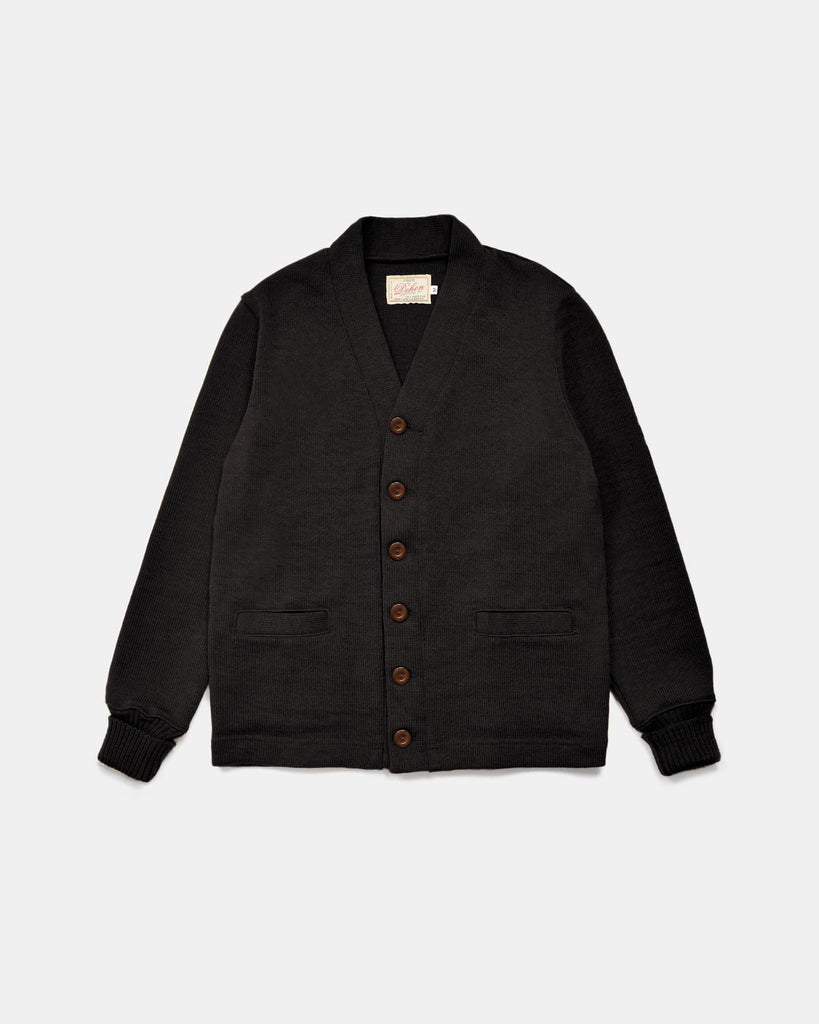
- Six custom corozo buttons
- Pockets
- Two exterior welt patch pockets
- Care
- Dry clean only
Pricing
We don't publish a price we haven't verified. The retailer links below open the live listing for this exact model.
Best for
Winter basecamp living, Drafty mountain cabins, Vehicle-based cold overland travel, Chopping firewood and yard chores
Where to buy the Classic Cardigan - Black
We don't have a direct Amazon listing on file yet — this opens an Amazon search for the exact make and model.
Some links are affiliate links. Buying through them supports our testing at no extra cost to you.
Calling this piece a sweater is technically accurate, but functionally misleading. Built in Portland, Oregon, on vintage knitting machines that date back to the 1940s, this heavyweight cardigan acts far closer to an outerwear chore jacket than a standard knit midlayer. It uses substantial four-end worsted wool, creating an extraordinarily dense fabric that resists abrasion, repels light precipitation, and cuts through bitter canyon winds. While modern outdoor apparel prioritizes ultralight packability and synthetic stretch, this heritage piece takes the opposite stance. It embraces sheer physical mass to achieve thermal efficiency. The tight gauge prevents snagging on briars or rough cordwood, and the classic buttoned front gives you simple mechanical ventilation when you are working up heat splitting kindling or setting up wall tents. It takes the tenth spot on our roster because you will never stuff it into an ultralight trekking pack. It is simply too heavy and structured for high-mileage human-powered travel. Instead, it earns its ranking as an indestructible heirloom piece for life around basecamp, drafty mountain cabins, and cold tailgate mornings where bombproof natural fibers outshine technical synthetics.
Materials and Old-World Looming
The foundation of this garment is worsted wool, spun from long-staple fibers that have been combed straight before twisting. This process strips away short, fuzzy filaments, yielding a smooth, tough yarn with immense tensile strength. Knit on antique flatbed machines, the four-end construction creates a slab of material that stands up on its own. Unlike loosely spun lambswool or airy Shetland yarns that pill within a season, this surface remains tight and uniform even under heavy friction from pack straps or firewood. The pocket bags are integrated seamlessly, the collar lays flat without flopping, and the buttonholes are heavily reinforced to prevent stretching over decades of constant use.
Field Warmth and Weather Defense
In freezing, dry conditions, this knit traps a reliable microclimate of dead air close to your core, especially when layered over a flannel or thermal henley. Because the knit tension is remarkably tight, moderate breezes bounce off the exterior rather than cutting through the ribs as they do on traditional cable knits. Wool also retains its insulating properties when exposed to sleet or wet snow, absorbing up to thirty percent of its weight in moisture before feeling clammy. The open V-neck naturally dumps heat when you are active, while the sturdy fold-back cuffs can be extended down over your knuckles to fend off early morning frost.
Weight and Bulk Realities
Honesty demands recognizing that this is among the heaviest garments you could carry into the woods. It weighs several pounds and rolls up to roughly the size of a three-season sleeping bag. Trying to squeeze it into a multi-day backpack is an exercise in futility, and doing so would waste precious volume better reserved for shelter and food. This garment belongs on your shoulders, draped over the back of a truck bench, or hung from a timber peg near the woodstove. It is designed for stationary warmth and rugged work environments where durability and spark resistance matter far more than shaving ounces off your base weight.
Generational Wear Life
Most modern fleece and technical wool hybrids rely on elastic binding, synthetic laminates, and lightweight zippers that inevitably degrade after a few seasons of hard use. This piece contains none of those failure points. The corozo nut buttons are stitched directly into fortified plackets, and the wool yarn resists catching stray sparks from an evening campfire. Friction areas like the forearms and cuffs break in rather than blow out, slowly conforming to the shape of your arms over years of chores. With sensible storage away from moths during the summer months, this is genuinely an item you will pass down to your children intact.
The Competitive Landscape
At this premium price tier, your alternatives are traditional Norwegian ski sweaters from Dale of Norway or dense boiled-wool jackets from European alpine makers. While an oiled maritime sweater from Devold provides raw nautical weatherproofing, it lacks the easy-on, easy-off utility of a full-button cardigan. Similarly, a Filson wool vest or mackinaw cruiser offers comparable durability in woven wool, but cannot match the natural ergonomic stretch of a four-end knit. This design bridges the gap between a tailored heritage work jacket and a traditional sporting sweater, offering a unique silhouette that performs equally well on timber properties or in cold coastal workshops.
The Daily Trade-Offs
Acquiring a garment of this caliber comes with distinct compromises. First is skin comfort: worsted wool is rugged and robust, not buttery soft, so wearing it over bare skin or short sleeves will cause noticeable itching for sensitive individuals. It demands a collared shirt or long-sleeve base layer beneath it. Cleaning is another hurdle, as it cannot simply be tossed into a camp wash basin or home washing machine without risking severe shrinkage. Finally, the initial stiffness takes a few dozen wearings to soften, meaning it feels more like structural armor than a cozy loungewear piece straight out of the box.
How we chose
We compared widely available outdoor wool sweaters using maker specifications, retailer listings and published reviews, then ranked 10 against the same criteria below. This is desk research unless a pick is marked field tested. Rankings are editorial. No brand pays for placement, and affiliate links never move a pick up or down.
- Real-world durability
- How the material, stitching, or steel holds up after a season of hard use — not how it looks new.
- Performance in bad conditions
- Wind, rain, cold, and grit are the test. Anything that only works on a nice day gets marked down.
- Weight and packability
- Every ounce has to earn its place in the pack, but not at the cost of something that fails in the field.
- Ease of use
- Setup, adjustment, and maintenance with cold hands, in the dark, without the manual.
- Value at its price point
- Compared against the closest competitors in the same tier, not against cheaper gear in a different class.
- Repairability and support
- Field-fixable design, available parts, and a warranty the maker actually honors.
Classic Cardigan - Black — frequently asked questions
- Is the Classic Cardigan - Black worth it?
- We rank it #10 in Outdoor Wool Sweaters. Best heirloom heavyweight
- What is the Classic Cardigan - Black best for?
- Best for winter basecamp living, drafty mountain cabins, vehicle-based cold overland travel and chopping firewood and yard chores. Standouts: dense four-end knit blocks wind far better than standard knitwear and worsted wool fibers resist pilling, abrasion, and camp sparks.
- What are the downsides of the Classic Cardigan - Black?
- Far too bulky and heavy for human-powered backcountry packing, Coarse exterior requires a long-sleeve underlayer to prevent itching and Substantial price tag represents a major financial commitment.
- What are the key specs of the Classic Cardigan - Black?
- Material: 100% Worsted wool · Fabric Weight: Substantial four-end heavy knit · Origin: Made in Portland, Oregon, USA · Closure: Six custom corozo buttons · Pockets: Two exterior welt patch pockets
- Materials and Old-World Looming — what should I know about the Classic Cardigan - Black?
- The foundation of this garment is worsted wool, spun from long-staple fibers that have been combed straight before twisting. This process strips away short, fuzzy filaments, yielding a smooth, tough yarn with immense tensile strength.
- Field Warmth and Weather Defense — what should I know about the Classic Cardigan - Black?
- In freezing, dry conditions, this knit traps a reliable microclimate of dead air close to your core, especially when layered over a flannel or thermal henley. Because the knit tension is remarkably tight, moderate breezes bounce off the exterior rather than cutting through the ribs as they do on traditional cable…
Compare side by side
Put the Classic Cardigan - Black against any other pick on this list — specs, price, pros, cons and reader ratings.