


Reader rating
Rate it and you move it. Community ratings re-rank this product inside its Top 10 list.
Expert-picked, reader-ranked. Our editors choose the products and the launch order; member star ratings move picks up or down over time.
Best simple field sweater
Pros
- Dense pure merino knit provides immense thermal retention without coarse itch
- Naturally spark and ember resistant for worry-free campfire cooking
- Resists game and body odors over weeks of continuous backcountry use
- Long torso and sleeves stay tucked and covered during physical labor
Cons
- Substantial bulk makes it impractical for small-volume pack systems
- Zero wind resistance requires carrying a dedicated shell layer
- Slow drying times compared to modern synthetic fleece midlayers
Best uses
- Sub-freezing winter bushcraft
- Stationary cold-weather hunting
- Autumn basecamp chores
- Off-grid cabin maintenance
Specifications
- Material
- 100% mulesing-free merino wool
- Knit Type
- Medium-to-heavy gauge ribbed knit
- Fit Profile
- Regular field cut with long torso and arms
- Origin
- Designed in Finland, manufactured in the EU
- Care
- Hand wash or gentle wool cycle; dry flat
Pricing
We don't publish a price we haven't verified. The retailer links below open the live listing for this exact model.
Best for
Sub-freezing winter bushcraft, Stationary cold-weather hunting, Autumn basecamp chores, Off-grid cabin maintenance
Where to buy the Merino Wool Sweater
We don't have a direct Amazon listing on file yet — this opens an Amazon search for the exact make and model.
Some links are affiliate links. Buying through them supports our testing at no extra cost to you.
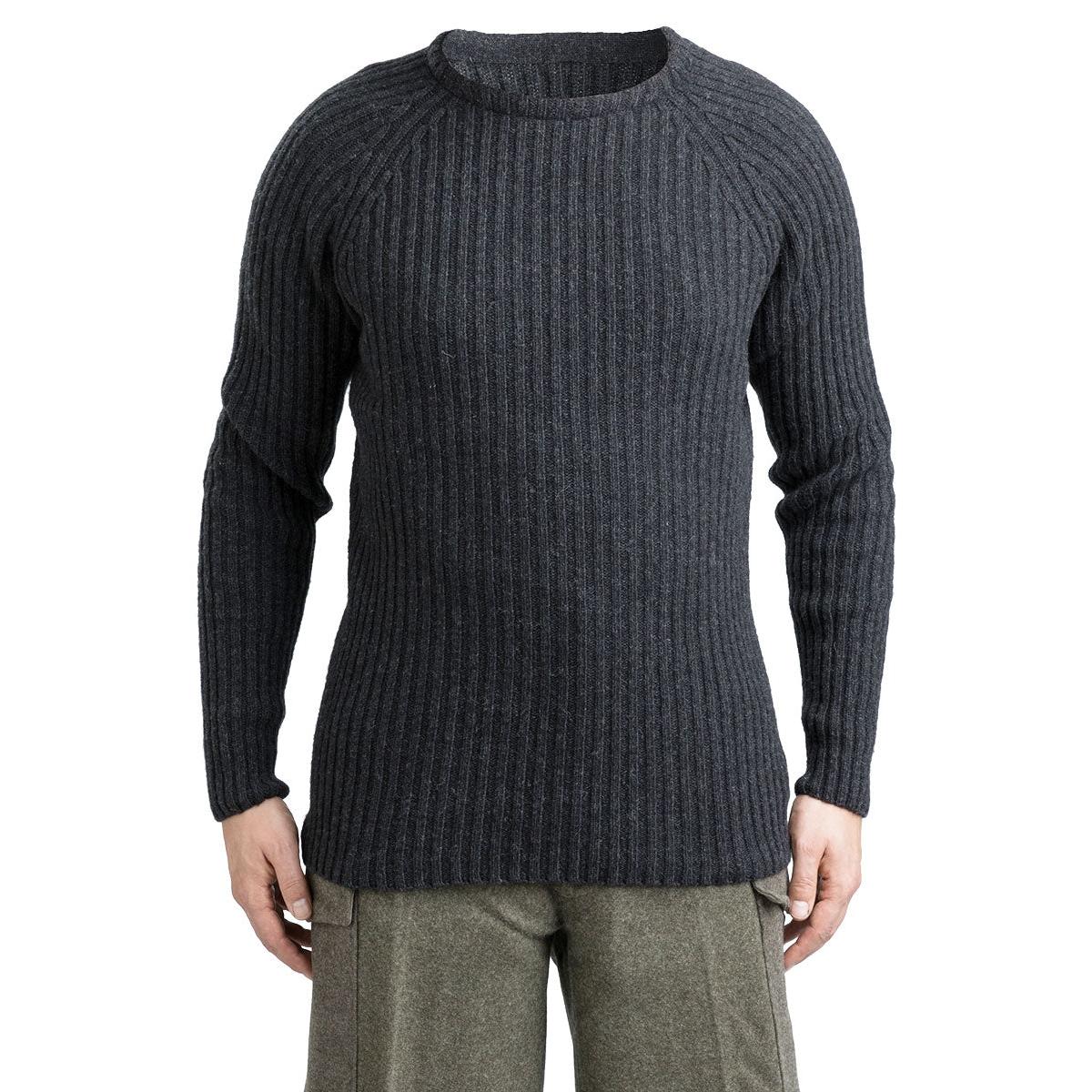
Finnish outfitter Varusteleka avoids the lifestyle markup that plagues modern outdoor apparel, and their Särmä Merino Wool Sweater reflects that utilitarian ethos. Modeled loosely on classic European military field pullovers, this garment provides thermal heft without decorative distractions. It cuts out the leather elbow patches, gaudy zipper pulls, and fragile vanity yarns in favor of dense, unadulterated wool designed to absorb the punishment of cold backcountry work. Built primarily as a hard-wearing midlayer, the sweater excels in sub-freezing woods where synthetic fleeces melt against floating campfire embers. It fits comfortably over a thin base layer and under an unlined canvas smock or shell jacket, providing massive dead-air retention. The substantial knit yields a reassuring heft on the shoulders, trading ultralight compressibility for steadfast durability and silent movement through scrub and timber.
Materials and Construction
The construction centers on pure, long-staple merino wool yarn knit into an elastic, substantial rib. Unlike cheaper wool blends that dilute the fiber with acrylic to reduce manufacturing costs, this sweater relies entirely on natural wool fibers to deliver its structural elasticity and warmth. The crew collar, hem, and cuffs utilize a tighter ribbing that holds its shape against wrists and waistlines rather than stretching out after a few days in the woods. Flat, reinforced shoulder and neck seams prevent hot spots beneath heavy pack harness straps. The wool possesses enough natural lanolin and density to maintain structural integrity, avoiding the delicate, snag-prone nature of fine-gauge baselayers while bypassing the prickly stiffness associated with untreated Shetland or raw military-surplus wool.
Real-World Thermal Performance
In freezing conditions, the open-yet-dense knit acts as a high-capacity heat sink. Worn as a standalone outer garment on calm, crisp days, it lets moisture vapor exhaust immediately during uphill ascents or axe work, preventing the clammy sweat accumulation common to nylon-faced synthetics. When a breeze picks up, pairing it with a windproof canvas shell or breathable anorak instantly traps body heat in the knit's deep air pockets. Even after sustained exposure to sleet or heavy perspiration, the wool fiber continues to insulate by generating a modest amount of sorption heat as it takes on moisture. It will not dry as fast as polyester fleece if thoroughly soaked, but it preserves core body temperature far more effectively when damp.
Packability and Bulk
This is deliberately not an ultralight piece designed to be compressed into a microscopic stuff sack. The sweater has genuine physical mass and occupies noticeable volume inside a rucksack, rivaling the packed size of a three-season synthetic sleeping bag. For fast-and-light thru-hiking where every liter and ounce is scrutinized, it is the wrong tool. Instead, this garment is designed for users who put it on at the trailhead in late autumn and keep it on until the trip ends, eliminating the need to pack it away. If your itinerary involves frequent transitions between high-output movement and sedentary resting in sub-zero weather, the space it demands in a rucksack is offset by its sheer reliability across erratic temperatures.
Durability in the Bush
Field durability is where this sweater justifies its inclusion over fragile consumer-grade knitwear. The dense ribbing resists surface abrasion from rough cordura packs, shotgun slings, and abrasive hemlock branches. It will not tear easily when dragged past deadfall, and minor snags tend to work themselves back into the elastic knit rather than developing into structural runs. Most crucially for woodcraft practitioners, it is inherently spark-resistant. Sitting tight against a spitting pine fire, stray embers simply smolder harmlessly on the wool surface without burning large holes or fusing into skin the way fleece or nylon down shells do. With minimal hand-washing and periodic airing out, it withstands years of abrasive seasonal service.
Field Alternatives and Trade-Offs
Compared to traditional Scandinavian options like the Devold Nansen, this sweater features a softer next-to-skin feel thanks to its merino grading, avoiding the scratchiness of coarse Norwegian wool. Against military surplus commando pullovers, it lacks sewn-on cloth reinforcement patches but offers superior stretch and a cut that does not ride up your back when you bend over. The primary trade-off is its absolute lack of wind resistance; moving air cuts straight through the knit if it is worn without an outer layer. Additionally, saturated wool carries considerable water weight and requires patient, horizontal air-drying away from direct heat to prevent shrinking or misshaping the garment.
How we chose
We compared widely available outdoor wool sweaters using maker specifications, retailer listings and published reviews, then ranked 10 against the same criteria below. This is desk research unless a pick is marked field tested. Rankings are editorial. No brand pays for placement, and affiliate links never move a pick up or down.
- Real-world durability
- How the material, stitching, or steel holds up after a season of hard use — not how it looks new.
- Performance in bad conditions
- Wind, rain, cold, and grit are the test. Anything that only works on a nice day gets marked down.
- Weight and packability
- Every ounce has to earn its place in the pack, but not at the cost of something that fails in the field.
- Ease of use
- Setup, adjustment, and maintenance with cold hands, in the dark, without the manual.
- Value at its price point
- Compared against the closest competitors in the same tier, not against cheaper gear in a different class.
- Repairability and support
- Field-fixable design, available parts, and a warranty the maker actually honors.
Merino Wool Sweater — frequently asked questions
- Is the Merino Wool Sweater worth it?
- We rank it #5 in Outdoor Wool Sweaters. Best simple field sweater
- What is the Merino Wool Sweater best for?
- Best for sub-freezing winter bushcraft, stationary cold-weather hunting, autumn basecamp chores and off-grid cabin maintenance. Standouts: dense pure merino knit provides immense thermal retention without coarse itch and naturally spark and ember resistant for worry-free campfire cooking.
- What are the downsides of the Merino Wool Sweater?
- Substantial bulk makes it impractical for small-volume pack systems, Zero wind resistance requires carrying a dedicated shell layer and Slow drying times compared to modern synthetic fleece midlayers.
- What are the key specs of the Merino Wool Sweater?
- Material: 100% mulesing-free merino wool · Knit Type: Medium-to-heavy gauge ribbed knit · Fit Profile: Regular field cut with long torso and arms · Origin: Designed in Finland, manufactured in the EU · Care: Hand wash or gentle wool cycle; dry flat
- Materials and Construction — what should I know about the Merino Wool Sweater?
- The construction centers on pure, long-staple merino wool yarn knit into an elastic, substantial rib. Unlike cheaper wool blends that dilute the fiber with acrylic to reduce manufacturing costs, this sweater relies entirely on natural wool fibers to deliver its structural elasticity and warmth.
- Real-World Thermal Performance — what should I know about the Merino Wool Sweater?
- In freezing conditions, the open-yet-dense knit acts as a high-capacity heat sink. Worn as a standalone outer garment on calm, crisp days, it lets moisture vapor exhaust immediately during uphill ascents or axe work, preventing the clammy sweat accumulation common to nylon-faced synthetics.
Compare side by side
Put the Merino Wool Sweater against any other pick on this list — specs, price, pros, cons and reader ratings.