


Reader rating
Rate it and you move it. Community ratings re-rank this product inside its Top 10 list.
Expert-picked, reader-ranked. Our editors choose the products and the launch order; member star ratings move picks up or down over time.
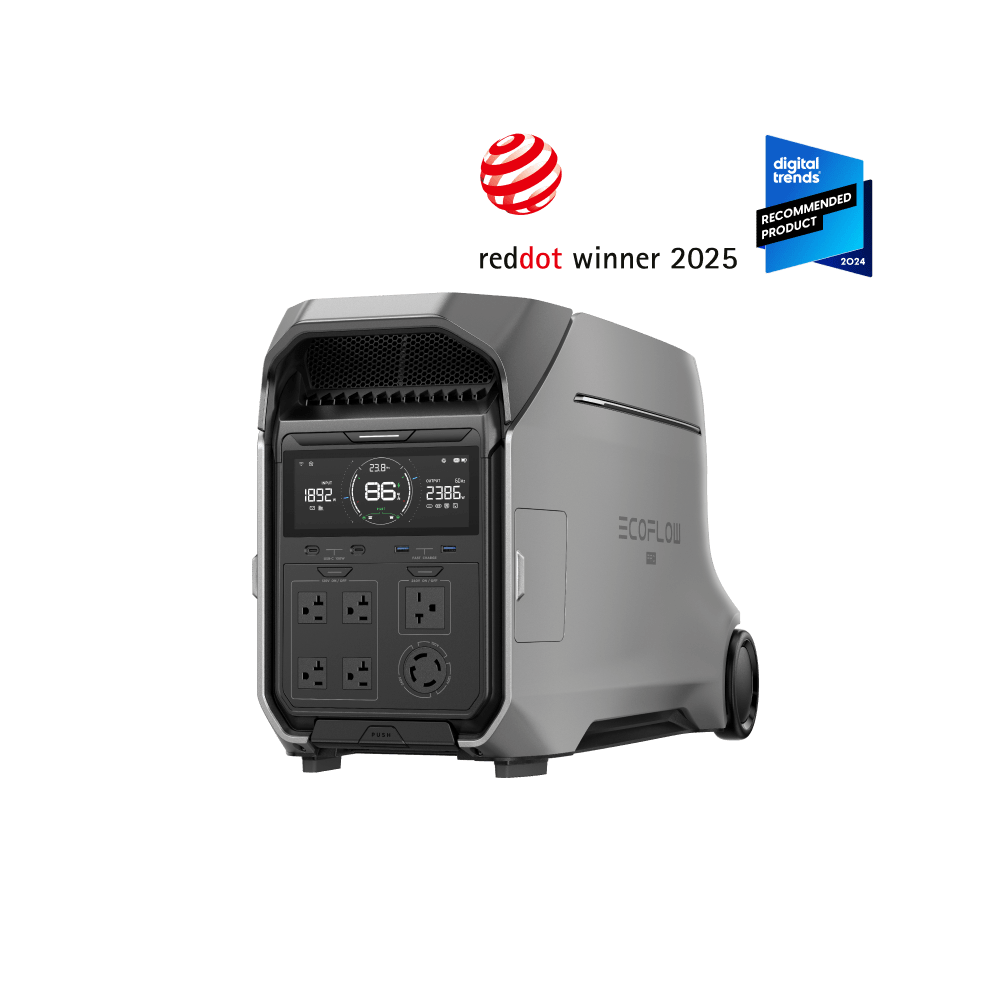
The EcoFlow DELTA Pro 3 is not an everyday tent-camping battery; it is an industrial-grade basecamp powerhouse built for wall tents, overland rigs, off-grid cabins, and mobile expedition trailers. Packing a massive 4,096Wh LiFePO4 battery and a 4,000-watt AC inverter, it can run an entire multi-person camp simultaneously. It will power air conditioners, large RV refrigerators, induction cooktops, and high-draw shop tools without strain, operating more like a portable microgrid than a camp accessory. In field applications, runtime measurements shift from hours to days or weeks. A standard 12V overland compressor fridge can run for more than a week straight off this unit without any solar input. CPAP machines, even with full humidification and heated tubing turned to max, can run for over a week without needing a recharge. Charging capabilities are equally extreme: it accepts high-wattage solar arrays, plugs into standard RV hookup pedestals, and can even charge at Level 2 EV charging stations with an optional adapter. The obvious constraint is sheer physical mass. Weighing roughly 114 pounds, it is not a unit you hike away from your vehicle. EcoFlow integrated heavy-duty luggage-style rear wheels and a telescoping handle to help roll it across packed dirt, but lifting it into a lifted truck bed demands two capable adults. For users needing massive, quiet power without hauling a noisy gas generator, however, the Pro 3 is unmatched. **Highlights** - Massive 4,096Wh LiFePO4 capacity supports extended multi-day basecamps - Tremendous 4,000W AC output runs virtually any home or RV appliance - Integrated wheels and pull handle ease transport over level terrain - Supports multiple charging sources including solar, wall, and EV stations - Whisper-quiet operation relative to its enormous inverter capacity **Watch-outs** - Enormous 114-pound weight makes vehicle loading a strict two-person job - Physical dimensions consume substantial rear cargo and bed space
Pros
- Massive 4,096Wh capacity sustains heavy multi-day basecamp power demands
- 4,000W continuous output effortlessly runs induction stoves and RV AC units
- Dual solar ports accept up to 2,600W for remarkably fast off-grid charging
- LiFePO4 battery chemistry offers over 4,000 cycles to 80% health
Cons
- Weighs nearly 114 pounds, demanding two people for vehicle loading
- Substantial external dimensions take up major cargo space in truck beds
- Higher idle inverter draw requires mindful power management when dormant
Best uses
- Remote wall tent basecamps
- Off-grid expedition trailers
- Camper van electrical setups
- Emergency home backup power
Specifications
- Battery Chemistry
- LiFePO4 (4,000+ cycles to 80% capacity)
- Total Capacity
- 4,096 Wh
- Continuous Output
- 4,000W (Surge 8,000W, 120V/240V split-phase)
- Total Weight
- 113.5 lbs (51.5 kg)
- Max Solar Input
- 2,600W (Dual ports: 1,600W high-PV + 1,000W low-PV)
- AC Recharge Time
- Roughly 1.5 to 2 hours from wall outlet
Pricing
We don't publish a price we haven't verified. The retailer links below open the live listing for this exact model.
Full catalog listing & offersBest for
Remote wall tent basecamps, Off-grid expedition trailers, Camper van electrical setups, Emergency home backup power
Where to buy the DELTA Pro 3
Prices and stock change often, so check the current Amazon offer before you buy.
Some links are affiliate links. Buying through them supports our testing at no extra cost to you.
The EcoFlow DELTA Pro 3 is not built for throwing into the trunk of a hatchback for a casual overnight at a state park. With a massive 4,096-watt-hour capacity and a 4,000-watt continuous inverter, this unit functions more like an emission-free mobile microgrid than a camp accessory. It is engineered specifically for hunting camps, overland trailers, wall tents, and mobile workshops where high-wattage power needs must be met far beyond the reach of standard utility hookups. At the center of the unit is a durable lithium iron phosphate (LiFePO4) battery pack capable of enduring thousands of harsh charge cycles. In remote basecamp environments, the Pro 3 bridges the gap between traditional noisy fuel generators and whisper-quiet battery banks. It can power high-draw induction cooktops, heavy power tools, and roof-mounted camper air conditioning units without breaking a sweat, all while remaining quiet enough to sit inside an enclosed living space.
Chassis and Portability Realities
EcoFlow constructed the DELTA Pro 3 with high-impact polymer and internal bracing designed to withstand rough transit. It features a rugged rear axle with wide, luggage-style rolling wheels and a telescoping handle. Pulling the 114-pound unit across hard-packed dirt, gravel roads, or flat pavement is straightforward, but loose scree and soft sand will halt the wheels immediately. Loading and unloading from a truck bed or trailer tailgate is strictly a two-person operation using the molded side handles. There is no getting around the sheer mass of this unit, and it demands dedicated floor space in an overland build. The chassis includes well-protected port covers and rubberized bumper zones, helping it survive shifting gear in transit and dusty outdoor conditions.
Pure Inverter Muscle
The 4,000-watt pure sine wave inverter is what separates this unit from smaller 2,000-watt camping boxes. It delivers clean 120-volt and native 240-volt split-phase power, which means it can drive high-draw appliances that normally choke portable power stations. In camp setups, you can run an electric water kettle, a 1,800-watt induction cooktop, and an air compressor simultaneously without tripping the internal breakers. The built-in 30-amp RV receptacle allows camper van and travel trailer owners to plug their rig directly into the unit without cumbersome dogbone adapters. Surge capacity tops out at 8,000 watts, providing plenty of headroom for starting inductive electric motors on refrigeration compressors and air conditioners without inverter sag or voltage drop.
Measured Field Runtimes
When running typical camp appliances, runtime numbers shift from standard hours into days and weeks. A standard 12-volt dual-zone overland compressor fridge pulling around 45 watts intermittently will run for more than ten days straight on a single charge without any solar replenishment. For medical needs, a CPAP machine running without heated humidification can easily operate for two to three weeks every night. Even when running full heated tubing and high moisture levels at 60 watts average draw, the Pro 3 delivers roughly 50 to 60 hours of continuous runtime. Parasitic idle drain from the massive inverter is higher than on smaller units, so switching the AC circuit off when not actively using wall plugs is essential.
High-Capacity Solar Harvesting
Recharging a 4,096-watt-hour battery pack can be an agonizing chore unless the input architecture supports serious wattage. EcoFlow resolved this bottleneck by implementing dual solar inputs that accept a combined 2,600 watts of photovoltaic power. One high-voltage port accepts up to 1,600 watts (30-150V, 15A), while a second port accepts up to 1,000 watts (11-60V, 20A). In bright sunlight with a matched array, the unit can be fully replenished from zero in under three hours. In addition to standard solar and grid charging, it can recharge via Level 2 EV charging stations with an optional adapter, making roadside top-offs during transit remarkably fast compared to standard 12-volt car cigarette lighter charging.
Thermal Control and Noise
High-wattage inverters typically suffer from loud, high-pitched cooling fans that ruin quiet camp environments. The Pro 3 utilizes EcoFlow's X-Quiet thermal architecture, which relies on larger, slower-spinning cooling fans and optimized internal ducting. When drawing moderate loads under 2,000 watts, the unit operates around 30 to 35 decibels, which registers as a soft, unobtrusive hum barely audible outside a wall tent. Under maximum 4,000-watt output or during rapid AC wall charging, the fans ramp up considerably to vent heat from the battery core, but the sound remains a low-frequency rush of air rather than a harsh whine. Thermal protection firmware holds up reliably even in direct ambient heat exceeding 95 degrees Fahrenheit.
Price and Practical Alternatives
The DELTA Pro 3 sits in an elite price bracket, putting it toe-to-toe with competitors like the Anker SOLIX F3800 and the older EcoFlow DELTA Pro. The Anker matches the high capacity and offers 120V/240V output, but the DELTA Pro 3 edges it out in solar input flexibility and low-noise fan management. Compared to sub-2,000Wh options like the Jackery 2000 Plus, the Pro 3 provides double the usable energy and significantly more inverter output, but at twice the physical weight. For car campers simply charging phones, drones, and a 12-volt cooler, this unit is complete overkill. But for extended off-grid expeditions requiring continuous heavy power without the maintenance of a gas engine, it is worth the investment.
How we picked
We started with a long list of portable power stations that people actually buy, cut anything that could not clear our baseline for durability and field performance, then ranked the 10 that were left against the same criteria. Rankings are editorial. No brand pays for placement, and affiliate links never move a pick up or down.
- Real-world durability
- How the material, stitching, or steel holds up after a season of hard use — not how it looks new.
- Performance in bad conditions
- Wind, rain, cold, and grit are the test. Anything that only works on a nice day gets marked down.
- Weight and packability
- Every ounce has to earn its place in the pack, but not at the cost of something that fails in the field.
- Ease of use
- Setup, adjustment, and maintenance with cold hands, in the dark, without the manual.
- Value at its price point
- Compared against the closest competitors in the same tier, not against cheaper gear in a different class.
- Repairability and support
- Field-fixable design, available parts, and a warranty the maker actually honors.
DELTA Pro 3 — frequently asked questions
- Is the DELTA Pro 3 worth it?
- We rank it #8 in Portable Power Stations. The EcoFlow DELTA Pro 3 is not an everyday tent-camping battery; it is an industrial-grade basecamp powerhouse built for wall tents, overland rigs, off-grid cabins, and mobile expedition trailers. Packing a massive 4,096Wh LiFePO4 battery and a 4,000-watt AC inverter, it can run an entire multi-person camp…
- What is the DELTA Pro 3 best for?
- Best for remote wall tent basecamps, off-grid expedition trailers, camper van electrical setups and emergency home backup power. Standouts: massive 4,096wh capacity sustains heavy multi-day basecamp power demands and 4,000w continuous output effortlessly runs induction stoves and rv ac units.
- What are the downsides of the DELTA Pro 3?
- Weighs nearly 114 pounds, demanding two people for vehicle loading, Substantial external dimensions take up major cargo space in truck beds and Higher idle inverter draw requires mindful power management when dormant.
- What are the key specs of the DELTA Pro 3?
- Battery Chemistry: LiFePO4 (4,000+ cycles to 80% capacity) · Total Capacity: 4,096 Wh · Continuous Output: 4,000W (Surge 8,000W, 120V/240V split-phase) · Total Weight: 113.5 lbs (51.5 kg) · Max Solar Input: 2,600W (Dual ports: 1,600W high-PV + 1,000W low-PV)
- Chassis and Portability Realities — what should I know about the DELTA Pro 3?
- EcoFlow constructed the DELTA Pro 3 with high-impact polymer and internal bracing designed to withstand rough transit. It features a rugged rear axle with wide, luggage-style rolling wheels and a telescoping handle.
- Pure Inverter Muscle — what should I know about the DELTA Pro 3?
- The 4,000-watt pure sine wave inverter is what separates this unit from smaller 2,000-watt camping boxes. It delivers clean 120-volt and native 240-volt split-phase power, which means it can drive high-draw appliances that normally choke portable power stations.
Compare side by side
Put the DELTA Pro 3 against any other pick on this list — specs, price, pros, cons and reader ratings.