


DELTA 3 Plus vs Explorer 1000 v2
Our #1 and #2 picks from The 10 Best Portable Power Stations for Camping, compared spec-by-spec with clear pros, cons, and a verdict.
The 1kWh capacity class represents the undisputed sweet spot in portable power, balancing real-world off-grid utility against manageable trunk space. In this high-stakes showdown, EcoFlow’s DELTA 3 Plus squares off against Jackery’s overhauled Explorer 1000 v2. Both power stations transition to durable Lithium Iron Phosphate (LiFePO4) chemistry, ensuring thousands of lifecycle recharges, but they target divergent outdoor philosophies. The EcoFlow DELTA 3 Plus doubles down on high-output performance, featuring blistering AC recharge rates, generous dual-solar input configurations, and a seamless 10ms UPS switchover for sensitive electronics. Conversely, Jackery’s Explorer 1000 v2 is an exercise in minimalist optimization, packing 1070Wh into a lighter, remarkably compact chassis equipped with a space-saving folding handle. Deciding between them comes down to whether your mobile setup demands high-draw appliance muscle and rapid-fire replenishment, or a rugged, whisper-quiet grab-and-go battery that slips effortlessly under camper van bed platforms without sapping your payload capacity.
DELTA 3 Plus
EcoFlow
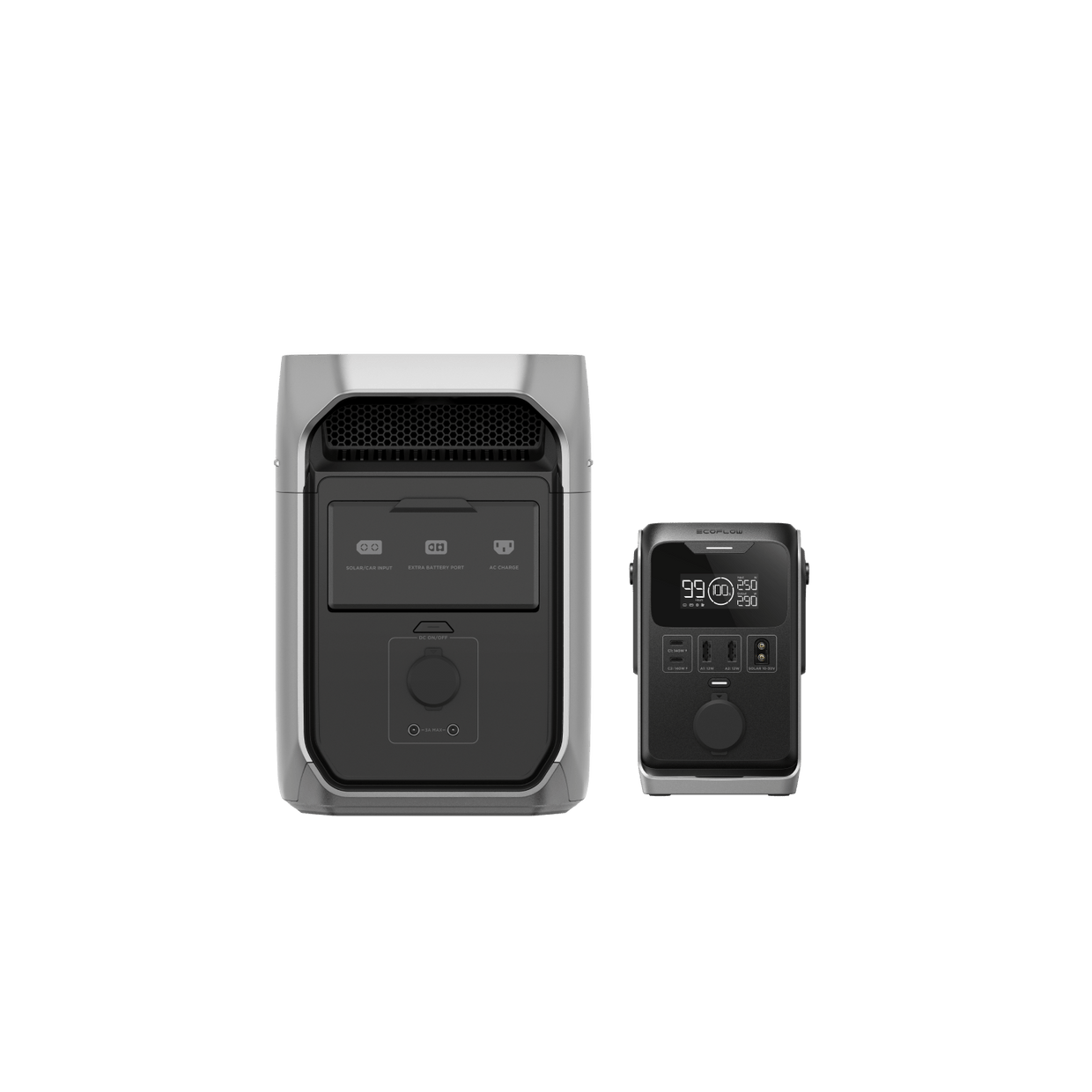
The EcoFlow DELTA 3 Plus sets the current standard for the competitive one-kilowatt-hour class. Built around durable LiFePO4 battery chemistry, it strikes the best balance of fast wall recharging, heavy inverter output, and manageable exterior dimensions for car campers and overland rigs. Its pure sine-wave inverter easily shoulders demanding basecamp draws like electric skillets, coffee makers, and power tools without tripping circuit breakers. In the field, usable capacity reliably runs a typical 12-volt compressor camping fridge for two to three days without supplemental solar input. For medical gear, it easily delivers multiple nights of CPAP use, even when running heated tubing. EcoFlow continues to lead the industry in recharge speed; plugging into a standard wall outlet before a weekend trip tops off the pack from empty in around an hour, while the solar charge controller handles high-wattage panel arrays efficiently under direct sun. The build feels dense and robust, with recessed carry handles integrated into the outer shell that make stowing it in a packed trunk straightforward. The companion app offers deep control over charging speeds and output ports, though the display screen alone gives you the necessary watt-hour telemetry at a glance. The main compromise comes down to thermal management: under full-tilt fast charging or heavy AC loads, internal cooling fans kick in aggressively and can be noisy in an otherwise quiet campsite. **Highlights** - Durable LiFePO4 chemistry rated for years of regular cycling - High-output pure sine wave inverter handles high-draw heating appliances - Category-leading AC wall recharge speeds get you packed quickly - Robust solar input compatible with portable and roof-mounted panels - Clean digital display showing real-time input, output, and run times **Watch-outs** - Internal cooling fans are loud under peak loads and fast charging - At roughly 27 pounds, it is strictly for vehicle-supported outings
Find it on AmazonExplorer 1000 v2
Jackery

Jackery modernized its workhorse camp station by upgrading the Explorer 1000 v2 to long-life LiFePO4 cells, addressing the lifespan shortcomings of the original version. The redesign retains Jackery's trademark approachable ergonomics, featuring a folding carry handle that collapses completely flat for easier stacking in the back of an SUV. It is aimed squarely at traditional car campers who want dependable plug-and-play power without a steep technical learning curve. With just over 1,000 watt-hours on tap, this unit is an exceptional partner for a camp kitchen. It will easily run a 45-liter 12V fridge for a long weekend while keeping phones, lanterns, and GPS units topped off via front-facing USB-C ports. For CPAP users, running off the regulated 12-volt DC port avoids inverter conversion losses and delivers three to four full nights of humidification-free sleep. Jackery has also improved internal inverter capacity, allowing it to drive medium-draw camp appliances like immersion heaters and blenders. Recharge speeds from a home outlet are drastically faster than the original generation, turning this into a battery you can charge up on Friday afternoon while loading gear. Solar input is competent, though it utilizes proprietary DC connectors that often require adapters if you are not using Jackery's own SolarSaga panels. Fan noise is better controlled than on previous iterations, making it one of the quieter mid-sized stations to keep inside an enclosed camper or vehicle. **Highlights** - Upgraded LiFePO4 battery pack built for thousands of charge cycles - Folding handle design stows flat beneath other camp gear - Straightforward, high-contrast display with physical port toggles - High-wattage USB-C ports eliminate the need for wall bricks - Noticeably quieter cooling fan profile during moderate discharge **Watch-outs** - Solar input uses proprietary DC inputs requiring brand-specific adapters - Car 12V charging is slow, taking a full day of driving to replenish from flat
Find it on AmazonSpec-by-Spec
| Spec | #1 DELTA 3 Plus | #2 Explorer 1000 v2 |
|---|---|---|
| Weight | 27.5 lbs (12.5 kg) | 23.8 lbs (10.8 kg) |
| Capacity/Size | 1024Wh (15.7 x 8.3 x 11.0 in) | 1070Wh (13.0 x 8.7 x 9.8 in) |
| Materials | Flame-retardant ABS/polycarbonate shell | UL 94V-0 rated fireproof PC/ABS chassis |
| Price tier | Mid-range ($799 - $899) | Mid-range ($799) |
| Warranty | 5 years | 5 years (3 years + 2-year registration) |
| Best use | Basecamps, high-draw power tools, and home emergency UPS backup | Overlanding, vehicle camping, and remote fieldwork |
| Portability | Dual fixed molded carry handles; wider footprint | Recessed folding handle; tight, packable dimensions |
| Durability | Impact-resistant exterior with IP65-rated battery protection | Shock-resistant internal architecture with reinforced corners |
| Feature highlights | 1800W output, 1000W solar input, 10ms UPS mode, expandable capacity | 1500W output, 400W solar input, 100W USB-C PD, whisper-quiet operation |
DELTA 3 Plus
Best for: Power users needing high wattage, rapid solar recovery, and home backup versatility.
Pros
- Massive 1000W maximum solar intake allows rapid off-grid recharges.
- Certified 10ms UPS failover protects sensitive electronics and medical gear.
- Higher 1800W continuous output handles demanding heating appliances.
- Battery capacity can be doubled via modular EcoFlow extra batteries.
Cons
- Heavier build with fixed handles that take up valuable cargo volume.
- Cooling fans are noticeably loud during maximum input/output cycles.
Explorer 1000 v2
Best for: Mobile camp road-trippers prioritizing lightweight packability and quiet, fuss-free reliability.
Pros
- Nearly four pounds lighter with a flush, space-saving folding handle.
- Extremely quiet cooling system ideal for enclosed camper cabins.
- Slightly larger native battery capacity at 1070Wh in a smaller box.
- Intuitive physical interface requires zero app setup to operate efficiently.
Cons
- Solar recharge input is limited to 400W, slowing down off-grid recovery.
- Output tops out at 1500W continuous, preventing expansion via add-on packs.
The Verdict
While both units offer major technological leaps over first-generation portable power, the EcoFlow DELTA 3 Plus claims the overall victory. EcoFlow simply provides greater functional headroom: its 1800W continuous inverter handles power-hungry gear without tripping, its 1000W solar capability ensures fast replenishment on overcast camp days, and its 10ms UPS certification makes it a genuine whole-house backup asset. However, Jackery's Explorer 1000 v2 cannot be discounted for mobile explorers. Its lighter frame, compact form factor, and flush folding handle make it dramatically easier to slot into packed vehicle trunks. If packability and quiet camp manners trump raw spec sheets, buy the Jackery. For maximum versatility, sheer electrical throughput, and true emergency power backup, invest in the EcoFlow DELTA 3 Plus.