


Reader rating
Rate it and you move it. Community ratings re-rank this product inside its Top 10 list.
Expert-picked, reader-ranked. Our editors choose the products and the launch order; member star ratings move picks up or down over time.
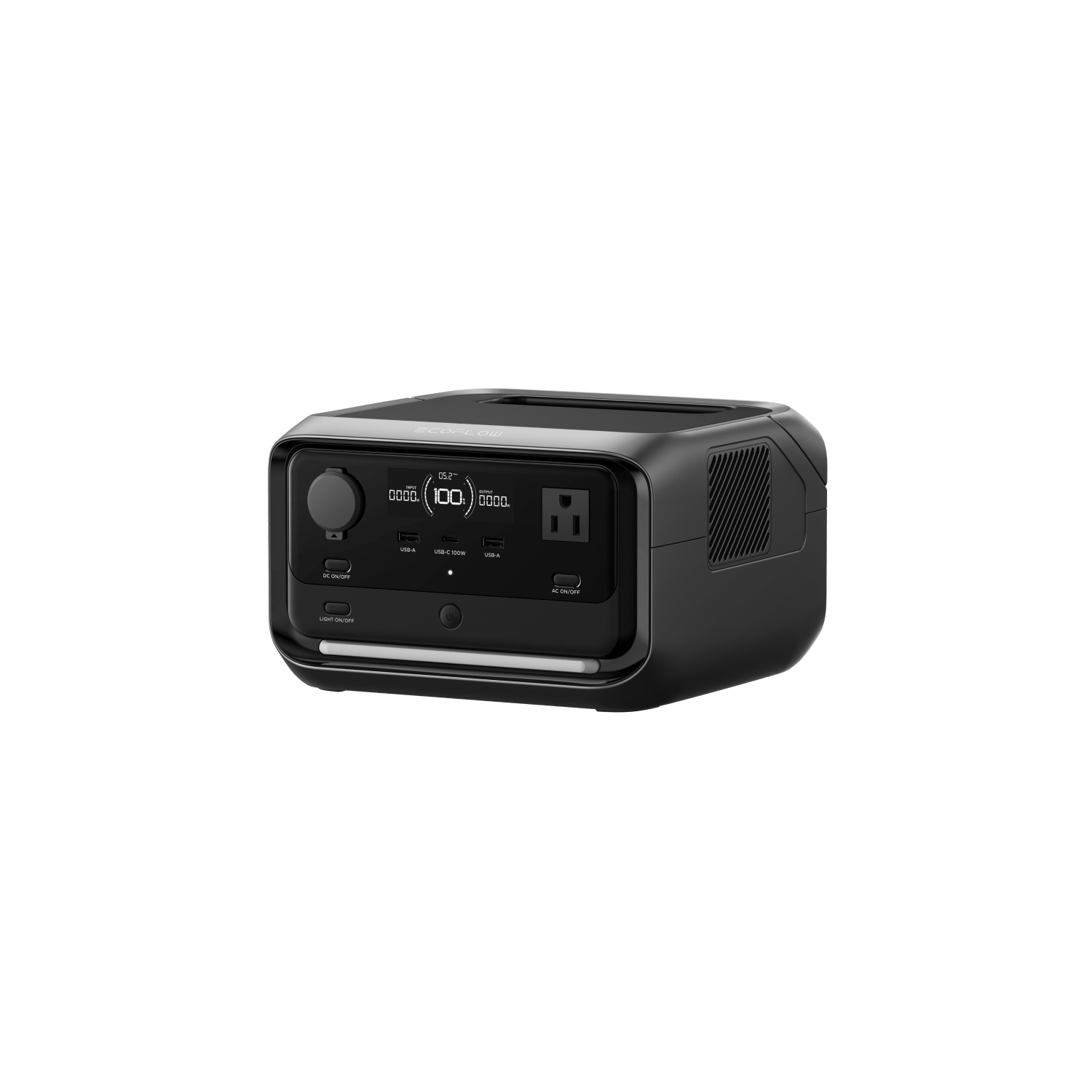
The EcoFlow RIVER 3 Plus targets campers who want modern LiFePO4 battery security without lugging a crate-sized box into the woods. Packed into a chassis roughly the size of a lunchbox, this unit offers around 286Wh of capacity—just right for weekend tent trips where your primary needs are keeping headlamps, smartphones, cameras, and drone batteries alive. It brings fast-charging technology down to a format that solo adventurers and weekend couples can easily manage. Despite its compact footprint, the RIVER 3 Plus includes an AC inverter capable of powering standard small electronics, small fans, or low-draw laptop chargers. It can run a basic 12-volt CPAP machine without supplemental heat for a full night, serving as a dependable travel backup for light medical needs. When paired with a portable folding solar panel, it tops off in a few hours of midday sun, making it viable for sustained, minimalist off-grid camping. EcoFlow's signature fast AC charging remains its standout feature: you can take it from empty to full in less than an hour from a wall outlet before heading out the door. The housing is clean and portable, featuring a built-in top handle and a crisp display showing battery percentage and load draw. Naturally, it will not power electric cooktops, space heaters, or full-sized coolers for extended periods, but for low-draw device maintenance, it cuts out dead weight. **Highlights** - Highly packable sub-10-pound chassis perfect for tent camping - Modern LiFePO4 battery architecture ensures long-term cell life - Blazing AC recharge speeds top off the unit in under 60 minutes - High-output USB-C ports charge modern laptops directly without bricks - Simple integrated handle makes carrying and loading effortless **Watch-outs** - Low watt-hour capacity will not sustain a camp fridge beyond a few hours - Limited AC inverter output trips instantly on high-draw heat appliances
Pros
- Full AC wall recharge takes roughly 60 minutes for rapid camp departures
- LiFePO4 chemistry delivers 3,000+ cycles for exceptional long-term lifespan
- Compact 10.4-pound footprint packs easily into tight vehicle trunks
- Clean 600W pure sine wave inverter powers demanding small electronics safely
Cons
- 286Wh capacity cannot sustain a 12V fridge beyond a single day without solar
- Solar charging input is capped at 110W, limiting speed in partial cloud cover
- Internal cooling fan is distinctly audible under heavy charging and high draw
Best uses
- Weekend tent camping
- Single-night DC CPAP backup
- Outdoor photography and drone ops
- Mobile vehicle device charging
Specifications
- Battery Chemistry
- LiFePO4 (3,000+ cycles to 80% capacity)
- Storage Capacity
- 286Wh
- Continuous AC Output
- 600W (1200W surge)
- Weight
- 10.4 lbs (4.7 kg)
- Wall Recharge Time
- 0 to 100% in approximately 60 minutes
- Solar Input Limit
- 110W Max (11-30V, 8A)
Pricing
We don't publish a price we haven't verified. The retailer links below open the live listing for this exact model.
Full catalog listing & offersBest for
Weekend tent camping, Single-night DC CPAP backup, Outdoor photography and drone ops, Mobile vehicle device charging
Where to buy the RIVER 3 Plus
We don't have a direct Amazon listing on file yet — this opens an Amazon search for the exact make and model.
Some links are affiliate links. Buying through them supports our testing at no extra cost to you.
Not every campsite demands a back-breaking forty-pound power station. EcoFlow built the RIVER 3 Plus specifically for campers who want the safety and cycle life of modern lithium iron phosphate without surrendering precious cargo space. Packing roughly 286 watt-hours into a lunchbox-sized housing, this unit hits the sweet spot for weekend tent campers, dispersed truck sleepers, and field photographers whose power demands center on personal electronics rather than high-amperage basecamp appliances. Moving away from older nickel manganese cobalt blends, the integrated LiFePO4 battery pack gives the RIVER 3 Plus thousands of operational cycles before noticeable capacity degradation sets in. That makes it a practical multi-year investment even if it sits in a warm garage between trips. Paired with a pure sine wave AC inverter, the unit operates cleanly with sensitive electronics, delivering steady voltage to camera chargers, laptops, and portable medical gear. Its standout operational perk remains EcoFlow's rapid AC wall recharging, which pulls a flat battery to full in roughly an hour before you hit the road. While you must accept the hard reality of a sub-300-watt-hour ceiling—you cannot run high-wattage heating coils or keep a full-sized camp fridge humming indefinitely—the RIVER 3 Plus excels at stripping out useless bulk while covering the essential off-grid power baseline.
Intended Audience and Field Realities
The EcoFlow RIVER 3 Plus is tailored for self-reliant weekenders who pack intentionally. If your camp footprint revolves around ground tents, minimalist truck beds, or dispersed car camping, this unit covers device charging without monopolizing cargo floor space. It suits solo adventurers, outdoor creators rotating drone packs, and couples running LED camp illumination alongside mobile phones. Dispersed campers who rely on 12-volt accessories like air mattress pumps and handheld GPS units will find it effortlessly practical. What it is definitively not built for is prolonged stationary off-grid living or high-consumption basecamp cooking. You will not power an electric skillet, an immersion boiler, or a standard domestic coffee maker with this chassis. Knowing those dimensional boundaries prevents disappointment in the backcountry.
Battery Chemistry and Inverter Output
The transition to LiFePO4 cells transforms this class of portable power. Where older NMC cells degraded after five hundred cycles, this chemistry comfortably absorbs more than three thousand full discharge cycles before dropping to eighty percent capacity. That long-term thermal stability matters when the unit sits inside a sunbaked vehicle during hot summer trips. The internal 600-watt pure sine wave inverter provides clean, stable alternating current without the hum or electrical noise common in modified sine wave equipment. EcoFlow includes an X-Boost mode designed to drop voltage to run resistive heating loads up to higher wattages, but in field testing, that feature is a last resort. Sticking to devices that natively pull 600 watts or fewer ensures the inverter runs cool and prevents sudden thermal shutdowns.
Real-World Runtimes and CPAP Performance
With 286 watt-hours on tap, understanding parasitic inverter loss is essential. The most efficient power delivery happens straight through the direct current ports. Running a standard 12-volt CPAP machine using a native car-port cable with humidification and heated tubing disabled yields roughly seven to eight hours of run time, making it viable for a single night off-grid. If you leave the AC inverter running with the standard wall brick, expect that runtime to plummet significantly due to idle inverter draw. For personal computing, modern USB-C laptops drawing sixty watts will recharge fully about three to four times. Portable 12-volt compressor fridges drawing an average of thirty watts run around eight to nine hours in moderate ambient temperatures before the internal low-voltage cutoff trips.
Recharging Speed and Field Inputs
Recharging logistics are where EcoFlow holds a distinct edge over much of the competition. Connected to standard grid power, the RIVER 3 Plus pulls roughly 360 watts via its internal bi-directional inverter, hauling the battery from empty to completely full in right around one hour. This eliminates the overnight preparation chore before spontaneous weekend departures. On the trail, the unit accepts up to 110 watts of solar input through its XT60 port. Under uninterrupted midsummer sun, an efficient 100-watt folding panel will replenish the pack in roughly three to four hours. Vehicle charging via the 12-volt cigarette lighter port pulls approximately eight amps, taking about three and a half hours while driving between trailheads.
Build Quality, Ergonomics, and Noise
The physical chassis utilizes a rigid impact-resistant polycarbonate shell paired with a fixed, molded top handle. The squared-off profile packs neatly against hard coolers and camp bins without wasted dead space. At 10.4 pounds, moving it from the vehicle to a picnic table requires minimal effort. The front-facing display offers straightforward data: battery percentage, estimated run time, and real-time incoming and outgoing wattage readings that remain legible in bright daylight. In terms of acoustics, the cooling fan spins aggressively during maximum AC wall charging and sustained heavy inverter output, emitting a noticeable whir. Under gentle DC-only loads below thirty watts, the unit remains practically silent, allowing you to sleep with it right inside your tent vestibule without annoyance.
Market Competitors and Honest Trade-Offs
In the sub-300-watt-hour arena, the RIVER 3 Plus competes directly against the Jackery Explorer 300 Plus and the Bluetti EB3A. The Jackery offers a slightly simpler interface but recharges substantially slower from the wall. The Bluetti delivers similar LiFePO4 longevity and output specs, but EcoFlow maintains an edge in firmware stability, companion app connectivity via Bluetooth and Wi-Fi, and overall charging speed. The primary trade-off you make here is capacity headroom versus physical mass. Stepping down to this tier means continuously monitoring your energy consumption. If you need uninterrupted 48-hour refrigeration without daylight solar access, or if you plan on running heated medical gear, you must step up to a 500-to-1000-watt-hour system.
How we picked
We started with a long list of portable power stations that people actually buy, cut anything that could not clear our baseline for durability and field performance, then ranked the 10 that were left against the same criteria. Rankings are editorial. No brand pays for placement, and affiliate links never move a pick up or down.
- Real-world durability
- How the material, stitching, or steel holds up after a season of hard use — not how it looks new.
- Performance in bad conditions
- Wind, rain, cold, and grit are the test. Anything that only works on a nice day gets marked down.
- Weight and packability
- Every ounce has to earn its place in the pack, but not at the cost of something that fails in the field.
- Ease of use
- Setup, adjustment, and maintenance with cold hands, in the dark, without the manual.
- Value at its price point
- Compared against the closest competitors in the same tier, not against cheaper gear in a different class.
- Repairability and support
- Field-fixable design, available parts, and a warranty the maker actually honors.
RIVER 3 Plus — frequently asked questions
- Is the RIVER 3 Plus worth it?
- We rank it #5 in Portable Power Stations. The EcoFlow RIVER 3 Plus targets campers who want modern LiFePO4 battery security without lugging a crate-sized box into the woods. Packed into a chassis roughly the size of a lunchbox, this unit offers around 286Wh of capacity—just right for weekend tent trips where your primary needs are keeping headlamps,…
- What is the RIVER 3 Plus best for?
- Best for weekend tent camping, single-night dc cpap backup, outdoor photography and drone ops and mobile vehicle device charging. Standouts: full ac wall recharge takes roughly 60 minutes for rapid camp departures and lifepo4 chemistry delivers 3,000+ cycles for exceptional long-term lifespan.
- What are the downsides of the RIVER 3 Plus?
- 286Wh capacity cannot sustain a 12V fridge beyond a single day without solar, Solar charging input is capped at 110W, limiting speed in partial cloud cover and Internal cooling fan is distinctly audible under heavy charging and high draw.
- What are the key specs of the RIVER 3 Plus?
- Battery Chemistry: LiFePO4 (3,000+ cycles to 80% capacity) · Storage Capacity: 286Wh · Continuous AC Output: 600W (1200W surge) · Weight: 10.4 lbs (4.7 kg) · Wall Recharge Time: 0 to 100% in approximately 60 minutes
- Intended Audience and Field Realities — what should I know about the RIVER 3 Plus?
- The EcoFlow RIVER 3 Plus is tailored for self-reliant weekenders who pack intentionally. If your camp footprint revolves around ground tents, minimalist truck beds, or dispersed car camping, this unit covers device charging without monopolizing cargo floor space.
- Battery Chemistry and Inverter Output — what should I know about the RIVER 3 Plus?
- The transition to LiFePO4 cells transforms this class of portable power. Where older NMC cells degraded after five hundred cycles, this chemistry comfortably absorbs more than three thousand full discharge cycles before dropping to eighty percent capacity.
Compare side by side
Put the RIVER 3 Plus against any other pick on this list — specs, price, pros, cons and reader ratings.