


Reader rating
Rate it and you move it. Community ratings re-rank this product inside its Top 10 list.
Expert-picked, reader-ranked. Our editors choose the products and the launch order; member star ratings move picks up or down over time.
Best for fishing, boats and mixed use: tough latex-neoprene shell with a lugged sole.
Pros
- Unmatched slip resistance on wet boat decks and smooth surfaces
- Highly supple latex shaft rolls down easily to dump excess heat
- Completely seamless dipped construction prevents bond delamination
- Narrow ankle lock holds heel securely to defeat mud suction
Cons
- Shallow Chevron tread packs out rapidly in thick hillside mud
- Zero built-in insulation offers poor protection in near-freezing water
- Minimal puncture defense against briars, beaver stobs, and thorns
Best uses
- Duck boat blind operations
- Tidal marsh waterfowl hunting
- Coastal river skiff transport
- Early-season swamp wading
Specifications
- Shaft Height
- 15 inches
- Shell Build
- Triple-dipped seamless latex neoprene
- Outsole
- Non-marking slip-resistant Chevron
- Insulation
- Uninsulated fabric lining
- Pliability
- Roll-down calf shaft
- Chemical Resistance
- Resistant to fuel, fish oil, and acids
Pricing
We don't publish a price we haven't verified. The retailer links below open the live listing for this exact model.
Best for
Duck boat blind operations, Tidal marsh waterfowl hunting, Coastal river skiff transport, Early-season swamp wading
Where to buy the Men's 15" Legacy Boot
We don't have a direct Amazon listing on file yet — this opens an Amazon search for the exact make and model.
Some links are affiliate links. Buying through them supports our testing at no extra cost to you.
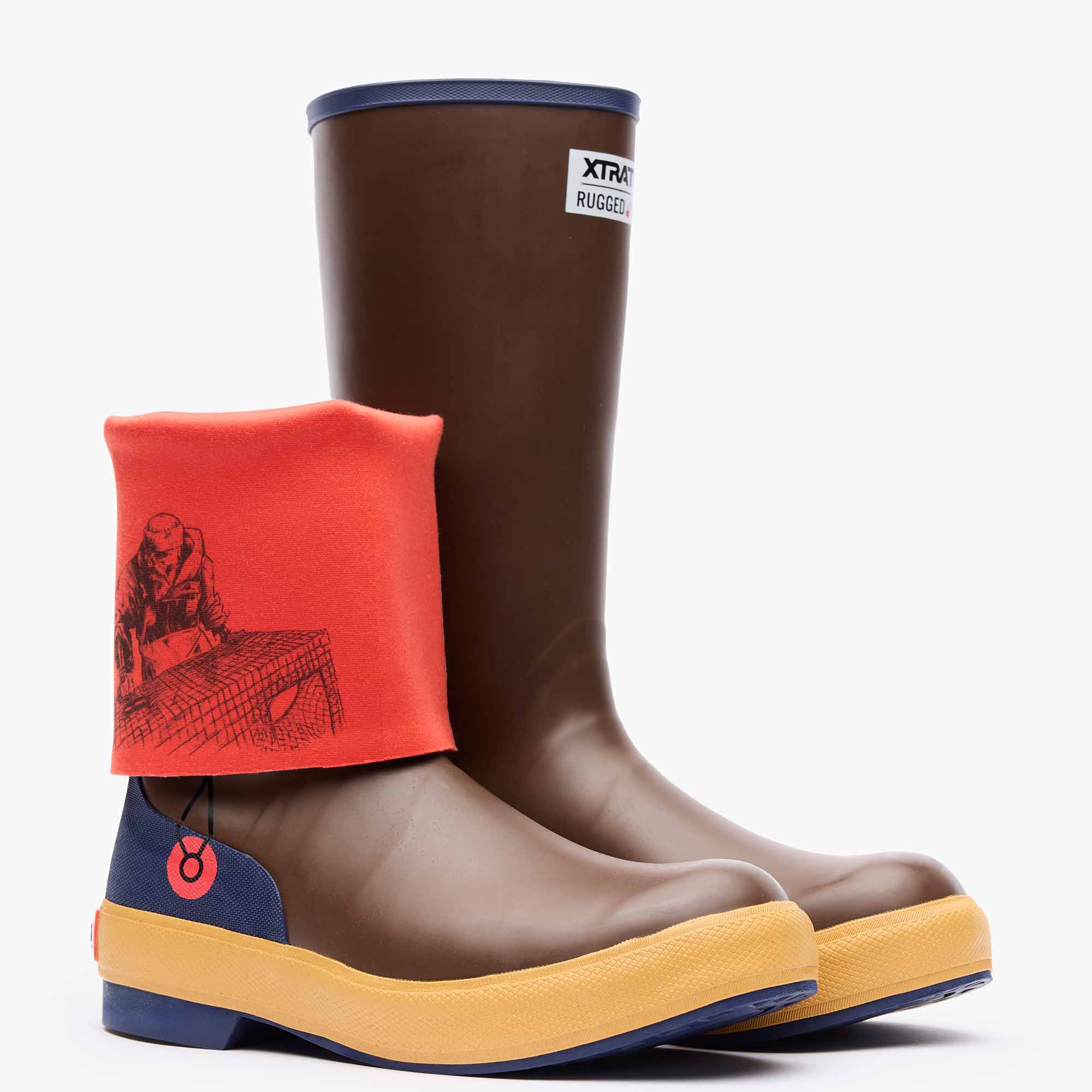
Every commercial dock from Bristol Bay to Ketchikan runs on this footwear, but it earned a cult following among coastal and river hunters for identical reasons. When waterfowling out of an aluminum jon boat or working marsh edges where slick decks meet muck, standard heavy hunting pacs feel like concrete blocks. This model provides an exceptionally supple, 100 percent waterproof barrier that moves with your ankle rather than fighting it. The build relies on seamless triple-dipped latex neoprene, vulcanized to seal out corrosive salt brine, swamp muck, and motor fuel. Unlike stiff multi-layer rubber boots lined with thick foam, the pliable upper rolls down smoothly to the mid-calf when temperatures rise or during warm-weather boat transits. It sits low to the ground and delivers immediate tactile feedback through the footbed. Taking an Alaskan fishing staple into the timber involves deliberate compromises. Without rigid shanks or aggressive deep-cleat outsoles, it falters on steep, frozen side-hills and offers zero thermal buffer once water temperatures plunge toward freezing. Yet for flat tidelands, boat blinds, and swamp runs where agility and bombproof waterproofing take precedence over rigidity, few boots feel as natural.
Materials and Shell Build
The foundation of this boot is a seamless dipped-latex construction that behaves very differently from standard injection-molded rubber or heavy vulcanized sheets. The latex forms a flexible, elastic skin over a lightweight knit backing, creating a waterproof barrier that stretches easily over the calf and bends naturally at the instep. Because there are no bonded side seams to delaminate, points of mechanical failure are drastically reduced along high-stress flex zones. The rubber compound is specifically formulated to resist corrosive compounds, from marsh tannins and outboard gas spills to fish oils that cause standard boots to crack and degrade prematurely. It feels almost skin-like compared to thick armor-plated deer hunting boots, sacrificing puncture resistance against sharp thorns in exchange for a lighter, softer shell that hugs the lower leg without calf pinch.
Field Traction and Footing
Underfoot, the boot runs the proprietary Chevron outsole: a tightly spaced, grooved pattern originally engineered to evacuate water from wet fiberglass boat decks and steel docks. On slick wet wood, damp aluminum hulls, and hard-packed tidal flats, this sole grips with remarkable tenacity, far outperforming aggressive off-road lugs that slip on wet hard surfaces. However, its hunting limits emerge the moment you climb greasy clay riverbanks or traverse loose, muddy slopes. The shallow grooves lack the tooth to dig into soft loam, and thick muck quickly packs between the sipes, turning the sole into a slick flat surface. Hunters operating in steep river breaks or muddy timber will miss the aggressive biting lugs of dedicated upland or swamp boots, making this pattern strictly optimal for flat bottoms, boats, and tidal mud.
Fit, Flex, and Packability
Sizing runs true but fits narrow through the ankle and across the instep, an intentional design feature that creates a secure hold and prevents mud from suctioning the footwear off your foot. The lack of rigid internal plastic counters means the boot articulates naturally, requiring virtually zero break-in period. You can easily roll the 15-inch shaft down to the ankle to dump heat during warm early-season setup or while running the boat motor. This extreme pliability also makes it far easier to pack into a duffel or stow beneath a skiff thwart than rigid hunting boots. The flat footbed provides minimal built-in arch support, meaning anyone covering significant dry miles will want to drop in aftermarket orthotics to prevent mid-foot fatigue after long days standing in blinds.
Thermal Limits and Comfort
Because this standard model contains no internal insulating foam or neoprene sponge core, thermal performance depends entirely on your sock selection. The thin shell offers zero thermal barrier against ice water; when standing submerged in late-season marsh water, cold conducts through the rubber instantly. In temperatures above freezing, this breathability deficit is manageable, and rolling the shaft down creates immediate ventilation that thick hunting rubber simply cannot match. For sub-freezing timber hunts or late-season goose pit sessions, your feet will quickly become numb unless you step up to an insulated sub-model or size up significantly to accommodate heavy wool loops. Treat this as a three-season, high-moisture tool designed for working wet bottoms in moderate temperatures rather than a cold-weather stationary stand boot.
Durability and Longevity
Longevity depends heavily on how you store and treat the latex. When kept away from continuous direct UV exposure and ozone sources like electric heaters, the supple shell outlasts rigid vulcanized rubbers that dry out and split along the flex line behind the toes. The sole rubber wears down slowly on natural ground, though abrasive gravel bars and concrete launch ramps will gradually round off the shallow sipes over seasons of hard use. The primary structural vulnerability is puncture resistance: the thin latex-neoprene construction does not offer the heavy-gauge barrier needed for walking through black locust, sharp hawthorn, or broken beaver puncheon. Keep it in mud, water, reeds, and boats, and the seamless exterior will remain watertight across years of relentless abuse.
Hunting Suitability and Rivals
Positioning this boot against competitors like the Lacrosse Grange or Muck Wetland highlights its distinct mixed-use specialty. The Lacrosse Grange provides superior calf-locking cinch straps and slightly better hillside traction for still-hunting timber, while the Muck Wetland brings thick insulating neoprene for freezing tree-stand days. However, neither matches this boot for boat-based duck hunting, decoy handling, or coastal wet-work where stepping across slick gunwales and rolling down cuffs is routine. It remains an offbeat choice for the deer woods, but for hunters whose territory centers on skiffs, swamp marshes, coastal estuaries, and wet transport, its combination of tactile grip, effortless flexibility, and proven watertight integrity justifies its presence on any serious waterman's rack.
How we chose
We compared widely available rubber hunting boots using maker specifications, retailer listings and published reviews, then ranked 10 against the same criteria below. This is desk research unless a pick is marked field tested. Rankings are editorial. No brand pays for placement, and affiliate links never move a pick up or down.
- Fabric behavior over time
- Breathability, DWR life, loft retention, and how the piece performs after repeated washing.
- Real-world durability
- How the material, stitching, or steel holds up after a season of hard use — not how it looks new.
- Performance in bad conditions
- Wind, rain, cold, and grit are the test. Anything that only works on a nice day gets marked down.
- Weight and packability
- Every ounce has to earn its place in the pack, but not at the cost of something that fails in the field.
- Ease of use
- Setup, adjustment, and maintenance with cold hands, in the dark, without the manual.
- Value at its price point
- Compared against the closest competitors in the same tier, not against cheaper gear in a different class.
Men's 15" Legacy Boot — frequently asked questions
- Is the Men's 15" Legacy Boot worth it?
- We rank it #8 in Rubber Hunting Boots. Best for fishing, boats and mixed use: tough latex-neoprene shell with a lugged sole.
- What is the Men's 15" Legacy Boot best for?
- Best for duck boat blind operations, tidal marsh waterfowl hunting, coastal river skiff transport and early-season swamp wading. Standouts: unmatched slip resistance on wet boat decks and smooth surfaces and highly supple latex shaft rolls down easily to dump excess heat.
- What are the downsides of the Men's 15" Legacy Boot?
- Shallow Chevron tread packs out rapidly in thick hillside mud, Zero built-in insulation offers poor protection in near-freezing water and Minimal puncture defense against briars, beaver stobs, and thorns.
- What are the key specs of the Men's 15" Legacy Boot?
- Shaft Height: 15 inches · Shell Build: Triple-dipped seamless latex neoprene · Outsole: Non-marking slip-resistant Chevron · Insulation: Uninsulated fabric lining · Pliability: Roll-down calf shaft
- Materials and Shell Build — what should I know about the Men's 15" Legacy Boot?
- The foundation of this boot is a seamless dipped-latex construction that behaves very differently from standard injection-molded rubber or heavy vulcanized sheets. The latex forms a flexible, elastic skin over a lightweight knit backing, creating a waterproof barrier that stretches easily over the calf and bends…
- Field Traction and Footing — what should I know about the Men's 15" Legacy Boot?
- Underfoot, the boot runs the proprietary Chevron outsole: a tightly spaced, grooved pattern originally engineered to evacuate water from wet fiberglass boat decks and steel docks. On slick wet wood, damp aluminum hulls, and hard-packed tidal flats, this sole grips with remarkable tenacity, far outperforming…
Compare side by side
Put the Men's 15" Legacy Boot against any other pick on this list — specs, price, pros, cons and reader ratings.