


Reader rating
Rate it and you move it. Community ratings re-rank this product inside its Top 10 list.
Expert-picked, reader-ranked. Our editors choose the products and the launch order; member star ratings move picks up or down over time.
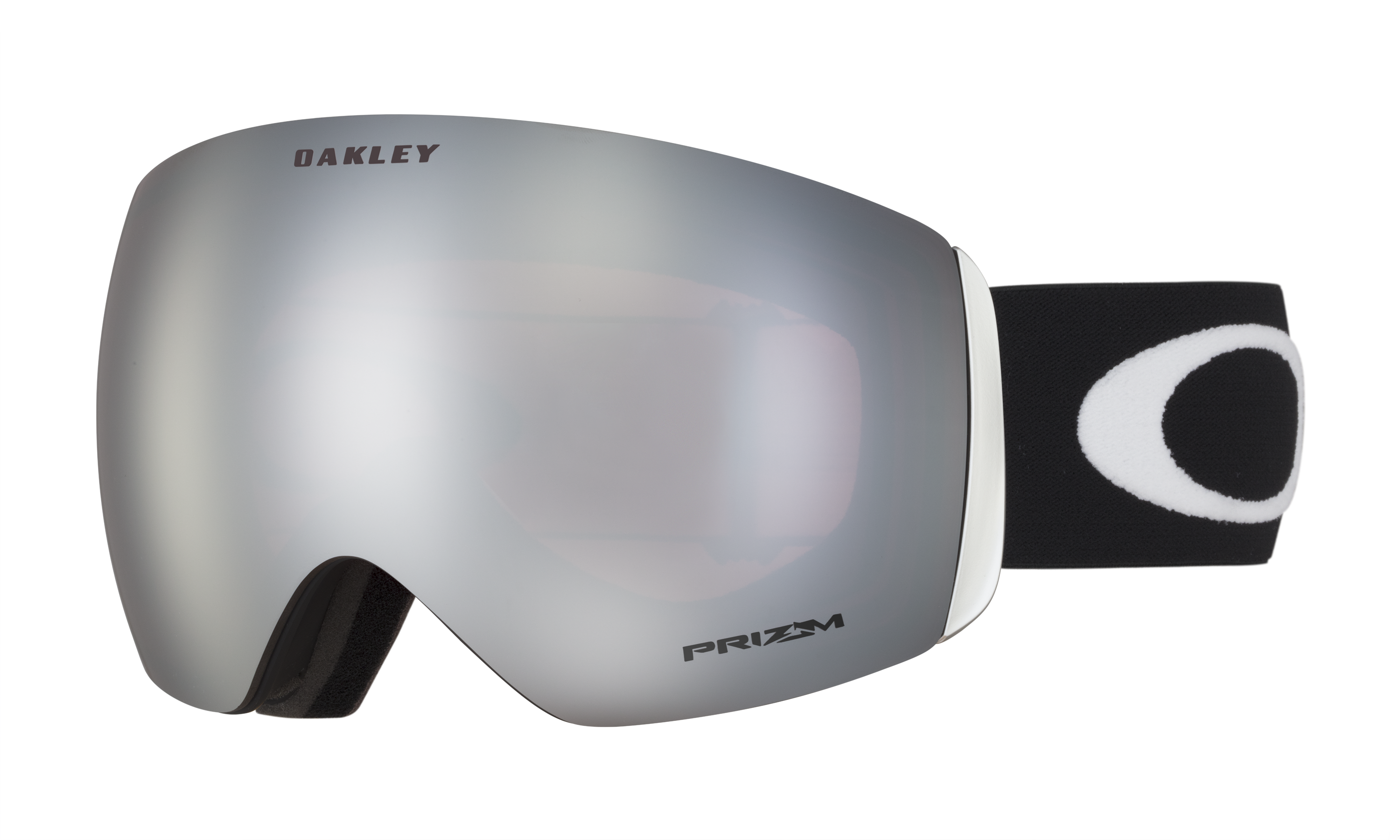
The Oakley Flight Deck is an iconic frameless snow goggle engineered for riders who want an expansive, rimless field of view inspired by fighter pilot helmet visors. Its oversized spherical lens sits flush over a sub-frame architecture, providing unobstructed downward and peripheral visibility. Testers consistently praise the Flight Deck for its panoramic perspective and the crisp performance of Oakley's proprietary Prizm lens technology. Prizm optics excel at fine-tuning specific wavelengths of light, emphasizing contrast on snow surfaces so you can spot moguls, wind-scoured crust, and transitions before making a turn. The large interior volume naturally helps combat fogging by maintaining a generous air buffer between your warm face and the cold outside air. Backed by moisture-wicking triple-layer polar fleece foam, the frame rests comfortably against the face without pinching the nose bridge. The primary drawback of the Flight Deck is its proprietary Ridgelock lens system. While it creates an airtight seal that keeps out wind and snow, swapping lenses requires prying the lens out of frame grooves, which is slow and frustrating when wearing gloves. Additionally, the oversized profile fits medium-to-large faces exceptionally well, but can overpower smaller facial profiles and create fit conflicts with compact helmets. **Highlights** - Rimless spherical lens design delivers exceptional panoramic vision - Prizm optical tuning provides industry-leading contrast across variable snow - Generous internal air volume enhances natural anti-fog resistance - Ridgelock lens retention creates an airtight weather seal - Compatible with most prescription eyeglasses (OTG design) **Watch-outs** - Lens replacement process is stiff, slow, and unsuited for quick field swaps - Large frame footprint can push down on the nose with smaller helmets - High replacement cost for individual Prizm lenses
Pros
- Expansive downward and peripheral vision via frameless spherical design
- Prizm optics deliver exceptional terrain and surface contrast in variable snow
- Large internal air volume minimizes fog formation across temperature swings
- Comfortable triple-layer face foam seals evenly without pinching pressure
Cons
- Ridgelock lens replacement is stiff, slow, and difficult while wearing gloves
- Oversized frame can push downward on the nose with low-profile helmets
- Individual replacement lenses are relatively expensive
Best uses
- All-mountain resort skiing
- Freeride snowboarding
- Variable light terrain reading
- Over-the-glasses prescription wearers
Specifications
- Lens Shape
- Spherical rimless
- Optics System
- Oakley Prizm Technology
- Frame Size
- Large (Flight Deck L)
- Lens Interchange
- Ridgelock channel system
- Face Foam
- Triple-layer with moisture-wicking polar fleece
- Eyeglass Fit
- OTG compatible with discrete frame notches
Pricing
We don't publish a price we haven't verified. The retailer links below open the live listing for this exact model.
Full catalog listing & offersBest for
All-mountain resort skiing, Freeride snowboarding, Variable light terrain reading, Over-the-glasses prescription wearers
Where to buy the Flight Deck
Prices and stock change often, so check the current Amazon offer before you buy.
Some links are affiliate links. Buying through them supports our testing at no extra cost to you.
The Oakley Flight Deck remains a benchmark in snow goggle design, recognizable by its clean, frameless spherical shield inspired by military fighter pilot visors. By mounting the lens directly onto a hidden sub-frame, Oakley maximizes peripheral and downward visibility, giving skiers and snowboarders an unobstructed sightline that few competitors match. The design is deliberately oversized, prioritizing expansive vision and generous internal volume over minimalist bulk. Optical performance centers on Oakley's proprietary Prizm lens family, which manipulates the visible light spectrum to exaggerate contrasts in flat or shadow-dappled snow. Combined with the sheer airspace inside the frame, the goggle manages moisture and temperature shifts reliably throughout full resort days. It accommodates prescription eyeglasses comfortably under the frame, making it a reliable option for riders who prefer not to wear contact lenses on the slopes. The goggle's primary compromise lies in its lens-change mechanism. Rather than adopting modern magnetic latches, Oakley relies on its proprietary Ridgelock channel system. While Ridgelock ensures an airtight, windproof seal, manual removal and installation can be frustrating, especially with cold hands in parking lots or chairlifts.
Target Audience and Intended Use
The Flight Deck is built for all-mountain skiers and snowboarders who demand an unconstrained panoramic view and prioritize optical contrast over rapid lens swaps. It caters naturally to individuals with medium-to-large facial profiles who find standard goggles constricting. Riders who typically select a single, versatile lens tint for the entire day—such as Prizm Torch or Prizm Sapphire—will appreciate the simplicity of wearing this goggle without fussing over hardware. It also serves skiers who wear prescription glasses beneath their goggles, thanks to generous interior clearance and subtle temple cutouts in the sub-frame. Conversely, backcountry users who frequently transition between climbing and riding, or skiers with petite faces, will likely find its volume and slower lens replacement impractical for fast-moving mountain excursions.
Materials and Frame Construction
Oakley constructs the Flight Deck using an injection-molded Plutonite lens anchored to a flexible O Matter chassis. The minimalist sub-frame sits entirely behind the lens, keeping structural plastic away from your peripheral sightline while maintaining enough rigidity to resist deformation on impact. Contact with the face is cushioned by triple-layer foam lined with a soft polar fleece that wicks sweat and distributes pressure evenly across the brow and cheeks. An extra-wide, silicone-ribbed strap provides steady friction against smooth helmet shells, preventing slipping or uneven canting. The construction balances structural protection with flexible comfort, though the exposed rim of the lens means the perimeter edges lack protective bumper plastic, leaving them slightly vulnerable to edge-chipping if dropped against hard surfaces or tossed carelessly into a gear bin.
Optics and Visual Performance
The core strength of the Flight Deck is visual acuity in mixed alpine lighting. Oakley's Prizm dye profiles selectively block specific colors of light to enhance the tonal separation between ice, packed snow, and soft powder. This targeted contrast helps riders anticipate terrain variations, sudden mogul troughs, and wind-scoured crust before edge contact occurs. The spherical curvature is geometrically tuned to match the natural shape of the human eye, which virtually eliminates the optical distortion or peripheral warping often found in flat cylindrical alternatives. Downward vision is particularly broad, letting you monitor binding buckles, pack straps, and immediate boot placement without tipping your chin down. While very flat, foggy light still challenges the darker tint options, selecting a high-transmission tint like Prizm Rose or Hi-Pink offers dependable relief in low-visibility storms.
Moisture Management and Durability
Fog prevention in the Flight Deck relies on physical volume as much as chemical coatings. By maintaining a large pocket of air between the heated face and the freezing exterior lens, internal temperatures stabilize gradually, reducing condensation potential. Oakley coats the inner lens with an F3 anti-fog compound that absorbs moisture efficiently, provided riders avoid rubbing the inside surface when damp. Directional vents along the top and bottom frame perimeter allow heat to escape naturally, especially when paired with an unblocked helmet brim. In terms of wear resistance, the Plutonite material resists branches and flying ice well, but the glossy exterior mirror finish remains sensitive to abrasive jacket zippers and coarse wiping cloths. Storing the goggle inside its microfiber bag when not in use is mandatory to preserve the optical coatings.
The Ridgelock Lens System
The primary operational friction point with the Flight Deck is its Ridgelock lens-retention mechanism. Unlike modern magnetic systems found across the industry, Ridgelock uses a continuous tongue-and-groove track around the frame perimeter. To change lenses, you must firmly grip the chassis, peel the rim away, and manually pull the lens free, then align and press the replacement lens into the channel until fully seated. This design creates an impermeable, draft-proof barrier that stops blowing snow and sub-zero air from penetrating the eye chamber. However, the process requires substantial finger strength, leaves greasy thumbprints across the lens surface, and is nearly impossible to execute while wearing gloves on a windy lift. It is a system best managed indoors on a dry bench before the day begins.
Fit and Helmet Integration
Because of its oversized footprint, the Flight Deck demands careful pairing with headwear. The top rim aligns flush with most contemporary freeride helmets from Oakley, Smith, and Giro, minimizing the forehead gap that leads to brain freeze. However, on smaller helmet models or low-profile shells, the top frame can be pushed down over the bridge of the nose, causing breathing restriction or pressure points. The wide strap spreads tension well, but riders with smaller skull circumferences may run out of strap adjustment if wearing the goggle without a helmet. For those with narrower faces who want the frameless aesthetic without the massive exterior dimensions, Oakley offers the Flight Deck M (formerly the XM), which preserves the visual design language in a scaled-down footprint.
Alternatives and Market Value
At an approximate retail price of $250, the Flight Deck sits squarely in the premium tier alongside the Smith I/O MAG and the Anon M4. Both competitors feature magnetic interchangeable lens systems that make mid-day adjustments radically faster than Oakley's mechanical channel. Smith's ChromaPop optics rival Prizm for high-definition snow definition, and Anon offers seamless magnetic facemask integration. Where the Flight Deck retains an advantage is in its sheer field of view, frameless look, and proven optical uniformity across the entire spherical curve. For riders who rarely swap lenses and simply want exceptional peripheral clarity with an airtight seal, the Flight Deck remains a reliable, high-performing investment, though bargain hunters may find better value in midrange cylindrical goggles with extra lenses included.
How we picked
We started with a long list of snow goggles that people actually buy, cut anything that could not clear our baseline for durability and field performance, then ranked the 10 that were left against the same criteria. Rankings are editorial. No brand pays for placement, and affiliate links never move a pick up or down.
- Real-world durability
- How the material, stitching, or steel holds up after a season of hard use — not how it looks new.
- Performance in bad conditions
- Wind, rain, cold, and grit are the test. Anything that only works on a nice day gets marked down.
- Weight and packability
- Every ounce has to earn its place in the pack, but not at the cost of something that fails in the field.
- Ease of use
- Setup, adjustment, and maintenance with cold hands, in the dark, without the manual.
- Value at its price point
- Compared against the closest competitors in the same tier, not against cheaper gear in a different class.
- Repairability and support
- Field-fixable design, available parts, and a warranty the maker actually honors.
Flight Deck — frequently asked questions
- Is the Flight Deck worth it?
- We rank it #5 in Snow Goggles. The Oakley Flight Deck is an iconic frameless snow goggle engineered for riders who want an expansive, rimless field of view inspired by fighter pilot helmet visors. Its oversized spherical lens sits flush over a sub-frame architecture, providing unobstructed downward and peripheral visibility.
- What is the Flight Deck best for?
- Best for all-mountain resort skiing, freeride snowboarding, variable light terrain reading and over-the-glasses prescription wearers. Standouts: expansive downward and peripheral vision via frameless spherical design and prizm optics deliver exceptional terrain and surface contrast in variable snow.
- What are the downsides of the Flight Deck?
- Ridgelock lens replacement is stiff, slow, and difficult while wearing gloves, Oversized frame can push downward on the nose with low-profile helmets and Individual replacement lenses are relatively expensive.
- What are the key specs of the Flight Deck?
- Lens Shape: Spherical rimless · Optics System: Oakley Prizm Technology · Frame Size: Large (Flight Deck L) · Lens Interchange: Ridgelock channel system · Face Foam: Triple-layer with moisture-wicking polar fleece
- Target Audience and Intended Use — what should I know about the Flight Deck?
- The Flight Deck is built for all-mountain skiers and snowboarders who demand an unconstrained panoramic view and prioritize optical contrast over rapid lens swaps. It caters naturally to individuals with medium-to-large facial profiles who find standard goggles constricting.
- Materials and Frame Construction — what should I know about the Flight Deck?
- Oakley constructs the Flight Deck using an injection-molded Plutonite lens anchored to a flexible O Matter chassis. The minimalist sub-frame sits entirely behind the lens, keeping structural plastic away from your peripheral sightline while maintaining enough rigidity to resist deformation on impact.
Compare side by side
Put the Flight Deck against any other pick on this list — specs, price, pros, cons and reader ratings.