


Reader rating
Rate it and you move it. Community ratings re-rank this product inside its Top 10 list.
Expert-picked, reader-ranked. Our editors choose the products and the launch order; member star ratings move picks up or down over time.
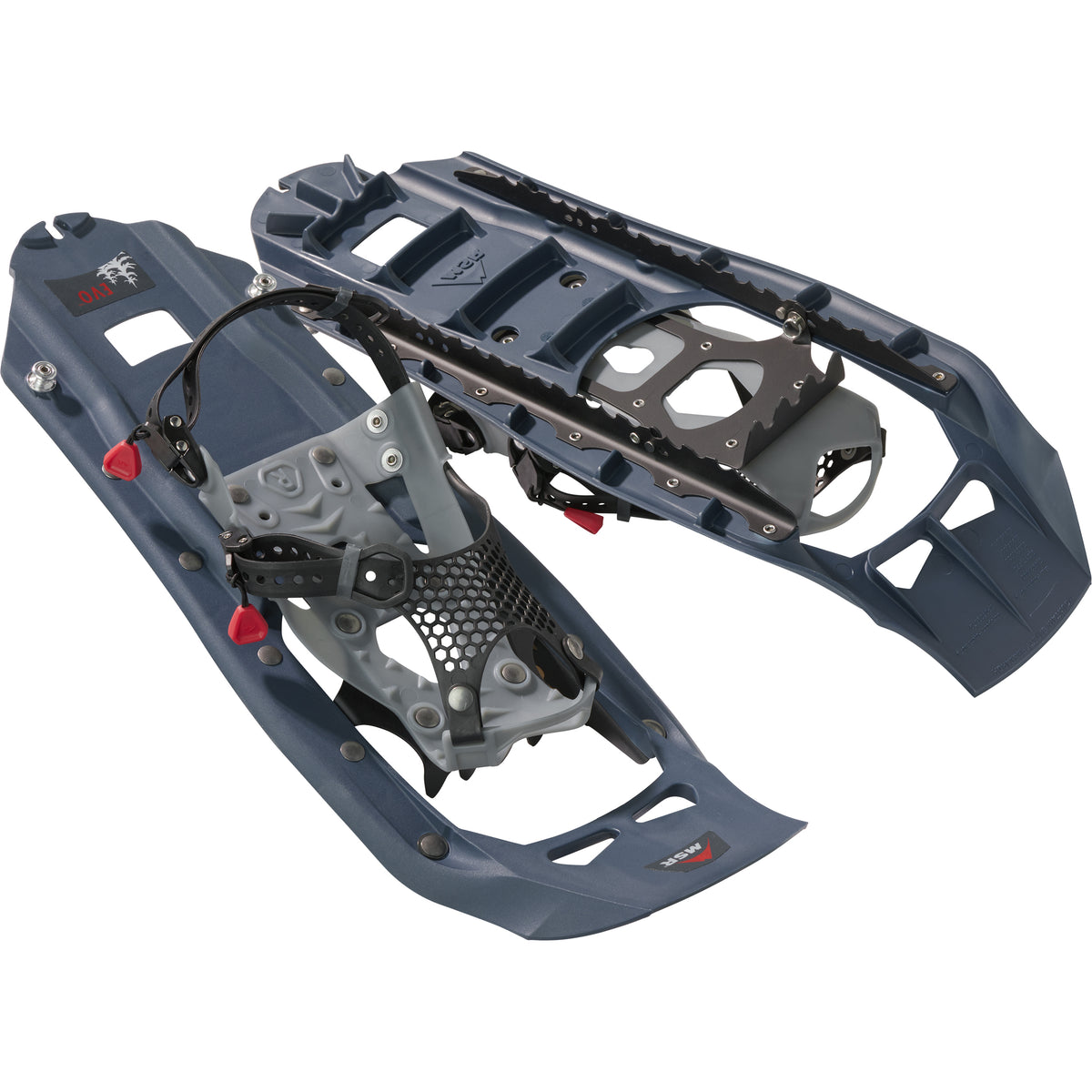
The MSR Evo Trail is widely regarded as the benchmark for entry-level to mid-range winter hikers who want bombproof durability without paying technical alpine prices. Built around an injection-molded plastic UniBody deck with steel traction rails running along the underside, this snowshoe is virtually indestructible. It thrives on rolling forest trails, frozen lakes, and packed snowpack where rocks, roots, and hidden debris might easily puncture a softer fabric deck. While simpler than high-end backcountry models, the Evo Trail does not cut corners on security. Its DuoFit binding system relies on straightforward, freeze-resistant elastomer straps that secure a wide variety of footwear, from standard hiking boots to bulky pac boots. The forward crampon delivers reliable forward bite on moderate climbs, while molded brake bars integrated into the deck prevent sliding backward or sideways on packed routes. The trade-offs center on weight and flexibility. The rigid plastic frame can feel stiff and clattery underfoot over hardpack or icy trails, lacking the smooth, natural roll of flexible composite decks. It also omits the heel lift bars found on steep-climbing models, making sustained ascents more tiring. Still, for dependable performance, minimal maintenance, and long service life at around $180, it offers the best value on the market. **Highlights** - Indestructible UniBody plastic deck resists rock strikes and punctures. - Full-length steel side traction rails provide solid grip on hardpack. - Simple DuoFit elastomer bindings remain pliable in extreme cold. - Modular tail compatibility allows added flotation when carrying heavier packs. - Molded-in deck brake bars assist with downhill control. **Watch-outs** - Rigid plastic deck is loud and stiff on hard, crusted trails. - Lacks a heel lift for comfortable sustained climbing.
Pros
- Nearly indestructible injection-molded deck resists rocks and roots.
- Full-length steel rails deliver exceptional edge bite on hard crust.
- Freeze-resistant elastomer bindings fit standard boots and bulky pac boots.
- Modular design allows tail extensions for added flotation in powder.
Cons
- Lacks a heel lift bar for reducing fatigue on steep climbs.
- Rigid plastic frame is noticeably loud on hard, icy trails.
- Modest out-of-the-box flotation in deep, dry powder.
Best uses
- Packed forest trail hiking
- Rolling terrain day hikes
- Early-season low snowpack exploration
- General recreational winter walking
Specifications
- Deck Material
- Injection-molded UniBody plastic
- Weight
- 3 lbs. 8 oz. per pair
- Traction System
- Full-length steel rails and steel toe crampon
- Binding Style
- DuoFit freeze-resistant elastomer straps
- Heel Lift
- None
- Flotation Expansion
- Compatible with modular tails
Pricing
We don't publish a price we haven't verified. The retailer links below open the live listing for this exact model.
Full catalog listing & offersBest for
Packed forest trail hiking, Rolling terrain day hikes, Early-season low snowpack exploration, General recreational winter walking
Where to buy the Evo Trail
Prices and stock change often, so check the current Amazon offer before you buy.
Some links are affiliate links. Buying through them supports our testing at no extra cost to you.
The MSR Evo Trail represents the baseline standard for recreational snowshoeing across North America. Rather than targeting technical alpine ascents or deep powder expeditions, this model focuses on providing reliable, bombproof performance for rolling trails, frozen lake beds, and mixed winter woodlands. At an accessible price point near $180, it bridges the gap between flimsy entry-level recreational gear and expensive backcountry setups. Constructed around an injection-molded plastic UniBody deck, the Evo Trail trades the supple feel of aluminum-and-fabric snowshoes for raw impact resistance. Integrated steel traction rails run along the underside of the deck, ensuring lateral stability on icy crust where simple toe crampons frequently slip. Its DuoFit binding harness employs freeze-resistant elastomer straps that secure a wide array of footwear without requiring mechanical ratchets that can clog with snow. While highly dependable, the Evo Trail makes clear compromises to hit its price and durability targets. The rigid plastic platform produces a loud clatter over hardpack, and the lack of an integrated heel lifter means sustained climbs will tire out calf muscles quickly. For winter hikers prioritizing longevity, rock-strike resilience, and low maintenance on established paths, it remains an industry benchmark.
Target User and Scope
The Evo Trail is engineered primarily for day hikers, winter trail walkers, and outdoor enthusiasts who spend most of their time on packed snow, rolling forest paths, and frozen waterways. It is not intended for steep mountaineering or technical off-camber traverses in high-alpine environments. Instead, it serves the user who needs dependable traction and flotation without overcomplicating the experience. The shoe readily accommodates beginners due to its intuitive design, but seasoned hikers frequently keep a pair on hand for early-season conditions when thin snow covers sharp rocks, roots, and hidden branches that would ruin more delicate aluminum-frame fabric decks. Its straightforward nature makes it a standard rental fleet fixture for park systems and outdoor centers nationwide.
Materials and Construction
The foundation of the Evo Trail is MSR's proprietary UniBody deck, molded from high-impact plastic that retains flex and structural integrity in sub-zero temperatures. Unlike traditional snowshoes that stretch a vinyl or nylon skin over a tubular aluminum rim, the Evo's perimeter is solid plastic with molded brake bars on the underside. Steel traction rails are bolted directly into the deck along the longitudinal axes, offering bite across the full length of the stride. The toe pivot houses a two-tooth steel crampon that engages the surface as the foot flexes forward. This design eliminates puncture points entirely and minimizes the mechanical failure points common to riveted aluminum joints, creating a platform that resists gouging and impacts across years of regular use.
Traction on Packed Routes
On firm snow and hardpack, the Evo Trail delivers grip that rivals significantly more expensive technical models. The steel side rails provide continuous perimeter edge control, preventing the sideways skidding that often occurs on crowned trails or mild sidehills. As the user moves forward, the steel toe crampon bites down to secure the stride, while the molded-in transverse brake bars under the tail resist backsliding on mild inclines. Downhill control is similarly predictable, as the deck's underside texture scrubs speed effectively. However, the traction design is optimized for firm to crusty conditions rather than deep powder. In uncompressed snow, the relatively compact footprint offers limited lift unless paired with optional modular tail add-ons.
Binding Interface and Boot Fit
The DuoFit binding system utilizes durable elastomer straps that thread through secure friction buckles over the forefoot and around the heel. This setup eschews complex ratchets, cables, or dials in favor of simple, freeze-proof components that can be manipulated even when wearing thick winter mittens. Because the elastomer remains flexible in severe cold, the straps maintain consistent tension without stretching or absorbing water. The open-harness geometry accommodates a vast range of footwear styles, easily wrapping around low-profile insulated hiking boots, heavy mountaineering leather, or bulky soft-sided pac boots. The absence of a rigid toe cup allows the harness to conform smoothly around irregular boot shapes, preventing localized pressure points during extended walks.
Durability and Field Maintenance
Durability is the primary reason the Evo Trail remains a perennial favorite among outdoor gear reviewers. The solid molded plastic deck cannot tear, puncture, or delaminate, making it virtually impervious to submerged granite slabs, gravel, and fallen timber. If an elastomer binding strap eventually degrades or cracks from years of UV exposure, it can be replaced in the field without special tools or shop repairs. The steel hardware resists deformation under normal hiking loads, requiring only occasional drying after use to prevent surface rust. For users who traverse mixed terrain where snow depth varies wildly and exposed ground is common, this snowshoe provides a level of abuse tolerance that few composite or fabric alternatives can match.
Notable Trade-Offs
The primary sacrifice inherent to the Evo Trail's hard plastic construction is noise and ride quality. On hard crust or frozen tracks, the deck slaps against the snow with a pronounced clatter that some hikers find distracting compared to quiet aluminum-frame designs. Furthermore, the absence of an integrated heel lift bar (Televator) limits the shoe's efficiency on sustained uphill climbs, causing calf fatigue on steep slopes. Flotation in deep, uncompressed powder is also modest out of the box due to the compact surface area, requiring users carrying heavier packs to purchase optional tail extensions. While exceptionally tough and reliable on modest terrain, it remains fundamentally suited for rolling trails rather than alpine peaks.
How we picked
We started with a long list of snowshoes that people actually buy, cut anything that could not clear our baseline for durability and field performance, then ranked the 10 that were left against the same criteria. Rankings are editorial. No brand pays for placement, and affiliate links never move a pick up or down.
- Fabric behavior over time
- Breathability, DWR life, loft retention, and how the piece performs after repeated washing.
- Real-world durability
- How the material, stitching, or steel holds up after a season of hard use — not how it looks new.
- Performance in bad conditions
- Wind, rain, cold, and grit are the test. Anything that only works on a nice day gets marked down.
- Weight and packability
- Every ounce has to earn its place in the pack, but not at the cost of something that fails in the field.
- Ease of use
- Setup, adjustment, and maintenance with cold hands, in the dark, without the manual.
- Value at its price point
- Compared against the closest competitors in the same tier, not against cheaper gear in a different class.
Evo Trail — frequently asked questions
- Is the Evo Trail worth it?
- We rank it #2 in Snowshoes. The MSR Evo Trail is widely regarded as the benchmark for entry-level to mid-range winter hikers who want bombproof durability without paying technical alpine prices. Built around an injection-molded plastic UniBody deck with steel traction rails running along the underside, this snowshoe is virtually indestructible.
- What is the Evo Trail best for?
- Best for packed forest trail hiking, rolling terrain day hikes, early-season low snowpack exploration and general recreational winter walking. Standouts: nearly indestructible injection-molded deck resists rocks and roots. and full-length steel rails deliver exceptional edge bite on hard crust..
- What are the downsides of the Evo Trail?
- Lacks a heel lift bar for reducing fatigue on steep climbs., Rigid plastic frame is noticeably loud on hard, icy trails. and Modest out-of-the-box flotation in deep, dry powder..
- What are the key specs of the Evo Trail?
- Deck Material: Injection-molded UniBody plastic · Weight: 3 lbs. 8 oz. per pair · Traction System: Full-length steel rails and steel toe crampon · Binding Style: DuoFit freeze-resistant elastomer straps · Heel Lift: None
- Target User and Scope — what should I know about the Evo Trail?
- The Evo Trail is engineered primarily for day hikers, winter trail walkers, and outdoor enthusiasts who spend most of their time on packed snow, rolling forest paths, and frozen waterways. It is not intended for steep mountaineering or technical off-camber traverses in high-alpine environments.
- Materials and Construction — what should I know about the Evo Trail?
- The foundation of the Evo Trail is MSR's proprietary UniBody deck, molded from high-impact plastic that retains flex and structural integrity in sub-zero temperatures. Unlike traditional snowshoes that stretch a vinyl or nylon skin over a tubular aluminum rim, the Evo's perimeter is solid plastic with molded brake…
Compare side by side
Put the Evo Trail against any other pick on this list — specs, price, pros, cons and reader ratings.