


Real Food vs MEAL Bar
Our #1 and #2 picks from The 10 Best Trail Energy Bars, compared spec-by-spec with clear pros, cons, and a verdict.
Dialing in your trail nutrition requires balancing calorie density, ingredient integrity, and on-the-move palatability. In the realm of whole-food endurance fuel, Kate's Real Food bars and PROBAR MEAL bars represent two distinct approaches to powering big backcountry days. Kate's Real Food emphasizes clean, USDA Organic certification, building its recipes around gluten-free oats, nut butters, and organic honey to create a light, easily chewable snack that digests cleanly at high heart rates. Conversely, the PROBAR MEAL bar is an unapologetic, plant-based caloric workhorse. Tipping the scales at three ounces and packing up to 400 calories, PROBAR integrates whole nuts, seeds, and rolled oats into a dense slab designed to replace a stove-cooked meal when you are pushing through long miles. Choosing between them comes down to how your body processes fuel under load: do you need an easily portioned, great-tasting energy boost for active ascents, or a heavy-hitting, calorie-dense meal replacement that minimizes pack weight on multiday expeditions?
Real Food
Kate's

Kate's Real Food takes the top spot due to wide critical acclaim from multiple independent testing outlets, earning overall top honors across the board. These bars stand out primarily because they rely on real, recognizable organic ingredients—primarily certified gluten-free oats, honey, and nut butters—yielding a texture reminiscent of homemade trail flapjacks rather than processed paste. For long day hikes and multiday backpacking trips, this wholesome composition provides an even mix of quick-burning carbs and sustained fats that digests comfortably without sharp blood-sugar spikes. In field performance reviews, a major reason Kate's Real Food consistently scores high is its textural resilience. Many trail bars either freeze solid in sub-freezing temperatures or melt into oily slurry under hot summer sun. The oat and nut-butter structure of Kate's holds up admirably across varying seasons, remaining easy to bite even when stored in cold pack pockets. At 2.2 ounces, they offer a dense yet approachable snack that balances weight against satisfying substance. The trade-offs come down to cost and caloric ceiling. Because they use certified organic nuts, seeds, and fruits, the cost per bar is noticeably higher than conventional grocery-store options when purchased in standard multi-packs. Additionally, while calorically dense enough for standard day outings, thru-hikers seeking extreme calorie-to-weight ratios for deep backcountry expeditions may still need heavier meal bars to cover massive daily deficits. **Highlights** - Whole-food recipe based on organic oats, nut butter, and honey - Texture holds up well across a wide range of temperatures - Easy on sensitive stomachs during continuous endurance efforts - Gluten-free, non-GMO, and free of artificial additives - Balanced mix of simple sugars, complex carbohydrates, and healthy fats **Watch-outs** - Higher cost per unit than mass-market options - Crumbles slightly if crushed at the bottom of a heavy pack
Buy on AmazonMEAL Bar
PROBAR
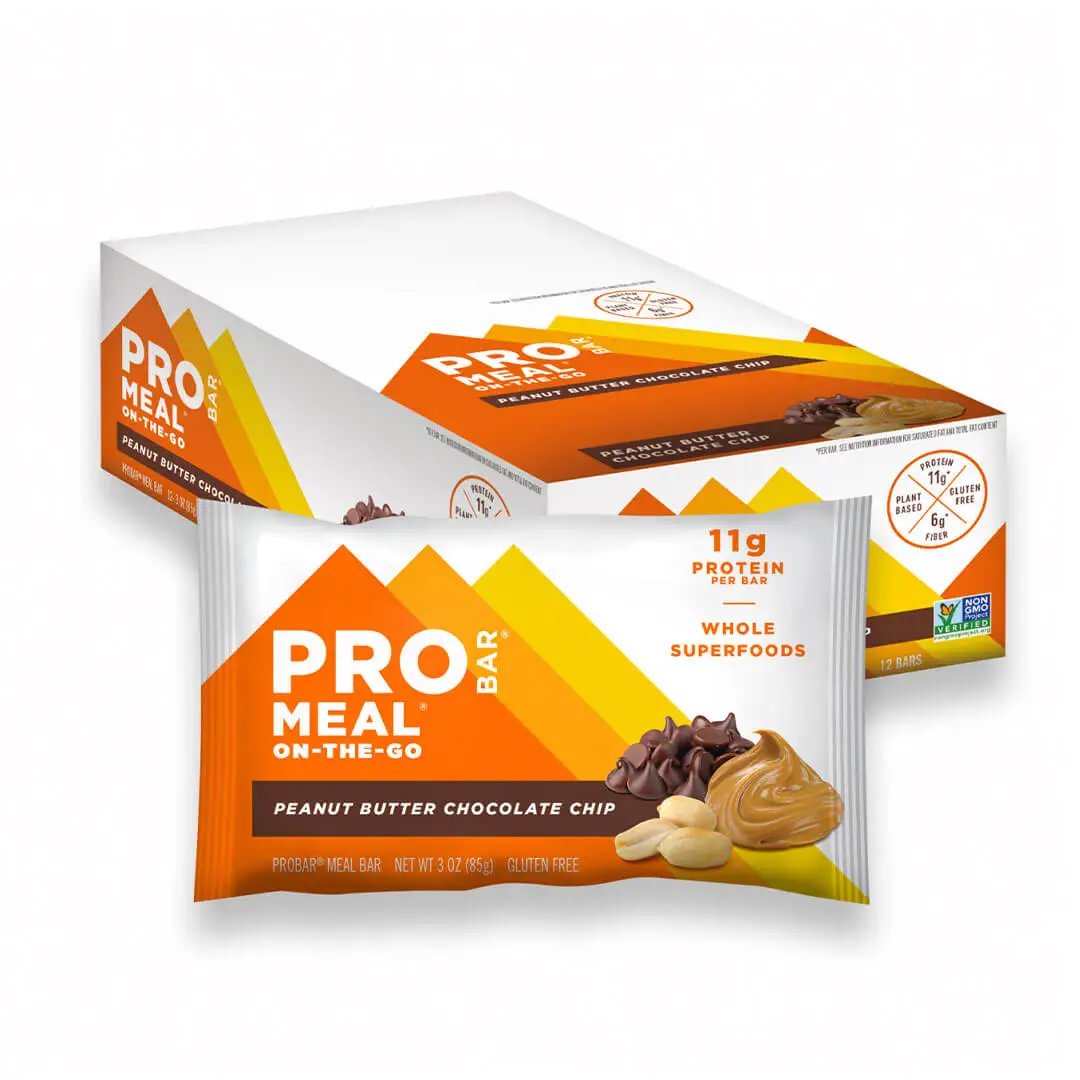
The PROBAR MEAL Bar is the undisputed workhorse for high-mileage hikers, thru-hikers, and anyone seeking maximum calories per cubic inch of pack space. Clocking in at a substantial 3 ounces per package, it functions exactly as advertised: a legitimate on-the-go meal replacement that saves you from firing up a camp stove. Independent reviewers frequently single it out for its exceptionally dense nutritional profile, delivering hefty doses of carbohydrates, healthy fats, and plant-based protein sourced from nuts, seeds, and rolled oats. Performance-wise, the PROBAR provides sustained, long-duration fuel that prevents the deep energy slumps common during heavy climbing days. It has a hearty, thick texture loaded with intact seeds and grains, giving it genuine substance that requires actual chewing. Unlike bars relying on dry protein powders, PROBAR uses plant oils and nut blends to maintain a moist, palatable texture that does not require chugging an entire water bottle just to swallow a bite. However, its size and density represent clear trade-offs. Eating a whole 3-ounce bar in one sitting can feel heavy in the stomach if consumed right before high-intensity uphill efforts, making it better suited for steady pacing or planned trail breaks. Furthermore, several flavor varieties incorporate chocolate coatings or chips that can soften and become messy inside hot pack pockets during midsummer outings. **Highlights** - Substantial 3-ounce size designed for genuine meal replacement - High caloric density makes it efficient for multiday pack weight - Plant-based recipe loaded with whole seeds, nuts, and rolled oats - Stays relatively moist and easy to chew without excessive dryness - Widely available across major outdoor and grocery retailers **Watch-outs** - Too heavy for quick mid-climb bursts of energy - Varieties with chocolate or sweet coatings can melt in warm weather
Buy on AmazonSpec-by-Spec
| Spec | #1 Real Food | #2 MEAL Bar |
|---|---|---|
| Weight | 2.2 oz (62 g) | 3.0 oz (85 g) |
| Capacity / Size | 260–300 calories per bar | 370–400 calories per bar |
| Materials (Ingredients) | Organic gluten-free oats, organic honey, nut butter, brown rice crisps | Rolled oats, whole nuts, seeds (chia, flax, sesame), brown rice syrup |
| Price tier | Moderate ($2.75–$3.25 per bar) | Premium ($3.50–$4.00 per bar) |
| Warranty | Perishable item / Satisfaction guarantee | Perishable item / Satisfaction guarantee |
| Best use | Day hiking, trail running, climbing snack, cycling | Thru-hiking, fastpacking, emergency rations, no-cook lunches |
| Portability | Compact pocket size; easily split into two servings | Thick, dense footprint; fills an entire hip-belt pocket |
| Durability | Moderate; holds shape well but can soften in high heat | High; dense brick withstands severe pack compression |
| Feature highlights | USDA Organic, certified gluten-free, sweetened with real honey | 100% vegan, Non-GMO Project Verified, 8–11g plant protein |
Real Food
Best for: Day hikers, runners, and organic purists looking for an easily digestible, great-tasting trail snack.
Pros
- Certified USDA Organic and gluten-free across all flavors
- Light, crisp-chewy texture that is easy to eat without extra water
- Sweetened naturally with organic honey rather than refined syrups
- Easily broken in half for steady, metered energy intake
Cons
- Lower total caloric output requires carrying more individual units
- Contains honey, making it unsuitable for strict vegan diets
MEAL Bar
Best for: Thru-hikers, mountaineers, and ultralight backpackers seeking maximum calorie density in a ready-to-eat format.
Pros
- Exceptional caloric density approaching 400 calories per package
- Fully plant-based and certified vegan formulation
- Loaded with whole flax and chia seeds for long-burning healthy fats
- Crush-proof density survives being stuffed at the bottom of a pack
Cons
- Dense, chewy texture can cause jaw fatigue during hard efforts
- Hardens significantly in sub-freezing alpine conditions
The Verdict
For sheer backcountry utility and calorie-to-weight efficiency, the PROBAR MEAL bar takes the overall victory. When you are logging twenty-mile days on remote trails, pack space is at a premium, and PROBAR delivers nearly 400 dense, plant-based calories that reliably eliminate the need for mid-day stove stops. It is a genuine meal replacement built to withstand rugged pack treatment. However, Kate's Real Food remains the superior choice for mid-activity fueling during high-aerobic output. Kate's texture is vastly lighter, easier on the digestive tract during steep climbs, and far tastier for casual outdoor pursuits where you do not need an overwhelming brick of food at once. If your goal is surviving long thru-hiker mileage on dry rations, pack PROBAR; if you want an organic, honey-sweetened energy bar that you will genuinely look forward to eating at the summit, reach for Kate's.