


Reader rating
Rate it and you move it. Community ratings re-rank this product inside its Top 10 list.
Expert-picked, reader-ranked. Our editors choose the products and the launch order; member star ratings move picks up or down over time.
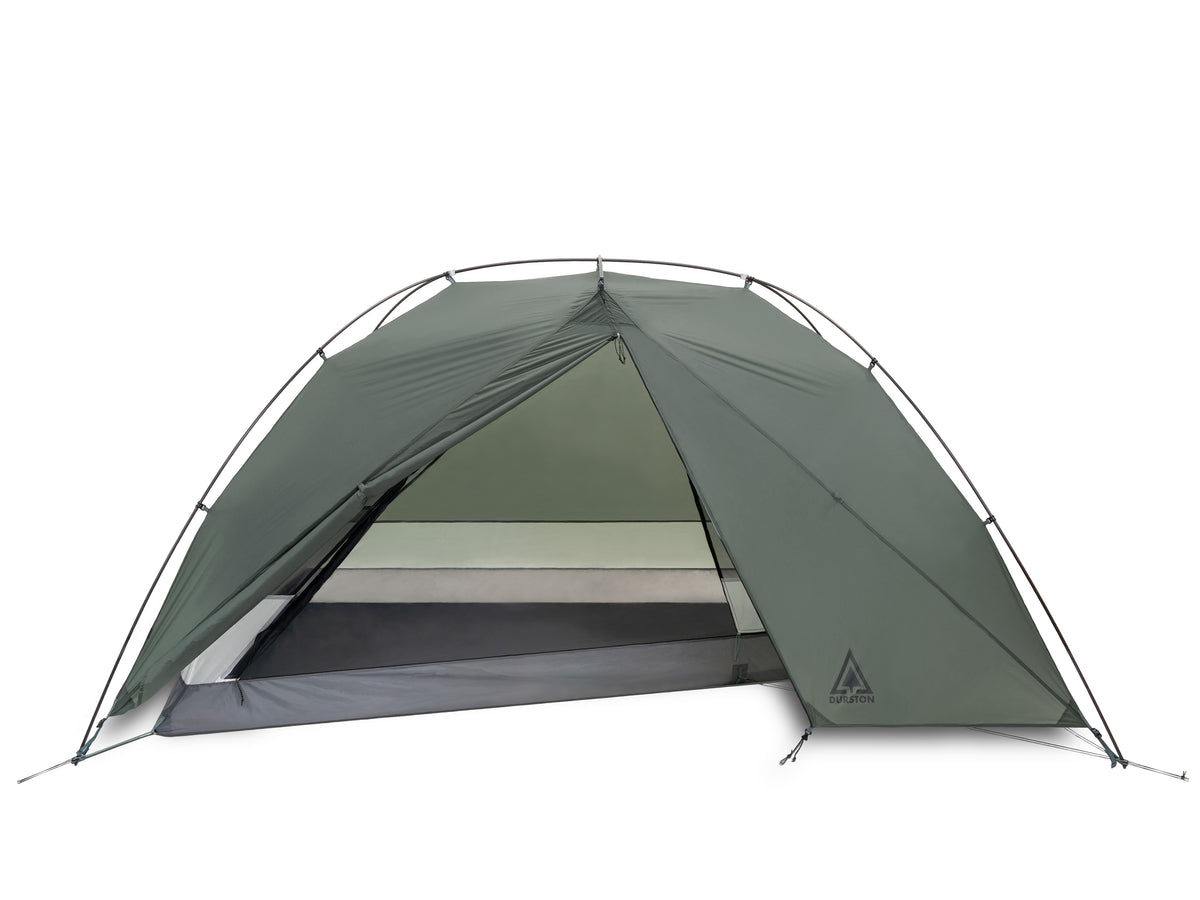
The Durston X-Mid 1 has fundamentally reshaped the budget-to-performance calculation in the ultralight tent market. Designed by an experienced long-distance hiker, the shelter uses an offset, twin-pole layout that creates a completely rectangular base. This design bypasses the fussy geometry of traditional trekking-pole tents, allowing hikers to stake out four base corners first and insert poles without touching a single guyline. Performance in wind and rain is exceptional due to the use of polyester fabric rather than nylon. Silpoly absorbs virtually no water, meaning it maintains pitch tension throughout cold, rainy nights and dries far faster on the trail. Because the X-Mid 1 is a true double-wall shelter, internal condensation stays entirely on the outer fly, keeping your sleeping quilt and gear protected from damp walls inside the mesh inner. At a modest packed size of roughly 13 by 6.5 inches and priced well below bespoke DCF shelters, it is the premier choice for hikers seeking low weight without fragile fabrics or steep price tags. The trade-off is pack weight compared to cuben fiber options; while light for a double-wall tent, it remains heavier than single-wall alternatives. **Highlights** - Straightforward four-stake rectangular setup with no required guylines for basic pitch - True double-wall construction isolates condensation completely from the living space - Polyester rainfly resists sagging and water absorption in heavy rains - Offset pole structure creates vertical side walls and ample headroom - Highly accessible price point compared to Dyneema alternatives **Watch-outs** - Heavier than comparable single-wall DCF solo shelters - Requires two trekking poles for setup despite being a one-person tent - Larger footprint requires a moderately clear, flat pitch area
Pros
- Simple four-corner pitch requires no immediate guylines to establish structure
- Polyester fabric resists water absorption and will not sag in sustained rain
- Double-wall build isolates interior living space completely from fly condensation
- Offset dual-pole design generates generous headroom and steep side walls
- Outstanding price-to-performance ratio compared to expensive Dyneema shelters
Cons
- Requires two trekking poles to set up a one-person shelter
- Heavier and bulkier than minimalist single-wall DCF shelters
- Relatively large fly footprint requires clear ground for a proper pitch
Best uses
- Three-season thru-hiking
- Budget ultralight backpacking
- Wet-weather trail conditions
- Transitioning from freestanding tents
Specifications
- Capacity
- 1 person
- Packed Size
- 13 x 6.5 x 6.5 in
- Shelter Style
- Double-wall trekking pole tent
- Poles Required
- 2 trekking poles
- Canopy Fabric
- Silpoly (silicone-coated polyester)
- Approximate Price
- $269
Pricing
We don't publish a price we haven't verified. The retailer links below open the live listing for this exact model.
Full catalog listing & offersBest for
Three-season thru-hiking, Budget ultralight backpacking, Wet-weather trail conditions, Transitioning from freestanding tents
Where to buy the X-Mid 1
We don't have a direct Amazon listing on file yet — this opens an Amazon search for the exact make and model.
Some links are affiliate links. Buying through them supports our testing at no extra cost to you.
The Durston X-Mid 1 has established itself as one of the most practical solo trekking-pole shelters on the market, shifting the conversation around what an ultralight tent can deliver for under $300. Designed around a patented offset geometry, the shelter avoids the fussy pitching angles common to traditional pyramid or A-frame trekking-pole tents. It anchors to four primary stakes arranged in a simple rectangle, allowing backpackers to establish a taut structure rapidly without immediately wrestling with guylines. Rather than relying on nylon, which stretches and sags when saturated with moisture, the X-Mid 1 utilizes a silicone-coated polyester fly. This material choice allows the shelter to maintain its pitch tension through torrential downpours and cool, damp nights, while also drying significantly faster on trail. Because it is engineered as a true double-wall tent, inner living space is physically separated from fly condensation, protecting down sleeping bags from inadvertent dampness along the walls. While ultralight purists fixated on the absolute lowest base weight might lean toward single-wall Dyneema Composite Fabric shelters, the X-Mid 1 appeals to backpackers who prioritize storm-worthy reliability, interior volume, and financial sense. It bridges the gap between delicate niche shelters and heavier mass-market freestanding domes, delivering a balanced package that packs down to roughly 13 by 6.5 inches.
Target Audience and Intent
The X-Mid 1 is tailored for three-season backpackers and long-distance hikers who want to reduce pack weight without giving up the comforts of a conventional double-wall shelter. Hikers who already use trekking poles on the trail will find it exceptionally practical, as it transforms existing walking gear into the main structural frame. It is particularly well matched to backpackers moving away from heavy freestanding tents who feel intimidated by the intricate rigging often required by non-freestanding tarps. Solo travelers who frequent wet, humid environments like the Appalachian Trail or the Pacific Northwest will appreciate its condensation-mitigating design. It is less suited to alpine pursuits where trekking poles cannot be anchored into soft ground, or for hikers who strictly travel without trekking poles and would need to carry dedicated modular supports.
Materials and Structural Geometry
The foundation of the X-Mid 1 is its offset rectangular footprint. Standard pyramid tents place support poles directly in the center of the living area or door access, requiring complicated geometry to maximize usable volume. By placing two poles diagonally offset from one another, the ridge line runs diagonally across the shelter. This creates vertical side walls that pull the fabric away from the occupant's head and feet, preventing sleeping bags from touching wet outer panels. Durston relies on a polyester rainfly rather than silnylon. Silpoly resists water absorption, meaning the fabric does not expand, stretch, or absorb heavy water weight during continuous precipitation. The inner mesh cabin clips securely into the outer fly, allowing both components to remain attached for swift, all-in-one pitches during poor weather.
Real-World Performance
In wet and windy conditions, the shelter performs reliably due to its low-drag panel angles and tension retention. Because the polyester skin does not stretch when wet, users rarely need to wake up in the middle of the night to re-tension saggy guylines, a routine chore associated with nylon alternatives. The double-wall configuration provides an essential line of defense against internal condensation. Humid air condenses on the underside of the polyester fly, while the inner mesh keeps personal gear, down quilts, and clothing isolated from moisture. Dual vestibules provide sheltered storage space for a damp pack and muddy trail shoes outside the main living compartment. The tent holds up well against moderate wind gusts, provided the four primary corner stakes are driven deeply into secure, compacted ground.
Durability and Maintenance
Polyester delivers solid tear strength and offers better resistance to ultraviolet degradation over extended thru-hikes than budget nylon equivalents. Because the shelter uses no proprietary folding poles or plastic hub assemblies, the risk of mechanical pole snapping is completely eliminated; structural integrity relies on the durability of the user's trekking poles. To maximize the tent's lifespan, the primary maintenance focus involves safeguarding the lightweight floor against sharp trail debris, slate, and prickly ground cover. While seasoned ultralight hikers often pitch directly on clean forest duff, carrying a lightweight groundsheet helps protect against punctures on rough terrain. Keeping the zippers free of grit and thoroughly drying the polyester fly before long-term closet storage prevents seam degradation and fabric mildew.
Pitch Tuning and Site Selection
Pitching the X-Mid 1 is among the most intuitive processes in the trekking-pole category, but it still demands proper technique. The initial step requires staking out the four corners into a true 90-degree rectangle. If the base rectangle is skewed into a parallelogram, the fabric tension will be uneven once the poles are inserted. Once the base corners are anchored, the two trekking poles are extended into the grommets and adjusted to tension the peak. Because the shelter requires an uninterrupted rectangular footprint, site selection requires finding a moderately flat, obstacle-free surface roughly the size of the fly. On uneven terrain or rocky surfaces where driving stakes is difficult, hikers must use the 'big rock, little rock' method or rely on nearby tree roots to secure the four mandatory anchoring points.
Market Alternatives and Trade-Offs
At roughly $269, the X-Mid 1 sits in an aggressive value category. Premium single-wall shelters made from Dyneema Composite Fabric, such as those from Zpacks, weigh considerably less and absorb zero water, but they often cost more than double the price and suffer from severe condensation inside a single-wall living space. Conversely, freestanding tents from brands like Big Agnes or Nemo offer freestanding convenience without relying on stakes for shape, but they carry substantial weight and bulk penalties. The primary trade-off of the X-Mid 1 is its reliance on two trekking poles for a solo shelter, whereas some minimalist solo shelters only require one. Additionally, the outer fly's total footprint is relatively wide, demanding more open clearance than narrow bivy-style tarps.
How we picked
We started with a long list of ultralight tents that people actually buy, cut anything that could not clear our baseline for durability and field performance, then ranked the 10 that were left against the same criteria. Rankings are editorial. No brand pays for placement, and affiliate links never move a pick up or down.
- Storm worthiness and livability
- Pitch tension in wind, condensation management, and usable interior space for the weight.
- Real-world durability
- How the material, stitching, or steel holds up after a season of hard use — not how it looks new.
- Performance in bad conditions
- Wind, rain, cold, and grit are the test. Anything that only works on a nice day gets marked down.
- Weight and packability
- Every ounce has to earn its place in the pack, but not at the cost of something that fails in the field.
- Ease of use
- Setup, adjustment, and maintenance with cold hands, in the dark, without the manual.
- Value at its price point
- Compared against the closest competitors in the same tier, not against cheaper gear in a different class.
X-Mid 1 — frequently asked questions
- Is the X-Mid 1 worth it?
- We rank it #3 in Ultralight Tents. The Durston X-Mid 1 has fundamentally reshaped the budget-to-performance calculation in the ultralight tent market. Designed by an experienced long-distance hiker, the shelter uses an offset, twin-pole layout that creates a completely rectangular base.
- What is the X-Mid 1 best for?
- Best for three-season thru-hiking, budget ultralight backpacking, wet-weather trail conditions and transitioning from freestanding tents. Standouts: simple four-corner pitch requires no immediate guylines to establish structure and polyester fabric resists water absorption and will not sag in sustained rain.
- What are the downsides of the X-Mid 1?
- Requires two trekking poles to set up a one-person shelter, Heavier and bulkier than minimalist single-wall DCF shelters and Relatively large fly footprint requires clear ground for a proper pitch.
- What are the key specs of the X-Mid 1?
- Capacity: 1 person · Packed Size: 13 x 6.5 x 6.5 in · Shelter Style: Double-wall trekking pole tent · Poles Required: 2 trekking poles · Canopy Fabric: Silpoly (silicone-coated polyester)
- Target Audience and Intent — what should I know about the X-Mid 1?
- The X-Mid 1 is tailored for three-season backpackers and long-distance hikers who want to reduce pack weight without giving up the comforts of a conventional double-wall shelter. Hikers who already use trekking poles on the trail will find it exceptionally practical, as it transforms existing walking gear into the…
- Materials and Structural Geometry — what should I know about the X-Mid 1?
- The foundation of the X-Mid 1 is its offset rectangular footprint. Standard pyramid tents place support poles directly in the center of the living area or door access, requiring complicated geometry to maximize usable volume.
Compare side by side
Put the X-Mid 1 against any other pick on this list — specs, price, pros, cons and reader ratings.