


Reader rating
Rate it and you move it. Community ratings re-rank this product inside its Top 10 list.
Expert-picked, reader-ranked. Our editors choose the products and the launch order; member star ratings move picks up or down over time.
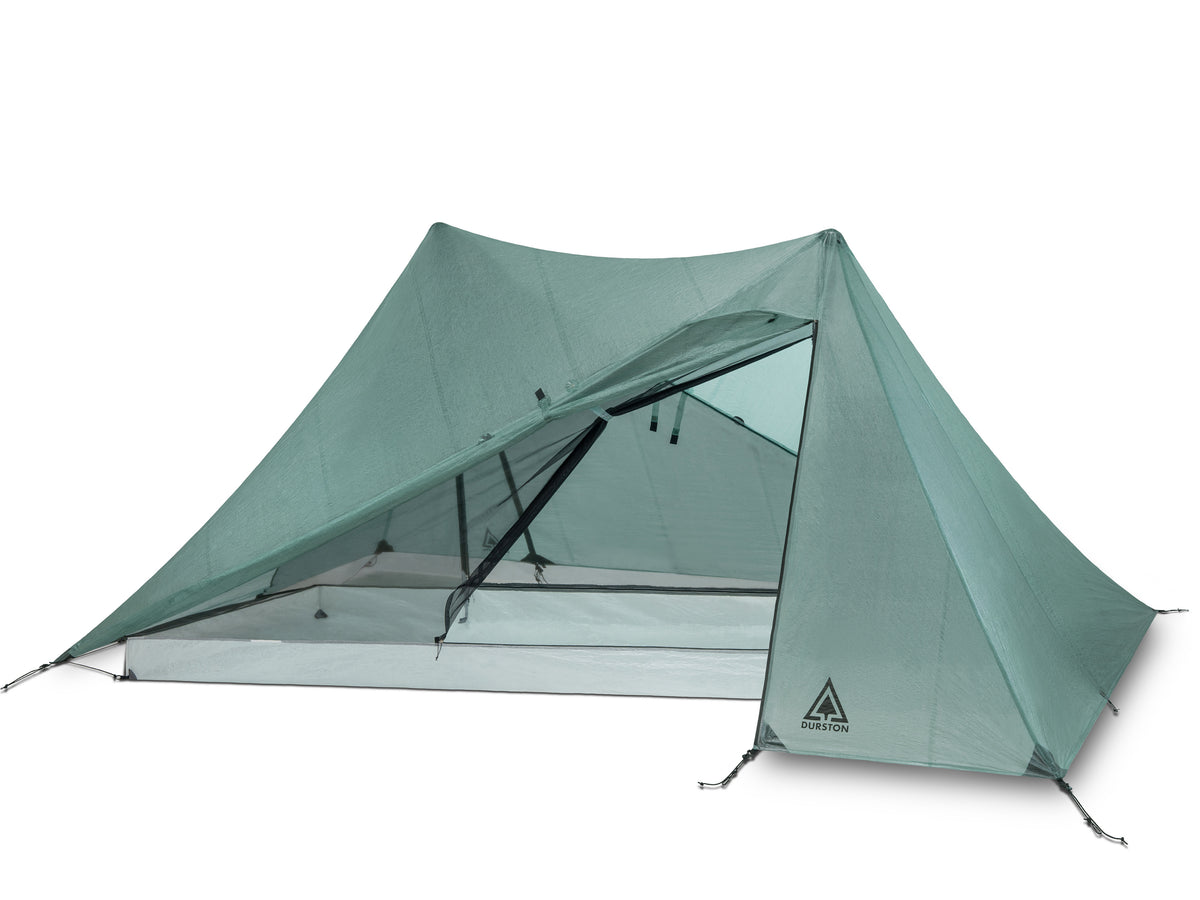
The Durston X-Mid Pro 1 combines Dan Durston's patented offset geometric layout with ultra-premium Dyneema Composite Fabric. The result is a dedicated solo shelter that weighs a fraction of traditional double-wall tents while preserving the upright headroom and generous living space that made the original X-Mid platform famous among long-distance hikers. By leveraging DCF for the fly, the Pro 1 achieves exceptional panel tension without guyline stretch during sustained rain. Inside, the offset dual-pole design positions the poles completely out of the interior living area and doorway paths. This orientation creates steep end walls, eliminating the feeling of fabric resting on your face or feet. Its compact packed size—measuring roughly 11 by 6.5 inches—slips effortlessly into low-volume fastpacks. Because this is a single-wall shelter, proper pitching is essential to avoid moisture contact. The inner floor is bonded directly to the fly via perimeter mesh, which vents condensation effectively but means interior droplets must be managed if brushing against walls in high-humidity zones. For solo hikers seeking peak ultralight performance without cramped dimensions, it stands among the very best options available. **Highlights** - Low total weight paired with premium Dyneema canopy construction - Patented offset pole geometry creates vertical walls and off-center pole placement - Packs down to a compact 11 x 6.5 x 6.5 inches - Simple four-stake baseline setup requires no mandatory guylines in moderate conditions - Dual vestibules provide generous dry storage for solo gear **Watch-outs** - High price reflects premium DCF materials and construction - Single-wall design demands attention to condensation in humid climates - Requires two trekking poles for a one-person shelter
Pros
- Generous interior volume and headroom via patented offset geometry
- Dyneema canopy eliminates fabric stretch and water retention in heavy rain
- Straightforward four-stake rectangular pitch without mandatory guylines
- Dual doors and vestibules provide distinct gear storage and easy entry
Cons
- Substantial financial investment around $699 limits accessibility
- Single-wall construction requires active condensation management
- Requires carrying two trekking poles for a solo pitch
Best uses
- Ultralight thru-hiking
- Fastpacking adventures
- Three-season solo backpacking
- High-mileage mountain treks
Specifications
- Capacity
- 1 person
- Packed Size
- 11 x 6.5 x 6.5 in
- Canopy Material
- Dyneema Composite Fabric (DCF)
- Structure Type
- Single-wall trekking pole shelter
- Poles Required
- 2 trekking poles
- Estimated Price
- Around $699
Pricing
We don't publish a price we haven't verified. The retailer links below open the live listing for this exact model.
Full catalog listing & offersBest for
Ultralight thru-hiking, Fastpacking adventures, Three-season solo backpacking, High-mileage mountain treks
Where to buy the X-Mid Pro 1
We don't have a direct Amazon listing on file yet — this opens an Amazon search for the exact make and model.
Some links are affiliate links. Buying through them supports our testing at no extra cost to you.
The Durston X-Mid Pro 1 is an ultralight, single-wall solo shelter designed for long-distance backpackers seeking minimal pack weight without sacrificing interior volume. Constructed using Dyneema Composite Fabric, the shelter pairs a high-performance, non-stretch canopy with designer Dan Durston's patented offset pole geometry. OutdoorGearLab awarded it the title of Best 1-Person Ultralight Tent, reflecting its reputation for turning minimalist dimensions into a surprisingly livable backcountry home. Unlike conventional solo trekking pole shelters that place a central support directly in the living path, the X-Mid geometry positions two trekking poles outside the inner sleeping rectangle. This creates steep end walls and asymmetrical peaks that prevent the fabric from sagging against your sleeping bag footbox or head. Measuring roughly 11 by 6.5 by 6.5 inches when packed, the Pro 1 occupies remarkably little room inside ultralight packs. Positioned around the $699 mark, the shelter represents a significant financial investment targeted at experienced hikers. As a single-wall tent, moisture management requires thoughtful site selection and ventilation, yet the integration of dual vestibules and generous interior headroom places it among the most capable solo DCF shelters on the market.
Target User Profile
The X-Mid Pro 1 caters specifically to weight-conscious backpackers, thru-hikers, and fastpackers who cover serious daily mileage and prioritize gear efficiency. Because it retails near $699 and relies on trekking poles for structural pitch, it rarely suits casual campers or hikers who do not already use poles. Instead, it is aimed at individuals who understand the nuances of single-wall shelters and demand an uncompromising weight-to-space ratio. Hikers above average height find exceptional value in the angled geometry, which offers usable length rarely matched in traditional solo pyramids. It also serves fastpackers using low-volume frameless packs, as Dyneema’s packability and lack of rigid frame elements make packing seamless. For hikers needing dependable weather resistance on exposed trails while keeping total base weight exceptionally low, the Pro 1 occupies an ideal sweet spot between extreme minimalism and everyday liveability.
DCF Materials and Build
At the core of the Pro 1 is Dyneema Composite Fabric (DCF), an ultra-high-molecular-weight polyethylene laminate that delivers high tensile strength and complete waterproofness at minimal weight. Because DCF does not absorb water, the tent avoids water-weight gain during sustained downpours and will not sag over the course of a damp night, eliminating the need to retension guylines at 2 a.m. The seams are fully taped and bonded, bypassing traditional stitched perforations that require manual seam sealing. The bathtub floor is integrated with the fly via perimeter mesh, allowing uninterrupted cross-ventilation while securing the sleeping space from insects. While DCF is legendary for its tear resistance, its puncture resistance against sharp granite or root systems requires reasonable campsite scrutiny. The construction standard across the canopy reflects precise laser-cut tolerances, reinforcing peak stress points and zipper terminations against heavy wind loading.
Livability and Offset Geometry
The defining technical achievement of the X-Mid platform is its patented offset geometry. Rather than centering trekking poles within the entrance or directly beside the bivy space, the two poles sit diagonally opposite each other outside the rectangular floor plan. This arrangement creates dual vertical sidewalls and asymmetrical peaks, translating into substantial shoulder room and generous sitting headroom. Two full-sized vestibules provide distinct dry storage zones, allowing muddy footwear and a damp pack to remain completely separated from clean sleeping insulation. Dual large side doors mean access is never obstructed by vertical trekking pole shafts, facilitating effortless entry and exit even during heavy weather. The diagonal floor placement provides enough longitudinal space for tall sleeping pads without risk of pressing the sleeping bag against condensation-prone perimeter walls.
Pitching Mechanics and Tuning
Setting up the X-Mid Pro 1 is distinctly straightforward compared to complex multi-guyline pyramids. Pitching begins with staking out a basic rectangle using four perimeter corner stakes. Once the base is anchored at right angles, two trekking poles set to roughly 118–120 centimeters are inserted handles-up into the peak grommets. Tensioning the corners instantly pulls the structure taut without requiring complex triangulation or mandatory secondary guyline tie-outs in standard conditions. Fine-tuning the pitch relies on keeping the four base corners square; an uneven base rectangle will introduce minor wrinkles across the fabric panels. For severe alpine winds, built-in peak guyout points and perimeter stake loops allow additional anchors to secure the canopy against lateral deflection. The absence of mandatory ridgeline guyouts keeps the pitch footprint remarkably compact on narrow trailside clearings.
Moisture Management and Weather
As with any single-wall design, condensation is an inherent operational factor that requires conscious management. When warm, humid breath meets a cold exterior canopy in still air, internal moisture accumulates on the inner face of the Dyneema. Durston counters this physics challenge by positioning large protected peak vents alongside low perimeter mesh to encourage convective airflow. Because the inner floor is separated from the fly walls, condensation that trickles down the canopy naturally drains through the perimeter mesh to the ground outside. However, campers must exercise care not to brush lofted sleeping bags or down garments against the ceiling during damp mornings. In sustained winds and heavy rain, the steep panels shed precipitation efficiently, and the non-stretch fabric prevents drumming or pooling, keeping the structure structurally quiet and stable throughout storms.
Alternatives and Competitive Value
At approximately $699, the X-Mid Pro 1 competes directly in the boutique ultralight category against shelters like the Zpacks Altaplex, Zpacks Plexamid, and Tarptent ProTrail Li. Many traditional single-pole solo tents save marginal weight by utilizing an apex pole right in the center of the doorway, restricting interior movement and forcing asymmetrical sitting postures. The Pro 1 offers distinctly better livability and dual-vestibule flexibility than single-door competitors, though it requires two trekking poles rather than one. For budget-conscious hikers, Durston’s standard silpoly X-Mid 1 offers identical internal geometry and true double-wall condensation isolation at less than half the financial outlay, albeit with a noticeable weight penalty. Against other DCF competitors, the Pro 1 stands out for its balanced geometry, intuitive four-stake pitch, and refined interior space.
How we picked
We started with a long list of ultralight tents that people actually buy, cut anything that could not clear our baseline for durability and field performance, then ranked the 10 that were left against the same criteria. Rankings are editorial. No brand pays for placement, and affiliate links never move a pick up or down.
- Storm worthiness and livability
- Pitch tension in wind, condensation management, and usable interior space for the weight.
- Real-world durability
- How the material, stitching, or steel holds up after a season of hard use — not how it looks new.
- Performance in bad conditions
- Wind, rain, cold, and grit are the test. Anything that only works on a nice day gets marked down.
- Weight and packability
- Every ounce has to earn its place in the pack, but not at the cost of something that fails in the field.
- Ease of use
- Setup, adjustment, and maintenance with cold hands, in the dark, without the manual.
- Value at its price point
- Compared against the closest competitors in the same tier, not against cheaper gear in a different class.
X-Mid Pro 1 — frequently asked questions
- Is the X-Mid Pro 1 worth it?
- We rank it #7 in Ultralight Tents. The Durston X-Mid Pro 1 combines Dan Durston's patented offset geometric layout with ultra-premium Dyneema Composite Fabric. The result is a dedicated solo shelter that weighs a fraction of traditional double-wall tents while preserving the upright headroom and generous living space that made the original X-Mid…
- What is the X-Mid Pro 1 best for?
- Best for ultralight thru-hiking, fastpacking adventures, three-season solo backpacking and high-mileage mountain treks. Standouts: generous interior volume and headroom via patented offset geometry and dyneema canopy eliminates fabric stretch and water retention in heavy rain.
- What are the downsides of the X-Mid Pro 1?
- Substantial financial investment around $699 limits accessibility, Single-wall construction requires active condensation management and Requires carrying two trekking poles for a solo pitch.
- What are the key specs of the X-Mid Pro 1?
- Capacity: 1 person · Packed Size: 11 x 6.5 x 6.5 in · Canopy Material: Dyneema Composite Fabric (DCF) · Structure Type: Single-wall trekking pole shelter · Poles Required: 2 trekking poles
- Target User Profile — what should I know about the X-Mid Pro 1?
- The X-Mid Pro 1 caters specifically to weight-conscious backpackers, thru-hikers, and fastpackers who cover serious daily mileage and prioritize gear efficiency. Because it retails near $699 and relies on trekking poles for structural pitch, it rarely suits casual campers or hikers who do not already use poles.
- DCF Materials and Build — what should I know about the X-Mid Pro 1?
- At the core of the Pro 1 is Dyneema Composite Fabric (DCF), an ultra-high-molecular-weight polyethylene laminate that delivers high tensile strength and complete waterproofness at minimal weight. m.
Compare side by side
Put the X-Mid Pro 1 against any other pick on this list — specs, price, pros, cons and reader ratings.