


From the north · Wildlife
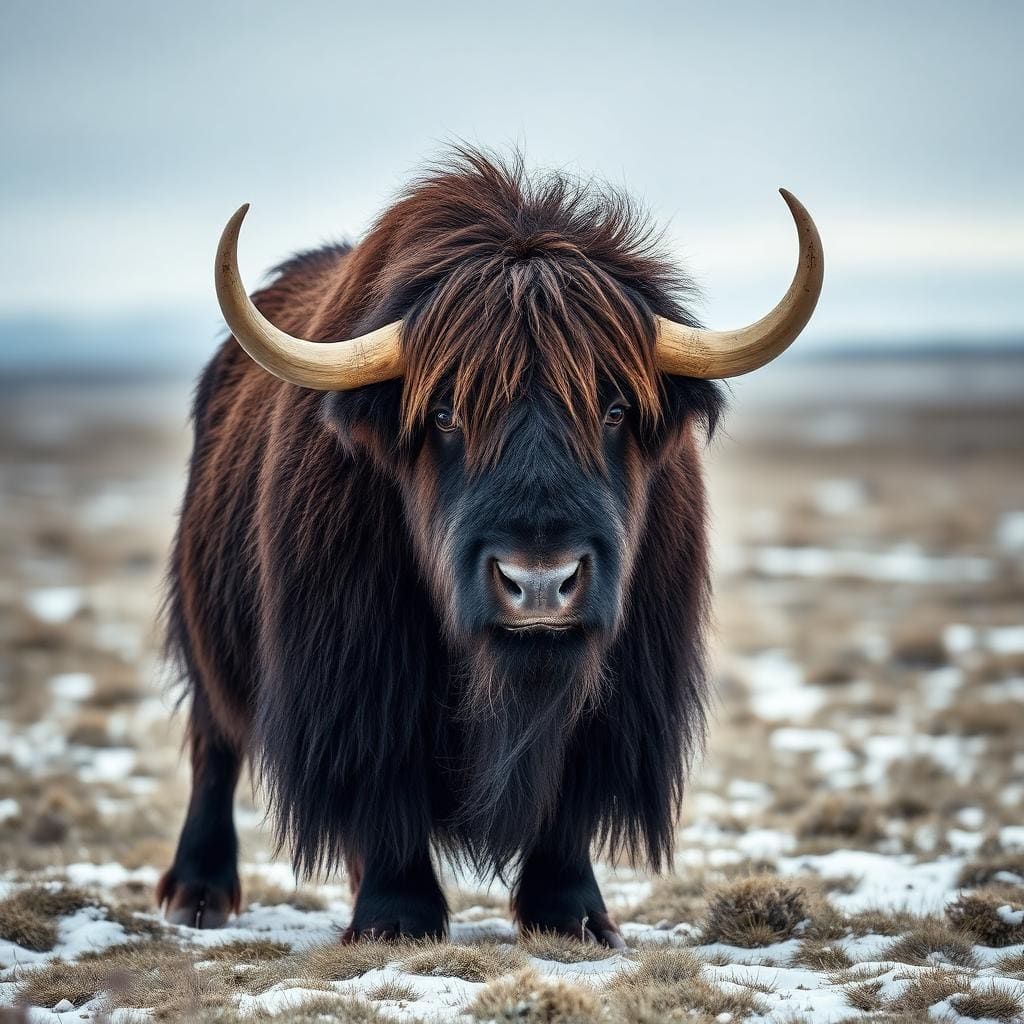
Muskox
A shaggy 800-pound relic of the Pleistocene — usually indifferent, but a defensive bull can flatten a tent and everything in it.
Ovibos moschatus
- Weight
- 500–900 lb (bulls); 350–500 lb (cows)
- Height
- 4–5 ft at the shoulder
- Lifespan
- 12–20 yr wild
- Herd size
- 10–20 typical, up to 70 in winter
- Diet
- Sedge, willow, lichen; digs through snow with hooves
- Range
- NWT, Nunavut, Alaska, Greenland; reintroduced across boreal edge
- Coat
- Qiviut underwool — 8× warmer than sheep wool
- Defense
- Circle formation, horns out, calves inside
Regulations by region
Muskox rules where you're headed
Seasons, tags, limits, and legal methods for muskox are set jurisdiction by jurisdiction. Pick your state or province and we'll point you at the agency that writes the rules.
Jump to another species
Where they intersect Alone country
Muskox range hugs the arctic coast but the sub-arctic reintroduction herds now come south into the northern edge of Great Slave Lake terrain and the barrenlands used by Frozen crews. They favour wind-scoured ridges in winter and river-valley sedge meadows in summer. Sign is unmistakable: shed clumps of qiviut on willow, deeply cratered snow where a herd has fed, and dinner-plate hoof prints in mud.
Defensive behavior
Muskoxen evolved with wolves as their primary predator. Their entire defence is the circle: adults face outward horns down, calves in the middle. It works against wolves. It does not work against a rifle, which is why herds collapsed under early hunting. On foot at close range the circle is stable — but a lone bull, an outcast, or a rut-crazed dominant male will charge, and a full charge from an 800-lb animal is not survivable in a small shelter.
Approach rules
Give any muskox at least 200 yards. If a herd forms a circle, they are stressed — back off, do not photograph closer. A bull that swings his head sideways, rubs a preorbital gland on his foreleg, or paws the ground has committed to a charge. Downed birch, willow thickets, and any solid tree between you and the animal is your only real protection on open tundra.
As a food source
For any legal harvest scenario (permits, subsistence tag), muskox is extraordinarily calorie-dense — fat layers up to 3 inches on a fall bull, and the qiviut can be spun into insulation. But a downed muskox is a magnet: wolves, wolverine, and grizzly bear can find the kill within hours. Butcher fast, hang high, and expect competition.
Field notes
- A circled herd is a stressed herd — retreat immediately, do not close for photos.
- Lone bulls in late summer are outcasts driven from the herd and are the most likely to charge unprovoked.
- Qiviut caught on willow is the easiest sign that a herd used a valley recently — worth checking wind and pulling back if you were planning to camp there.
Where you'll find it
Filming locations with muskox
On screen