


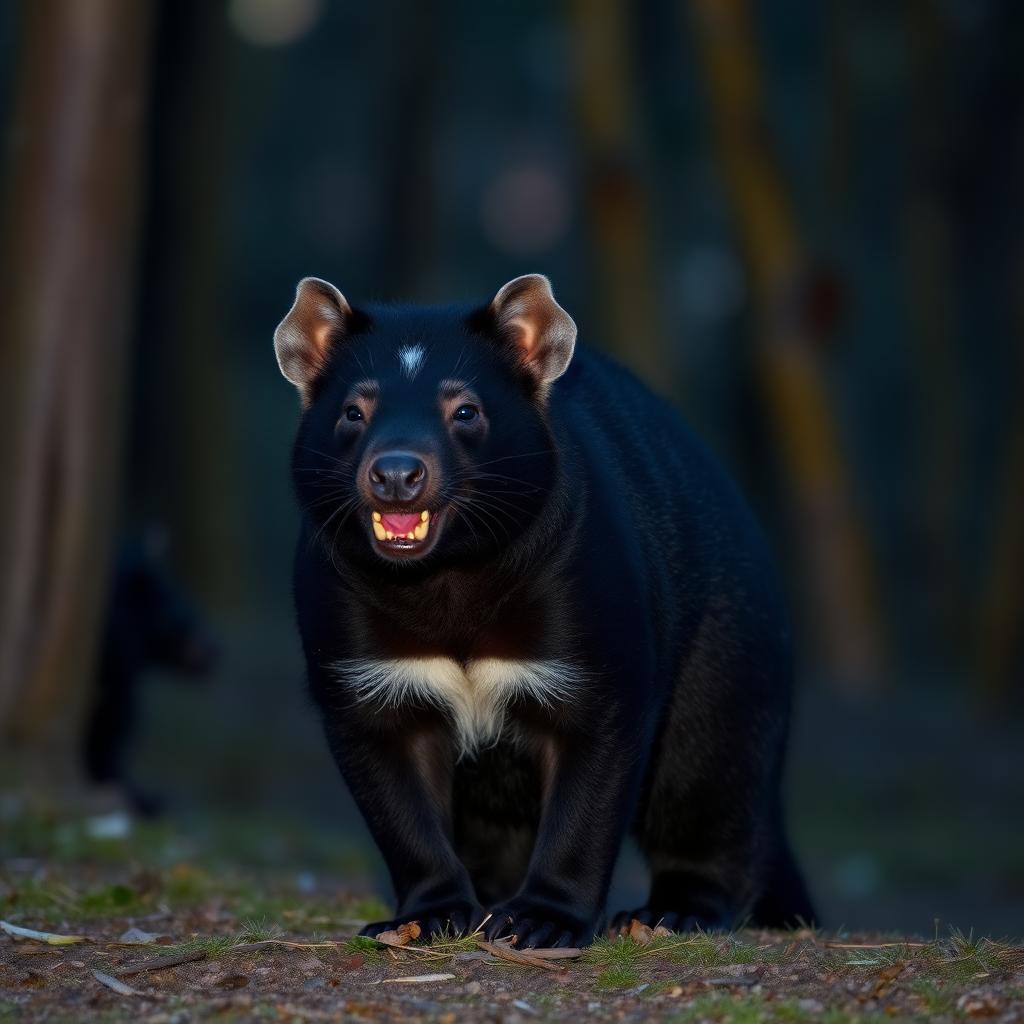
From the north · Wildlife
Tasmanian devil
A stocky nocturnal scavenger with the strongest bite-per-body-mass of any living mammal — a nuisance to food caches, not a threat to people.
Sarcophilus harrisii
- Weight
- 10–26 lb (4.5–12 kg)
- Length
- 22–26 in body + 10 in tail
- Lifespan
- 5–6 yr wild
- Bite force
- ~553 N — highest per kg of any living mammal
- Diet
- Carrion primarily; possum, wallaby, wombat carcasses, bones and all
- Active
- Strictly nocturnal
- Range
- Endemic to Tasmania — statewide
- Status
- Endangered (DFTD facial tumour disease)
Regulations by region
Tasmanian devil rules where you're headed
Seasons, tags, limits, and legal methods for tasmanian devil are set jurisdiction by jurisdiction. Pick your state or province and we'll point you at the agency that writes the rules.
Jump to another species
What they mean for a camp
Devils are the reason nothing is left of a road-killed wallaby in Tasmania by morning. In camp they are a food-security problem, not a personal-safety problem. A devil will chew through a soft pack, drag a fish out of a covered pot, and audibly crack through bones on your doorstep while you sleep. Their screeching at a carcass — the sound that gave them the name — is unmistakable and unnerving but not aggressive.
Behavior around humans
Devils are naturally wary and typically flee. Attacks on people are essentially unheard of; the risk is a defensive bite when a devil is cornered or hand-fed. That bite is disproportionate to the body size — the jaw musculature is built to crush the skull and long bones of prey up to wallaby size — and a hand bite is a serious wound needing sutures and antibiotics.
Camp planning
Hang or hard-case all food and fish. Bury or burn every fish frame and gut pile at least 100 m from the sleeping shelter. Do not leave boots or leather gloves out — devils chew salt-stained leather. Sleep with the shelter closed; a devil investigating scent will crawl into an open vestibule but will not force a zipper.
As sign for other species
A devil actively feeding on a carcass tells you the carcass is fresh enough that a larger predator (feral cat, quoll, wedge-tailed eagle) may return. Devil scat — dark, twisted, packed with hair and shattered bone fragments — on a trail junction indicates a regular latrine and a nearby den, useful for avoiding an unwelcome midnight visit.
Field notes
- Screeching and jaw-clacking at a carcass is normal social behavior at feed, not an attack signal.
- Bite force is disproportionate to size — a defensive bite to the hand is a serious wound; never hand-feed or corner one.
- Devils will chew salt-stained leather; do not leave boots or gloves outside the shelter overnight.