


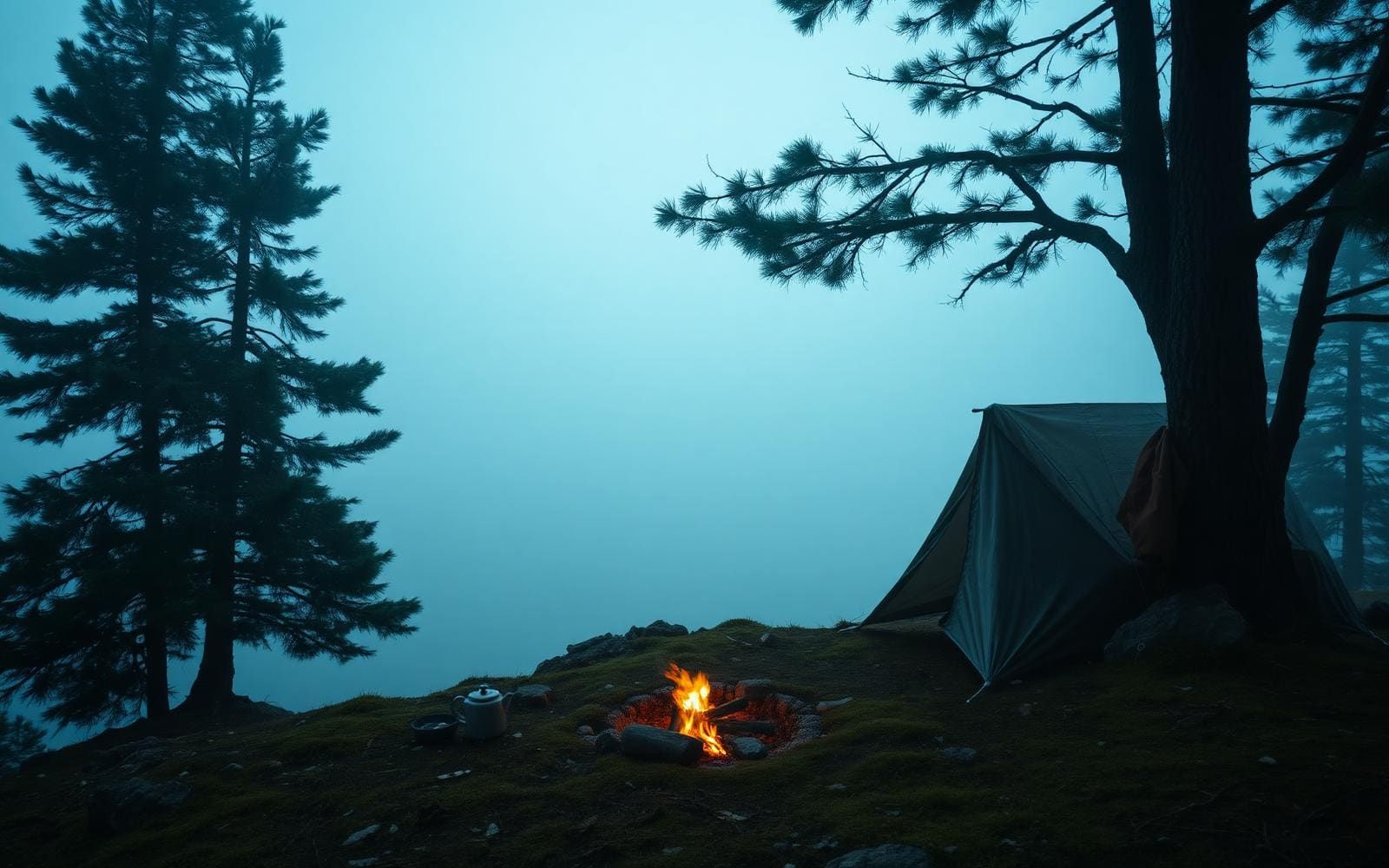
A good campsite prevents problems before gear leaves the pack. The best location is legal, durable, well drained, protected from hazards, and appropriate for the weather and local wildlife. A scenic view is welcome. A scenic view directly beneath a dead branch, inside a flood channel, or on fragile vegetation is less of a bargain.
Start with legality and designated options
Use established sites where required and follow permit, distance, group-size, fire, and food-storage rules. In high-use areas, concentrating impact on durable established surfaces is often better than creating a new clearing. In dispersed settings, follow land-manager guidance about distance from roads, trails, water, and other camps. Do not assume an existing fire ring makes a site legal.
Scan above, below, and around
Look overhead for dead limbs, damaged trees, hanging rocks, and unstable slopes. Inspect the ground for drainage channels, ant nests, roots, sharp objects, and signs of rising water. Consider wind exposure, tide, avalanche terrain, rockfall, and whether a storm could isolate the site. Check for wildlife trails, nests, carcasses, and food attractants left by previous visitors.
Use terrain to manage weather
A small rise may drain better than a depression, while a slight bench can reduce wind compared with an exposed ridge. Cold air settles in low areas, and narrow valleys can channel wind. Face tent doors away from prevailing weather when practical and use natural barriers without crowding unstable trees. Leave enough room to tension guylines without blocking paths.
Protect water and the experience of others
Camp at the required distance from water and avoid washing, cooking, or disposing of waste at the shoreline. Give other visitors visual and acoustic space. Keep lights and noise modest, especially after dark. A campsite should support recovery, not establish territorial control over the entire drainage.
Five-minute campsite scan
| Direction | Question |
|---|---|
| Above | What can fall, slide, or shed branches? |
| Below | Will water collect, flow, or rise here? |
| Upwind | What weather, smoke, or odors may arrive? |
| Nearby | Are there wildlife signs, trails, nests, or attractants? |
| Outward | Will this site damage vegetation or intrude on others? |
Common mistakes to avoid
- Choosing the flattest depression: Flat ground can become a bathtub.
- Pitching beside water for convenience: It can violate rules, increase condensation, disturb wildlife, and expose camp to floods.
- Ignoring old damage: Burned trunks, cracked limbs, and eroded banks remain hazards after the weather clears.
Field checklist
- Verify the site is legal
- Inspect overhead and slope hazards
- Check drainage and flood evidence
- Choose durable ground
- Leave appropriate distance from water and other visitors
Frequently asked questions
How close should I camp to water?
Follow local regulations and Leave No Trace guidance. Required distances vary by property and ecosystem.
Is it safe to camp under trees?
Trees can provide shelter, but inspect for dead limbs, damaged trunks, lightning exposure, and wind hazards. No tree is automatically safe.
Should I move rocks or dig a tent platform?
Avoid altering the site. Choose a naturally suitable durable surface whenever possible.
Final word
A campsite is a risk decision disguised as a patch of ground. Spend five careful minutes choosing it and you may save hours of wet, windy, or medically interesting regret.