


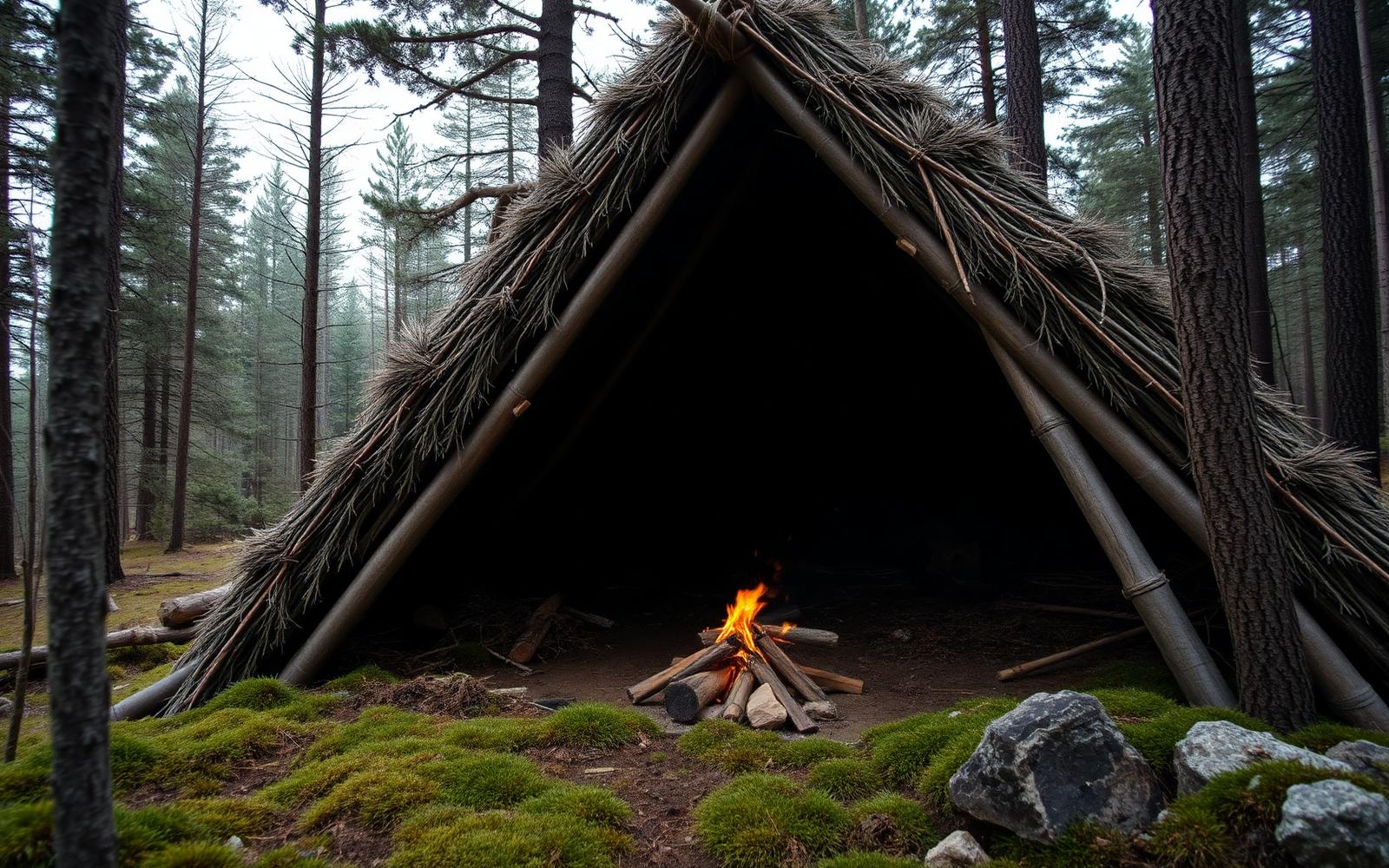
Tarp Ridgeline is useful because a reliable ridgeline is quick to tension, easy to release with cold hands, and gentle on the trees or anchors supporting it. The practical goal is not a perfect demonstration; it is a system that still works when time, weather, and attention are imperfect.
Field answer: For tarp ridgeline setup, use a five-part sequence: choose healthy anchors outside dead-limb fall zones, use wide tree straps or protective wraps, tie a fixed loop at one end and an adjustable hitch at the other, keep the line high enough for drainage but low enough for storm stability, and add drip lines so water does not run into the shelter. Practice the sequence with the exact gear you will carry and stop when the legal, weather, or safety margin changes.
Why this skill matters
A reliable ridgeline is quick to tension, easy to release with cold hands, and gentle on the trees or anchors supporting it. Campcraft is most valuable when it improves ordinary trips without damaging live vegetation or turning a controlled practice session into an emergency.
The useful standard is repeatability. A technique that works once in a backyard demonstration but fails when the ground is wet, the group is tired, or a critical item is buried is not yet a field system. Define the conditions in which the skill is appropriate, the warning signs that should stop it, and the simpler backup that remains available.
A field-ready method
1. Healthy anchors outside dead-limb fall zones
The field version is straightforward: Choose healthy anchors outside dead-limb fall zones. This is where preparation replaces improvisation and makes the next decision easier to evaluate. Before continuing, ask what would fail first if wind, rain, darkness, or fatigue increased.
2. Wide tree straps or protective wraps
Make the action observable: Use wide tree straps or protective wraps. Pause long enough to confirm the setup before adding force, distance, heat, exposure, or commitment. Confirm that the action follows current local rules and does not create avoidable impact.
3. Tie a fixed loop at one end and an adjustable hitch at the other
For tarp ridgeline, this is the working action: Tie a fixed loop at one end and an adjustable hitch at the other. Doing this early preserves options before weather, fatigue, or time pressure narrows the decision. Before continuing, ask what would fail first if wind, rain, darkness, or fatigue increased.
4. The line high enough for drainage but low enough for storm stability
Apply the step in plain terms: Keep the line high enough for drainage but low enough for storm stability. Treat this as a checkpoint rather than a detail to fix after the system is already loaded. Confirm that the action follows current local rules and does not create avoidable impact.
5. Add drip lines so water does not run into the shelter
The field version is straightforward: Add drip lines so water does not run into the shelter. The goal is not speed; it is a repeatable result that remains safe when hands are cold or attention is divided. Before continuing, ask what would fail first if wind, rain, darkness, or fatigue increased.
Gear and setup
A practical starting kit is tarp, low-stretch cord, tree straps, stakes, and headlamp. Pack it as a working system, not as unrelated objects. Inspect condition, confirm fit or compatibility, and place the item needed first where it can be reached first.
Before the trip, perform the whole sequence from packed state to finished state. That exposes missing connectors, empty fuel, incompatible parts, dull edges, dead batteries, poor fit, and instructions that were never read.
Common mistakes
- Wrapping thin cord directly around fragile bark. Fatigue and schedule pressure make this error more likely, which is why the correction should be decided in advance. Reset by returning to this earlier action: Choose healthy anchors outside dead-limb fall zones.
- Placing the tarp beneath dead branches. The problem is not only the immediate result; it can also hide the warning signs that should trigger a stop. The better move is to pause and re-establish the system: Use wide tree straps or protective wraps.
- Using knots that jam after loading. It usually appears when the group starts working before defining the real objective. Correct it before continuing: Tie a fixed loop at one end and an adjustable hitch at the other.
A practice session that builds judgment
Use this drill: Time yourself setting and removing the same ridgeline five times, including one round while wearing gloves and one in low light.
Run the first repetition slowly and narrate each decision. On the second, remove narration but keep every checkpoint. On the third, add one controlled complication such as gloves, low light, a modest load, or light weather—never all at once. End by resetting the site and writing one change for the next session.
Safety and stewardship
Practice on land where the activity is permitted. Protect live trees, follow fire restrictions, and stop before fatigue makes edged-tool work unsafe. Wild10Basecamp provides educational outdoor information. Conditions, regulations, and individual capabilities vary. Readers are responsible for obtaining current local guidance, training, permits, and professional help when needed.
Use durable surfaces, minimize disturbance, pack out small waste, and choose a stove, established facility, or no-fire option whenever it reduces impact. Skill does not create an exemption from land rules or from the obligation to leave the place functional for wildlife and the next visitor.
Frequently asked questions
What is the fastest safe way to improve at tarp ridgeline?
Use short, repeatable practice sessions in low-consequence conditions. A strong session for this topic is: Time yourself setting and removing the same ridgeline five times, including one round while wearing gloves and one in low light. Stop when fatigue, weather, or tool control begins to reduce quality.
What gear do I need for tarp ridgeline?
Start with the activity-appropriate essentials: tarp, low-stretch cord, tree straps, stakes, and headlamp. Add location-specific equipment only after checking current rules, weather, and the consequences of failure.
What is the most common tarp ridgeline mistake?
A recurring mistake is wrapping thin cord directly around fragile bark. Correct it by returning to the setup sequence and verifying each step before adding speed or commitment.
Final takeaway
The durable lesson in tarp ridgeline is to make preparation visible, practice the full sequence, and respond to feedback before conditions force the decision. Add original field experience and qualified review before publishing this draft as advice.
Sources and further reading
- Ten Essentials — U.S. National Park Service
- The Seven Principles — Leave No Trace
- Know Before You Go: Fire — U.S. Forest Service
Editorial safety note: Wild10Basecamp provides educational outdoor information. Conditions, regulations, and individual capabilities vary. Readers are responsible for obtaining current local guidance, training, permits, and professional help when needed.