


Best of the Best: Cedar Stump-Shooter vs Doug Fir Big-Game
Cedar Stump-Shooter vs Doug Fir Big-Game
Our #1 and #2 picks from Top 10 Arrow Builds, compared spec-by-spec with clear pros, cons, and a verdict.
Choosing the right arrow build is paramount for archers, directly impacting accuracy, penetration, and overall shooting experience. When comparing traditional wooden arrows like the Cedar Stump-Shooter and the Doug Fir Big-Game, archers need to consider their specific discipline and target. Are you a recreational stump shooter or small game hunter, prioritizing forgiveness and reusability, or are you a serious big-game hunter demanding ultimate penetration and precision? Your arrow's wood type, spine, point weight, fletching style, and even feather cut all play critical roles in how it flies, impacts, and holds up in the field. This head-to-head looks at two distinct builds tailored for very different applications, guiding your decision based on your archery goals.
Cedar Stump-Shooter
Port Orford cedar, 500 spine, 125 gr blunt or judo, 5" shield feathers
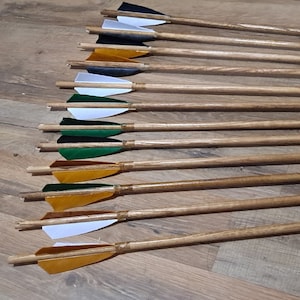
The classic roving arrow. Cheap enough to lose, tough enough to keep shooting after hitting rocks and stumps.
Doug Fir Big-Game
Surewood Douglas fir, 55–60 spine, 190 gr single-bevel broadhead, 5.5" parabolic
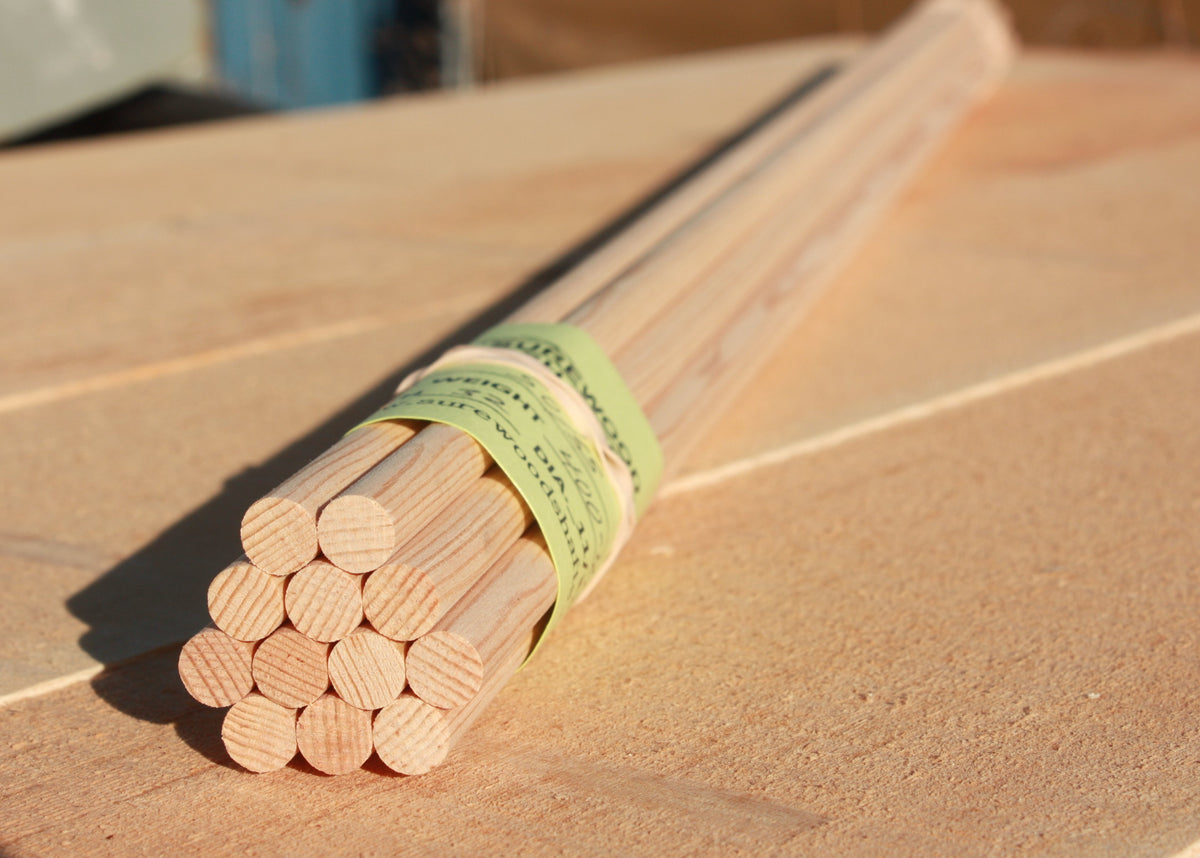
Heavy front-of-center wood arrow for elk and moose from a 55–65 lb longbow. Deep penetration, quiet flight.
Spec-by-Spec
| Spec | #1 Cedar Stump-Shooter | #2 Doug Fir Big-Game |
|---|---|---|
| Wood Type | Port Orford Cedar | Douglas Fir |
| Spine (Approximate) | 500 | 55-60 |
| Point Weight (Grains) | 125 gr (blunt/judo) | 190 gr (single-bevel broadhead) |
| Fletching Style | 5" Shield Feathers | 5.5" Parabolic Feathers |
| Intended Use | Stump Shooting, Small Game | Big Game Hunting |
| Durability (Shaft) | Good, forgiving for impacts | Excellent, very strong |
| Straightness Retention | Good, can be straightened | Very good, holds straightness well |
| Price Tier (Per Dozen Shafts) | Mid-Range | Upper-Mid Range |
Cedar Stump-Shooter
Best for: Recreational archers and small game hunters seeking a durable, forgiving, and fun arrow.
Pros
- Excellent for small game and practice, minimizes loss.
- Port Orford Cedar offers classic aesthetics and scent.
- Lighter point weight and higher spine provide a flatter trajectory for closer shots.
- Shield cut feathers provide excellent stability for blunts/judos.
- Shafts are relatively easy to straighten after impact.
Cons
- Not ideal for big game hunting due to lower momentum.
- Lighter weight can be more susceptible to wind drift.
- 500 spine may not be optimal for heavy hunting bows.
- Blunt/judo points are not designed for deep penetration.
Doug Fir Big-Game
Best for: Serious big-game hunters prioritizing maximum penetration and knockdown power.
Pros
- Exceptional penetration for large game animals.
- Heavy point weight and low spine maximize kinetic energy and momentum.
- Douglas Fir is renowned for its strength and resilience.
- Single-bevel broadhead enhances bone-splitting capabilities.
- Parabolic fletching offers excellent flight characteristics and less wind drift.
Cons
- Significantly heavier overall, resulting in a more arcing trajectory.
- Requires a powerful bow to achieve adequate speed and flat trajectory.
- More expensive due to premium wood and broadhead.
- Less forgiving for casual target practice or stump shooting.
The Verdict
The choice between the Cedar Stump-Shooter and the Doug Fir Big-Game is clear-cut, dictated entirely by your archery objective. For the recreational archer who enjoys target practice, stump shooting, or pursuing small game, the Cedar Stump-Shooter is the undeniable winner. Its forgiving Port Orford Cedar, lighter point, and durable blunt/judo combination make it ideal for repeated impacts and minimizes wear on your gear. Conversely, for the dedicated big-game hunter who demands maximum stopping power and penetration, the Doug Fir Big-Game is the superior choice. Its robust Douglas Fir shaft, heavy single-bevel broadhead, and low spine are engineered for deep tissue and bone penetration. Neither build is a 'one-size-fits-all'; each excels in its specific, intended domain.