


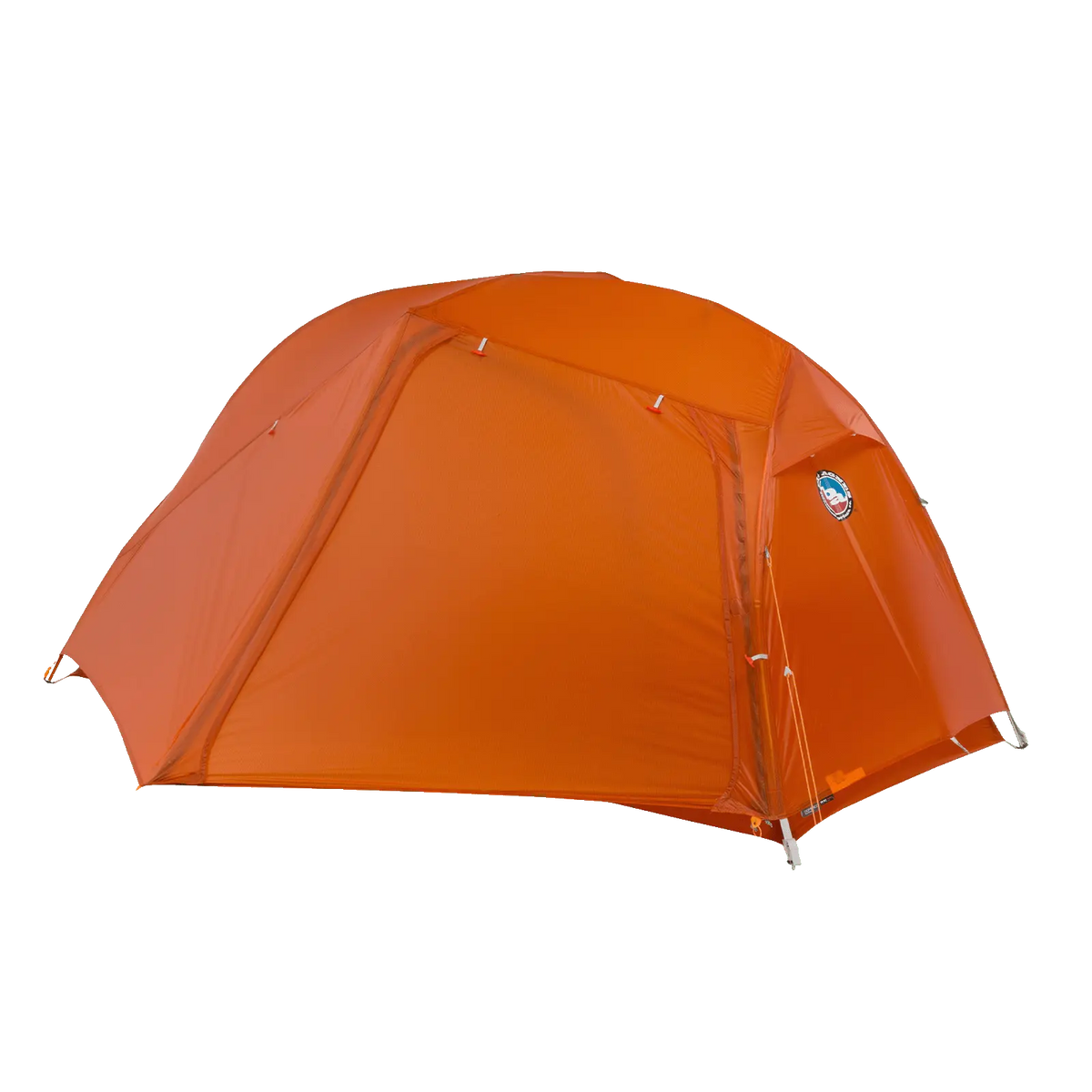
#1 on this list
Copper Spur HV UL1
Big Agnes
The Big Agnes Copper Spur HV UL1 is widely viewed as the benchmark against which all other freestanding solo backpacking shelters are measured. Designed for backpackers who want a low pack weight without sacrificing the simple, dependable pitch of a traditional pole architecture, it delivers exceptional interior volume relative to its footprint. Its high-volume hub pole structure produces steep, near-vertical side walls that keep the canopy off your head and feet when sitting up or changing clothes. Constructed from proprietary ultralight double-ripstop nylon treated with a polyurethane-silicone coating, the Copper Spur pairs delicate weight savings with intentional reinforcements at high-stress points. The single side-entry door is generously proportioned, and the vestibule can be configured into an awning using trekking poles to vent the shelter during light rain. Because it is fully freestanding, it can be pitched quickly on rock ledges, compacted dirt, and wooden tent platforms where driving stakes is impractical. The clear trade-off is pack weight and packed size compared to non-freestanding ultralight options. The Copper Spur includes a multi-hubbed pole set that takes up dedicated room inside your pack. Furthermore, the ultralight floor fabric requires careful site preparation or an additional footprint to prevent punctures from sharp gravel, thorns, and roots. **Highlights** - Fully freestanding high-volume hub pole architecture provides steep sidewalls. - Awning-style vestibule can be extended using trekking poles for extra ventilation. - Large side door with dual zippers allows easy entry and smooth operation. - Generous interior storage pockets, including a large ceiling gear loft. - Color-coded webbing and pole ends simplify setup in low-light conditions. **Watch-outs** - Thin floor fabric requires attentive campsite clearing or a dedicated ground cloth. - Higher trail weight and packed volume than minimalist trekking-pole shelters. - Single vestibule design limits external gear storage space.
- Price
- Check current price
- Reader rating
- No reader votes yet
- How we assessed it
- Specification researched

#2 on this list
Hornet OSMO 1P
Nemo
The Nemo Hornet OSMO 1P caters directly to weight-conscious backpackers who prefer a dedicated pole frame over trekking-pole setups. Operating as a semi-freestanding shelter, the Hornet utilizes a single hubbed pole structure with a Y-configuration that provides structure to the head end while requiring two corner stakes to extend the footbox. This layout substantially reduces pole weight while retaining a predictable, quick setup. A central feature of this tent is Nemo's proprietary OSMO composite fabric. Blending recycled polyester and nylon fibers, the material is engineered to resist water absorption, sag substantially less when wet, and dry faster than conventional silnylon. Overhead, the patented Flybar clip pulls the inner tent mesh outward at the apex, increasing shoulder-level volume and preventing the tent wall from bowing inward against the camper. Because the foot end is non-freestanding, the Hornet requires secure staking to achieve its full interior length and prevent the foot of your sleeping bag from brushing the fly. The interior floor is distinctly tapered, leaving minimal room beside your sleeping pad for extra gear. Campers who prioritize shoulder and elbow clearance over a wide floor plan will appreciate the balance, but taller hikers may find the low footbox restrictive. **Highlights** - Semi-freestanding design cuts frame weight while maintaining a rapid pitch. - OSMO poly-nylon fabric offers three times less wet sag and faster dry times. - Flybar clip creates noticeably better headroom and shoulder width at the apex. - Compact packed dimensions fit horizontally inside narrow ultralight backpacks. - Nightlight Pocket diffuses headlamp beams to create warm, ambient ceiling lighting. **Watch-outs** - Tapered footbox requires solid ground stakes to avoid canopy sag. - Snug interior floor plan leaves virtually no room for gear beside a sleeping pad. - Ultralight fabrics require gentle handling around rough surfaces.
- Price
- Check current price
- Reader rating
- No reader votes yet
- How we assessed it
- Specification researched
Specs side by side
| Spec | Copper Spur HV UL1 | Hornet OSMO 1P |
|---|---|---|
| Design Type | Freestanding double-wall solo tent | — |
| Canopy Fabric | Proprietary double-ripstop nylon | — |
| Pole Architecture | High-volume hubbed pole system | — |
| Entry Configuration | Single side-entry door with vestibule | — |
| Ventilation Feature | Vestibule converts to trekking-pole awning | — |
| Pitch Alignment | Color-coded webbing and pole attachments | — |
| Shelter Type | — | Semi-freestanding double-wall solo tent |
| Frame Structure | — | Single-hubbed aluminum Y-pole system |
| Fly Fabric | — | Proprietary OSMO poly-nylon composite |
| Interior Tensioner | — | Flybar volumizing canopy clip |
| Staking Needs | — | Two required corner stakes at the foot |
| Ambient Lighting | — | Headlamp-diffusing Nightlight Pocket |
What our reviewers liked and didn't
Copper Spur HV UL1
- Steep sidewall architecture provides usable head and shoulder room
- Freestanding frame sets up easily on rock shelves and wooden platforms
- Vestibule awning feature vents the shelter safely during warm drizzle
- Generous interior pocketing keeps gear and electronics organized
- Thin floor fabric necessitates careful site prep or an extra footprint
- Packs down larger than trekking-pole-supported ultralight shelters
- Single side vestibule limits overall exterior covered storage space
Hornet OSMO 1P
- OSMO composite fabric drastically cuts wet fabric sag and dries quickly
- Flybar clip widens shoulder-level headroom at the tent apex
- Side-entry layout is significantly easier to access than front-door solo tents
- Packs down small enough for minimalist packs and bikepacking setups
- Semi-freestanding footbox requires solid stake points to avoid sagging
- Tapered floor plan provides virtually no room inside for personal gear
- Ultralight shell fabrics require diligent site clearance to prevent tears
Prices change constantly — the figure shown is the last verified catalog price, and the buy buttons always go to the current listing.