



#10 on this list
Notch Li
Tarptent
The Tarptent Notch Li is a high-performance ultralight solo shelter that uniquely combines Dyneema Composite Fabric construction with a true double-wall design. Designed for weight-focused hikers traversing demanding environments, it uses two trekking poles for support along with integrated carbon fiber end struts that prop up the low ends of the shelter, transforming dead space into usable foot and head clearance. Because it is a double-wall tent, the breathable mesh inner completely isolates the sleeper from any condensation that forms on the underside of the outer DCF fly. This provides a substantial comfort advantage over typical single-wall Dyneema shelters in damp, cold conditions. The Notch Li also stands out by offering two full-sized side doors and two independent vestibules, giving solo hikers flexible ventilation options and ample gear storage on both sides of the tent. However, the integrated carbon struts mean the shelter rolls up longer than tents without built-in stiffeners, requiring vertical packing inside most backpacks. Achieving a storm-worthy pitch also requires proper tension on the four primary perimeter stakes and two ridgeline guyouts. While the material is completely waterproof and impervious to wet sag, the premium construction carries a high retail cost. **Highlights** - True double-wall DCF construction completely isolates campers from condensation. - Dual side doors and dual vestibules provide unmatched access and gear storage for a solo tent. - Integrated pitch-enhancing carbon struts create upright vertical end walls. - Inherently waterproof Dyneema fabric absorbs zero water and will not sag overnight. - Fly and inner pitch together rapidly, keeping the interior dry during rainy setups. **Watch-outs** - High retail investment due to premium materials and specialized manufacturing. - Integrated corner struts result in a longer packed length that affects packing style. - Non-freestanding pitch requires firm ground anchors to maintain tautness.
- Price
- Check current price
- Reader rating
- No reader votes yet
- How we assessed it
- Specification researched
#1 on this list
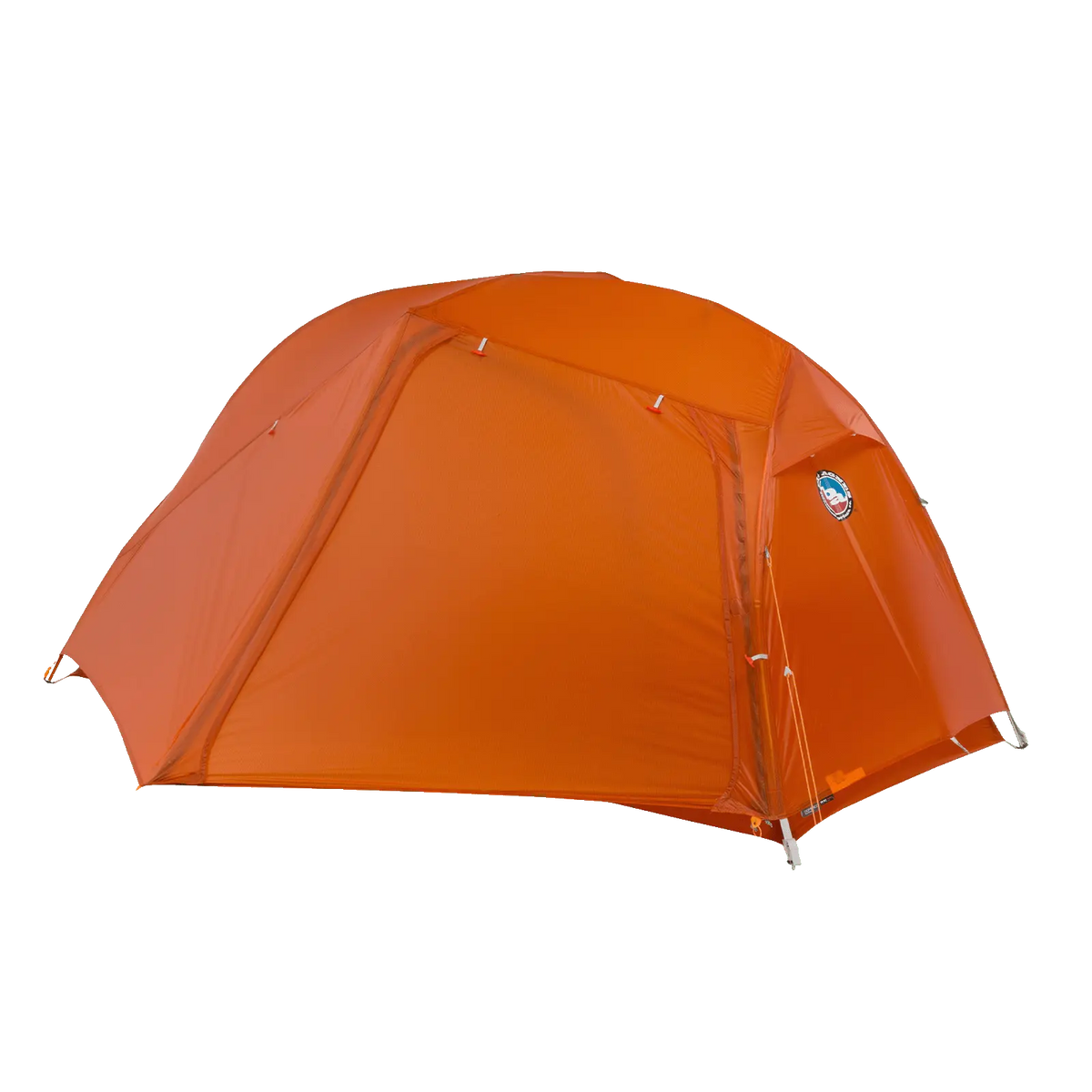
Copper Spur HV UL1
Big Agnes
The Big Agnes Copper Spur HV UL1 is widely viewed as the benchmark against which all other freestanding solo backpacking shelters are measured. Designed for backpackers who want a low pack weight without sacrificing the simple, dependable pitch of a traditional pole architecture, it delivers exceptional interior volume relative to its footprint. Its high-volume hub pole structure produces steep, near-vertical side walls that keep the canopy off your head and feet when sitting up or changing clothes. Constructed from proprietary ultralight double-ripstop nylon treated with a polyurethane-silicone coating, the Copper Spur pairs delicate weight savings with intentional reinforcements at high-stress points. The single side-entry door is generously proportioned, and the vestibule can be configured into an awning using trekking poles to vent the shelter during light rain. Because it is fully freestanding, it can be pitched quickly on rock ledges, compacted dirt, and wooden tent platforms where driving stakes is impractical. The clear trade-off is pack weight and packed size compared to non-freestanding ultralight options. The Copper Spur includes a multi-hubbed pole set that takes up dedicated room inside your pack. Furthermore, the ultralight floor fabric requires careful site preparation or an additional footprint to prevent punctures from sharp gravel, thorns, and roots. **Highlights** - Fully freestanding high-volume hub pole architecture provides steep sidewalls. - Awning-style vestibule can be extended using trekking poles for extra ventilation. - Large side door with dual zippers allows easy entry and smooth operation. - Generous interior storage pockets, including a large ceiling gear loft. - Color-coded webbing and pole ends simplify setup in low-light conditions. **Watch-outs** - Thin floor fabric requires attentive campsite clearing or a dedicated ground cloth. - Higher trail weight and packed volume than minimalist trekking-pole shelters. - Single vestibule design limits external gear storage space.
- Price
- Check current price
- Reader rating
- No reader votes yet
- How we assessed it
- Specification researched
Specs side by side
| Spec | Notch Li | Copper Spur HV UL1 |
|---|---|---|
| Design Type | Double-wall trekking-pole tent | Freestanding double-wall solo tent |
| Canopy Material | Dyneema Composite Fabric (DCF) | — |
| Pole Requirement | Two trekking poles | — |
| Entry Style | Dual side doors with vestibules | — |
| End Structure | Integrated carbon fiber struts | — |
| Interior Layout | Detachable inner with mesh canopy | — |
| Canopy Fabric | — | Proprietary double-ripstop nylon |
| Pole Architecture | — | High-volume hubbed pole system |
| Entry Configuration | — | Single side-entry door with vestibule |
| Ventilation Feature | — | Vestibule converts to trekking-pole awning |
| Pitch Alignment | — | Color-coded webbing and pole attachments |
What our reviewers liked and didn't
Notch Li
- True double-wall DCF construction completely isolates camper from condensation
- Dual side doors and dual vestibules provide generous entry and gear storage
- Dyneema fabric will not absorb water or sag overnight during rainstorms
- End struts elevate fabric above sleeping bag to prevent quilt dampness
- Fixed carbon struts create a long packed length that limits pack options
- Significant financial investment compared to traditional silnylon shelters
- Non-freestanding architecture requires solid stake purchase to stand securely
Copper Spur HV UL1
- Steep sidewall architecture provides usable head and shoulder room
- Freestanding frame sets up easily on rock shelves and wooden platforms
- Vestibule awning feature vents the shelter safely during warm drizzle
- Generous interior pocketing keeps gear and electronics organized
- Thin floor fabric necessitates careful site prep or an extra footprint
- Packs down larger than trekking-pole-supported ultralight shelters
- Single side vestibule limits overall exterior covered storage space
Prices change constantly — the figure shown is the last verified catalog price, and the buy buttons always go to the current listing.