


#3 on this list
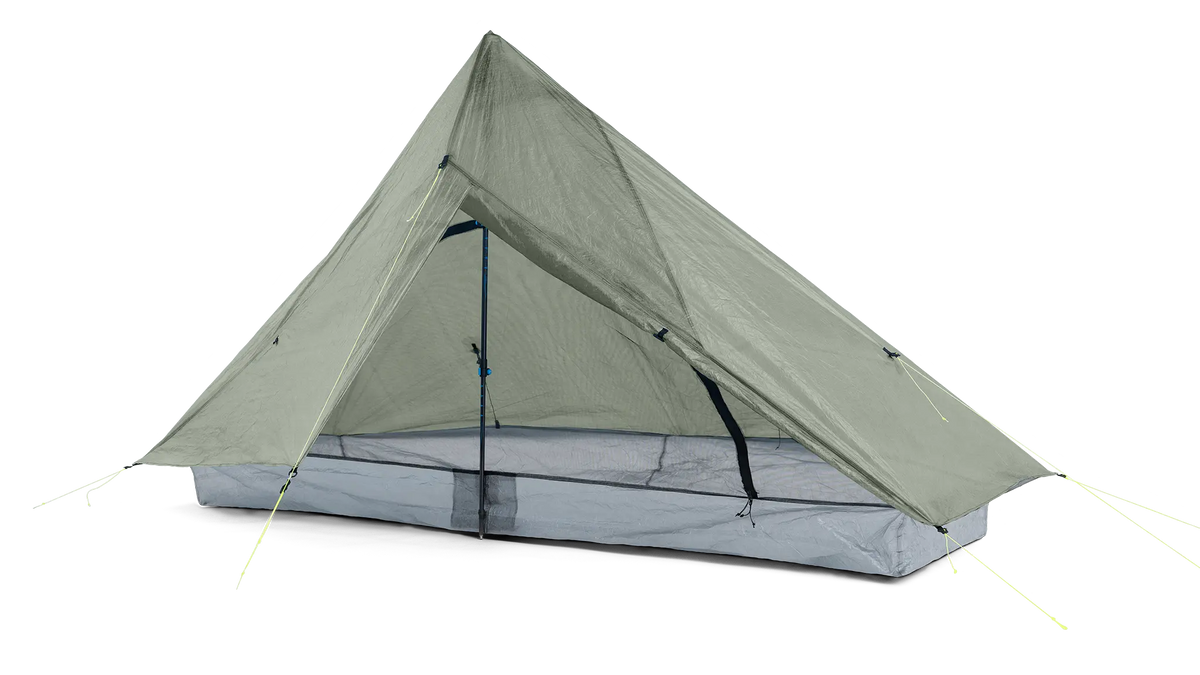
Plex Solo
Zpacks
The Zpacks Plex Solo is engineered for dedicated ultralight backpackers and long-distance thru-hikers where every fraction of an ounce matters. Built around a single-wall architecture supported by a single trekking pole set to approximately 52 inches, the shelter strips away unnecessary hardware to achieve an astonishingly low trail weight. It packs down remarkably small, making it a staple among high-mileage hikers tackling extended trail systems. The entire canopy is constructed from Dyneema Composite Fabric (DCF), an exceptionally strong, inherently waterproof non-woven laminate. Unlike nylon or polyester, DCF absorbs zero water, meaning the tent will not sag during prolonged rainstorms and can be packed away wet without gaining significant water weight. The bathtub floor is sewn directly to the canopy via breathable perimeter mesh, which aids airflow while keeping ground moisture and insects out. Operating a single-wall DCF shelter introduces clear practical trade-offs. Condensation is an unavoidable reality in humid or poorly ventilated conditions, requiring users to wipe down interior walls with a camp towel and practice smart campsite selection. Setup requires a firm foundation with at least six stakes—often ten in high winds—and the single-pole pyramid profile leaves limited elbow room away from the apex. **Highlights** - Dyneema Composite Fabric construction eliminates wet fabric stretch and water absorption. - Exceptionally low total weight and minimal packed volume for ultralight kits. - Single-pole pitch utilizes standard trekking poles adjusted to fixed heights. - Deep bathtub floor keeps splash and running ground water away from your sleep system. - Storm doors feature metal hooks and overlapping panels for straightforward weather adjustments. **Watch-outs** - High retail cost associated with premium Dyneema Composite Fabric construction. - Single-wall design demands active condensation management in humid environments. - Requires secure staking across multiple guy points to maintain structural integrity.
- Price
- Check current price
- Reader rating
- No reader votes yet
- How we assessed it
- Specification researched

#4 on this list
X-Mid 1
Durston
The Durston X-Mid 1 has developed a passionate following among three-season backpackers due to its innovative geometry. Designed by an experienced long-distance hiker, the shelter uses an offset two-pole trekking pole architecture oriented around a rectangular footprint. This diagonal orientation positions the two poles outside the living area, creating vertical side walls, generous shoulder space, and an expansive vestibule without blocking the entry doors. Unlike traditional trekking-pole tents that require complex tensioning, the X-Mid 1 pitches with just four perimeter stakes placed in a true rectangle before the poles are inserted. The fly and inner tent can be pitched together or separately, allowing hikers to set up the waterproof outer shell first during heavy downpours to keep the interior dry. Built from 20D polyester rather than nylon, the fabric resists water absorption and does not stretch or sag when wet. The tent is a double-wall design, meaning internal condensation is physically separated from your sleeping bag by a full mesh inner. The main consideration is the overall pitch footprint; the combination of dual large vestibules and the diagonal geometry means the tent occupies a broader area of ground than conventional solo shelters, which can require careful scouting in tight or brushy campsites. **Highlights** - Offset pole geometry creates vertical walls and moves poles out of the doorway. - Four-stake rectangular pitch makes initial setup simple and repeatable. - Polyester fabric resists water absorption and maintains taut pitch without sagging. - Dual doors and dual large vestibules provide extensive covered gear storage. - Fly-first pitching protects the inner mesh canopy from rain during stormy setups. **Watch-outs** - Large external footprint requires wider campsite clearings than typical solo tents. - Requires two trekking poles for setup, which may inconvenience hikers who walk with one pole or none. - Peak vents must be manually propped open to maintain optimal airflow.
- Price
- Check current price
- Reader rating
- No reader votes yet
- How we assessed it
- Specification researched
Specs side by side
| Spec | Plex Solo | X-Mid 1 |
|---|---|---|
| Shelter Type | Non-freestanding trekking-pole tent | Trekking-pole double-wall tent |
| Wall Structure | Single-wall with perimeter mesh | — |
| Canopy Fabric | Dyneema Composite Fabric (DCF) | 20D polyester |
| Support Pole | One trekking pole (approx. 52 inches) | — |
| Staking Needs | 6 stakes baseline, up to 10 in wind | — |
| Intended Use | Ultralight backpacking and thru-hiking | — |
| Support Required | — | Two trekking poles |
| Entry Points | — | Dual doors and dual vestibules |
| Base Pitch | — | Four-stake rectangular foundation |
What our reviewers liked and didn't
Plex Solo
- Dyneema Composite Fabric absorbs zero water and will not sag in sustained rain.
- Remarkably low trail weight and compact packed size for ultralight kits.
- Single-pole pitch uses standard trekking poles adjusted to roughly 52 inches.
- Deep bathtub floor keeps running ground runoff away from sleeping gear.
- Single-wall geometry requires active condensation wiping in damp environments.
- High retail price compared to conventional silnylon or silpoly solo shelters.
- Non-freestanding structure relies entirely on secure ground stakes to pitch.
X-Mid 1
- Simple four-stake rectangular base allows rapid, repeatable setup
- 20D polyester canopy resists water sagging and maintains pitch tension
- Offset dual poles keep entryways clear and maximize usable headroom
- Double-wall architecture effectively separates condensation from gear
- Large overall footprint requires expansive campsite clearings
- Requires two trekking poles to set up properly in standard configuration
Prices change constantly — the figure shown is the last verified catalog price, and the buy buttons always go to the current listing.