


Reader rating
Rate it and you move it. Community ratings re-rank this product inside its Top 10 list.
Expert-picked, reader-ranked. Our editors choose the products and the launch order; member star ratings move picks up or down over time.
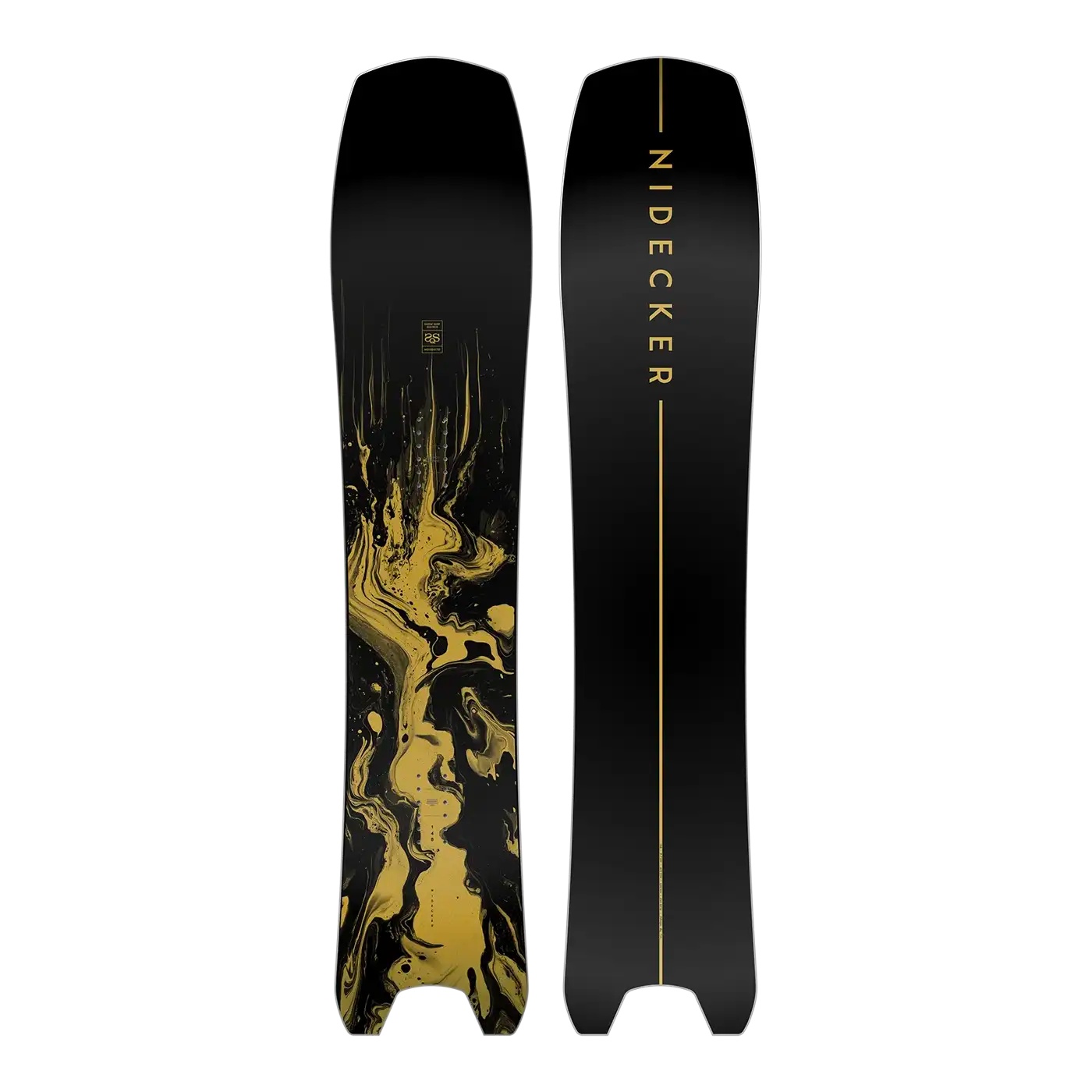
The Nidecker Mosquito is an unconventional, volume-shifted freeride board designed to maximize agility and powder float in a compact, stubby frame. Built to be downsized significantly from your standard board length, it relies on an ultra-wide waist and an exaggerated swallowtail to provide the float of a much larger deck while delivering sports-car-like handling through dense trees and tight gullies. The board’s radical geometry places a massive, rockered nose upfront, pulling down to a short, responsive camber profile and terminating in a functional fish-style cutout tail. In fresh snow, the tail sinks automatically, keeping the tip elevated with virtually zero back-leg strain. On groomers, the tight sidecut grips firmly, allowing riders to lay into surprisingly deep, banked turns, provided they keep their weight properly balanced over the short running surface. However, the Mosquito is undeniably specialized compared to standard all-mountain shapes. Its ultra-short tail makes landing significant drops challenging, as there is minimal surface area behind the back binding to catch your weight. Riding switch is functionally off the table, and in hard, uneven chop, the short effective edge can feel nervous and skittish compared to a traditionally sized freeride stick. **Highlights** - Volume-shifted geometry allows for significant downsizing in length - Deep swallowtail design sinks naturally for effortless powder flotation - Broad nose shape prevents submarining in deep or heavy snowpacks - Ultra-quick pivoting through tight forest glades and natural gullies - Capable of aggressive, tight-radius carves on smooth groomers **Watch-outs** - Short tail provides minimal support on large landing impacts - Functionally directional; practically unusable for switch riding - Effective edge can feel unstable in high-speed, choppy hardpack
Pros
- Effortless powder float with virtually zero rear-leg muscle burn
- Lightning-fast pivot speed through dense tree glades and chutes
- Extra-wide waist eliminates boot overhang on aggressive carves
- Lively snap out of tight-radius turns on smooth corduroy
Cons
- Functionally directional design makes switch riding impractical
- Minimal tail provides little forgiveness on heavy landing impacts
- Short effective edge feels nervous in fast, chopped-up hardpack
Best uses
- Dense tree glade exploration
- Deep powder bowl riding
- Tight-radius groomer carving
- Natural gully surfing
Specifications
- Profile
- Directional Camber with Rockered Nose
- Shape
- Volume-Shifted Tapered Swallowtail
- Flex
- Medium-Stiff
- Riding Style
- Directional Powder and Freeride
- Sizing Recommendation
- Downsize 6 to 10 cm from standard length
- Core Construction
- Multi-wood core with carbon reinforcement
Pricing
We don't publish a price we haven't verified. The retailer links below open the live listing for this exact model.
Best for
Dense tree glade exploration, Deep powder bowl riding, Tight-radius groomer carving, Natural gully surfing
Where to buy the Mosquito
We don't have a direct Amazon listing on file yet — this opens an Amazon search for the exact make and model.
Some links are affiliate links. Buying through them supports our testing at no extra cost to you.
The Nidecker Mosquito stands out as an unapologetically radical, volume-shifted freeride board engineered to extract maximum agility and float from an ultra-compact footprint. Rather than relying on traditional length to generate surface area, the Mosquito expands width across the chassis, combining a bulbous, rockered nose with a deeply notched swallowtail. This design allows riders to downsize significantly compared to their standard all-mountain decks, resulting in a stubby, surf-inspired silhouette that pivots through tight terrain with minimal physical effort. Beneath its unconventional profile lies a responsive core construction and traditional camber between the feet, giving the board surprising bite on hardpack. In deep snow, the swallowtail drops naturally, allowing the wide nose to stay above the surface without requiring excessive rear-leg weight. On groomed terrain, the tight sidecut lets riders rail energetic, low-angle carves, provided the snow surface is relatively clean and predictable. While marketed within the broader all-mountain freeride sphere, the Mosquito is deliberately specialized. Its truncated tail offers negligible forgiveness on heavy flat landings, and riding switch is functionally off the table. It thrives in the hands of an experienced rider who views the entire resort through a surf-inspired lens, prioritizing tree runs, gullies, and fresh powder stashes over park laps or high-speed straight-lining.
Target Rider and Intent
The Nidecker Mosquito is built specifically for intermediate to expert riders who prioritize turning agility, powder flotation, and natural terrain navigation. It is not an entry-level platform, nor is it aimed at riders who spend their mornings working on switch tricks or lapping the terrain park. Instead, it serves the freerider who hunts tight glades, banked slaloms, and fresh snow off the beaten path. Because of its volume-shifted geometry, the board requires an active, front-foot-driving riding style to engage its nose and initiate turns cleanly. Casual cruisers or back-seat riders will find the board grabby or unforgiving on firmer snow. However, for a pilot who understands how to load camber and exploit a setback stance, the Mosquito acts as a nimble, specialized tool that transforms dense forests and technical gullies into natural playgrounds.
Materials and Core Construction
Nidecker builds the Mosquito using a high-density wood core engineered with alternating stringers of lighter woods to keep swing weight low despite the expansive waist width. Triaxial fiberglass laminates provide torsional rigidity, ensuring that edge hold remains dependable when the board is tipped high onto its sidecut. Strategic carbon reinforcement runs through critical flex zones to enhance snap and rebound out of turns, compensating for the lack of a traditional, elongated tail. The running surface utilizes a fast, dense sintered base that absorbs wax well and maintains speed across flat runouts and deep snow. The sidewalls are rugged, protective ABS, though the delicate tips of the swallowtail require sensible care when navigating lift lines or rocky drop-ins. Overall, the fit and finish reflect high manufacturing tolerances, delivering a damp yet energetic feel underfoot.
Groomer and Carving Performance
On corduroy, the Mosquito behaves like a high-performance carving board squeezed into a sports-car chassis. The generous waist width virtually eliminates toe and heel drag, permitting aggressive edge angles without boot out. Combined with a tight sidecut and positive camber between the bindings, the board grips tenaciously into clean snow and whips through rapid, tight-radius carves with notable spring. However, this agility comes with clear limits. Because the effective edge is condensed and the tail is short, the board lacks the directional stability of longer, traditional freeride decks when pointed straight down choppy slopes. In late-day refrozen rutting or uneven tracked snow, the stubby running length feels skittish, transmitting vibrations directly into the bindings. It demands active edge management and clean technique rather than passive, flat-based coasting.
Powder and Tree Dynamics
Deep snow is the environment where the Mosquito justifies its radical shape. The broad, spooned nose creates enormous surface area up front, while the tapered waist and recessed swallowtail allow the back of the board to sink effortlessly. This mechanical displacement keeps the rider centered, eliminating the fatiguing back-thigh burn typical of standard directional boards in deep powder. In dense, technical tree glades, the short overall length allows for instantaneous pivoting and rapid directional adjustments. Where a standard 160-centimeter powder board feels sluggish between tight pine trunks, the downsized Mosquito darts through narrow gaps and around obstacles with minimal rider input. It manages wind-affected crust and wet maritime snow with equal competence, driving through heavy accumulations without submerging its nose.
Durability and Tuning Considerations
Operating a volume-shifted swallowtail requires specific setup and maintenance adjustments. Riders must adhere to Nidecker sizing charts and downsize substantially, usually six to ten centimeters shorter than their standard board length, to match rider weight to the board flex profile. Stance width should remain moderate; stretching out too far compromises the mechanical advantage of the camber pocket and short tail. For edge tuning, keeping a sharp 90-degree or slightly beveled edge along the main running surface preserves carving precision, but slightly detuning the transition zones near the wide shoulders of the nose helps prevent twitchy hookups on hardpack. The swallowtail tips represent the most structurally vulnerable area of the deck; riders should avoid resting the board tails-down on hard concrete or letting chairlift gates impact the rear cutout.
Comparable Market Alternatives
Riders considering the Mosquito will naturally cross-shop other volume-shifted freeride models. The Lib Tech Orca offers a similarly wide platform with a rockered center and serrated edges, providing superior grip on icy hardpack and slightly more tail for landings, though it lacks the Mosquito’s pure, locked-in carving snap out of turns. The K2 Excavator is another prominent competitor, retaining a slightly more conventional tail shape that handles high-speed chatter and chopped-up resort snow with better dampness, albeit with slightly less surf-style pivot in tight trees. Meanwhile, boards like the Ride Warpig deliver volume-shifted agility in a tapered twin package, which suits riders who still want to land switch or hit side hits. The Mosquito remains the most directional and powder-purist option of the group.
How we picked
We started with a long list of all-mountain snowboards that people actually buy, cut anything that could not clear our baseline for durability and field performance, then ranked the 10 that were left against the same criteria. Rankings are editorial. No brand pays for placement, and affiliate links never move a pick up or down.
- Edge hold and stability
- Grip on firm snow and composure at speed for the intended skier level.
- Versatility across conditions
- How the ski or board handles groomers, crud and fresh snow in one day.
- Real-world durability
- How the material, stitching, or steel holds up after a season of hard use — not how it looks new.
- Performance in bad conditions
- Wind, rain, cold, and grit are the test. Anything that only works on a nice day gets marked down.
- Weight and packability
- Every ounce has to earn its place in the pack, but not at the cost of something that fails in the field.
- Ease of use
- Setup, adjustment, and maintenance with cold hands, in the dark, without the manual.
Mosquito — frequently asked questions
- Is the Mosquito worth it?
- We rank it #8 in All-Mountain Snowboards. The Nidecker Mosquito is an unconventional, volume-shifted freeride board designed to maximize agility and powder float in a compact, stubby frame. Built to be downsized significantly from your standard board length, it relies on an ultra-wide waist and an exaggerated swallowtail to provide the float of a much larger…
- What is the Mosquito best for?
- Best for dense tree glade exploration, deep powder bowl riding, tight-radius groomer carving and natural gully surfing. Standouts: effortless powder float with virtually zero rear-leg muscle burn and lightning-fast pivot speed through dense tree glades and chutes.
- What are the downsides of the Mosquito?
- Functionally directional design makes switch riding impractical, Minimal tail provides little forgiveness on heavy landing impacts and Short effective edge feels nervous in fast, chopped-up hardpack.
- What are the key specs of the Mosquito?
- Profile: Directional Camber with Rockered Nose · Shape: Volume-Shifted Tapered Swallowtail · Flex: Medium-Stiff · Riding Style: Directional Powder and Freeride · Sizing Recommendation: Downsize 6 to 10 cm from standard length
- Target Rider and Intent — what should I know about the Mosquito?
- The Nidecker Mosquito is built specifically for intermediate to expert riders who prioritize turning agility, powder flotation, and natural terrain navigation. It is not an entry-level platform, nor is it aimed at riders who spend their mornings working on switch tricks or lapping the terrain park.
- Materials and Core Construction — what should I know about the Mosquito?
- Nidecker builds the Mosquito using a high-density wood core engineered with alternating stringers of lighter woods to keep swing weight low despite the expansive waist width. Triaxial fiberglass laminates provide torsional rigidity, ensuring that edge hold remains dependable when the board is tipped high onto its…
Compare side by side
Put the Mosquito against any other pick on this list — specs, price, pros, cons and reader ratings.