


Reader rating
Rate it and you move it. Community ratings re-rank this product inside its Top 10 list.
Expert-picked, reader-ranked. Our editors choose the products and the launch order; member star ratings move picks up or down over time.
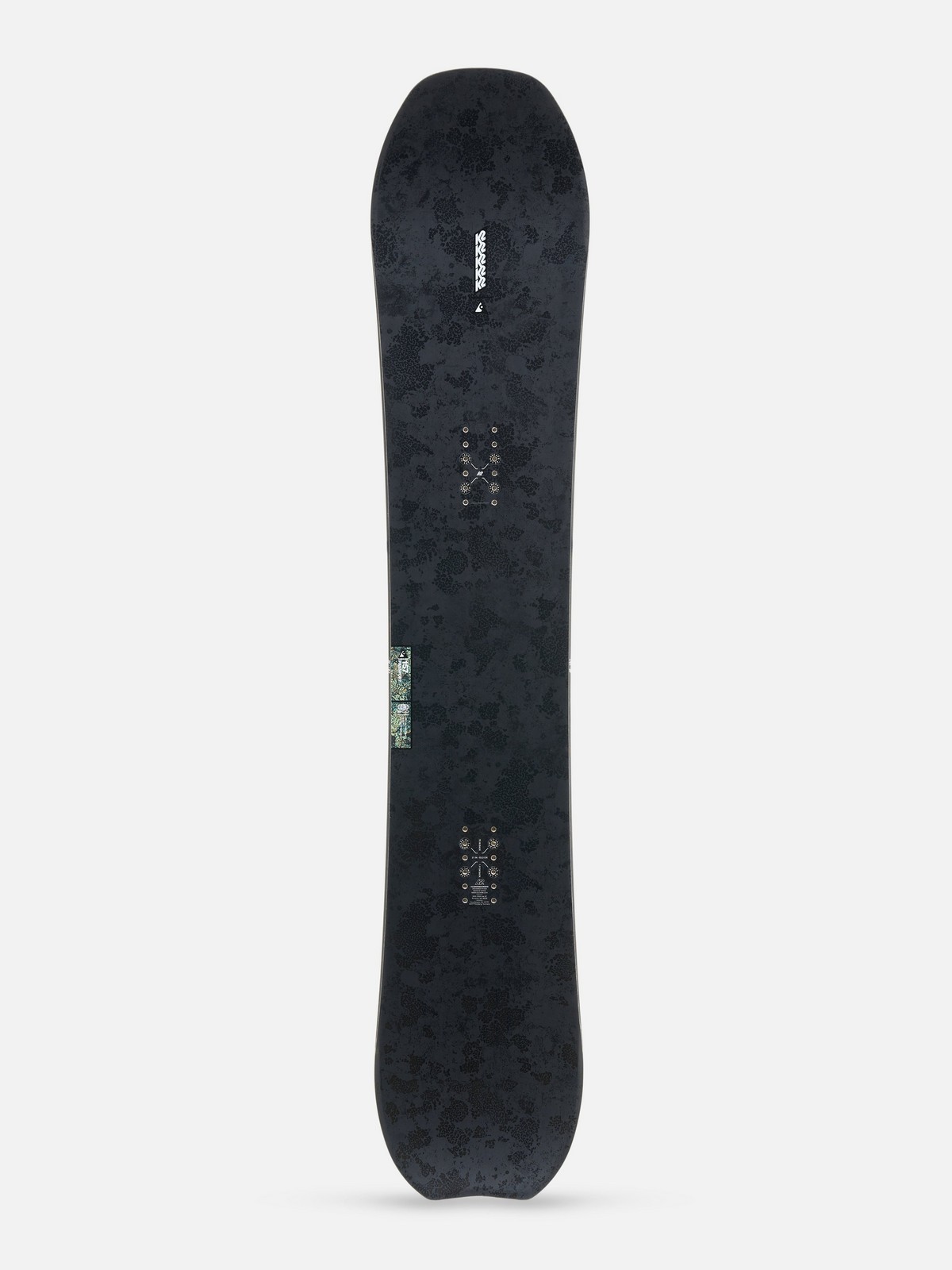
The K2 Passport is an understated freeride-leaning all-mountain board designed for riders who prioritize clean line choice, dependable edge control, and deep powder competence. Blending a functional directional shape with an accessible flex, it acts as a dependable vehicle for exploring off-piste bowls, diving through steep forest corridors, and laying down structured turns on groomed trails without beating up the rider's legs. K2 utilizes a directional camber baseline that runs traditional camber through the tail and midsection, tapering into a gradual, elongated rocker in the nose. This geometry ensures solid edge hold and turn completion while keeping the tip raised above deep, untracked snow. The board’s sidecut is dialed for medium to long-radius turns, offering a stable, predictable track when opening up your lines on open faces, while composite reinforcements provide just enough pop to hop natural obstacles without turning the deck into a stiff plank. The trade-off is that the Passport has a dedicated directional bias. While it can be ridden switch for basic transitions and quick utility maneuvers, it is clearly not designed for regular backward riding or park rail progression. It is a directional resort utility knife for riders who keep their nose pointed downhill and value consistency across changing mountain conditions. **Highlights** - Directional camber profile balances edge security with powder float - Predictable sidecut geometry ensures clean, stable arcs - Accessible flex pattern reduces fatigue over full-day sessions - Snappy tail construction provides reliable pop and turn completion - Excellent tracking across varied, mixed-snow conditions **Watch-outs** - Directional layout makes sustained switch riding awkward - Not intended for dedicated freestyle park or jib features - Lacks the extreme dampness demanded by elite-level speed chargers
Pros
- Early-rise rocker nose provides effortless float in powder
- Underfoot camber delivers crisp edge hold and energetic carves
- Forgiving flex reduces leg burn during full-day resort sessions
- Nimble and responsive handling through tight trees and bumps
Cons
- Directional layout is not optimized for sustained switch riding
- Lacks the extreme dampness demanded by high-speed chargers
- Not designed for dedicated freestyle or park rail features
Best uses
- Resort freeride exploration
- Tree runs and glades
- Groomer carving
- Powder bowl riding
Specifications
- Profile
- Directional camber with rocker nose
- Shape
- Directional
- Flex Rating
- Medium-stiff
- Core Material
- Wood core with carbon reinforcement
- Base Type
- Sintered 4000
- Riding Level
- Intermediate to advanced
Pricing
We don't publish a price we haven't verified. The retailer links below open the live listing for this exact model.
Best for
Resort freeride exploration, Tree runs and glades, Groomer carving, Powder bowl riding
Where to buy the Passport
We don't have a direct Amazon listing on file yet — this opens an Amazon search for the exact make and model.
Some links are affiliate links. Buying through them supports our testing at no extra cost to you.
The K2 Passport occupies a sweet spot in the all-mountain category, blending dedicated freeride capabilities with daily resort comfort. Rather than mimicking the punishing, board-stiff rigidity often found on specialized big-mountain decks, the Passport is engineered for practical mountain versatility. It serves riders who prioritize hunting through tree stashes, dropping into steep bowls, and carving up morning corduroy with dependable edge control. At its core, the board utilizes a directional baseline that pairs an elongated, early-rise rocker nose with traditional camber running underfoot and through the tail. This geometry delivers immediate lift in untracked powder while preserving the crisp rebound, stability, and edge hold required on firm or wind-buffed terrain. With a predictable sidecut designed for medium to long-radius turns, the board tracks cleanly without hooking unexpectedly. While remarkably capable across natural terrain, the Passport maintains an accessible flex that will not overly fatigue your legs over a full day of resort laps. It consciously trades symmetrical freestyle balance for superior forward-facing performance, cementing its place as a reliable quiver-killer for riders whose focus remains aimed directly downhill.
Target Rider and Mountain Role
The K2 Passport is tuned specifically for intermediate to advanced riders who want an assertive, directional board without the uncompromising stiffness of an aggressive freeride charger. If your typical day consists of seeking out natural side hits, navigating glades, and charging open bowls, this board fits that terrain profile naturally. It favors riders who spend the vast majority of their time traveling forward and desire a fluid, intuitive feel rather than something that requires absolute muscle to bend into a turn. Park-focused riders or those wanting to practice complex switch tricks will likely find its directional bias limiting. However, for the rider seeking a reliable all-terrain daily driver that handles fresh snow as smoothly as morning corduroy, the Passport provides a stable, confidence-inspiring platform that rewards clean line choices.
Edge Hold and Carving Dynamics
On hardpack and groomers, the Passport relies on its underfoot camber to establish firm contact along the effective edge. Because the camber extends well into the tail, the board generates clean energy out of turns, allowing you to lock into medium and long-radius carves with reassuring predictability. The tip rocker does not compromise turn initiation; instead, it provides a smooth, catch-free transition as you roll from edge to edge. While it lacks aggressive mechanical serrations or specialized traction edges found on some competitor boards, the Passport’s edge bite is completely dependable in typical resort conditions. Only on bulletproof ice or severely scoured summits does the board show minor limits in outright grip, where a stiffer torsional flex would otherwise provide an absolute lock on the snow surface.
Powder and Tree Maneuverability
Where the Passport truly excels is in soft snow and variable off-piste conditions. The elongated rocker profile in the nose allows the deck to plane effortlessly through deep snow, minimizing the need to lean back and strain your rear leg during heavy powder days. This lift, combined with a subtle directional setback, keeps the front contact point high over chop and crust. In the trees, the board’s accessible flex profile allows for fast, low-effort steering adjustments. You can quickly dump speed or pivot the tail to duck through narrow glade corridors without feeling like the board is fighting your inputs. It offers the float and agility of a freeride deck while retaining enough mid-body composure to skip through tracked-out late-afternoon powder.
Construction and Flex Balance
K2 builds the Passport around a resilient wood core reinforced with targeted carbon stringers to deliver snap and stability without excessive weight. The flex is medium-stiff—sturdy enough underfoot to resist buckling through choppy snow, yet forgiving enough in the tips to absorb terrain transitions cleanly. The carbon integration enhances torsional response, giving the board immediate feedback when initiating turns without turning the chassis into a bone-rattling plank. Underneath, a high-density sintered base offers high-velocity glide and good wax retention, holding speed through flat runouts and cat tracks. The overall construction prioritizes an optimal balance between vibration damping and energetic rebound, ensuring the board stays lively across varied surface conditions rather than feeling dead or overly muted.
Setup and Stance Considerations
To get the best performance from the Passport, riders should pay close attention to binding placement and stance angles. The board comes with a factory-marked reference stance that works well for mixed resort riding, offering a stable midpoint between carving drive and float. For powder days, setting your bindings back one notch further unlocks even greater surface area in the nose, making deep snow navigation virtually effortless. Pairing this deck with a medium to medium-stiff binding helps translate micro-adjustments directly to the edges, matching the board’s natural responsiveness. While riders can set up a centered duck stance, the board clearly performs best with a forward-angled directional configuration, which naturally complements its tapered geometry and camber-to-rocker profile.
Trade-offs and Comparable Boards
The Passport's directional bias means it is not an ideal fit for dedicated park riders or those who prioritize regular switch riding. Boards like the Never Summer Proto Type 3 offer far better twin-tip balance for switch landings and jibbing. On the other end of the freeride spectrum, boards like the Stranda Descender or Jones Flagship provide superior high-speed dampness and brute stability for charging steep, icy faces, albeit at the cost of being far more demanding on rider fatigue. The Rome Ravine shares a similar approachable freeride ethos, but the Passport offers a bit more traditional camber snap off the tail. The primary trade-off with the Passport is outright dampness at terminal velocity in exchange for all-day agility and low-fatigue cruising.
How we picked
We started with a long list of all-mountain snowboards that people actually buy, cut anything that could not clear our baseline for durability and field performance, then ranked the 10 that were left against the same criteria. Rankings are editorial. No brand pays for placement, and affiliate links never move a pick up or down.
- Edge hold and stability
- Grip on firm snow and composure at speed for the intended skier level.
- Versatility across conditions
- How the ski or board handles groomers, crud and fresh snow in one day.
- Real-world durability
- How the material, stitching, or steel holds up after a season of hard use — not how it looks new.
- Performance in bad conditions
- Wind, rain, cold, and grit are the test. Anything that only works on a nice day gets marked down.
- Weight and packability
- Every ounce has to earn its place in the pack, but not at the cost of something that fails in the field.
- Ease of use
- Setup, adjustment, and maintenance with cold hands, in the dark, without the manual.
Passport — frequently asked questions
- Is the Passport worth it?
- We rank it #6 in All-Mountain Snowboards. The K2 Passport is an understated freeride-leaning all-mountain board designed for riders who prioritize clean line choice, dependable edge control, and deep powder competence. Blending a functional directional shape with an accessible flex, it acts as a dependable vehicle for exploring off-piste bowls, diving…
- What is the Passport best for?
- Best for resort freeride exploration, tree runs and glades, groomer carving and powder bowl riding. Standouts: early-rise rocker nose provides effortless float in powder and underfoot camber delivers crisp edge hold and energetic carves.
- What are the downsides of the Passport?
- Directional layout is not optimized for sustained switch riding, Lacks the extreme dampness demanded by high-speed chargers and Not designed for dedicated freestyle or park rail features.
- What are the key specs of the Passport?
- Profile: Directional camber with rocker nose · Shape: Directional · Flex Rating: Medium-stiff · Core Material: Wood core with carbon reinforcement · Base Type: Sintered 4000
- Target Rider and Mountain Role — what should I know about the Passport?
- The K2 Passport is tuned specifically for intermediate to advanced riders who want an assertive, directional board without the uncompromising stiffness of an aggressive freeride charger. If your typical day consists of seeking out natural side hits, navigating glades, and charging open bowls, this board fits that…
- Edge Hold and Carving Dynamics — what should I know about the Passport?
- On hardpack and groomers, the Passport relies on its underfoot camber to establish firm contact along the effective edge. Because the camber extends well into the tail, the board generates clean energy out of turns, allowing you to lock into medium and long-radius carves with reassuring predictability.
Compare side by side
Put the Passport against any other pick on this list — specs, price, pros, cons and reader ratings.