


Reader rating
Rate it and you move it. Community ratings re-rank this product inside its Top 10 list.
Expert-picked, reader-ranked. Our editors choose the products and the launch order; member star ratings move picks up or down over time.
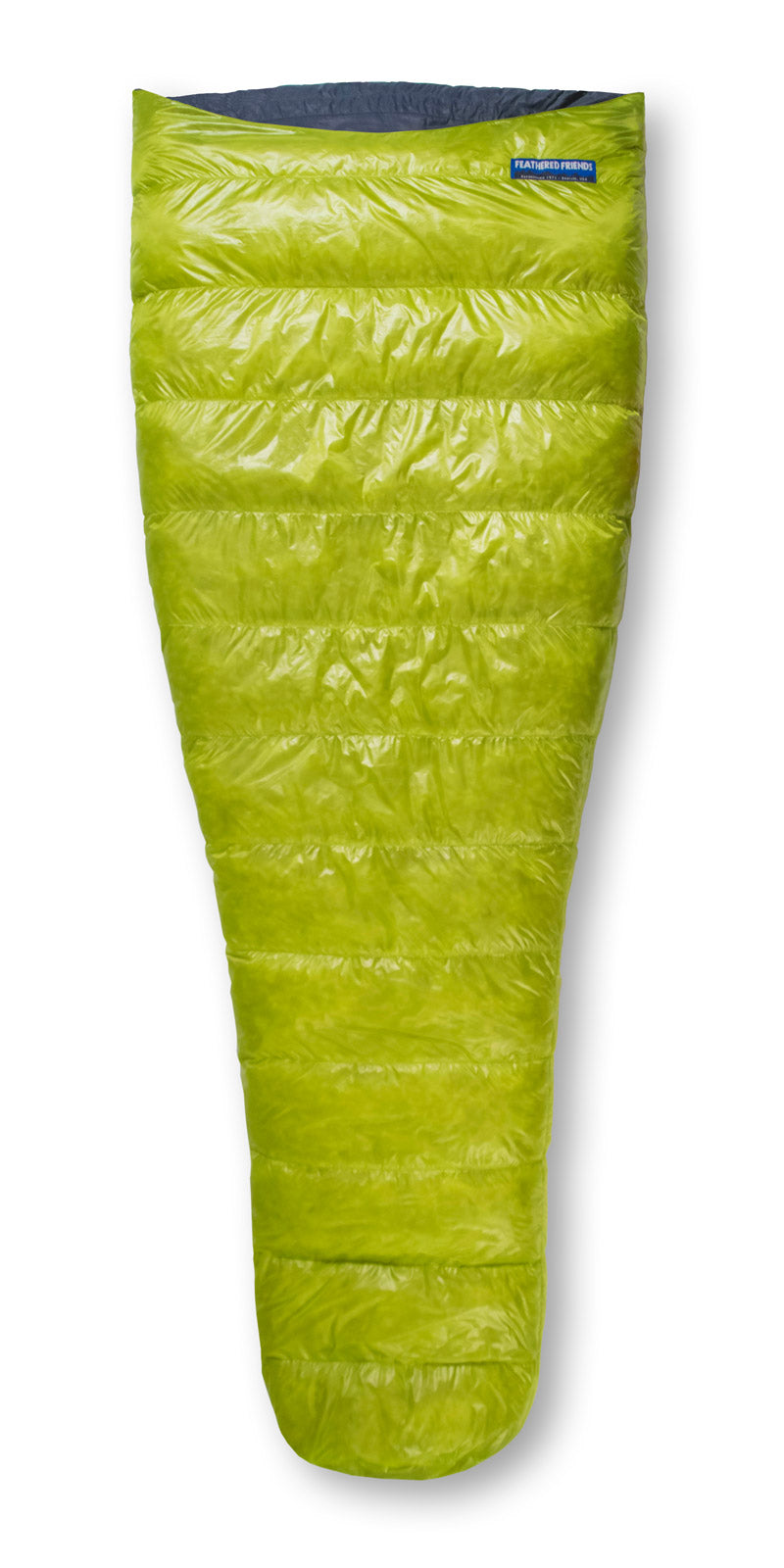
The Feathered Friends Tanager 20 is an uncompromising, minimalist sleeping bag designed for dedicated ounce-counters and fastpackers who prefer the draft-free security of a bag over a quilt. By entirely eliminating the zipper and hood, Feathered Friends created an ultra-streamlined down cocoon that delivers maximum warmth per ounce. Filled with top-shelf 950+ fill goose down, the Tanager achieves remarkable loft while packing down smaller than almost any zippered bag in its temperature class. Reviewers from technical hiking outlets praise its seamless efficiency: without a zipper channel, there are zero mechanical failure points, no zipper-related cold spots, and no stiff hardware pressing into your side. Sleepers simply slip in from the top and cinch the collar around their neck, relying on a warm beanie or balaclava for head warmth. The trade-offs are extreme and require an experienced user. Getting into and out of the bag requires shimmying through the top opening, which can be awkward inside cramped shelters. Temperature regulation is also binary—because you cannot unzip the bag to vent heat, warm nights require pulling the bag down to your waist. It is a specialized tool engineered exclusively for technical weight savings. **Highlights** * Zipperless design eliminates cold spots, drafts, and mechanical failure * Exceptional warmth-to-weight ratio powered by 950+ fill goose down * Vanishingly small packed volume leaves ample room for small packs * Fully continuous baffles wrap around the entire circumference * Soft, ultralight interior and exterior fabrics maximize loft **Watch-outs** * Lacks a hood, requiring a dedicated warm hat or hooded jacket * Zipperless entry can be cumbersome in tight backpacking shelters * Very limited venting capability on mild or warm evenings
Pros
- Class-leading warmth-to-weight ratio utilizing 950+ fill goose down
- Zipperless construction completely eliminates drafts and zipper failure
- Continuous baffles allow customized down distribution for varied temps
- Packs down significantly smaller than traditional hooded mummy bags
Cons
- Sliding in and out through the top opening can be cumbersome in small tents
- Zero mechanical venting makes the bag prone to overheating on mild nights
- Lacks an integrated hood, necessitating a separate insulated beanie or balaclava
Best uses
- Ultralight three-season thru-hiking
- Fastpacking and mountain running
- Weight-critical alpine bivouacs
- Gram-counting shoulder-season backpacking
Specifications
- Temperature Rating
- 20°F (-7°C)
- Insulation Type
- 950+ fill power goose down
- Closure Style
- Zipperless top entry with drawcord
- Hood Design
- Hoodless with insulated neck collar
- Baffle Layout
- Continuous horizontal baffles
- Country of Origin
- Made in Seattle, USA
Pricing
We don't publish a price we haven't verified. The retailer links below open the live listing for this exact model.
Full catalog listing & offersBest for
Ultralight three-season thru-hiking, Fastpacking and mountain running, Weight-critical alpine bivouacs, Gram-counting shoulder-season backpacking
Where to buy the Tanager 20 Sleeping Bag
Prices and stock change often, so check the current Amazon offer before you buy.
Some links are affiliate links. Buying through them supports our testing at no extra cost to you.
The Feathered Friends Tanager 20 represents an uncompromising exercise in ultralight sleep engineering. Built in Seattle by one of mountaineering's most respected down manufacturers, this specialized bag dispenses with almost every conventional design staple—including zippers, draft tubes, and a contoured hood—in pursuit of the highest possible warmth-to-weight ratio. What remains is a continuous tube of high-loft down insulation built for backpackers who view every fraction of an ounce through a critical lens. Rather than competing directly with standard mummy bags, the Tanager 20 occupies a distinct niche between traditional bags and ultralight backpacking quilts. While quilts reduce weight by eliminating underside insulation and using open backs, they can allow drafts whenever a sleeper shifts. The Tanager eliminates that draft vulnerability completely by maintaining full 360-degree coverage, but does so without the dead weight and mechanical failure risk of a metal zipper. This level of weight optimization inherently narrows the product's functional scope. Entering and exiting the bag requires shimmying through a cinched collar, and thermal regulation on warmer evenings is practically nonexistent. For thru-hikers, fastpackers, and seasoned alpine travelers facing sustained cold conditions, however, the Tanager offers an exceptionally efficient thermal sanctuary that packs down smaller than nearly any other 20-degree sleeping system on the market.
Target User and Intent
The Tanager 20 is purpose-built for experienced ultralight backpackers, long-distance thru-hikers, and fastpackers who prioritize pack weight and space above all else. It appeals strongly to sleepers who dislike the draftiness of ultralight quilts but refuse to carry the extra ounces inherent to fully featured mummy bags. Because this design eliminates mechanical venting and an insulated hood, it is not intended for casual campers, restless sleepers who frequently leave their shelter at night, or hikers exploring unpredictable climates where daytime and nighttime temperatures swing wildly. Successful use requires familiarity with modular layering systems, as the sleeper must supply their own head insulation via a balaclava, beanie, or hooded jacket. For dedicated gram-counters who hike late into the shoulder season, it delivers a precise balance of total enclosure and minimal pack footprint.
Materials and Construction
Feathered Friends constructs the Tanager using ethically sourced 950+ fill power goose down, representing the highest tier of commercial loft available. This insulation expands rapidly after compression and requires very little overall mass to trap air effectively. The exterior shell utilizes a 7-denier nylon fabric treated with a light water-repellent finish, while the interior lining employs a similarly supple 7-denier textile designed to allow down plumes to loft unhindered. Structurally, the bag features continuous horizontal baffles running uninterrupted from the front to the back. This construction allows users to manually shift down toward the top of the bag on cold nights or push down beneath them if they want less insulation over their core. The neck opening is finished with a simple drawcord closure and an internal draft collar to seal in heat.
Real-World Thermal Performance
Without a zipper track breaking the perimeter of the shell, the Tanager completely eliminates the traditional cold spots and draft leaks common to standard lightweight sleeping bags. Independent evaluations consistently note that its 20-degree rating is true to spec, provided the sleeper insulates their head appropriately. When cinched around the neck, the bag creates a fully sealed thermal cocoon that prevents convective heat loss as the occupant tosses or turns. However, this same sealing mechanism limits thermal adaptation. If ambient temperatures rise into the 40s or 50s, the bag quickly overheats because the user cannot unzip the footbox or open the side for ventilation. Temperature control on mild nights essentially requires pulling the bag down to the hips and sleeping with an uncovered torso, making the bag substantially less adaptable than zippered or quilt-based alternatives.
Sizing and Entry Logistics
Entering the Tanager requires a deliberate technique that takes adjustment, particularly inside cramped, low-profile trekking-pole shelters. Sleepers must sit down, slide their legs into the bag, and gradually wiggle the shell up their body like a pair of thermal trousers before sliding their arms inside and pulling the drawcord snug. Exiting follows the same reverse procedure, which can be frustrating during middle-of-the-night bathroom breaks. In terms of internal dimensions, the cut is trim through the torso and legs to prevent dead air spaces that take extra body heat to warm. Sleepers with broad shoulders or those who toss and turn aggressively may find the circumference restrictive, whereas back sleepers and compact side sleepers will appreciate the snug, thermally efficient fit.
Durability and Fabric Care
The 7-denier fabrics used in the Tanager are extraordinarily thin, prioritizing packability over brute abrasion resistance. While the continuous nylon weave resists down migration effectively, the fabric requires cautious handling around sharp tent hardware, abrasive sleeping pads, and unclipped fingernails. There is no heavy zipper to snag or tear the ultralight shell, which ironically removes the single most common failure point found in conventional sleeping bags. However, campers must exercise caution when airing the bag out near brush or rocky surfaces. Because ultralight shells are more vulnerable to body oils over extended thru-hikes, regular laundering using specialized down washes and careful low-heat drying is necessary to preserve the loft of the 950-fill down across multiple seasons.
Comparable Market Alternatives
In the category of sub-20-ounce 20-degree sleep insulation, the Tanager competes most directly with premium ultralight quilts and minimalist mummy bags. Products like the Katabatic Gear Alsek 22 offer comparable warmth and materials with simpler entry and better venting, but quilts rely on pad attachment cords and can allow drafts when shifting positions. On the zippered side, bags like the Western Mountaineering Flylite or Western Mountaineering UltraLite provide the convenience of full-length zippers and integrated hoods, but carry higher pack weights and bulkier packed dimensions. The Tanager occupies a distinct middle ground: it avoids the mechanical bulk and thermal inefficiencies of zippered hoods while entirely removing the draft vulnerabilities of pad-strapped quilts, albeit at the expense of ventilation versatility.
How we picked
We started with a long list of backpacking sleeping bags that people actually buy, cut anything that could not clear our baseline for durability and field performance, then ranked the 10 that were left against the same criteria. Rankings are editorial. No brand pays for placement, and affiliate links never move a pick up or down.
- Load carriage
- How the suspension handles the loads the pack is actually rated for, over long days.
- Real-world durability
- How the material, stitching, or steel holds up after a season of hard use — not how it looks new.
- Performance in bad conditions
- Wind, rain, cold, and grit are the test. Anything that only works on a nice day gets marked down.
- Weight and packability
- Every ounce has to earn its place in the pack, but not at the cost of something that fails in the field.
- Ease of use
- Setup, adjustment, and maintenance with cold hands, in the dark, without the manual.
- Value at its price point
- Compared against the closest competitors in the same tier, not against cheaper gear in a different class.
Tanager 20 Sleeping Bag — frequently asked questions
- Is the Tanager 20 Sleeping Bag worth it?
- We rank it #10 in Backpacking Sleeping Bags. The Feathered Friends Tanager 20 is an uncompromising, minimalist sleeping bag designed for dedicated ounce-counters and fastpackers who prefer the draft-free security of a bag over a quilt. By entirely eliminating the zipper and hood, Feathered Friends created an ultra-streamlined down cocoon that delivers maximum…
- What is the Tanager 20 Sleeping Bag best for?
- Best for ultralight three-season thru-hiking, fastpacking and mountain running, weight-critical alpine bivouacs and gram-counting shoulder-season backpacking. Standouts: class-leading warmth-to-weight ratio utilizing 950+ fill goose down and zipperless construction completely eliminates drafts and zipper failure.
- What are the downsides of the Tanager 20 Sleeping Bag?
- Sliding in and out through the top opening can be cumbersome in small tents, Zero mechanical venting makes the bag prone to overheating on mild nights and Lacks an integrated hood, necessitating a separate insulated beanie or balaclava.
- What are the key specs of the Tanager 20 Sleeping Bag?
- Temperature Rating: 20°F (-7°C) · Insulation Type: 950+ fill power goose down · Closure Style: Zipperless top entry with drawcord · Hood Design: Hoodless with insulated neck collar · Baffle Layout: Continuous horizontal baffles
- Target User and Intent — what should I know about the Tanager 20 Sleeping Bag?
- The Tanager 20 is purpose-built for experienced ultralight backpackers, long-distance thru-hikers, and fastpackers who prioritize pack weight and space above all else. It appeals strongly to sleepers who dislike the draftiness of ultralight quilts but refuse to carry the extra ounces inherent to fully featured mummy…
- Materials and Construction — what should I know about the Tanager 20 Sleeping Bag?
- Feathered Friends constructs the Tanager using ethically sourced 950+ fill power goose down, representing the highest tier of commercial loft available. This insulation expands rapidly after compression and requires very little overall mass to trap air effectively.
Compare side by side
Put the Tanager 20 Sleeping Bag against any other pick on this list — specs, price, pros, cons and reader ratings.