A data-backed guide to the best backpacking sleeping bags, comparing warmth-to-weight ratios, comfort cuts, and long-term durability across top independent reviews.
A dependable sleeping bag is fundamental backcountry safety gear. Balancing warmth, packed bulk, and weight dictates how comfortably your pack carries during the day and how well you recharge overnight. While ultralight quilts have gained ground among fastpackers, traditional hooded mummy and tapered bags remain the benchmark for draft elimination, head insulation, and reliable thermal performance when temperatures dip or winds push through a shelter.
Interpreting fill power claims, shell deniers, and temperature ratings can be challenging. An EN/ISO lower limit is not a comfort rating, and a bag that looks featherweight on paper may compromise on zipper durability, internal girth, or hood coverage. To help you choose accurately, we aggregated performance data from leading outdoor testing platforms—including Switchback Travel, OutdoorGearLab, CleverHiker, SectionHiker, and Treeline Review—and layered our own editorial weighting for overall value, longevity, and design integrity.
Our selections prioritize honest thermal efficiency, quality down sourcing, and sensible shell construction over marketing gimmicks. Whether you are counting every single gram for an extended thru-hike, seeking a wider cut as a dedicated side-sleeper, or trying to maximize warmth on a tight budget, these ten sleeping bags represent the most reliable options available today.
A data-backed guide to the best backpacking sleeping bags, comparing warmth-to-weight ratios, comfort cuts, and long-term durability across top independent reviews.
Key takeaways
#1 Swallow UL — Feathered Friends
#2 Magma — REI
#3 Disco 15 — NEMO
#4 Spark — Sea to Summit
#5 MegaLite — Western Mountaineering
#6 Phantom — Mountain Hardwear
Intended uses
Gear
Verification notes
Editorial ranked list, 10 entries. Evidence mix — 10 research only. Buy links open the maker or a retailer search.
The gear reviews
A data-backed guide to the best backpacking sleeping bags, comparing warmth-to-weight ratios, comfort cuts, and long-term durability across top independent reviews.
Rank this list
Loading community ratings… Ratings re-order the picks — they never change which products make the list.
Contoured 3D collar with insulated zipper draft tube
Cut
Slim, thermally efficient mummy profile
Origin
Made in Seattle, Washington, USA
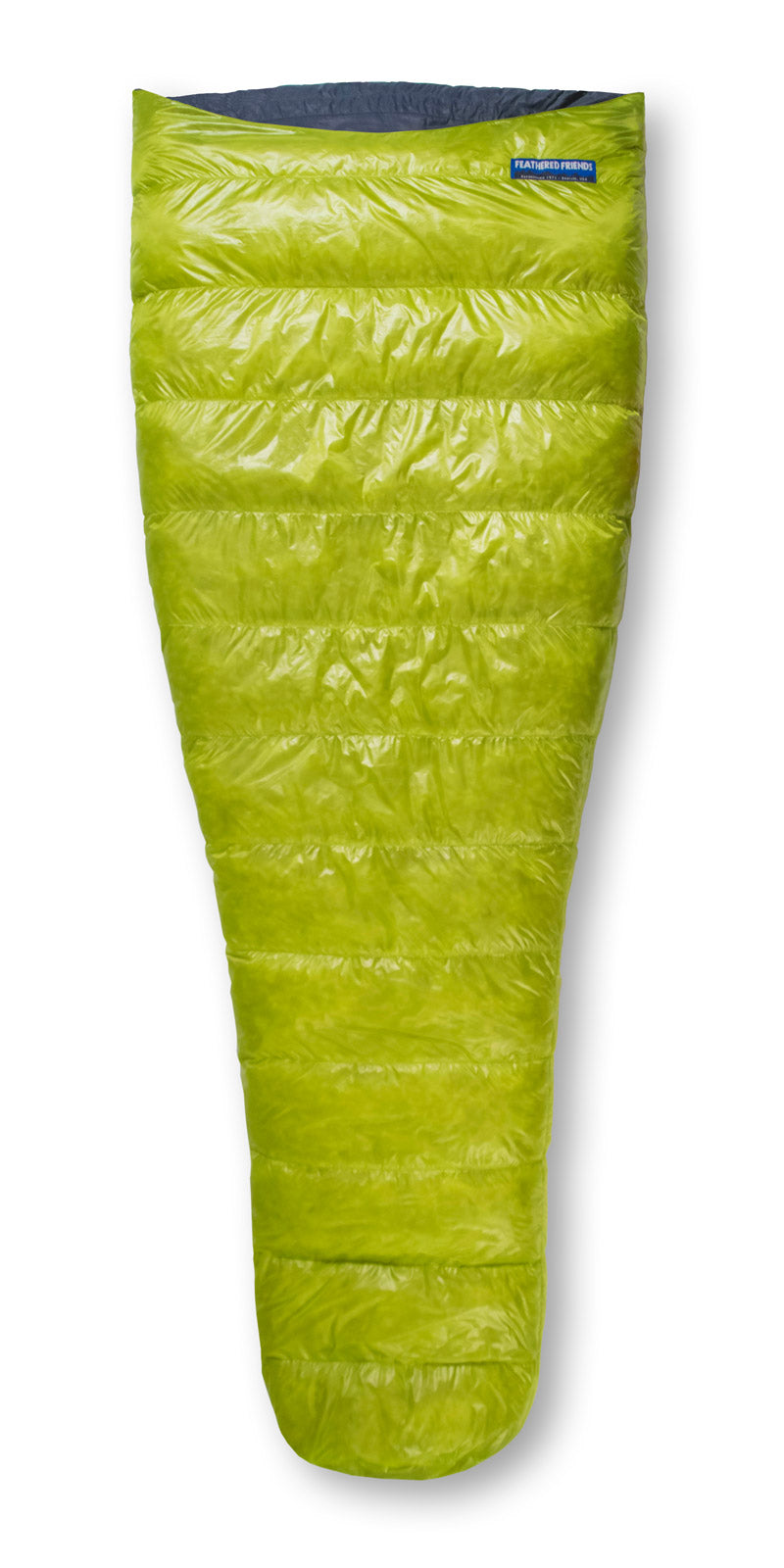
The Feathered Friends Swallow UL holds a distinguished reputation across long-distance backpacking circles. Built by a dedicated down specialist in Seattle, it consistently earns top rankings from independent gear outlets for its unmatched balance of thermal efficiency, loft, and minimal packed volume. Rather than competing on mass-market features, the bag relies on meticulous domestic construction and raw insulation quality to deliver dependable three-season warmth.
At the heart of the Swallow UL is premium 950+ fill goose down matched with a lightweight, downproof exterior. Independent reviewers regularly praise Feathered Friends for its conservative temperature metrics, noting that the bag holds loft and keeps sleepers warm right down to its stated boundaries where conventional commercial alternatives often falter. Continuous horizontal baffles further elevate utility, giving users the freedom to shift down insulation toward the chest or the back depending on overnight conditions.
Choosing this bag requires accepting a few clear design compromises. An investment hovering around $659 puts it squarely in premium specialist territory, and the athletic, slim mummy shape deliberately cuts dead air space to save weight, leaving little wiggle room for broad-shouldered or restless sleepers.
Where it fits
Long-distance thru-hiking
Three-season alpine backpacking
Fast-and-light wilderness travel
Cold shoulder-season treks
Pros
Class-leading warmth-to-weight ratio powered by 950+ fill goose down
Continuous horizontal baffles let you shift insulation where needed
Conservative temperature ratings reliably hold up in sub-freezing conditions
Substantial draft collar and full zipper tube block cold drafts effectively
Cons
Steep price point approaching $660 represents a major upfront investment
Trim, thermally efficient cut can feel restrictive to broad or active sleepers
Gossamer shell fabrics require careful handling around abrasive camp surfaces
The Feathered Friends Swallow UL is tailored for ounce-conscious backpackers, long-distance thru-hikers, and alpine travelers who operate in environments where gear failure carries steep consequences. Because it weighs very little while delivering dependable protection in freezing or near-freezing mountain conditions, it suits wilderness travelers prioritizing minimal pack weight without giving up thermal safety margins. Casual summer car campers will find its technical focus and premium pricing far beyond what simple weekend trips necessitate. Instead, this sleeping bag shines along extended backcountry routes where relentless elevation gain makes low base weight essential. Reviewers frequently highlight it as an ideal choice for high-elevation traverses across the Rockies or high passes along the Pacific Crest Trail. If your itinerary involves unpredictable shoulder-season weather and strict volume limitations inside your pack, the Swallow UL provides an uncompromising balance of packability and reliable warmth.
Materials and Down Quality
Feathered Friends uses ethically sourced 950+ fill power goose down, representing the upper tier of commercial insulation efficiency. This ultra-high loft rating means the bag captures substantial warm air pockets using fewer raw ounces of down than bags built with standard 650 or 800-fill down. The down clusters expand rapidly when unpacked from a compression sack, returning to full loft with minimal shaking. Surrounding this down is a lightweight, tightly woven nylon shell specifically engineered to keep feathers from migrating out while resisting moisture penetration from shelter condensation. The materials feel supple against bare skin, preventing the clammy plastic texture found on cheaper synthetic-lined bags. The brand uses durable YKK hardware and stiffened anti-snag tape alongside the zipper, avoiding fabric catching during midnight adjustments. Every component is picked to shave grams without undermining long-term structural integrity.
Baffle Architecture and Thermal Tuning
A defining structural feature of the Swallow UL is its continuous horizontal baffle configuration. Because the baffles run seamlessly around the circumference from top to bottom, users can manually position the down fill depending on ambient temperatures. On sub-freezing nights, shifting the down toward the top maximizes chest insulation; on warmer summer evenings, moving the insulation underneath distributes loft away from the body to vent heat. To combat convective heat loss, Feathered Friends incorporates a 3D passive draft collar that seals around the neck without feeling constrictive, alongside a plush down-filled draft tube backing the full-length zipper. External review sources consistently note that Feathered Friends uses conservative in-house temperature ratings rather than pushing optimistic numbers, meaning users can trust the published thresholds without needing to pad their sleep system with extra thermal liners.
Fit and Sleeping Space
Thermal efficiency requires minimizing dead air volume inside the bag, which is why the Swallow UL features a tailored, athletic mummy profile. With a relatively narrow shoulder girth around 60 inches, it fits average-sized hikers closely without excess interior bulk. While this snug cut ensures rapid warming and reduces overall weight, it does restrict movement for restless sleepers or individuals with broad shoulders. Side sleepers who habitually pull their knees up to their chest may feel slight fabric tension across the hip and knee zones. Hikers wanting extra room to wear thick insulating layers inside their bag will need to size up carefully or look toward broader cuts like the brand's Swift model. Before purchasing, buyers should realistically measure their shoulder circumference to determine whether an aggressive alpine fit aligns with their personal sleeping style.
Durability and Fabric Handling
Ultralight fabrics require mindful handling in the field. The shell material on the Swallow UL is gossamer-thin to preserve low packed weight, making it more vulnerable to abrasion and puncturing than heavier utility bags. Campers must exercise care when tossing the bag onto rough shelter planks, sharp granite ledges, or pine-needle-covered ground. Using a ground cloth or protective bivvy is standard practice when sleeping under tarps or directly on soil. Despite the delicate feel of the shell, the stitching and baffle internal walls are built to high production standards, resisting seam blowouts over repeated compression cycles. The high-grade goose down retains its structural resilience across multiple seasons, provided it is washed with specialized down cleaner and stored uncompressed in a breathable cotton storage sack between backcountry excursions.
Market Context and Realistic Alternatives
Carrying an MSRP near $659, the Swallow UL commands a significant financial outlay that demands clear justification. Its primary rival across independent testing panels is the Western Mountaineering UltraLite, another premier down bag sharing identical high-end build standards, American manufacturing, and conservative ratings. The UltraLite offers a slightly wider cut at the shoulders, making it a friendlier option for larger-framed backpackers, whereas the Swallow UL leans toward a marginally sleeker profile and shifts down easily via its continuous chambers. Ultra-minimalist hikers might also weigh the Swallow against open-backed quilts from cottage brands like Katabatic Gear, which save weight and money but lack the foolproof draft isolation and hood coverage of a true mummy bag. For backpackers prioritizing traditional thermal security and flawless build quality, the Swallow UL stands on solid ground.
As an Amazon Associate, Wild10 earns from qualifying purchases.
No ratings yet
Pick 02Research-based review
Magma
REI
Insulation Type
850-fill-power down
Approximate Price
Around $399
Cut Profile
Trim, performance-oriented mummy
Sizing Range
Extensive length and width selections
Draft Protection
Contoured hood with insulated draft collar
Intended Use
Three-season backcountry backpacking
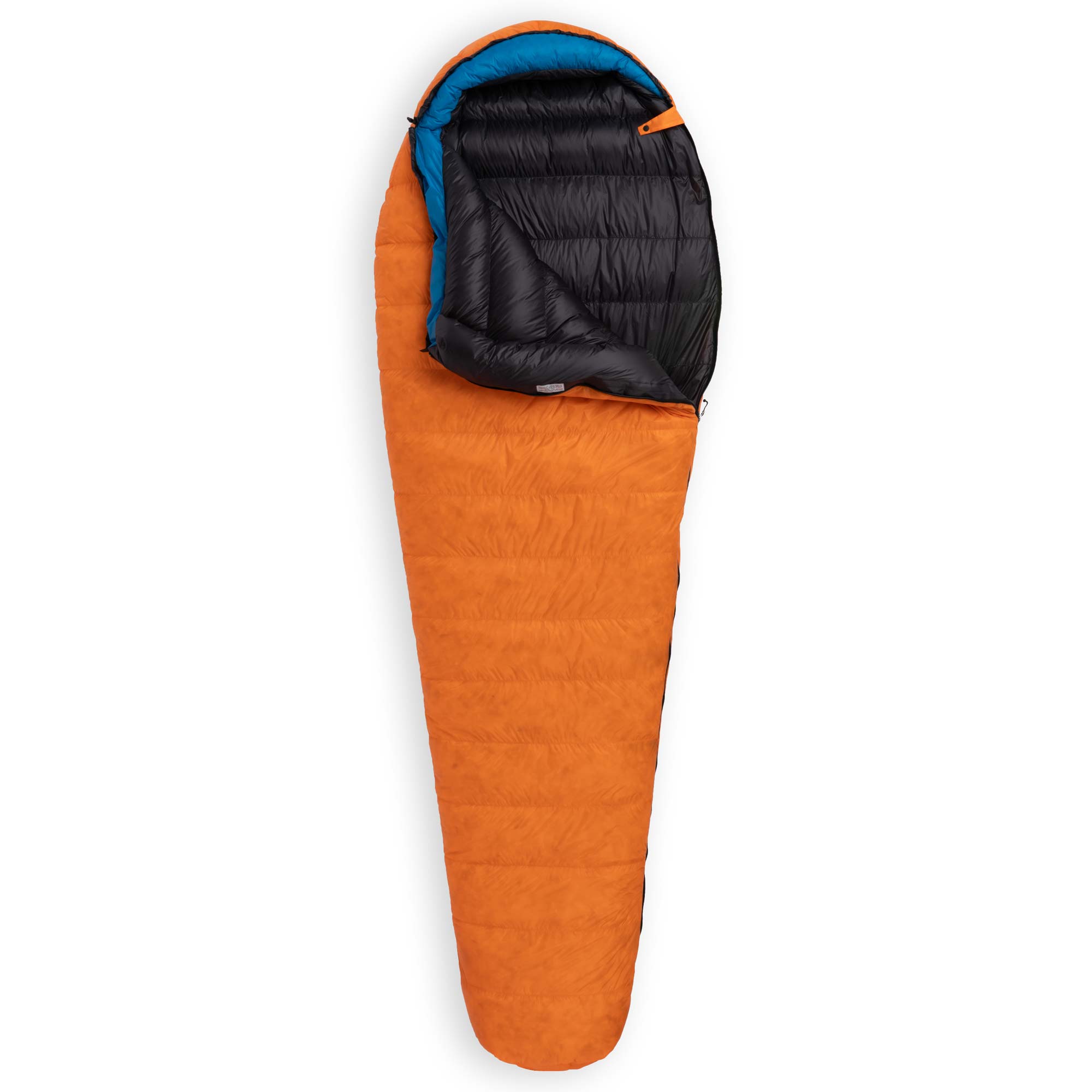
The REI Magma series stands out in the backpacking market by offering top-tier technical specifications at a price point well below comparable boutique offerings. Built around premium 850-fill-power down, this bag targets weight-conscious hikers who need dependable three-season warmth without lugging unnecessary bulk. Prominent outdoor publications consistently praise the Magma for bridging mainstream retail convenience and genuine ultralight performance.
Rather than relying on sheer fill weight alone, the Magma maximizes thermal efficiency through calculated design. Variable baffle spacing concentrates the loft over the core and feet, while a sculpted hood and tailored draft collar seal off drafts around the neck. The result is a sleep system that traps warmth quickly and compresses neatly down to the size of a small melon inside a pack.
Achieving this level of packability requires a lean cut. The snug mummy taper cuts down on dead air that your body would otherwise have to heat, but broad-shouldered or restless sleepers may feel constrained. For backpackers who can manage the trim silhouette and lightweight shell fabric, the Magma represents an exceptional balance of quality down, thoughtful patterning, and retail value.
Where it fits
Three-season alpine backpacking
Ultralight thru-hiking
Fast-and-light mountain travel
Weight-conscious bikepacking
Pros
High-loft 850-fill down delivers top-tier packability and warmth
Priced noticeably lower than comparable premium boutique bags
Sculpted hood and draft collar effectively seal out cold drafts
Broad selection of lengths and widths accommodates varied builds
Cons
Slim mummy cut feels tight for active side sleepers and wider frames
The REI Magma is tailored specifically for backpackers, thru-hikers, and section hikers who scrutinize their base weight but do not want to sacrifice reliable warmth. It serves hikers who prioritize pack space and thermal efficiency over sprawling interior room. While classic mummy cuts can often alienate larger or non-standard body types, the Magma line benefits from one of the most generous sizing ranges in the category, spanning multiple lengths and wider variations. Still, because it is engineered to eliminate dead air, back sleepers and hikers comfortable with a streamlined taper will get the best thermal returns. Restless rotators or stomach sleepers who need room to splay out their legs may find the standard dimensions confining.
Materials and Baffle Construction
At the core of the Magma is high-grade 850-fill-power down, an insulation standard usually reserved for niche cottage manufacturers. This high loft provides an outstanding warmth-to-weight ratio, bouncing back quickly after being compressed inside a stuff sack. REI incorporates variable baffle patterning across the shell, positioning narrower chambers over the chest and footbox. This targeted approach prevents down migration and keeps insulation anchored directly over areas most vulnerable to heat loss. The outer shell uses a gossamer, down-proof fabric that blocks minor breezes while letting the loft expand fully. Inside, smooth lining fabrics facilitate movement, although the sheer lightweight nature of the textiles means internal seams must be treated with reasonable care during daily packing.
Real-World Thermal Performance
Across independent gear analyses, the Magma consistently earns high marks for holding true to its temperature expectations. Thermal efficiency is bolstered by a well-patterned hood that cinches closely around the brow without crushing the face, alongside a dedicated draft collar that forms a barrier around the collarbone. This neck baffle keeps shifting sleepers from inadvertently pumping heated air out through the top opening. Because down loft remains uniformly distributed across the core, cold spots are minimal during standard alpine overnight drops. However, like any down bag utilizing ultralight outer shell fabrics, its insulation relies heavily on a dry environment and an adequately insulated sleeping pad to achieve its stated temperature buffer.
Durability and Shell Protection
Shaving ounces inevitably introduces trade-offs in abrasion resistance. The Magma's exterior shell material is chosen for packability and weight, meaning it lacks the heavy denier strength found in entry-level camping bags. It performs reliably inside tents on clean sleeping pads, but rough shelter floors, sharp pine needles, and pet claws pose genuine puncture risks. The lightweight zipper track also demands deliberate handling. Although REI integrates an anti-snag guard along the zipper run, the gossamer baffle fabric can still catch if the slider is yanked carelessly in the dark. Treating the closure with measured, steady pulls ensures the track remains aligned and avoids tear-inducing snags.
Fit and Sleeping Ergonomics
The Magma adheres strictly to performance-mummy proportions, which taper aggressively from the shoulders down through the hips and knees. This design choice is intentional: less interior volume means less air your body must expend calories to warm. For back sleepers, the footbox offers sufficient depth to keep feet upright without compressing down against the end wall. Side sleepers, however, will likely find their knees pressing against the side baffles, which can temporarily pinch out loft and cause cool spots. Buyers should carefully consult shoulder and hip circumference specs, opting for wide sizing if they tend to toss and turn or plan to layer thick clothing inside.
Market Alternatives and Trade-Offs
At roughly $399, the Magma sits in a competitive middle ground. High-end boutique bags from brands like Western Mountaineering or Feathered Friends offer slightly more refined micro-details, more continuous baffling, and marginally lighter shell weights, but they routinely cost substantially more. On the other end, spoon-shaped bags like those from Nemo provide far more room to shift positions, but they carry a noticeable weight and volume penalty. The Magma undercuts premium rivals on price while outperforming most retail competitors on raw down quality. The primary trade-off remains comfort versus weight: you give up sprawling interior luxury in exchange for an exceptionally light pack and reliable three-season insulation.
As an Amazon Associate, Wild10 earns from qualifying purchases.
No ratings yet
Pick 03Research-based review
Disco 15
NEMO
Total Weight
43 oz (1,219 g)
Temperature Rating
15°F (-9°C)
Bag Shape
Classic Spoon (contoured for side sleepers)
Ventilation
Dual zippered Thermo Gills
Draft Collar
External insulated Blanket Fold
Retail Price
Around $300
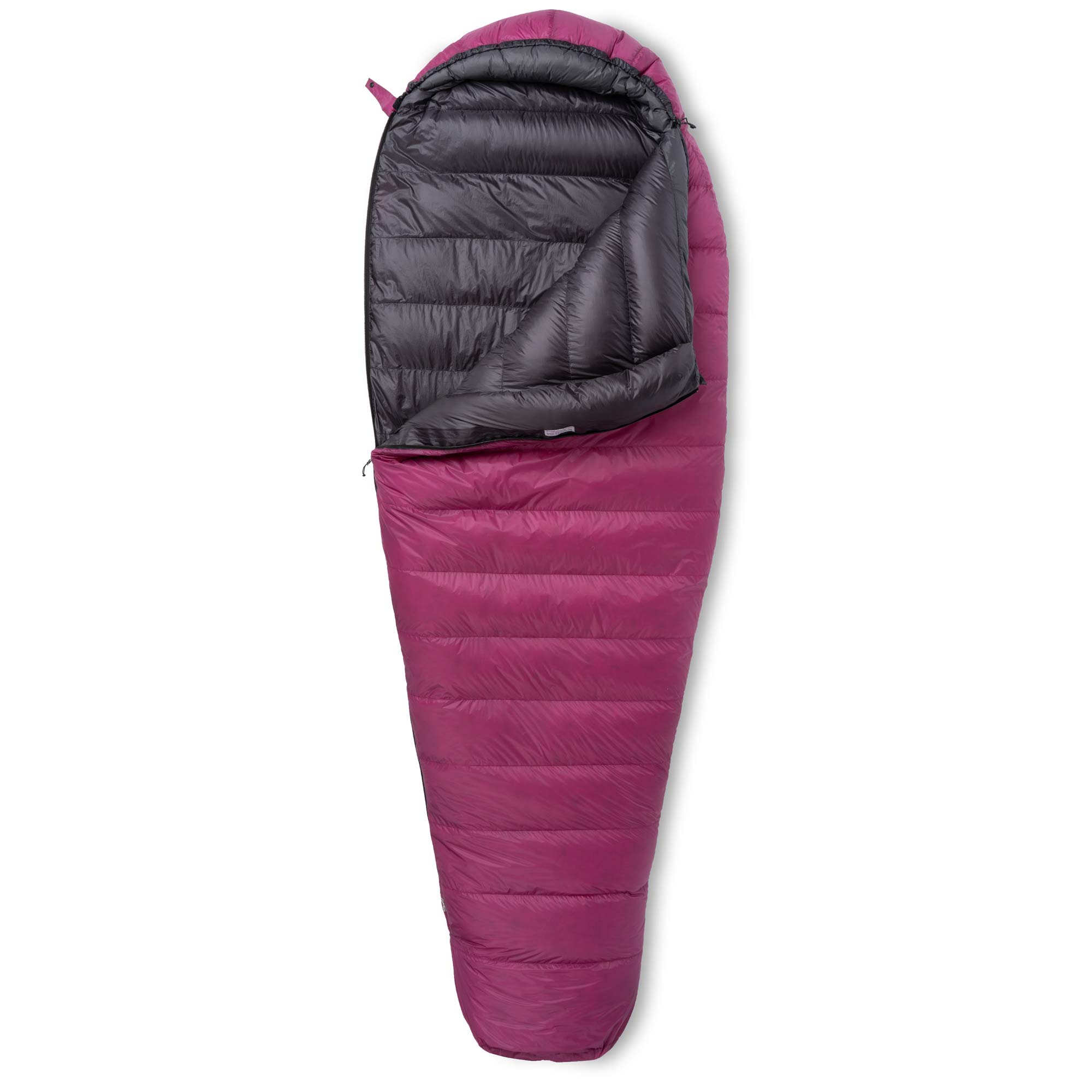
Traditional mummy bags achieve thermal efficiency by trimming away dead air space, but this constriction often forces backpackers into rigid, back-sleeping positions. The NEMO Disco 15 takes the opposite approach. Built specifically around NEMO's Classic Spoon cut, this sleeping bag provides targeted width at the elbows and knees, granting side sleepers and restless movers room to bend their legs and shift naturally through the night.
Comfort is further reinforced by thoughtful ventilation and contact details. Integrated Thermo Gills along the chest allow sleepers to dump excess heat on mild evenings without introducing chilling drafts, while an insulated Blanket Fold draft collar replicates the familiar feeling of tucked-in home bedding. A treated, water-resistant footbox adds practical protection against tent-wall condensation, preventing dampness from collapsing the down loft where feet press outward.
The clear trade-off for this interior elbow room and feature set is bulk and mass. Weighing roughly 43 ounces, the Disco 15 will not satisfy ounce-counting gram counters or fastpackers chasing minimal volume. Instead, it serves backpackers who accept carrying a bit more pack weight in exchange for eight hours of unrestricted, restorative sleep.
Where it fits
Side-sleeper backcountry camping
3-season tent backpacking
Cool-weather shoulder-season trips
Comfort-focused trail hiking
Pros
Spoon cut offers exceptional room for side sleepers to bend their knees
Thermo Gill vents dump heat on warm nights without letting drafts inside
Waterproof footbox prevents tent condensation from wetting down insulation
Blanket Fold collar mimics home bedding for natural, intuitive draft sealing
Cons
Noticeably heavier and bulkier packed size than slim performance mummy bags
Extra interior dead air requires more body heat to warm up initially
The Disco 15 is engineered specifically for active sleepers who find standard mummy designs intolerable. Backcountry hikers who roll onto their sides, pull their knees toward their chest, or shift frequently often find conventional bags binding around the joints. By bowing out at the elbows and knees while tapering slightly at the waist, this bag lets users sleep in natural postures without fighting against taut shell fabric. It also appeals directly to weekend backpackers and shoulder-season hikers who prioritize sleep comfort over ultralight minimalism. Conversely, dedicated long-distance thru-hikers focused primarily on base weight will find the cut too heavy and voluminous. It is a purpose-built shelter system for those who measure backcountry success by how rested they feel at sunrise rather than a spreadsheet number.
Materials and Thermal Architecture
NEMO utilizes hydrophobic down insulation mapped inside targeted baffles to maintain consistent loft across cold spots. Because down relies on lofting to trap warmth, the bag uses vertical baffles over the chest to prevent insulation from sliding outward when the sleeper moves. The outer shell is built from lightweight nylon fabrics, but the footbox receives a critical upgrade: a waterproof-breathable fabric barrier. When campers sleep inside compact tents, feet routinely press against the moisture-laden perimeter walls. This treated footbox prevents ambient condensation from soaking through into the down fill. The hood is anatomically contoured with a dedicated internal sleeve designed to secure a camp pillow or rolled jacket, keeping sleep accessories from migrating away during shifting.
Temperature Regulation and Gills
One persistent issue with 15-degree bags is their narrow comfort bandwidth; they often feel stifling if overnight temperatures hover in the forties. NEMO addresses this with its proprietary Thermo Gills, which are vertical zippered openings running down the chest. Rather than opening the bag entirely to outside air, unzipping these vents exposes an inner fabric barrier that lets body heat bleed outward without letting icy cross-drafts inside. Combined with a full-length two-way zipper, this gives the sleeper granular control over their microclimate. At the neckline, the Blanket Fold adds a soft, insulated draft flap that can be tucked inward to seal warmth around the neck or folded outward to vent, providing intuitive thermal management across unpredictable shoulder-season conditions.
Fit, Space, and Efficiency
The Classic Spoon silhouette creates a distinct interior environment compared to narrow performance bags. While the extra interior volume delivers unmatched freedom of movement, it introduces a physical reality: larger internal volume means extra dead air that the body must initially warm. Hikers who sleep exceptionally cold may notice this extra volume takes longer to reach ambient equilibrium in near-freezing conditions compared to a form-fitting mummy. However, for average sleepers, the ergonomic balance works well. The footbox is roomy enough to keep toes from compressing down against the end, and the shoulders offer sufficient clearance so that side-sleeping does not pull the hood off-center. Choosing the regular or long length accurately is critical to prevent dragging excess cold space at the feet.
Durability and Field Upkeep
Across multi-day trail use, the Disco demonstrates dependable build quality. The shell fabrics balance weight savings with reasonable snag resistance, though users must still take standard precautions around pack zippers and rough shelter floors. The main zipper track incorporates an anti-snag guard designed to minimize fabric catches during late-night adjustments, a frequent failure point on lighter designs. Routine maintenance mirrors typical down gear care: storing the bag loose in its included large mesh storage sack is vital to preserve the down clusters' spring and loft retention over years of storage. Occasional washing with technical down detergent will clear oils and camp grime, restoring loft and ensuring the hydrophobic treatment on the fill continues repelling condensation.
Market Trade-Offs and Alternatives
At approximately $300, the Disco 15 positions itself competitively against mid-range down bags. Its most direct competitors are traditional performance mummies like the Marmot Never Summer or REI Co-op Magma line. Standard mummies often weigh five to ten ounces less and compress down significantly smaller for the same thermal rating, purely because they use far less fabric and internal volume. Alternatively, backcountry sleepers looking for roominess sometimes consider backpacking quilts, which offer open freedom of movement at a lower weight but lack the Disco's draft security, hooded enclosure, and built-in condensation barrier. The Disco remains the definitive compromise: you accept carrying roughly two and a half pounds in your pack to secure the roomy feel of a quilt with the draft protection of an enclosed bag.
As an Amazon Associate, Wild10 earns from qualifying purchases.
No ratings yet
Pick 04Research-based review
Spark
Sea to Summit
Insulation Type
850+ fill power RDS-certified down
Bag Shape
Technical contoured mummy
Baffle Pattern
Hybrid vertical torso and horizontal lower
Target Use
Fastpacking and ultralight hiking
Approximate Price
$549
Weight Class
Ultralight
The Sea to Summit Spark is designed for gram-counters, fastpackers, and long-distance backpackers who prioritize minimal packed volume above almost everything else. Instead of chasing broad mass-market appeal with generous interior dimensions and durable, heavy fabrics, this bag intentionally strips away every non-essential feature to achieve an exceptionally low carry weight. Independent testing outlets frequently single it out for packing down smaller than almost any other conventional hooded mummy bag on the market.
At its core, the Spark utilizes high-lofting 850+ fill power RDS-certified down paired with gossamer shell fabrics. This pairing allows the insulation to trap maximum body warmth without consuming valuable cubic inches inside a lightweight rucksack. For minimalist hikers trying to fit multiple days of backcountry gear into low-volume packs, that level of compressibility is often the deciding factor when choosing between a traditional bag and an ultralight setup.
However, the pursuit of ultralight efficiency requires real compromises in camp comfort and handling. The bag's slender mummy taper leaves minimal room for restless side-sleepers or internal garment layering, and the thin materials require attentive care in camp to avoid tears. For those committed to moving fast with minimal weight, it remains a benchmark standard.
Where it fits
Ultralight thru-hiking
Fastpacking expeditions
Low-volume pack itineraries
High-mileage summer backpacking
Pros
High warmth-to-weight ratio powered by lofty 850+ fill RDS down
Compresses down small enough for compact, low-volume backpacks
Torso vertical baffles prevent down from shifting during the night
Fitted hood and ergonomic footbox reduce wasted internal dead air
Cons
Narrow mummy cut restricts active side-sleepers and garment layering
Ultra-thin shell fabrics demand careful handling around rough surfaces
Shortened zipper designs on light variants restrict warm-weather venting
The Spark is engineered specifically for fast-and-light wilderness travelers: thru-hikers, adventure racers, and backpackers operating out of compact packs. It serves outdoor travelers who measure base weight in grams and treat pack capacity as a strictly rationed resource. If your backcountry routine involves aggressive daily mileage and you view your sleep setup as a high-performance thermal tool rather than a plush lounger, this bag fits your itinerary. Conversely, traditional backpackers accustomed to roomy cuts, burly fabrics, and expansive shoulder room will likely find the tight taper confining. It is also less forgiving for casual campers who pitch tents over rough debris without a dependable ground cloth, where featherweight textiles can easily suffer damage.
Materials and Baffle Architecture
Sea to Summit builds the Spark around premium 850+ fill power down certified under the Responsible Down Standard. This high-loft insulation delivers exceptional thermal performance relative to its physical weight. To prevent the down from shifting without adding redundant fabric weight, the bag uses an engineered hybrid baffle arrangement. Vertical baffles run across the torso to hold down in place over vital organs as you turn at night, while horizontal baffles across the lower body and legs streamline construction and save grams. The outer shell and lining rely on paper-thin, low-denier nylon that feels soft against the skin while shedding light drafts. The contoured hood and angled footbox are deliberately sculpted to match body posture and eliminate excess fabric.
Thermal Efficiency in Practice
Aggregated reviews consistently highlight the Spark for delivering impressive warmth given its small packed size. Once removed from its stuff sack, the high-loft down expands rapidly to build a reliable insulating buffer around the body. The sculpted hood snugs closely around the face to seal in warm air without complicated cord adjustments, and the footbox keeps feet resting naturally without compressing the insulation. However, because the cut is slim, thermal consistency depends heavily on keeping limbs centered. Forcing knees or elbows hard against the shell compresses the down fill, which can create localized cold spots during colder nights. Furthermore, depending on the specific Spark variation selected, partial-length zippers limit your ability to vent excess heat on warm evenings.
Fabric Durability and Upkeep
Reaching an ultralight weight bracket inevitably demands trade-offs in fabric durability. The translucent nylon shell on the Spark is remarkably thin, prioritizing weight savings over abrasive resilience. Reviewers emphasize that this bag requires disciplined handling in the field. Catching the fine shell in a tent zipper, tossing it onto rough granite, or sleeping directly under the open sky without a reliable bivy or ground cloth can easily tear the outer layer and cause down leakage. The ultralight zipper hardware also requires slow, steady guidance to prevent catching on the draft tube. Backpackers willing to practice deliberate gear maintenance report that the bag handles long-distance trails well, but it will not tolerate carelessness.
Fit and Sleeping Ergonomics
The Spark's cut is intentionally narrow to eliminate dead airspace that a sleeper's body heat would otherwise need to warm. While this geometry maximizes thermal efficiency per ounce, it distinctly limits in-bag mobility. Active sleepers who frequently switch between side, back, and stomach positions may find the bag restrictive, as the mummy shell tends to turn with your body rather than letting you shift inside it. There is also very little excess circumference to accommodate bulky down jackets or thick layers for stretching the temperature rating on cold nights. The footbox is equally snug; while anatomically tapered, users with large feet or heavy sleep socks will encounter little leftover volume.
Market Context and Alternatives
At roughly $549, the Spark occupies the premium ultralight tier alongside bags like the Western Mountaineering SummerLite and custom down quilts from cottage gear makers. Traditional options from Western Mountaineering often supply a bit more interior circumference and full-length continuous baffles, but they generally command higher prices or slightly larger packed footprints. Down quilts offer lower overall weight and easier ventilation by skipping zippers and hoods altogether, but they demand more active draft management on windy nights. The Spark occupies a practical middle ground: it provides the enclosed thermal security of a true hooded mummy bag while matching the tiny pack size of many open quilt systems.
As an Amazon Associate, Wild10 earns from qualifying purchases.
No ratings yet
Pick 05Research-based review
MegaLite
Western Mountaineering
Insulation Type
Ethically sourced goose down
Packed Volume
6.6 liters
Temperature Rating
30°F (-1°C)
Baffle Style
Continuous horizontal chambers
Cut Profile
Wide-cut performance mummy
Country of Origin
Made in USA
The Western Mountaineering MegaLite occupies a distinct niche in the ultralight sleeping bag category: an ultralight three-season mummy bag cut with generous interior space for broad shoulders and restless sleepers. Standard performance mummies cut weight by paring interior girth to the absolute minimum, which often induces claustrophobia for broad-framed hikers or side-sleepers. The MegaLite retains an efficient mummy taper while widening the shoulder and hip circumference, avoiding the severe weight penalty typically associated with semi-rectangular profiles.
Manufactured in the United States, Western Mountaineering products maintain a reputation for conservative, true-to-spec temperature ratings and exceptional craftsmanship. The MegaLite uses top-tier, ethically sourced goose down contained in continuous horizontal baffles, granting backpackers the ability to shift loft from bottom to top depending on overnight conditions. Respected gear analysts frequently cite it as a reference standard for warmth-to-weight efficiency.
At an approximate retail price of $630, the barrier to entry is high. However, long-term feedback across the industry highlights Western Mountaineering down garments and bags for their durability and sustained loft retention over decades of regular trail use.
Where it fits
Three-season alpine backpacking
Active side-sleeper backcountry travel
Thru-hiking with broader shoulder profiles
High-mileage lightweight trekking
Pros
Spacious cut provides room for side-sleepers without adding excess bulk
Continuous horizontal baffles allow manual down redistribution
True-to-rating temperature performance down to freezing
High-loft goose down packs down to a compact 6.6-liter volume
Cons
Substantial upfront cost compared to mass-market alternatives
Lacks an insulated internal draft collar for drafts at freezing limits
Lightweight shell fabric requires care around rough camp surfaces
The MegaLite is specifically tailored for backpackers who find conventional ultralight mummy bags restrictive. Most standard ultralight bags limit shoulder girth to around 60 inches or less, requiring sleepers to rotate with the bag rather than within it. Active side-sleepers and individuals with broader builds frequently compress the insulation against their back and shoulders in tight shells, introducing cold spots. The MegaLite expands interior shoulder volume up to 64 inches, providing ample space to bend knees, shift positions, or layer clothing on unexpectedly cold evenings. While pure gram-counters with slight frames may prefer narrower silhouettes to trim an extra ounce or two, hikers needing room to maneuver without carrying a heavy car-camping bag find the MegaLite an ideal compromise.
Materials and Baffle Architecture
Construction quality represents Western Mountaineering's primary competitive advantage. The MegaLite is filled with exceptional, ethically sourced goose down that compresses efficiently down to roughly 6.6 liters. The shell is made of a lightweight, highly breathable downproof taffeta fabric that feels soft directly against the skin while shedding light condensation. What distinguishes the shell construction from typical bags is its continuous horizontal baffle configuration. Because the baffles run completely uninterrupted from the zipper across the front and around the back, users can physically massage the down upward toward the chest on sub-freezing nights, or shift it under the sleeping pad when temperatures climb into mild summer territory.
Real-World Thermal Performance
Independent reviewers routinely praise Western Mountaineering for publishing realistic, non-aspirational temperature ratings. While many brands publish limit ratings that test survival rather than comfort, the MegaLite's 30°F designation represents genuine functional comfort for an average sleeper paired with an adequately insulated pad. Because it is intended for late spring through early autumn, the MegaLite foregoes a heavy, overstuffed internal neck draft collar in favor of a simpler, insulated cinch baffle along the opening. In true freezing conditions, cold air can enter if the hood cinch is not properly dialed in, making proper hood adjustments necessary when nighttime temperatures dip directly to the 30-degree threshold.
Durability and Shell Care
The MegaLite achieves its low packed weight by pairing high-fill-power down with delicate shell textiles. The ultralight taffeta shell resists down leakage through tight micro-weaving, but the light denier demands sensible treatment in camp. Sleeping directly on abrasive shelter floors, rocky surfaces, or sharp debris risks punctures. Care must also be exercised around the zipper track to prevent snagging the thin fabric, although the integrated stiffening tape along the draft tube aids in preventing zipper bites. Provided it is kept dry, cleaned with specialized down wash, and stored fully uncompressed in its included cotton storage sack, the down loft and resilient baffle stitching will last through years of rigorous extended trips.
Market Alternatives and Trade-offs
At approximately $630, the MegaLite sits at the top end of the three-season market. Hikers looking for similar craftsmanship within the Western Mountaineering line often compare it to the Ultralite, which is warmer (rated to 20°F) and includes a full draft collar, but features a significantly narrower 59-inch shoulder cut. Backpackers willing to use an open quilt system might consider premium models from Katabatic Gear or Enlightened Equipment to save additional weight and money. However, quilts inherently sacrifice draft-free containment around the hood and head. For hikers who want full 360-degree draft protection combined with the roominess of a quilt, the MegaLite justifies its price tag.
As an Amazon Associate, Wild10 earns from qualifying purchases.
No ratings yet
Pick 06Research-based review
Phantom
Mountain Hardwear
Insulation
800-fill power down
Target Use
Winter and alpine backpacking
Fit Profile
Performance alpine mummy
Draft Protection
Insulated collar and face gasket
Estimated Retail
Approximately $780
Key Advantage
Maximum warmth retention per ounce
The Mountain Hardwear Phantom sits in a specialized tier of alpine and sub-zero sleep systems. While conventional backpacking bags prioritize minimal weight for balmy three-season trails, the Phantom is engineered for serious cold-weather routes, mountaineering approaches, and late-season expeditions. It relies on premium 800-fill down insulation packed into a tightly engineered mummy profile, creating an aggressive warmth-to-weight balance that caters directly to cold-weather backpackers.
Independent reviews across outlets like CleverHiker, GearJunkie, and Switchback Travel consistently single out the Phantom series for severe conditions. The bag pairs high-loft down with robust draft management, including an insulated face gasket and a substantial neck baffle designed to lock in core heat. It bridges the difficult divide between a packable wilderness sack and a bulky winter cocoon.
That focused alpine utility comes with distinct boundaries. At approximately $780, it represents a major financial commitment, and its trim mummy cut prioritizes thermal efficiency over room to stretch. For casual summer overnighters, it is both excessive and overly restrictive, but for sustained freeze conditions, it serves as a dependable workhorse.
Where it fits
Winter backpacking expeditions
High-altitude alpine mountaineering
Shoulder-season cold weather routes
Sub-zero wilderness traverses
Pros
High-efficiency 800-fill down offers excellent warmth-to-weight ratio
Substantial draft collar and insulated face gasket seal in vital heat
Snug alpine mummy cut eliminates cold dead air pockets
Compresses down small relative to its high thermal rating
Cons
Steep $780 investment limits appeal for non-winter backpackers
Trim alpine silhouette restricts restless sleepers and broader frames
Overbuilt and excessively hot for standard three-season trips
The Mountain Hardwear Phantom is not built for the casual summer trail hiker. Instead, it targets mountaineers, shoulder-season backpackers, and winter trekkers who routinely face freezing or sub-freezing temperatures. In these environments, dead air inside a sleeping bag is a liability that demands precious body heat to warm. The Phantom serves users who prioritize pure thermal safety and compactness when night falls in exposed, high-altitude camps. If your calendar revolves around balmy July outings along the Appalachian Trail, the insulation and cost will be massive overkill. However, for guides, alpine climbers, and committed four-season adventurers traversing snowfields or windy ridgelines, the bag provides a reliable buffer against volatile mountain weather without overwhelming an internal frame pack.
Materials and Down Quality
At the core of the Phantom is 800-fill power down, selected to maximize loft while remaining compressible inside a haul pack. Mountain Hardwear wraps this insulation in a lightweight, tightly woven shell fabric treated with a durable water-repellent finish. In alpine environments, moisture often threatens down from two sides: condensation dripping from single-wall tent ceilings and body vapor accumulating within the lining. The Phantom’s shell provides enough resistance to shed frost and minor tent drips before moisture can compromise the down clusters beneath. The baffling structure is engineered to prevent down migration across key zones like the chest and lower back, ensuring that cold spots do not develop when sleepers shift positions over uneven, frozen ground.
Thermal Architecture and Draft Control
What separates serious cold-weather bags from standard three-season models is their ability to trap air around the neck and face. The Phantom incorporates a heavily filled, contoured draft collar alongside an integrated face gasket. When the thermometer plunges, cinching the hood creates an enclosed microclimate that prevents the bellows effect—the accidental flushing out of warm air when shifting inside the bag. The zipper is backed by a full-length insulated draft tube, mitigating heat loss along the bag’s side seam and preventing fabric snags during middle-of-the-night adjustments. Reviewers consistently note that these comprehensive draft barriers allow the bag to maintain warmth efficiently, even in sustained freezing conditions that overwhelm lesser designs.
Fit and Interior Space
The cut of the Phantom is explicitly tailored for alpine efficiency, meaning it features an aggressive mummy silhouette. The internal dimensions stay close to the body through the torso and thighs, minimizing the volume of empty space your core needs to heat. At the lower end, an anatomically shaped footbox provides enough volume for feet to rest naturally upright without pressing against the shell, which prevents compression of the down in a vulnerable extremity zone. However, broad-shouldered individuals or active side-sleepers who roll aggressively may find the fit somewhat confining. There is minimal surplus space to store bulky boot liners or water filters inside the bag without creating uncomfortable tension against the zipper and baffles.
Alternatives and Market Context
Priced around $780, the Phantom operates in a premium bracket alongside cold-weather flagships from Western Mountaineering and Feathered Friends. Offerings like the Western Mountaineering Antelope or Kodiak are legendary benchmarks in this price class, often praised for exceptional craftsmanship and continuous baffling. The Phantom differentiates itself with a modern, technical cut and Mountain Hardwear’s specialized alpine pedigree. Against more mass-market competitors like the Marmot Never Summer, the Phantom commands a notable price premium but delivers a much higher warmth-to-weight ratio and superior packability via its 800-fill down. If budget is paramount, heavier duck-down bags exist, but for weight-sensitive winter pursuits, the Phantom remains a potent contender.
Longevity and Real-World Trade-Offs
Relying on high-loft down and lightweight technical fabrics requires disciplined maintenance in the field and at home. While the Phantom's shell handles frost and incidental friction well, ultralight face fabrics remain susceptible to abrasion from sharp gear, crampons, or rough bivy platforms. Proper storage in an uncompressed cotton sack is mandatory to maintain the 800-fill power's structural resilience over multiple seasons. The primary trade-off is versatility: this is an uncompromising cold-weather tool. It cannot be easily unzipped into a flat quilt for mild evenings, and using it in temperate weather guarantees sweat-soaked misery. For its intended winter remit, however, the construction offers proven longevity when treated with the care high-end alpine equipment demands.
As an Amazon Associate, Wild10 earns from qualifying purchases.
No ratings yet
Pick 07Research-based review
Egret UL 20
Feathered Friends
Temp Rating
20°F / -7°C (conservative in-house rating)
Fill Power
950+ fill goose down
Shape
Women's-specific mummy cut
Baffle Style
Continuous horizontal baffles
Country of Origin
Made in Seattle, USA
Shell Fabric
Ultralight downproof Pertex nylon
The Feathered Friends Egret UL 20 is a purpose-built sleeping bag engineered specifically for backpackers who run cold. Built in Seattle by one of the outdoor industry's premier down artisans, this bag applies high-lofting insulation to an intentionally tailored silhouette. Rather than merely shortening a standard unisex design, the Egret accounts for differential heat loss by narrowing the shoulder girth, providing generous hip room, and packing extra down into the footbox and core.
Filled with ultra-premium 950+ fill power goose down, the Egret UL 20 achieves an exceptional warmth-to-weight balance that holds up against genuine mountain chills. Independent evaluators consistently praise its thermal efficiency and craft quality. For wilderness travelers venturing into freezing temperatures, it provides uncompromising thermal insurance without penalizing pack volume.
Where it fits
Shoulder-season backpacking
High-elevation alpine camps
Cold-sleeper wilderness travel
Ultralight three-season trekking
Pros
Superb warmth-to-weight ratio driven by 950+ fill power goose down
Tailored dimensions eliminate dead airspace for cold sleepers
Continuous baffles allow manual shifting of down for thermal tuning
The Egret UL 20 is designed primarily for women and smaller-framed backpackers who struggle to stay warm in standard unisex sleeping bags. Unisex bags often feature broad shoulder dimensions that trap unnecessary empty space, forcing cold sleepers to expend extra metabolic energy heating unused volume. The Egret reduces dead airspace while offering sufficient room at the hips, creating a thermally efficient cocoon. Backpackers taking on high-altitude routes, autumn mountain treks, or early-spring shoulder-season conditions will appreciate its focused warmth. It is best suited for committed wilderness travelers who prioritize long-term gear investments over entry-level budgeting.
Materials and Construction
Feathered Friends utilizes top-tier 950+ fill power down, providing exceptional loft relative to its compressed mass. This premium insulation is housed in an ultralight, downproof nylon shell selected to resist fiber migration while keeping total pack weight minimal. The internal construction relies on continuous horizontal baffles. This classic design choice eliminates side block baffles, giving the user total control over down distribution. By manually smoothing down toward the top of the bag on freezing nights, or shifting it underneath on warmer evenings, users can adjust thermal efficiency according to current weather patterns.
Real-World Thermal Performance
Feathered Friends bypasses standardized ISO/EN laboratory testing in favor of conservative in-house ratings established through decades of high-altitude experience. Review consensus confirms that the Egret's 20-degree rating functions closer to an ISO comfort rating than a risky lower limit. The specialized distribution of insulation ensures that the footbox and torso remain adequately lofty even as ambient temperatures drop well below freezing. A substantial draft collar and insulated zipper backing keep draft intrusion minimal, allowing the bag to hold its temperature when sudden mountain cold fronts arrive.
Fit and Internal Dimensions
Fit is critical to the Egret's efficiency. With a narrower shoulder taper than the brand's unisex Hummingbird or Swift models, the bag hugs the upper torso closely without squeezing the chest. This trim cut maximizes thermal efficiency, but broad-shouldered individuals or active rotators may find it snug. Side sleepers will appreciate the footbox shaping, which accommodates naturally angled feet without compressing the down against the outer shell. Those considering layering bulky down garments inside the bag should evaluate internal girth carefully, as excessive interior clothing can compromise the loft.
Durability and Handling
Because the Egret belongs to the Feathered Friends UL (Ultralight) lineup, the outer fabrics are gossamer-thin to save weight. While the shell fabric is tightly woven and effectively resists snagging from smooth hardware, it requires mindful handling inside tents and around abrasive surfaces. Protecting the shell from zipper snags and keeping it away from sharp pack contents is necessary to ensure longevity. Proper long-term storage in the supplied loose cotton sack preserves the 950+ fill power down, allowing the bag to maintain its structural loft across many seasons.
Market Context and Alternatives
At this price tier, the Egret UL 20 competes directly with elite offerings like the Western Mountaineering Alpinlite or Katabatic Gear quilts. While Western Mountaineering offers comparable build quality and conservative ratings, their bags feature broader unisex cuts that may not suit cold sleepers seeking narrower internal volume. Quilts offer modular weight savings, but lack the enclosed hood and full-length draft defense needed when temperatures dip into the teens. The Egret commands a boutique premium, yet its specialized patterning and domestic manufacturing justify the investment for its intended audience.
As an Amazon Associate, Wild10 earns from qualifying purchases.
No ratings yet
Pick 08Research-based review
Terra 15
Exped
Insulation Type
RDS-certified European grey duck down
Packed Volume
Approx. 9.0 liters
Price Class
Approx. $260
Temperature Class
15°F / 3-season shoulder
Footbox Style
Anatomical 3D contoured
Award Profile
Best Value Down Bag (OutdoorGearLab)
Finding an authentic middle ground between entry-level synthetic bags and exorbitantly priced ultralight down can be difficult. The Exped Terra 15 directly addresses this gap, positioning itself as a down sleeping bag built around real-world utility and sensible pricing. Rated for roughly sub-freezing shoulder-season conditions, it targets backpackers who prioritize long-term thermal dependability over shaving the final few grams from their pack base weight.
Instead of inflating retail costs with ultra-high-loft goose down, Exped specifies RDS-certified European grey duck down. Independent reviews frequently single out the bag for delivering honest thermal efficiency at around $260, a price category typically flooded by heavy synthetics or questionable fill sourcing. This calculated design choice gives general wilderness travelers access to natural down warmth without demanding a prohibitive investment.
Naturally, compromising on fill power means living with slightly greater bulk and weight. Demanding about nine liters of packed volume, the Terra 15 is not built for fast-and-light thru-hikers packing sub-40-liter setups. Yet for traditional weekend loops, mountain outings, and extended three-season treks, it provides a stable, comfortable shelter system that holds its own in challenging weather.
Where it fits
Three-season mountain backpacking
Shoulder-season wilderness camping
Budget-conscious gear upgrades
General multi-day trail hiking
Pros
Outstanding thermal value at an accessible retail price point
Ethically sourced RDS-certified European duck down insulation
Anatomical 3D footbox prevents toe compression and cold spots
Durable shell fabric withstands standard trail wear without tearing
Cons
Higher packed volume of 9.0 liters demands more interior pack space
Heavier than premium high-fill goose down alternatives
Zipper pull requires steady alignment to avoid snagging draft baffles
The Exped Terra 15 caters squarely to core backpackers, section hikers, and weekend wilderness campers who need dependable sub-freezing protection without paying top-tier prices. It makes little sense for ounce-obsessed thru-hikers carrying tiny, low-volume packs, where every cubic inch and tenth of an ounce matters. Instead, it serves users running 50-to-65-liter multi-day packs who prioritize warmth, comfort, and financial sanity. For hikers stepping up from bulky synthetic sleeping bags into their first serious down sleep system, the Terra offers an accessible entry point. It handles cold shoulder-season camps in spring and autumn while still serving adequately on brisk summer alpine nights. If your primary goal is maximizing warmth per dollar while keeping weight reasonably balanced, this bag hits the exact operational target you are looking for.
Materials and Construction
At the heart of the Terra 15 is its fill: RDS-certified European grey duck down. Sourcing duck down rather than premium 850-plus fill goose down allows Exped to keep manufacturing costs controlled while retaining the loft characteristics inherent to waterfowl plumage. The Responsible Down Standard certification guarantees ethical sourcing throughout the supply chain. Externally, the bag features a rugged shell material designed to balance vapor breathability with surface abrasion resistance. Baffles are proportioned to limit down migration, keeping cold spots from developing over major torso zones during movement. A specialized 3D footbox relieves pressure on the toes, allowing the down to loft fully rather than compressing against interior walls. Exped also integrates a draft collar and an insulated draft tube behind the zipper to seal in core heat.
Real-World Performance
In real trail conditions, the Terra 15 delivers steady, predictable warmth down toward freezing temperatures. Independent testing outlets highlight the bag's thermal integrity, noting that the combination of a snug hood closure and a contoured footbox keeps warmth centered around critical extremities. Because duck down clusters are generally smaller and slightly denser than top-grade goose plumage, the bag requires a bit more physical volume to achieve its thermal rating. It compresses to approximately 9.0 liters, which packs easily into standard lower sleeping bag compartments but requires deliberate compression in tight spaces. On chilly, moisture-laden nights, the shell fabric handles ambient tent condensation without saturating the down prematurely. It delivers honest, unfussy thermal coverage that behaves reliably when frost forms on the rainfly.
Fit and Ergonomics
Exped shapes the Terra with a classic mummy silhouette that avoids feeling overly restrictive through the shoulders and torso. The cut accommodates normal shifting during the night without causing excessive dead air space that demands body heat to warm. The anatomical 3D footbox stands out here, granting feet natural resting room without forcing toes to compress the shell against cold ambient air. The hood features intuitive drawcord adjustments that allow users to cinch down around the brow and chin when mercury levels drop toward freezing. The main zipper operates smoothly along most of the track, though the relatively compact pull tab requires attentive guidance around the baffle fabric to prevent accidental catches. Overall interior volume balances thermal efficiency with enough breathing room for side-sleepers.
Durability and Longevity
Durability is one of the standout benefits of choosing a slightly heavier, value-oriented sleeping bag over ultralight competitors. Rather than utilizing paper-thin 7-denier or 10-denier fabrics that demand delicate handling, Exped equips the Terra 15 with a shell fabric resilient enough to handle repeated packing, abrasive tent floors, and occasional contact with bivy gear. The seams are reinforced at stress points around the footbox and zipper terminations to prevent seam slippage over years of regular use. Duck down, when properly maintained, cleaned, and stored uncompressed in a breathable storage sack, maintains its loft and resilience across many seasons of trail use. The bag avoids fragile micro-hardware, opting instead for solid, functional cords and toggles that withstand coarse grit and trail grit without failing in camp.
Alternatives and Honest Trade-Offs
At roughly $260, the Terra 15 occupies an intensely competitive sector against bags like the Kelty Cosmic Down 20 and mid-tier offerings from REI Co-op or Marmot. Compared to the budget-standard Kelty Cosmic, the Exped delivers better hood articulation and superior draft sealing, making it more trustworthy when temperatures drop. Conversely, compared to high-end alternatives like Western Mountaineering or Feathered Friends, the Terra is noticeably heavier and consumes significantly more pack volume. The primary trade-off is clear: you are accepting a packed volume of around nine liters and a slight weight penalty in exchange for cutting your initial gear expense in half. For anyone who does not require ultralight volume limits to complete their routes, this compromise represents exceptional practical value.
As an Amazon Associate, Wild10 earns from qualifying purchases.
No ratings yet
Pick 09Research-based review
Cosmic Down 20
Kelty
MSRP
Around $190
ISO Comfort
31°F (0°C)
ISO Lower Limit
21°F (-6°C)
Men's Weight
2 lb. 7.0 oz.
Women's Weight
3 lb. 4.8 oz.
Insulation
Down
The Kelty Cosmic Down 20 has served for years as the default recommendation for backpackers who want the packability of down without spending premium prices. Priced around $190, it sits at a critical intersection where entry-level synthetic bags usually dominate. By using moderate-fill down and accessible shell fabrics, Kelty delivers an option that packs down noticeably smaller than synthetic competitors while maintaining an accessible entry point for newcomers and weekend trail hikers.
Independent review outlets frequently single out the Cosmic Down as the premier budget down model on the market, noting that it brings genuine three-season utility to cost-conscious gear setups. However, balancing natural down insulation against an affordable MSRP requires compromises. The bag weighs noticeably more than technical ultralight quilts and high-fill sleeping bags, and its real-world warmth profile reflects standard entry-level ratings.
For hikers who prioritize durability, straightforward comfort, and reliable space over aggressive gram-counting, the Cosmic Down 20 hits an honest middle ground. It is an unpretentious workhorse built to survive standard trail conditions, making it an ideal anchor piece for those outfitting their initial backpacking kit.
Where it fits
Three-season weekend backpacking
Beginner trail setups
Car and tent camping
Budget-focused hiking trips
Pros
Remarkable value for real down insulation under $200
Compresses significantly smaller than budget synthetic bags
Roomier mummy cut accommodates restless and side sleepers
The Kelty Cosmic Down 20 is tailored specifically for budget-conscious hikers, occasional weekend campers, and people building their first dedicated backpacking kit. Hikers stepping up from heavy car-camping bags or bulky entry-level synthetic rolls will appreciate the reduction in pack space. However, this is not a bag engineered for fast-and-light thru-hikers or sub-freezing shoulder seasons. Its utility lives squarely in moderate three-season territory, where overnight temperatures hover near or slightly below freezing. Reviewers frequently award it top marks in budget categories because it allows newer backpackers to experience down's compressional advantages without dropping four hundred dollars or more. If you plan to spend two to four weekends a year on trail and want a reliable, fuss-free shelter setup, this bag offers sensible balance without demanding financial overcommitment.
Materials and Baffle Design
Kelty builds the Cosmic Down 20 using trapezoidal baffle construction, a method designed to minimize cold spots by keeping down clusters evenly dispersed across the torso and legs. Rather than utilizing ultra-high 850-fill-power down found in high-end bags, the Cosmic relies on a more economical down fill. This keeps costs down while preserving the soft, lofting feel that synthetic fills struggle to duplicate. The exterior shell fabric is standard nylon, avoiding the whisper-thin 10-denier fabrics typical of ultralight gear. This stouter fabric adds weight, but it also creates a tougher barrier against abrasion, zipper catches, and damp tent walls. The internal lining feels soft against bare skin, providing an inviting sleep environment that resists the clammy, plastic sensation common among sub-$100 synthetic bags.
Temperature Ratings and Warmth
A sleeping bag's name rarely reflects its true comfort threshold, and the Cosmic Down 20 is no exception. Tested to standard ISO metrics, the bag carries an official comfort rating of 31°F and an ISO lower limit of 21°F. In practical terms, standard sleepers—especially cold sleepers—will find its reliable limit around freezing. Pushing this bag toward 20°F requires a high-R-value sleeping pad, dedicated thermal base layers, and perhaps a warm hat. The insulated draft collar and hood cinch cord work effectively to seal in rising body heat, preventing cold air intrusion when shifting at night. While it is not a genuine deep-freeze winter bag, it manages typical spring, summer, and early autumn mountain evenings reliably if paired with adequate ground insulation.
Fit and Interior Dimensions
Rather than adhering to an aggressive, hyper-tapered mummy cut that constricts restless sleepers, Kelty gives the Cosmic Down a moderately relaxed shape. The chest and hip areas leave sufficient wiggle room for natural side-sleeping and knee-bending, making it forgiving for campers unused to restrictive mummy silhouettes. The footbox is anatomically shaped, giving feet natural room to relax upright without pressing against the down insulation and creating cold spots. The hood cinches securely without completely engulfing the face, and the two-way anti-snag zipper allows ventilation at the bottom if foot temperatures run high on mild summer nights. For broad-shouldered campers or restless sleepers who feel claustrophobic in race-cut bags, the Cosmic's cut is decidedly accommodating.
Durability and Pack Volume
Weighing 2 pounds 7 ounces for the men's regular and 3 pounds 4.8 ounces for the women's version, the Cosmic Down 20 is noticeably heavier than top-tier down alternatives, which often hover under two pounds. The trade-off comes in long-term fabric resilience. The thicker face fabric tolerates rough handling, friction against pack interiors, and hasty morning packing far better than fragile ultralight shells. Packed volume is another trade-off: while it compresses significantly smaller than an equivalent synthetic bag, its mid-grade down does not pack down into a tiny cantaloupe-sized bundle. It requires a decent amount of room in a 40- to 60-liter backpack, making a proper compression sack a wise secondary investment for extended excursions.
Competitive Alternatives
In the under-$200 category, the Cosmic Down 20 faces competition primarily from high-performing synthetic bags and low-cost direct-to-consumer down quilts. Synthetic options from brands like Marmot or Mountain Hardwear often provide equivalent warmth at similar prices, but they carry greater bulk and deteriorate faster over multiple seasons of compression. Conversely, ultralight down quilts offer lighter pack weights at a modest step up in cost, though quilts introduce draft management and sleep-system complexity that beginners may prefer to avoid. The Cosmic Down wins out by offering an approachable, classic mummy format with the natural longevity and compressibility of down, making it the most balanced compromise for campers wanting straightforward three-season performance on a strict gear budget.
As an Amazon Associate, Wild10 earns from qualifying purchases.
No ratings yet
Pick 10Research-based review
Tanager 20 Sleeping Bag
Feathered Friends
Temperature Rating
20°F (-7°C)
Insulation Type
950+ fill power goose down
Closure Style
Zipperless top entry with drawcord
Hood Design
Hoodless with insulated neck collar
Baffle Layout
Continuous horizontal baffles
Country of Origin
Made in Seattle, USA
The Feathered Friends Tanager 20 represents an uncompromising exercise in ultralight sleep engineering. Built in Seattle by one of mountaineering's most respected down manufacturers, this specialized bag dispenses with almost every conventional design staple—including zippers, draft tubes, and a contoured hood—in pursuit of the highest possible warmth-to-weight ratio. What remains is a continuous tube of high-loft down insulation built for backpackers who view every fraction of an ounce through a critical lens.
Rather than competing directly with standard mummy bags, the Tanager 20 occupies a distinct niche between traditional bags and ultralight backpacking quilts. While quilts reduce weight by eliminating underside insulation and using open backs, they can allow drafts whenever a sleeper shifts. The Tanager eliminates that draft vulnerability completely by maintaining full 360-degree coverage, but does so without the dead weight and mechanical failure risk of a metal zipper.
This level of weight optimization inherently narrows the product's functional scope. Entering and exiting the bag requires shimmying through a cinched collar, and thermal regulation on warmer evenings is practically nonexistent. For thru-hikers, fastpackers, and seasoned alpine travelers facing sustained cold conditions, however, the Tanager offers an exceptionally efficient thermal sanctuary that packs down smaller than nearly any other 20-degree sleeping system on the market.
Where it fits
Ultralight three-season thru-hiking
Fastpacking and mountain running
Weight-critical alpine bivouacs
Gram-counting shoulder-season backpacking
Pros
Class-leading warmth-to-weight ratio utilizing 950+ fill goose down
Zipperless construction completely eliminates drafts and zipper failure
Continuous baffles allow customized down distribution for varied temps
Packs down significantly smaller than traditional hooded mummy bags
Cons
Sliding in and out through the top opening can be cumbersome in small tents
Zero mechanical venting makes the bag prone to overheating on mild nights
Lacks an integrated hood, necessitating a separate insulated beanie or balaclava
The Tanager 20 is purpose-built for experienced ultralight backpackers, long-distance thru-hikers, and fastpackers who prioritize pack weight and space above all else. It appeals strongly to sleepers who dislike the draftiness of ultralight quilts but refuse to carry the extra ounces inherent to fully featured mummy bags. Because this design eliminates mechanical venting and an insulated hood, it is not intended for casual campers, restless sleepers who frequently leave their shelter at night, or hikers exploring unpredictable climates where daytime and nighttime temperatures swing wildly. Successful use requires familiarity with modular layering systems, as the sleeper must supply their own head insulation via a balaclava, beanie, or hooded jacket. For dedicated gram-counters who hike late into the shoulder season, it delivers a precise balance of total enclosure and minimal pack footprint.
Materials and Construction
Feathered Friends constructs the Tanager using ethically sourced 950+ fill power goose down, representing the highest tier of commercial loft available. This insulation expands rapidly after compression and requires very little overall mass to trap air effectively. The exterior shell utilizes a 7-denier nylon fabric treated with a light water-repellent finish, while the interior lining employs a similarly supple 7-denier textile designed to allow down plumes to loft unhindered. Structurally, the bag features continuous horizontal baffles running uninterrupted from the front to the back. This construction allows users to manually shift down toward the top of the bag on cold nights or push down beneath them if they want less insulation over their core. The neck opening is finished with a simple drawcord closure and an internal draft collar to seal in heat.
Real-World Thermal Performance
Without a zipper track breaking the perimeter of the shell, the Tanager completely eliminates the traditional cold spots and draft leaks common to standard lightweight sleeping bags. Independent evaluations consistently note that its 20-degree rating is true to spec, provided the sleeper insulates their head appropriately. When cinched around the neck, the bag creates a fully sealed thermal cocoon that prevents convective heat loss as the occupant tosses or turns. However, this same sealing mechanism limits thermal adaptation. If ambient temperatures rise into the 40s or 50s, the bag quickly overheats because the user cannot unzip the footbox or open the side for ventilation. Temperature control on mild nights essentially requires pulling the bag down to the hips and sleeping with an uncovered torso, making the bag substantially less adaptable than zippered or quilt-based alternatives.
Sizing and Entry Logistics
Entering the Tanager requires a deliberate technique that takes adjustment, particularly inside cramped, low-profile trekking-pole shelters. Sleepers must sit down, slide their legs into the bag, and gradually wiggle the shell up their body like a pair of thermal trousers before sliding their arms inside and pulling the drawcord snug. Exiting follows the same reverse procedure, which can be frustrating during middle-of-the-night bathroom breaks. In terms of internal dimensions, the cut is trim through the torso and legs to prevent dead air spaces that take extra body heat to warm. Sleepers with broad shoulders or those who toss and turn aggressively may find the circumference restrictive, whereas back sleepers and compact side sleepers will appreciate the snug, thermally efficient fit.
Durability and Fabric Care
The 7-denier fabrics used in the Tanager are extraordinarily thin, prioritizing packability over brute abrasion resistance. While the continuous nylon weave resists down migration effectively, the fabric requires cautious handling around sharp tent hardware, abrasive sleeping pads, and unclipped fingernails. There is no heavy zipper to snag or tear the ultralight shell, which ironically removes the single most common failure point found in conventional sleeping bags. However, campers must exercise caution when airing the bag out near brush or rocky surfaces. Because ultralight shells are more vulnerable to body oils over extended thru-hikes, regular laundering using specialized down washes and careful low-heat drying is necessary to preserve the loft of the 950-fill down across multiple seasons.
Comparable Market Alternatives
In the category of sub-20-ounce 20-degree sleep insulation, the Tanager competes most directly with premium ultralight quilts and minimalist mummy bags. Products like the Katabatic Gear Alsek 22 offer comparable warmth and materials with simpler entry and better venting, but quilts rely on pad attachment cords and can allow drafts when shifting positions. On the zippered side, bags like the Western Mountaineering Flylite or Western Mountaineering UltraLite provide the convenience of full-length zippers and integrated hoods, but carry higher pack weights and bulkier packed dimensions. The Tanager occupies a distinct middle ground: it avoids the mechanical bulk and thermal inefficiencies of zippered hoods while entirely removing the draft vulnerabilities of pad-strapped quilts, albeit at the expense of ventilation versatility.
As an Amazon Associate, Wild10 earns from qualifying purchases.
No ratings yet
How we picked
Ranked by Wild10 Editorial Team, Research desk
We started with a long list of backpacking sleeping bags that people actually buy, cut anything that could not clear our baseline for durability and field performance, then ranked the 10 that were left against the same criteria. Rankings are editorial. No brand pays for placement, and affiliate links never move a pick up or down.
Load carriage
How the suspension handles the loads the pack is actually rated for, over long days.
Real-world durability
How the material, stitching, or steel holds up after a season of hard use — not how it looks new.
Performance in bad conditions
Wind, rain, cold, and grit are the test. Anything that only works on a nice day gets marked down.
Weight and packability
Every ounce has to earn its place in the pack, but not at the cost of something that fails in the field.
Ease of use
Setup, adjustment, and maintenance with cold hands, in the dark, without the manual.
Value at its price point
Compared against the closest competitors in the same tier, not against cheaper gear in a different class.
How often we recheck this: Reviewed on a rolling basis and rechecked at least once a year, or sooner if a pick is discontinued, revised, or beaten by something new.
Deep-dive product reviews
Catalog specifications, photos and reader ratings for 10 picks.
Skip the ranking — jump to the pick that matches how you actually use it.
Best for long-distance thru-hiking
#1 Swallow UL — Feathered FriendsThe Feathered Friends Swallow UL is widely regarded across independent review circuits as the gold standard for three-season backcountry sleeping bags. Built by a dedicated Seattle-based down specialist, it prioritizes pure thermal efficiency and packability without cutting corners on interior draft defense. It is tailored for ounce-conscious backpackers and long-distance hikers who want maximum warmth with minimal weight penalties.
The real-world appeal of the Swallow lies in its pairing of exceptionally high-lofting 950+ fill goose down with a gossamer yet downproof shell. Independent reviewers routinely note that Feathered Friends rates their bags conservatively; the Swallow reliably maintains loft and warmth down to its stated thresholds where other bags begin feeling marginal. Continuous horizontal baffles also allow users to manually shift down from the bottom to the top of the bag depending on overnight temperatures.
The primary trade-off is the financial investment and the care required for ultralight fabrics. The slim mummy profile saves weight and heats up quickly, but broad-shouldered or restless sleepers may find the cut restrictive. The ultralight shell fabric also demands sensible handling around abrasive shelter floors or sharp pack accessories.
**Highlights**
* Premium 950+ fill power goose down offering top-tier loft
* Continuous horizontal baffles allow custom distribution of insulation
* Full-length draft tube and contoured 3D collar seal in warmth
* Exceptionally high warmth-to-weight ratio
* Conservative, trustworthy in-house temperature rating
**Watch-outs**
* Premium price tag reflects specialist domestic manufacturing
* Trim mummy profile leaves limited room for wide sleepers
* Ultralight exterior shell requires attentive care against abrasionRead the full profile
Best for three-season alpine backpacking
#2 Magma — REIThe REI Magma has cemented itself as an editorial favorite across multiple testing outlets by striking an exceptional balance between premium technical specs and mainstream retail value. Designed for weight-conscious backpackers who still require a dependable three-season buffer, it brings high-end materials down to a price point that undercuts boutique competitors.
Filled with premium 850-fill power down, the Magma compresses cleanly into a compact footprint and rebounds quickly upon unpacking. Independent reviewers frequently highlight its well-shaped, sculpted hood and ergonomic draft collar, which work together efficiently to trap dead air around the neck and head. Variable baffle spacing keeps the down concentrated over the core and feet, preventing cold spots even when rolling during the night.
To shave ounces, REI uses a lightweight shell fabric and a relatively slim mummy cut. While the brand offers diverse sizing to accommodate different body types, restless sleepers should confirm the dimensions before committing. Additionally, the lightweight, anti-snag zipper construction requires a steady hand to avoid catching along the thin baffle lining.
**Highlights**
* High-loft 850-fill power down delivers impressive packability
* Thoughtfully engineered hood and neck collar effectively block drafts
* Excellent balance of weight, warmth, and competitive pricing
* Available in an extensive range of sizing options
* Compresses small enough for streamlined multi-day packs
**Watch-outs**
* Tapered mummy shape can feel snug for active or side sleepers
* Ultralight zipper requires smooth handling to prevent catching
* Thin shell fabric warrants careful campsite site selectionRead the full profile
Best for side-sleeper backcountry camping
#3 Disco 15 — NEMOThe NEMO Disco 15 is built intentionally for backpackers who dread the constricting fit of classic mummy bags. Featuring NEMO's proprietary 'Classic Spoon' patterning, it provides extra volume at the shoulders, elbows, and knees, allowing natural side-sleeping and comfortable leg shifting without sacrificing total thermal integrity.
Beyond its accommodating shape, the Disco shines through its functional feature set. Independent testers consistently praise the integrated Thermo Gills—zippered chest vents that let internal heat escape during warmer nights without exposing the sleeper to direct cold drafts. The bag also includes an insulated Blanket Fold flap at the collar that mimics standard home bedding, adding a familiar layer of comfort that tucks around the chin.
The natural consequence of this generous cut and robust feature set is weight and packed volume. At well over two and a half pounds, it is noticeably heavier and bulkier in a pack than minimalist mummy bags. For hikers who value deep, unconstrained sleep over shaving every possible ounce, that trade-off is often well worth making.
**Highlights**
* Spoon-shaped silhouette allows natural movement for side sleepers
* Thermo Gill vents allow temperature regulation without letting in drafts
* Oversized Blanket Fold collar provides intuitive tuck-in comfort
* Waterproof-breathable footbox protects against tent-wall condensation
* Integrated pillow pocket holds a jacket or camp pillow securely in place
**Watch-outs**
* Heavier and bulkier than slim, standard mummy designs
* Requires extra body heat to warm the expanded internal dead air space
* Not suited for dedicated ultralight packing goalsRead the full profile
Best for ultralight thru-hiking
#4 Spark — Sea to SummitThe Sea to Summit Spark is an uncompromising technical mummy bag built specifically for ultralight hikers, adventure racers, and fastpackers. It represents an engineering exercise in weight minimization, stripping out non-essential hardware while using high-spec insulation to achieve a very low pack weight and minimal packed volume.
Filled with lofty 850+ fill power RDS-certified down, the Spark delivers exceptional warmth relative to the space it occupies in a rucksack. Testing outlets frequently celebrate its microscopic pack size, which frees up vital pack capacity on multi-day itineraries. The shell is constructed from featherweight nylon, and the design utilizes strategic baffling—vertical baffles over the torso to prevent down migration and horizontal baffles on the lower half to reduce overall weight.
Because of its intense ultralight focus, the Spark presents distinct trade-offs. The cut is decidedly trim, leaving little room for layering bulky clothes inside. Additionally, depending on the specific temperature variant within the Spark lineup, the zipper may be shortened to save grams, limiting your ability to vent the bag or splay it flat on warmer evenings.
**Highlights**
* Premium 850+ fill RDS-certified down maximizes loft and compressibility
* Microscopic packed size fits easily in low-volume backpacks
* Vertical chest baffles stabilize insulation over the core body
* Ergonomic hood and contoured footbox minimize dead air
* Purpose-built for fast-and-light backcountry pursuits
**Watch-outs**
* Trim internal cut leaves minimal wiggle room
* Ultralight zipper arrangements limit warm-weather venting options
* Translucent shell fabrics demand respect and careful handlingRead the full profile
Best for winter backpacking expeditions
#6 Phantom — Mountain HardwearThe Mountain Hardwear Phantom is an alpine-tested classic engineered for serious shoulder-season ventures, high-altitude trips, and cold-weather wilderness routes. It is constructed to bridge the gap between ultralight three-season bags and full-blown winter expedition gear, making it a reliable choice for variable alpine conditions.
Insulated with high-loft 800-fill down, the Phantom focuses on thermal efficiency and moisture defense. The shell fabric features a durable water-repellent finish that handles shelter condensation and damp morning frost effectively. Independent reviewers frequently highlight its well-padded, ergonomic draft collar and insulated face gasket, both of which seal out cold air and cinch down tightly during bitter overnight drops.
The Phantom's performance cut is distinctly alpine-oriented: snug around the shoulders and body to reduce dead air space that your body has to heat. Backpackers looking for a lounge-like, spacious fit might feel confined. Furthermore, the robust fabrics and heavy-duty thermal architecture push the cost upward, making it overbuilt for casual summer weekenders.
**Highlights**
* Reliable 800-fill down insulation built for colder environments
* Well-designed draft collar and face gasket seal out severe drafts
* Snug, thermally optimized mummy cut reduces air volume
* Weather-resistant outer shell fabric combats frost and condensation
* Contoured footbox allows natural, uncompressed foot placement
**Watch-outs**
* Premium pricing places it beyond casual camping budgets
* Snug performance mummy cut restricts movement for larger builds
* Overly warm and heavy for dedicated midsummer useRead the full profile
Best for shoulder-season backpacking
#7 Egret UL 20 — Feathered FriendsThe Feathered Friends Egret UL 20 is a specialized, women's-specific sleeping bag designed by the Seattle gear maker to deliver uncompromising warmth for sleepers who run cold. Built with the same exacting standards as their unisex line, the Egret adapts internal proportions to maximize thermal efficiency for narrower shoulders and wider hips.
Packed with ultra-premium 950+ fill goose down, the Egret provides top-tier loft and packability. Women's-specific designs often suffer from generic marketing changes, but independent review sources praise the Egret for its genuinely functional patterning, which concentrates insulation in the core and footbox where cold-sleeping backpackers lose heat fastest. Continuous baffles allow for manual down redistribution across changing seasonal conditions.
Because Feathered Friends is a boutique domestic manufacturer, the Egret comes with a high price tag and limited off-the-shelf retail availability. It is also worth noting that the brand uses conservative in-house testing rather than standardized EN/ISO ratings, though field feedback consistently verifies that its temperature rating is dependable in sub-freezing conditions.
**Highlights**
* Ultra-high-grade 950+ fill goose down provides exceptional loft
* Proportional patterning tailored specifically for colder-sleeping body shapes
* Extra down concentrated throughout the footbox and torso
* Continuous horizontal baffles allow versatile down shifting
* Ultralight construction compresses easily for streamlined carry
**Watch-outs**
* High cost of entry common to specialty domestic down gear
* Relies on brand ratings rather than standardized ISO/EN testing metrics
* Trim, thermally focused cut limits internal movementRead the full profile
Best for three-season mountain backpacking
#8 Terra 15 — ExpedThe Exped Terra 15 is engineered for backpackers seeking an authentic bridge between affordable budget bags and four-figure technical ultralight gear. It places an emphasis on functional reliability, dependable thermal coverage, and responsible material choices, making it a favorite among gear outlets looking for honest value.
Insulated with RDS-certified European grey duck down, the Terra 15 balances cost-efficiency with solid packability. Testing platforms note that while duck down produces slightly more bulk than 900-fill goose down, the Terra's smart 3D footbox and well-proportioned hood retain warmth effectively when temperatures hit shoulder-season lows. The shell fabric strikes a practical compromise, providing enough abrasion resistance to endure rough groundsheets without feeling unnecessarily stiff.
With a packed volume around 9.0 liters, the Terra demands more space inside your pack than premium ultralight competitors. It is not intended for gram-counters pushing the limits of sub-30-liter packs, but for general multi-day backpackers who want reliable freezing-point performance without overspending, it hits a rare sweet spot.
**Highlights**
* European grey duck down provides dependable, certified loft
* Excellent thermal value relative to overall price
* Practical, durable shell fabric resists everyday trail wear
* Anatomically shaped 3D footbox prevents toe compression
* Effective hood design seals down easily to keep out drafts
**Watch-outs**
* Moderately larger packed volume than higher fill-power alternatives
* Slightly heavier than boutique minimalist sleeping bags
* Modest zipper pull requires deliberate alignment to prevent snagsRead the full profile
Best for three-season weekend backpacking
#9 Cosmic Down 20 — KeltyThe Kelty Cosmic Down 20 has long served as the definitive benchmark for entry-level backpacking sleeping bags. It is purposefully built for newcomers, casual weekenders, and cost-conscious backpackers who want the natural packability of real down insulation without paying top-tier prices.
Independent testing outlets consistently highlight the Cosmic Down for providing respectable performance metrics at an accessible price point. While it utilizes mid-grade down, it compresses far better than comparable synthetic sleeping bags in the sub-$200 bracket. The trapezoidal baffle construction stabilizes the insulation, and the roomy mummy cut provides enough space for restless campers to adjust positions without feeling pinned down.
The compromises are predictable for the price. The bag is noticeably heavier than premium options, and its packed size will occupy substantial room in an internal frame pack. Furthermore, the ISO comfort rating sits around freezing, meaning that true 20-degree nights will feel quite cold unless paired with a high-R-value sleeping pad and thermal base layers.
**Highlights**
* Outstanding entry-level value for real down insulation
* Compresses significantly smaller than similarly priced synthetic models
* Comfortable, non-restrictive cut fits a wide variety of body shapes
* Durable exterior shell handles rough handling and casual use well
* Reliable draft collar and hood cinch for chilly campouts
**Watch-outs**
* Significantly heavier than technical ultralight alternatives
* Packed volume requires a moderately sized backpack
* Real-world comfort rating is closer to freezing than its 20-degree label suggestsRead the full profile
Expert-picked, reader-ranked
Our editors test the gear, pick the ten, and set the order the day a list publishes. After that, the ranking is live: every member star rating feeds the community order, so picks climb or slide as real owners report back. Editorial judgment decides what earns a spot — you help decide where it sits.
Editors set the field
Verified specs, feature and use-case comparison, and outside sources choose the ten and the published order; field-tested picks are labeled.
Readers re-rank it
Your 1–5 star ratings drive the community order on every list.
Rankings keep moving
Picks rise or fall over time — nothing is frozen at launch day.
Award picks
The ranking above is price-blind and judged on merit. These awards call out the pick we'd hand a specific person with a specific need.
For the ultimate balance of lofty warmth and ultralight packability, the Feathered Friends Swallow UL and Western Mountaineering MegaLite sit at the top of the category, while the REI Magma delivers nearly equivalent three-season performance at a more accessible price. Side sleepers and broader campers should look to the roomier NEMO Disco 15, while budget-conscious backpackers will find the Kelty Cosmic Down 20 a proven, trail-ready entry point.
How to choose backpacking sleeping bags
Every pick on this page was judged against the same criteria. If you want the short answer, Swallow UL by Feathered Friends is the one we point most people at. If you want to decide for yourself, here is what actually separates a good backpacking sleeping bag from an expensive one.
Load carriage
How the suspension handles the loads the pack is actually rated for, over long days.
Real-world durability
How the material, stitching, or steel holds up after a season of hard use — not how it looks new.
Performance in bad conditions
Wind, rain, cold, and grit are the test. Anything that only works on a nice day gets marked down.
Weight and packability
Every ounce has to earn its place in the pack, but not at the cost of something that fails in the field.
Ease of use
Setup, adjustment, and maintenance with cold hands, in the dark, without the manual.
Value at its price point
Compared against the closest competitors in the same tier, not against cheaper gear in a different class.
Match the pick to your use
The right backpacking sleeping bags depends on what you are actually doing with it: Long-distance thru-hiking; Three-season alpine backpacking; Fast-and-light wilderness travel; Cold shoulder-season treks; Ultralight thru-hiking; Fast-and-light mountain travel. Start from the use case, then work down the ranking until you hit the first pick that covers it.
Common mistakes
Buying the lightest backpacking sleeping bags you can find and discovering it cannot take a season of hard use.
Paying for a specialist feature you will use once a year instead of the versatile option.
Comparing headline specs across tiers instead of within the same class.
Skipping fit, sizing, or adjustment checks that decide whether you actually carry it.
Frequently asked questions
What is the best backpacking sleeping bags?
Swallow UL by Feathered Friends takes the top spot. The Feathered Friends Swallow UL is widely regarded across independent review circuits as the gold standard for three-season backcountry sleeping bags.
How did The Wild10 choose and rank these backpacking sleeping bags?
We judged every pick against the same criteria — load carriage, real-world durability, performance in bad conditions, weight and packability — and ranked them on merit regardless of price. A data-backed guide to the best backpacking sleeping bags, comparing warmth-to-weight ratios, comfort cuts, and long-term durability across top independent reviews.
What is the best budget backpacking sleeping bags?
Magma by REI — The REI Magma has cemented itself as an editorial favorite across multiple testing outlets by striking an exceptional balance between premium technical specs and mainstream retail value.
Swallow UL vs Magma — which should I pick?
Swallow UL ranks first: The Feathered Friends Swallow UL is widely regarded across independent review circuits as the gold standard for three-season backcountry sleeping bags. Magma is the close second: The REI Magma has cemented itself as an editorial favorite across multiple testing outlets by striking an exceptional balance between premium technical specs… Our full head-to-head compares them side by side.
How often is this list updated?
We review this ranking on a rolling basis and update it whenever a pick is discontinued, meaningfully revised, or beaten by something new. Rankings are editorial — brands do not see them before publication and affiliate links never change the order.