


#2 on this list
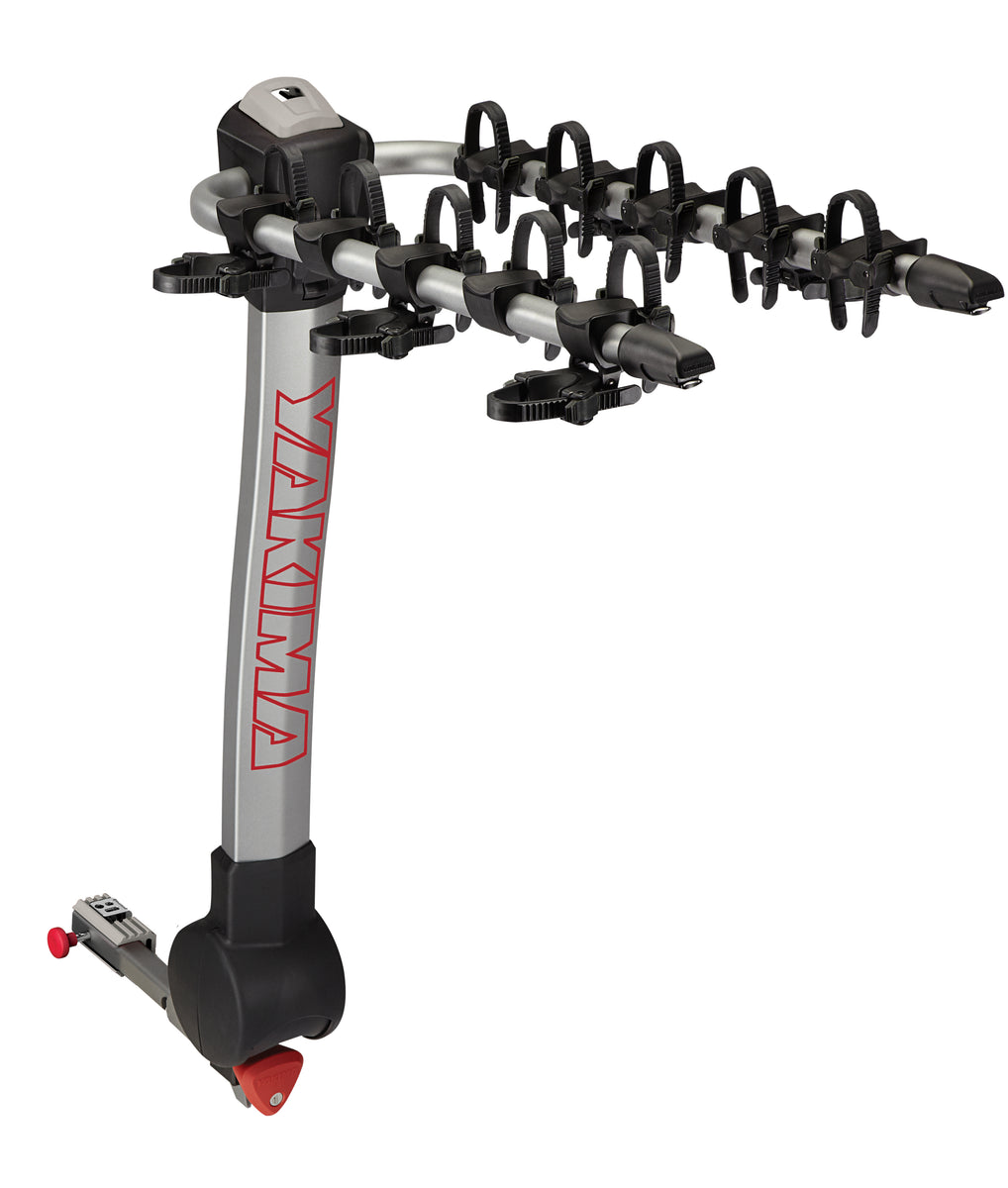
RidgeBack
Yakima
The Yakima RidgeBack targets families, casual cyclists, and camping groups needing to haul up to four bikes without spending four figures on an oversized tray system. Weighing around 35 pounds, it is substantially lighter and far easier to install or store in a closet than multi-bike platform racks. It operates via a traditional hanging mast, supporting bikes by the top tube using soft rubber cradles and ratcheting straps that hold frames in place during transit. Reviewers consistently praise the RidgeBack for its tool-free SpeedKnob hitch installation, which expands an internal wedge inside the receiver to eliminate wobble without requiring wrenches. Anti-sway cradles clip onto vertical frame tubes to minimize the front-to-back pendulum motion typical of older hanging designs. When bikes are removed, the dual support arms fold down flat against the mast with a single upper latch, keeping the vehicle compact for parallel parking or garage clearance. Because it is a hanging rack, the RidgeBack has inherent limitations compared to tray-style platforms. Step-through frames, kids' bikes, and modern full-suspension mountain bikes with horizontal rear shocks often require separate top-tube adapter bars to sit level. Furthermore, because bikes hang in close proximity, pedals and wheel rims can rub against adjacent frames unless you use supplementary bungee cords or padding on bumpy dirt roads. **Highlights** - Lightweight 35-pound build simplifies seasonal vehicle installation - Tool-free SpeedKnob locks rack securely to hitch receiver - Folding support arms reduce rear profile when unloaded - Upper-mast tilt lever provides rear tailgate access - Anti-sway cradles limit contact between bikes **Watch-outs** - Requires separate top-tube adapter bars for step-through and many full-suspension bikes - Bikes can swing into each other on uneven dirt roads without extra strapping - Upper arms can be a tight squeeze for four modern, wide-handlebar mountain bikes
- Price
- Check current price
- Reader rating
- No reader votes yet
- How we assessed it
- Specification researched

#3 on this list
Verse
Thule
The Thule Verse is engineered for riders who want the rock-solid frame isolation of a heavy-duty platform rack combined with refined, modern aesthetic styling. Geared toward daily commuters, road riders, and trail cyclists carrying standard to moderately heavy bikes, the Verse focuses on fast loading and rigid vehicle attachment. It replaces older cradle geometries with broader, contoured wheel trays that accommodate varying wheelbases without requiring loose hardware adjustments. Independent testers highlight the Verse for its solid hitch connection and smooth ratcheting wheel arms, which clamp down securely over front tires to eliminate frame contact entirely. At 58 pounds, the steel-reinforced spine gives the rack a planted feel at highway speeds, resisting the lateral oscillation that plagues lighter entry-level trays. The rack also incorporates Thule's signature folding architecture, tilting downward to clear liftgates when loaded and folding upright against the vehicle bumper when empty. That 58-pound mass is also the rack's primary drawback. Installing or removing the Verse is a deliberate, two-handed task that can strain your lower back if you routinely swap racks between vehicles. While it handles standard trail and gravel rigs effortlessly, riders transporting maximum-capacity electric cargo bikes will need to verify weight limits against the beefiest dedicated e-bike platforms. **Highlights** - Sturdy tray platform completely prevents frame contact - Wide-profile wheel trays cradle road, gravel, and mountain tires - One-handed tilt mechanism for vehicle hatch access - Folds vertically against the rear bumper when not in use - High-durability steel and aluminum chassis **Watch-outs** - Heavy 58-pound chassis makes off-vehicle handling cumbersome - Substantial physical footprint requires dedicated garage storage space - Ratchet mechanisms require periodic clearing of road grit to maintain smooth travel
- Price
- Check current price
- Reader rating
- No reader votes yet
- How we assessed it
- Specification researched
Specs side by side
| Spec | RidgeBack | Verse |
|---|---|---|
| Rack Type | Hitch-mount hanging mast | — |
| Total Weight | 35 lbs | 58 lbs |
| Max Capacity | Up to 4 bikes | — |
| Hitch Size | 1.25-inch and 2-inch compatible | — |
| Attachment | Tool-free SpeedKnob system | — |
| Price Point | Around $479 | — |
| Rack Style | — | Platform hitch rack |
| Frame Contact | — | Zero (front tire ratchet arm) |
| Tilt Mechanism | — | Foot/hand tilt for rear hatch clearance |
| Primary Materials | — | Powder-coated steel and aluminum |
| Bike Retention | — | Front wheel hook and rear wheel strap |
What our reviewers liked and didn't
RidgeBack
- Manageable 35-pound weight makes solo vehicle installation and storage easy
- Tool-free SpeedKnob eliminates receiver wobble without requiring wrenches
- Folding dual arms lower smoothly to shorten vehicle length when unloaded
- Tilt-away mast provides quick tailgate clearance without removing the rack
- Requires separate top-tube adapter bars for step-through and full-suspension frames
- Four-bike capacity is extremely tight for wide-handlebar modern mountain bikes
- Risk of cosmetic bike-to-bike rubbing on rough backroads without extra strapping
Verse
- Zero frame contact protects carbon fiber, custom paint, and odd tube shapes
- Stout 58-pound chassis minimizes wobble and flex at interstate speeds
- Broad trays comfortably hold various wheelbases without hardware adjustment
- Loaded tilt feature drops down smoothly for complete rear cargo access
- Heft makes seasonal installation, removal, and garage storage cumbersome
- Incompatible with full front fenders due to the over-the-tire clamping arm
- Ratcheting slide rails require routine cleaning to prevent grit buildup
Prices change constantly — the figure shown is the last verified catalog price, and the buy buttons always go to the current listing.