


Reader rating
Rate it and you move it. Community ratings re-rank this product inside its Top 10 list.
Expert-picked, reader-ranked. Our editors choose the products and the launch order; member star ratings move picks up or down over time.
Best bushcraft line: tarred twisted nylon that grips knots and sheds water.
Pros
- Tacky tar coating prevents knots from slipping loose under load
- Fraction of the bulk and weight of standard 550 paracord
- Naturally resists UV decay, ground rot, and water saturation
- Twisted construction easily separates into three functional threads
Cons
- Tar leaves a sticky residue on skin and light-colored gear
- Tensioned knots can jam permanently and require cutting
- Lower break rating than heavier braided survival cords
Best uses
- Semi-permanent bushcraft camp lashings
- Tarp ridgelines and ground tie-outs
- Trotline fishing and trap rigging
- Emergency gear and pack repairs
Specifications
- Material
- Tarred 100% nylon
- Construction
- 3-strand twisted
- Tensile Rating
- Approx. 320 lbs
- Treatment
- Petroleum/asphalt-based net tar
- Rot Resistance
- Immune to rot and mildew
- Primary Advantage
- Frictional knot retention
Pricing
We don't publish a price we haven't verified. The retailer links below open the live listing for this exact model.
Best for
Semi-permanent bushcraft camp lashings, Tarp ridgelines and ground tie-outs, Trotline fishing and trap rigging, Emergency gear and pack repairs
Where to buy the No.36 Bank Line
We don't have a direct Amazon listing on file yet — this opens an Amazon search for the exact make and model.
Some links are affiliate links. Buying through them supports our testing at no extra cost to you.
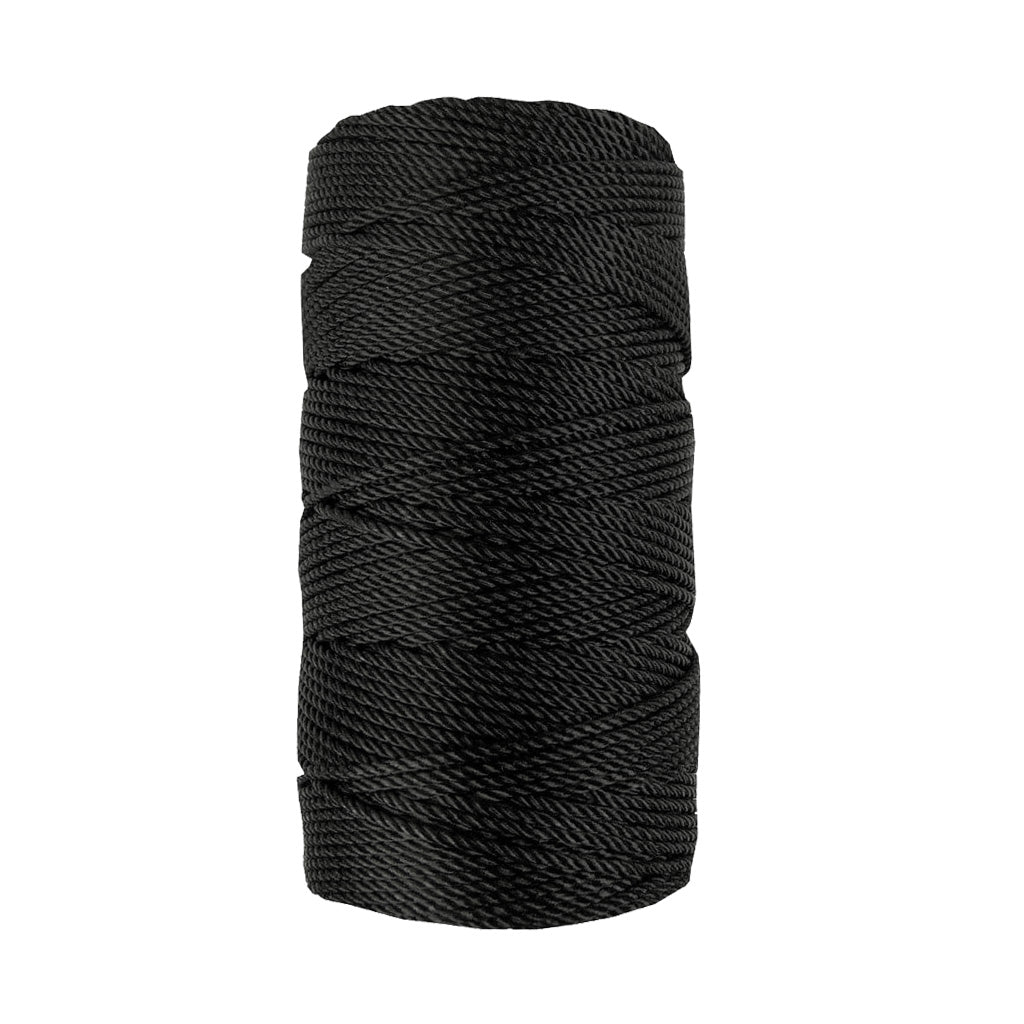
While mil-spec paracord captures most of the attention in modern survival kits, seasoned woodsmen often reach for tarred bank line instead. Originally manufactured for commercial trotlines and net repair, this black, resin-treated cord has quietly become the standard utility line for bushcraft and traditional camp setups. Number 36 is the sweet spot of the lineup, offering enough core strength to anchor structural shelter poles while staying thin enough to spool cleanly around a pocket toggle. The version distributed by Self Reliance Outfitters relies on a classic three-strand twisted nylon construction impregnated with an oil-based tar treatment. This coating serves two critical functions: it prevents the nylon from rotting or becoming waterlogged in muddy terrain, and it adds a distinct, tacky friction that locks knots securely in place. Where slick commercial cords slip or work loose in gusting wind, bank line bites down and stays put. Carrying enough line for a multi-day camp build usually requires bulky hanks of 550 cord that swallow prime real estate in your rucksack. A pocket-sized spool of bank line packs roughly four times the usable footage into the same footprint, drastically reducing pack volume without forcing you to ration your lashing material.
Materials and Construction
The foundation of this utility cord is multi-filament nylon spun into three distinct strands, then twisted under uniform tension before dipping in a weatherproofing net coat. The tar permeates deep into the core fibers rather than sitting as a brittle surface film. This saturating process protects the nylon from ultraviolet breakdown, sub-surface rot, and water saturation during extended rainy stretches. Because the core stays dry, the cord does not freeze solid into an unworkable cable in winter conditions. When cut with a sharp field knife, the ends mushroom slightly and can be cleanly sealed with a quick flame, though the tar prevents the rapid unraveling typically seen on untreated synthetic lines.
Knot Holding and Handling
Handling tarred bank line is completely different from working with slick paracord or braided spectra. The tacky coating provides immediate mechanical friction, meaning simple hitches like taut-line, prusik, and timber hitches lock under load without needing extra wraps or back-up safety knots. Square lashings on green saplings bite into the bark and resist shifting even as the wood shrinks over several days. The trade-off for this grip is that knots tied under high strain can effectively weld shut. If you tie a standard overhand knot or bowline under serious tension, you should expect to cut it rather than pick it apart around the campfire.
Field Packability and Footprint
One of the primary reasons hikers and bushcrafters switch away from heavier utility cord is bulk efficiency. Standard 550 cord requires a significant amount of pack volume to yield a hundred feet, often requiring dedicated exterior pouches or elaborate chain-sinnet braids. In contrast, a quarter-pound spool of number 36 yields over a hundred feet of line in a roll scarcely larger than an apple. You can wrap twenty feet around a knife sheath or an emergency signal whistle without altering the tool's ergonomics. For minimalist setups, this density allows you to carry abundant backup cordage without noticing the physical weight in your pack.
Durability Under Sustained Exposure
Standard commercial cords degrade rapidly when left exposed to constant ground moisture, dirt, and summer sun. Uncoated nylon acts like a sponge, absorbing water, attracting soil grit into its interior weave, and weakening under extended UV exposure. Bank line handles sustained field exposure without flinching. You can lash an improvised camp bench, stake out a lean-to shelter in wet soil, or submerge a trotline for weeks without the fibers weakening or rotting. Even when buried in damp humus or frozen into ground ice, the line maintains its structural integrity and remains easy to handle without turning slimy or stiff.
Versatility and Component Breaking
Because this line uses a three-strand twisted lay rather than a braided sheath, it can be quickly separated in the field into finer utility fibers. Unraveling a six-foot section gives you eighteen feet of thinner, highly durable cordage suitable for repairing pack straps, sewing blown boot seams, or fashioning emergency fishing leaders. Each individual strand retains enough tar residue to keep its twist and resist fraying during detailed needlework. This modular nature makes a single roll a versatile raw material for wilderness problem-solving, far outperforming braided lines that require tedious picking to extract interior threads.
Trade-offs and Competitors
This line is not for every application. The tar treatment carries a distinct asphalt scent and leaves a mild, tacky residue on bare hands during prolonged knot-tying sessions, which can transfer to light-colored garments and clean sleeping bags. It also lacks the 550-pound break strength of true Type III paracord, meaning it should never be used where substantial dynamic shock loads or human suspension are involved. Braided bank line from brands like Catahoula offers smoother feeding and resists tangling better than twisted line, but it cannot be easily unstranded for fine repair work. For structural camp tasks, the twisted variety remains the more versatile choice.
How we chose
We compared widely available cordage by type using maker specifications, retailer listings and published reviews, then ranked 10 against the same criteria below. This is desk research unless a pick is marked field tested. Rankings are editorial. No brand pays for placement, and affiliate links never move a pick up or down.
- Real-world durability
- How the material, stitching, or steel holds up after a season of hard use — not how it looks new.
- Performance in bad conditions
- Wind, rain, cold, and grit are the test. Anything that only works on a nice day gets marked down.
- Weight and packability
- Every ounce has to earn its place in the pack, but not at the cost of something that fails in the field.
- Ease of use
- Setup, adjustment, and maintenance with cold hands, in the dark, without the manual.
- Value at its price point
- Compared against the closest competitors in the same tier, not against cheaper gear in a different class.
- Repairability and support
- Field-fixable design, available parts, and a warranty the maker actually honors.
No.36 Bank Line — frequently asked questions
- Is the No.36 Bank Line worth it?
- We rank it #5 in Cordage by Type. Best bushcraft line: tarred twisted nylon that grips knots and sheds water.
- What is the No.36 Bank Line best for?
- Best for semi-permanent bushcraft camp lashings, tarp ridgelines and ground tie-outs, trotline fishing and trap rigging and emergency gear and pack repairs. Standouts: tacky tar coating prevents knots from slipping loose under load and fraction of the bulk and weight of standard 550 paracord.
- What are the downsides of the No.36 Bank Line?
- Tar leaves a sticky residue on skin and light-colored gear, Tensioned knots can jam permanently and require cutting and Lower break rating than heavier braided survival cords.
- What are the key specs of the No.36 Bank Line?
- Material: Tarred 100% nylon · Construction: 3-strand twisted · Tensile Rating: Approx. 320 lbs · Treatment: Petroleum/asphalt-based net tar · Rot Resistance: Immune to rot and mildew
- Materials and Construction — what should I know about the No.36 Bank Line?
- The foundation of this utility cord is multi-filament nylon spun into three distinct strands, then twisted under uniform tension before dipping in a weatherproofing net coat. The tar permeates deep into the core fibers rather than sitting as a brittle surface film.
- Knot Holding and Handling — what should I know about the No.36 Bank Line?
- Handling tarred bank line is completely different from working with slick paracord or braided spectra. The tacky coating provides immediate mechanical friction, meaning simple hitches like taut-line, prusik, and timber hitches lock under load without needing extra wraps or back-up safety knots.
Compare side by side
Put the No.36 Bank Line against any other pick on this list — specs, price, pros, cons and reader ratings.