


Reader rating
Rate it and you move it. Community ratings re-rank this product inside its Top 10 list.
Expert-picked, reader-ranked. Our editors choose the products and the launch order; member star ratings move picks up or down over time.
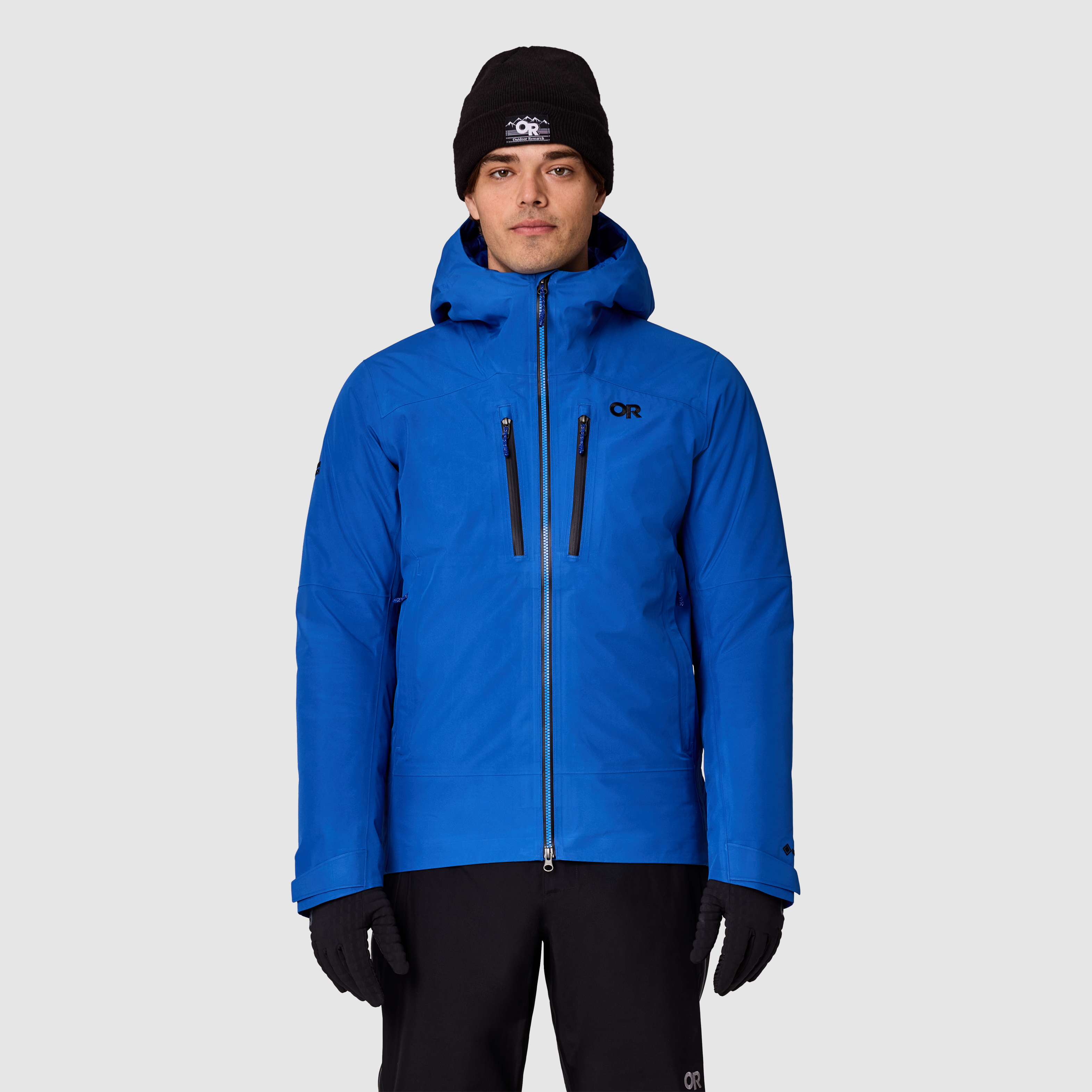
The Outdoor Research Headwall Jacket represents a modern push toward sustainability without abandoning heavy-weather capability. Designed for winter mountaineering, ice climbing, and wet-weather backcountry pursuits, this shell emphasizes dependable defense through an environmentally conscious, fully PFC-free build. Independent testing outlets have highlighted the Headwall as a standout option for climbers looking to move away from legacy fluorinated chemistries. Tipping the scales at 1 pound 1.6 ounces, the Headwall sits on the sturdier end of the spectrum, offering reassuring physical protection against blowing sleet and jagged ice tools. The tailoring prioritizes overhead mobility, allowing climbers to swing ice tools without pulling the jacket hem out from underneath a harness. Feature-wise, it includes deep underarm venting zips, a helmet-compatible halo hood that adjusts cleanly, and ample storage for bulky winter essentials like belay gloves. Because of its burly construction and slightly heavier weight, the Headwall is not the shell you pack away 'just in case' on warm summer hikes. It takes up noticeable space in a pack and feels warm during shoulder-season use, cementing its place as a dedicated cold-weather alpine and winter storm jacket rather than a four-season crossover. **Highlights** - Fully PFC-free waterproof construction tailored for winter use - Burly fabric construction resisting snagging on ice screws and rock - Dynamic Reach underarm patterning prevents hem ride-up - Generous internal and external pockets accommodate winter gloves - Fully adjustable, helmet-compatible halo hood **Watch-outs** - Heavy and bulky at 1 lb 1.6 oz for non-winter pack storage - Can run warm during high-output activity in moderate temperatures
Pros
- PFC-free waterproof build provides serious storm defense without toxic chemicals
- Tailored underarm patterning stops the hem from pulling out of a harness
- Heavy-duty exterior fabric withstands rough rock, ice screws, and heavy pack straps
- Spacious external and internal pockets easily fit bulky winter climbing mittens
Cons
- Weight of 1 lb 1.6 oz makes it too heavy and bulky for summer or general trail use
- Tends to run hot during aerobic climbs in moderate or mild temperatures
Best uses
- Ice climbing
- Winter mountaineering
- Backcountry ski mountaineering
- Severe cold weather ascents
Specifications
- Maker
- Outdoor Research
- Weight
- 1 lb 1.6 oz (499 g)
- Membrane
- Fully PFC-free waterproof construction
- Hood Style
- Helmet-compatible adjustable halo hood
- Venting
- Extended dual-direction pit zips
- Cut
- Technical alpine fit with harness clearance
Pricing
We don't publish a price we haven't verified. The retailer links below open the live listing for this exact model.
Full catalog listing & offersBest for
Ice climbing, Winter mountaineering, Backcountry ski mountaineering, Severe cold weather ascents
Where to buy the Headwall Jacket
We don't have a direct Amazon listing on file yet — this opens an Amazon search for the exact make and model.
Some links are affiliate links. Buying through them supports our testing at no extra cost to you.
The Outdoor Research Headwall Jacket is engineered as a dedicated cold-weather alpine barrier, combining robust storm protection with modern eco-conscious fabric chemistry. Tailored for ice climbing, winter mountaineering, and severe mountain weather, the shell relies on a completely PFC-free waterproof construction that avoids traditional fluorinated water repellents without forfeiting defense against driven snow and freezing rain. Tipping the scales at 1 pound 1.6 ounces, the Headwall intentionally bypasses the ultralight category to deliver structural durability and abrasion resistance. Its burly exterior textile shields against the abrasive wear typical of rack gear, abrasive granite, and jagged ice tools. Review outlets have identified the jacket as a benchmark for sustainable technical shells, noting that it manages harsh conditions without the environmental baggage of legacy membranes. Because of its heavier build and substantial feature set, the Headwall is not designed for summer day hikes or fast-and-light trail runs. It demands noticeable pack volume and runs too warm for shoulder-season aerobic pursuits. For winter alpinists needing reliable weatherproofing, harness-compatible tailoring, and ample room for thermal midlayers, it functions as a dependable front-line defensive layer.
Sustainable Weather Protection
The primary story behind the Headwall Jacket is its chemical footprint. Outdoor Research built this shell around a fully PFC-free waterproof barrier, aiming to eliminate persistent perfluorinated compounds from technical apparel. In sustained wet snow and sleet, the laminate sheds precipitation effectively, resisting the surface saturation that causes chills in sub-freezing winds. While early PFC-free garments occasionally suffered from rapid exterior wetting, recent membrane refinements ensure the outer textile maintains water beading through prolonged storms. It creates an impenetrable barrier against alpine gales, holding off wind-driven drafts on exposed ridges. The face fabric is matched with fully taped interior seams, keeping moisture out during damp, messy ice-climbing conditions where runoff is constant.
Climbing Mobility and Fit
A hardshell designed for winter climbing must articulate naturally with overhead movement. The Headwall integrates targeted underarm gusseting and dynamic reach patterning, allowing users to swing ice axes or reach high footholds without the hem pulling out from beneath a climbing harness or backpack waist belt. The torso features an alpine profile that sits close enough to minimize excess flapping in high winds while retaining adequate circumference to accommodate midweight fleece or low-profile down midlayers. The cuffs utilize wide hook-and-loop closures that seal securely over bulky under-cuff gauntlets or cinch cleanly around bare wrists. The hem includes dual drawcord adjustments that can be tuned with cold hands while wearing thick gloves.
Alpine Feature Set
Winter mountaineering places distinct demands on shell hardware. The Headwall features an oversized halo hood designed to fit seamlessly over standard climbing and ski helmets. Multi-point drawcords cinch the hood tightly around the face, preserving peripheral vision whether a helmet is worn or left behind. Storage is tailored to cold-weather utility: the external chest and hand pockets are positioned above harness line, remaining accessible during technical pitches. Interior drop-in pockets provide warm storage for frozen skins, electronics, or belay mittens. When high-output climbing generates excess body heat, deep two-way underarm pit zips provide rapid heat venting, allowing climbers to regulate their temperature without exposing their base layers to falling snow.
Weight and Packability
At 1 pound 1.6 ounces, the Headwall sits near the upper weight tier of modern three-layer hardshells. This heft is a deliberate engineering choice to maximize durability, but it presents real trade-offs when pack space and base weight are at a premium. Unlike minimal packable shells that compress into the size of an apple, this jacket occupies significant volume inside a winter daypack. It is heavy enough that gram-conscious backpackers will leave it at home during moderate three-season outings. The jacket is unequivocally intended to be worn for the duration of an outing or carried strictly when severe winter storms are guaranteed, rather than carried as passive emergency rainwear.
Durability and Abrasion Resistance
Where lightweight shells tear easily under alpine friction, the Headwall demonstrates robust resistance to physical damage. The heavy-denier face fabric withstands contact with coarse rock edges, sharp crampon points, and the repeated abrasion caused by heavy mountaineering pack straps. Reinforced stress areas help prevent punctures when carrying sharp climbing gear on harness gear loops. The main front zipper is a burly water-resistant component that glides smoothly without catching on internal draft flaps, resisting freezing in sub-zero alpine conditions. For users who frequently subject their outerwear to chimney climbing, off-width cracks, and technical winter ascents, the Headwall provides the physical resilience necessary for multi-season mountain duty.
Market Context and Trade-Offs
The Headwall operates in a competitive segment dominated by premium Gore-Tex Pro shells from brands like Arc'teryx and Patagonia. While top-tier mountaineering jackets often command prices well above normal budgets, the Headwall provides a high level of storm defense and ruggedness at a comparatively accessible price point, anchored by an explicitly sustainable design. The trade-off comes down to breathability and thermal range. The PFC-free membrane breathes adequately during steady cold-weather climbing, but it can trap heat quickly in mild or humid environments. For deep winter ascents, snow stability assessments, and frozen waterfall climbs, it represents a sturdy, environmentally conscious alpine tool.
How we picked
We started with a long list of hardshell jackets that people actually buy, cut anything that could not clear our baseline for durability and field performance, then ranked the 10 that were left against the same criteria. Rankings are editorial. No brand pays for placement, and affiliate links never move a pick up or down.
- Fabric behavior over time
- Breathability, DWR life, loft retention, and how the piece performs after repeated washing.
- Real-world durability
- How the material, stitching, or steel holds up after a season of hard use — not how it looks new.
- Performance in bad conditions
- Wind, rain, cold, and grit are the test. Anything that only works on a nice day gets marked down.
- Weight and packability
- Every ounce has to earn its place in the pack, but not at the cost of something that fails in the field.
- Ease of use
- Setup, adjustment, and maintenance with cold hands, in the dark, without the manual.
- Value at its price point
- Compared against the closest competitors in the same tier, not against cheaper gear in a different class.
Headwall Jacket — frequently asked questions
- Is the Headwall Jacket worth it?
- We rank it #8 in Hardshell Jackets. The Outdoor Research Headwall Jacket represents a modern push toward sustainability without abandoning heavy-weather capability. Designed for winter mountaineering, ice climbing, and wet-weather backcountry pursuits, this shell emphasizes dependable defense through an environmentally conscious, fully PFC-free build.
- What is the Headwall Jacket best for?
- Best for ice climbing, winter mountaineering, backcountry ski mountaineering and severe cold weather ascents. Standouts: pfc-free waterproof build provides serious storm defense without toxic chemicals and tailored underarm patterning stops the hem from pulling out of a harness.
- What are the downsides of the Headwall Jacket?
- Weight of 1 lb 1.6 oz makes it too heavy and bulky for summer or general trail use and Tends to run hot during aerobic climbs in moderate or mild temperatures.
- What are the key specs of the Headwall Jacket?
- Maker: Outdoor Research · Weight: 1 lb 1.6 oz (499 g) · Membrane: Fully PFC-free waterproof construction · Hood Style: Helmet-compatible adjustable halo hood · Venting: Extended dual-direction pit zips
- Sustainable Weather Protection — what should I know about the Headwall Jacket?
- The primary story behind the Headwall Jacket is its chemical footprint. Outdoor Research built this shell around a fully PFC-free waterproof barrier, aiming to eliminate persistent perfluorinated compounds from technical apparel.
- Climbing Mobility and Fit — what should I know about the Headwall Jacket?
- A hardshell designed for winter climbing must articulate naturally with overhead movement. The Headwall integrates targeted underarm gusseting and dynamic reach patterning, allowing users to swing ice axes or reach high footholds without the hem pulling out from beneath a climbing harness or backpack waist belt.
Compare side by side
Put the Headwall Jacket against any other pick on this list — specs, price, pros, cons and reader ratings.