



Updated October 2026 · 10 picks re-checked for availability and current spec, reader ratings refreshed live.
When mountain weather turns severe, a standard rain shell or softshell simply will not suffice. A true hardshell jacket serves as an impenetrable barrier against wind-driven sleet, blowing alpine snow, and prolonged downpours, engineered with rugged face fabrics and high-performance waterproof-breathable membranes. The gear landscape is evolving rapidly, driven by the industry-wide transition toward PFAS-free membranes and chemical treatments—such as Gore-Tex's new expanded polyethylene (ePE) technology—requiring outdoor brands to balance sustained weatherproofing with improved environmental compliance. Selecting the right jacket demands an honest assessment of your intended use. True four-season mountaineering shells prioritize bombproof abrasion resistance, tall protective collars, and harness-compatible pockets, accepting stiff hand-feel and extra weight as necessary trade-offs. In contrast, fast-and-light alpine models and ski-touring shells lean into stretch, weight reduction, and moisture permeability, sacrificing some puncture resistance against jagged granite or heavy pack straps. To build this ranking, we synthesized independent evaluations from veteran gear testing outlets—including OutdoorGearLab, Switchback Travel, and GearJunkie—cross-referencing technical specifications, long-term durability reports, and retail pricing. We then applied our own editorial weighting to elevate jackets that strike the most reliable balance between raw weather defense, smart tailoring, and enduring value.
The short answer

The Arc'teryx Beta AR has spent years at the pinnacle of all-around alpine hardshells, and the updated iteration continues that legacy with the…
Why it wins
The Patagonia M10 Storm addresses an often-overlooked middle ground in the hardshell market: technical alpine protection that does not carry an…
Why it wins
The Arc'teryx Alpha SV is the gold standard of brute-force weather defense, engineered strictly for severe mountaineering, mixed climbing, and…
Why it winsDeep-dive product reviews
We've published full field-test reports and technical deep-dives for 10 of the picks in this list.
Compare all 10 picks at a glance
Editorial ranking, what each pick is best at, and how we assessed it. Tap a name to jump to the full write-up.
| # | Pick | Best for | Key spec | Evidence |
|---|---|---|---|---|
| 1 | Beta AR Arc'teryx | Alpine climbing | Membrane: 3L Gore-Tex Pro ePE | Research only |
| 2 | M10 Storm Patagonia | Fast-and-light alpine climbing | Membrane: 3-layer H2No Performance Standard | Research only |
| 3 | Alpha SV Arc'teryx | Technical alpine climbing | Face Fabric: 100D recycled nylon plain weave | Research only |
| 4 | Trollveggen Gore-Tex Pro Light Norrona | Technical Alpine Climbing | Price: Around $749 | Research only |
| 5 | Monsoon Himali | Fast-and-light mountaineering | Retail Price: Approximately $460 | Research only |
| 6 | Ortler 3L - Women's Ortovox | Backcountry Ski Touring | Membrane: Toray Dermizax NX 3-layer non-porous | Research only |
| 7 | Taiss HS Mammut | Alpine rock and ice climbing | Retail Price: Around $389 | Research only |
| 8 | Headwall Jacket Outdoor Research | Ice climbing | Maker: Outdoor Research | Research only |
| 9 | Aequilibrium Lite GTX La Sportiva | Fastpacking and skyrunning | Weight: 6.8 oz (men's) / 6.4 oz (women's) | Research only |
| 10 | Mythogen Jacket Mountain Hardwear | Backcountry ski touring | Weight: 1 lb. 6 oz. (approx. 624 g) | Research only |
How we picked
Ranked by Renata Cho, Apparel & Layering Editor
We started with a long list of hardshell jackets that people actually buy, cut anything that could not clear our baseline for durability and field performance, then ranked the 10 that were left against the same criteria. Rankings are editorial. No brand pays for placement, and affiliate links never move a pick up or down.
- Fabric behavior over time
- Breathability, DWR life, loft retention, and how the piece performs after repeated washing.
- Real-world durability
- How the material, stitching, or steel holds up after a season of hard use — not how it looks new.
- Performance in bad conditions
- Wind, rain, cold, and grit are the test. Anything that only works on a nice day gets marked down.
- Weight and packability
- Every ounce has to earn its place in the pack, but not at the cost of something that fails in the field.
- Ease of use
- Setup, adjustment, and maintenance with cold hands, in the dark, without the manual.
- Value at its price point
- Compared against the closest competitors in the same tier, not against cheaper gear in a different class.
How often we recheck this: Reviewed on a rolling basis and rechecked at least once a year, or sooner if a pick is discontinued, revised, or beaten by something new.
Best of the Best · Head to Head
Beta AR vs M10 Storm
#1 vs #2 — side-by-side specs, pros & cons, and the final verdict.
Compare any two picks
Build your own side-by-side
Choose any two of these 10 picks and compare specs, price, pros, cons and reader ratings.
Topic summary
We analyzed expert reviews and technical specs to rank the 10 best hardshell jackets of 2026 for alpine climbing, backcountry touring, and severe storm defense.
Key takeaways
- #1 Beta AR — Arc'teryx
- #2 M10 Storm — Patagonia
- #3 Alpha SV — Arc'teryx
- #4 Trollveggen Gore-Tex Pro Light — Norrona
- #5 Monsoon — Himali
- #6 Ortler 3L - Women's — Ortovox
Intended uses
Gear
Verification notes
Editorial ranked list, 10 entries. Evidence mix — 10 research only. Buy links open the maker or a retailer search. Last reviewed October 2026.
Best hardshell jackets for a specific job
Skip the ranking — jump to the pick that matches how you actually use it.
- Best for alpine climbing
- #1 Beta AR — Arc'teryxThe Arc'teryx Beta AR has spent years at the pinnacle of all-around alpine hardshells, and the updated iteration continues that legacy with the integration of Gore-Tex Pro's newer ePE membrane. Engineered primarily for versatile mountain use—spanning alpine climbing, foul-weather trekking, and ski mountaineering—it balances burly durability with an articulated cut that moves cleanly with the body. Independent testers consistently rate its patterning and mobility among the best in the category, noting that it rarely binds across the shoulders or pulls up at the hem during dynamic reach. The build relies on an 80-denier face fabric with beam-dyed textile treatments, delivering substantial abrasion resistance against rock, ice tools, and heavy pack straps without feeling overly stiff. Arc'teryx equips the jacket with their signature separate collar and DropHood setup, allowing users to snug down neck protection without deploying the hood. The dual chest-accessible hand pockets sit clear of harness leg loops and backpack hipbelts, while deep underarm pit zips provide effective heat dumping on steep approaches. The primary friction point remains cost. At an approximate retail price of $650, the Beta AR represents a significant investment, though its durability across varied sports helps justify the outlay. The separate collar and hood design also splits opinions: while it provides cleaner drafts-free neck coverage, some mountaineers find it bunches slightly when layering over bulky midlayer hoods compared to an integrated StormHood. **Highlights** - 3-layer Gore-Tex Pro ePE membrane construction with beam-dyed 80D face fabric - Exceptional alpine patterning that prevents hem rise while reaching - Deep underarm pit zippers for quick thermal regulation - Standalone protective collar independent of the helmet-compatible hood - Harness- and pack-compatible pocket placement **Watch-outs** - High retail price represents a major barrier for casual users - Separate hood and collar construction can create bulk around layered hoodsRead the full profile
- Best for fast-and-light alpine climbing
- #2 M10 Storm — PatagoniaThe Patagonia M10 Storm addresses an often-overlooked middle ground in the hardshell market: technical alpine protection that does not carry an astronomical price tag. Designed for fast-moving alpinists, rock climbers, and weight-conscious ski tourers, this jacket replaces overbuilt heavy-duty shells with an agile, pared-back profile. It has emerged across expert testing panels as one of the best value-to-performance jackets available, earning repeated praise for active wear. Constructed using Patagonia's proprietary 3-layer H2No performance standard, the M10 Storm focuses on supple drape and minimal bulk. Reviewers highlight its ability to move quietly and pack down small in an alpine pack compared to crinkly, stiff alternatives. The tailoring is cleanly focused on technical movement, featuring high-set pockets that remain completely accessible when wearing a climbing harness or pack waistbelt, alongside an adjustable hood that accommodates a climbing helmet without restricting peripheral vision. To hit its competitive $389 price point and low pack weight, Patagonia omitted underarm pit zips. Venting relies entirely on the main front zipper and pocket liners, which may limit airflow during high-output climbs in wet, warm conditions. Additionally, while the lighter-weight face fabric holds up well to typical alpine use, it lacks the sheer rock-scraping abrasion tolerance of 80- or 100-denier expedition shells. **Highlights** - 3-layer H2No waterproof-breathable construction - Clean alpine cut designed for minimal bulk and unhindered movement - Competitive sub-$400 price point for a technical 3L alpine shell - Harness-compatible pocket configuration - Helmet-compatible hood with single-pull adjustment **Watch-outs** - Lacks underarm pit zips for dedicated mechanical ventilation - Lighter face fabric requires more care against sharp alpine granite than heavy-denier shellsRead the full profile
- Best for technical alpine climbing
- #3 Alpha SV — Arc'teryxThe Arc'teryx Alpha SV is the gold standard of brute-force weather defense, engineered strictly for severe mountaineering, mixed climbing, and unrelenting arctic storms. Where generalist shells compromise on fabric weight to remain comfortable on casual hikes, the Alpha SV accepts no compromises in armor-like protection. Reviewers consistently designate it as the single most durable hardshell on the market, built to withstand jagged rock faces, sharp crampon points, and years of relentless abuse. The foundation of the jacket is a massive 100-denier face fabric mated to a Gore-Tex Pro membrane, constructed from 100% recycled materials. This combination yields an exceptionally rigid barrier against wind, ice, and horizontal rain. The alpine-specific cut features Arc'teryx's StormHood, which cinches down completely over a climbing helmet with zero compromise to head rotation, as well as crossover chest pockets designed specifically for access while hanging in a harness. All that protection brings noticeable trade-offs. The 100D shell is heavy, stiff, and noticeably noisy in motion, feeling like overkill for standard backcountry skiing or temperate backpacking. Furthermore, with a price tag approaching $900, it is an specialized tool meant for serious mountaineers who regularly operate in high-consequence environments, rather than weekend hikers seeking a storm shell. **Highlights** - Heavyweight 100% recycled 100D Gore-Tex Pro construction - Unmatched abrasion resistance against rock, ice, and heavy hardware - StormHood design provides complete coverage without blind spots - Crossover external chest pockets engineered for harness compatibility - Internal dump pocket for warming gloves or climbing skins **Watch-outs** - Extremely expensive at roughly $900 - Rigid, loud fabric that is cumbersome for casual or mild-weather activitiesRead the full profile
- Best for fast-and-light mountaineering
- #5 Monsoon — HimaliThe Himali Monsoon is built for alpinists and mountain athletes who prioritize breathability and dynamic movement without paying the steep premiums demanded by heritage alpine brands. Sitting at an approximate retail price of $460, it targets fast-and-light mountaineering, alpine scrambles, and high-altitude trekking. Independent reviewers highlight the Monsoon as an exceptional balance of protective capability and approachable pricing, frequently citing its quiet, flexible hand feel. Rather than utilizing Gore-Tex, Himali employs an advanced Toray membrane that emphasizes high vapor permeability and mechanical stretch. At 15.4 ounces for the men's version and 14.2 ounces for the women's, the Monsoon sits comfortably in the mid-weight bracket, shedding water with relentless reliability while reducing the sauna-like internal condensation common to rigid alpine shells. Fully taped seams, a helmet-compatible hood, and deep underarm ventilation zips make it a genuine four-season mountaineering contender. The trade-off for the Toray fabric's suppleness is long-term abrasion resistance. While durable enough for scree fields and standard alpine climbing, it does not match the sheer rock-scraping resistance of an 80- or 100-denier Gore-Tex Pro weave. Users regularly encountering coarse off-width climbing or heavy tree-line bushwhacking may notice face-fabric wear faster than on heavier armor-class shells. **Highlights** - Advanced Toray waterproof-breathable membrane with built-in stretch - Reasonable weight at 15.4 oz (men's) / 14.2 oz (women's) - Substantially quieter and more flexible than traditional Gore-Tex Pro jackets - Deep underarm pit zips for thermal regulation on steep ascents - Helmet-compatible hood with multi-point cinching **Watch-outs** - Face fabric is less abrasion-resistant against sharp granite than 80D+ shells - Smaller brand footprint makes in-person try-ons harder to findRead the full profile
- Best for backcountry ski touring
- #6 Ortler 3L - Women's — OrtovoxThe Ortovox Ortler 3L Women's jacket is a purpose-driven alpine shell designed from the ground up for ski touring, ski mountaineering, and cold alpine ascents. While many hardshells feel like crinkly, stiff barriers, the Ortler incorporates Toray's Dermizax NX membrane, which provides four-way stretch and exceptional moisture-vapor transmission. Reviewers consistently single out this shell as an exceptional choice for backcountry touring because it flexes effortlessly through kick turns and transitions. Weighing under a pound, the Ortler trims away non-essential clutter while keeping backcountry safety in mind. The Dermizax NX non-porous membrane performs better the warmer you get, actively pushing moisture out as internal body heat rises during hard skinning efforts. Ortovox integrates subtle merino wool inserts around the chin and collar to prevent chafing in bitter winds, alongside two-way underarm pit zips and a storm hood that accommodates ski helmets cleanly. At roughly $550, the Ortler is an investment piece tuned specifically for snow sports and alpine travel. The minimalist pocket layout means it skips lower hand pockets in favor of a single large chest pocket and a sleeve pass pocket. Backpackers or casual hikers looking for somewhere to warm their hands will find the layout overly sparse for non-technical trail use. **Highlights** - 4-way stretch Dermizax NX membrane provides silent, unhindered mobility - Excellent moisture vapor transmission rate for high-output skinning - Soft merino wool comfort patches at the chin and collar - Helmet-compatible storm hood designed for ski and climbing lids - Clean, lightweight profile under 16 ounces **Watch-outs** - Minimalist pocket layout lacks traditional handwarmer pockets - Fabric can wet out on the surface under prolonged warm, heavy rainRead the full profile
- Best for alpine rock and ice climbing
- #7 Taiss HS — MammutThe Mammut Taiss HS offers technical Swiss alpine engineering at a price point that undercuts much of its direct competition. Retailing around $389, it is designed for climbers, mountaineers, and hillwalkers who need serious alpine protection without breaking into the $600-plus tier. Testing outlets have singled it out as an outstanding value for money, delivering the clean articulation and harness-friendly layout typical of higher-end shells. The jacket utilizes Mammut's proprietary 3-layer DRY Expedition material, constructed from recycled polyamide. The fabric delivers dependable water and windproofing while maintaining a surprisingly light, low-bulk feel in a pack. Mammut gave the Taiss deep, two-way underarm zips for dumping heat, high-mounted cross-body chest pockets that sit well clear of backpack belts, and a three-way adjustable, helmet-compatible hood that locks down tightly around the face. The primary compromise involves heavy-duty durability. While the recycled face fabric easily handles standard alpine weather and snow sports, it is noticeably thinner than expedition-weight Gore-Tex Pro shells. Repeated friction against coarse granite chimneys or heavy external equipment will test the fabric over time, making it best suited for fast-moving climbers who prioritize low weight and breathability over heavy armor. **Highlights** - 3-layer Mammut DRY Expedition membrane with recycled polyamide - Excellent value for a fully featured technical alpine shell at roughly $389 - Cross-over chest pockets remain accessible under climbing harnesses - Generous two-way underarm pit zips for heat dumping - Precision three-point hood adjustment with reinforced visor **Watch-outs** - Face fabric is less burly than heavyweight mountaineering shells - Athletic European cut can feel narrow through the midsection when layeringRead the full profile
- Best for ice climbing
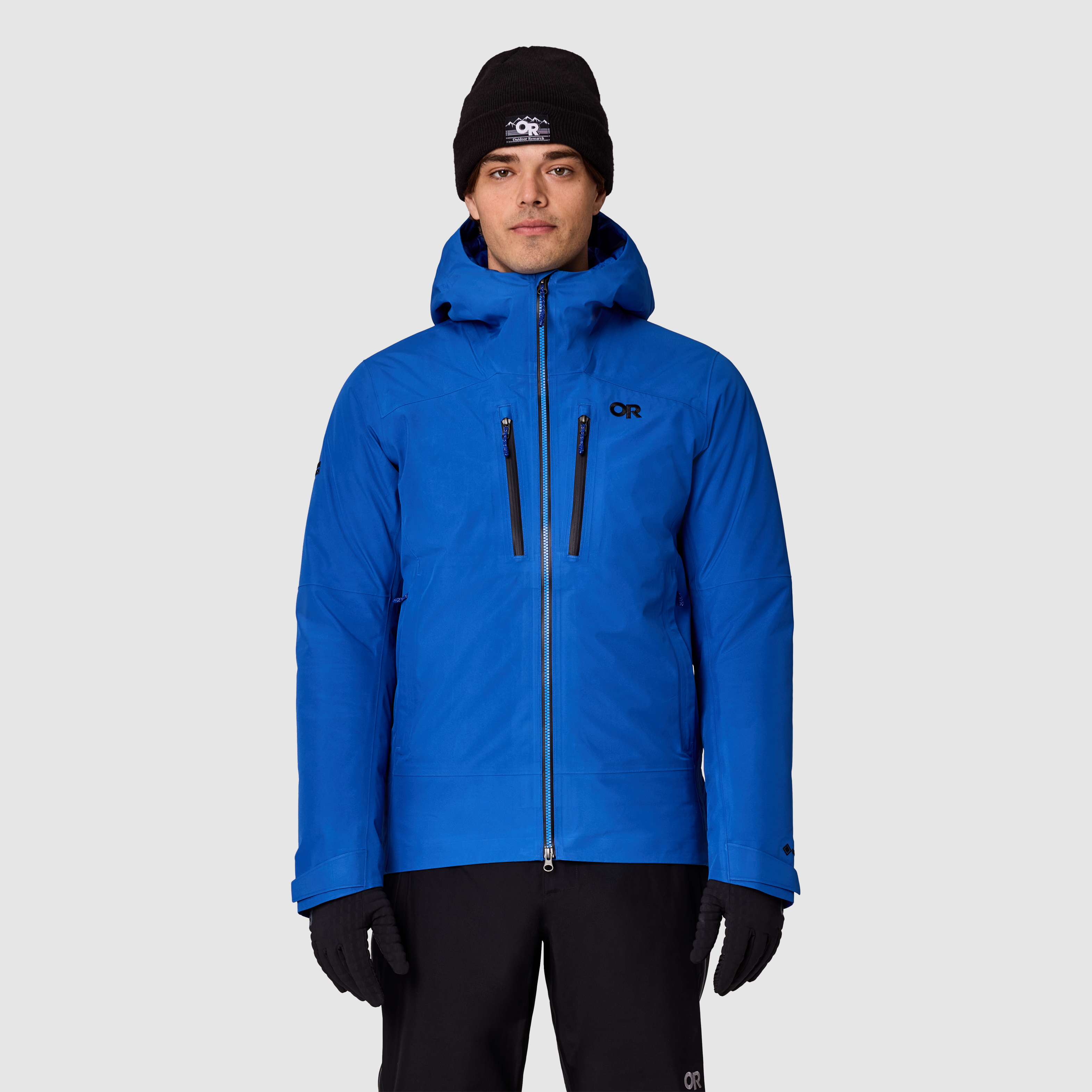
- #8 Headwall Jacket — Outdoor ResearchThe Outdoor Research Headwall Jacket represents a modern push toward sustainability without abandoning heavy-weather capability. Designed for winter mountaineering, ice climbing, and wet-weather backcountry pursuits, this shell emphasizes dependable defense through an environmentally conscious, fully PFC-free build. Independent testing outlets have highlighted the Headwall as a standout option for climbers looking to move away from legacy fluorinated chemistries. Tipping the scales at 1 pound 1.6 ounces, the Headwall sits on the sturdier end of the spectrum, offering reassuring physical protection against blowing sleet and jagged ice tools. The tailoring prioritizes overhead mobility, allowing climbers to swing ice tools without pulling the jacket hem out from underneath a harness. Feature-wise, it includes deep underarm venting zips, a helmet-compatible halo hood that adjusts cleanly, and ample storage for bulky winter essentials like belay gloves. Because of its burly construction and slightly heavier weight, the Headwall is not the shell you pack away 'just in case' on warm summer hikes. It takes up noticeable space in a pack and feels warm during shoulder-season use, cementing its place as a dedicated cold-weather alpine and winter storm jacket rather than a four-season crossover. **Highlights** - Fully PFC-free waterproof construction tailored for winter use - Burly fabric construction resisting snagging on ice screws and rock - Dynamic Reach underarm patterning prevents hem ride-up - Generous internal and external pockets accommodate winter gloves - Fully adjustable, helmet-compatible halo hood **Watch-outs** - Heavy and bulky at 1 lb 1.6 oz for non-winter pack storage - Can run warm during high-output activity in moderate temperaturesRead the full profile
- Best for fastpacking and skyrunning
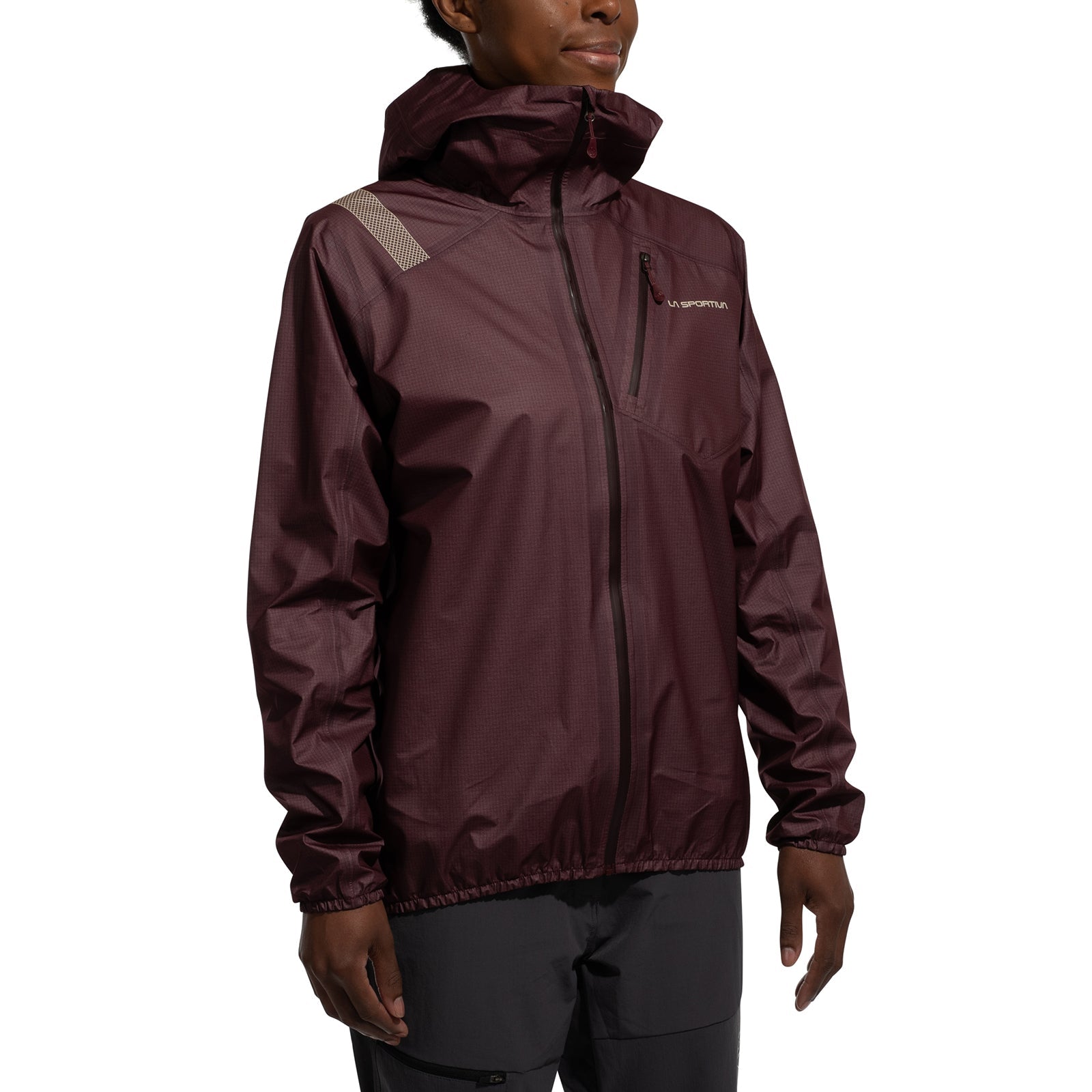
- #9 Aequilibrium Lite GTX — La SportivaThe La Sportiva Aequilibrium Lite GTX strips away virtually every non-essential feature to deliver an ultralight emergency storm shell for fast-and-light mountain travel. Tailored specifically for fastpackers, skyrunners, and minimalist alpinists, this jacket weighs an astonishing 6.8 ounces for men and 6.4 ounces for women. Testers have praised it as one of the most packable true Gore-Tex hardshells on the market, shrinking down to the size of an apple. Despite its minimal mass, La Sportiva incorporated Gore-Tex's next-generation ePE Performance membrane. This provides genuine waterproof-breathable storm protection that far exceeds the durability of standard PU-coated emergency rain shells. The jacket features elasticated cuffs, a snug, low-profile hood designed to fit under or over slim climbing helmets, and streamlined seam taping that cuts pack weight down to the absolute bare minimum. The severe weight reduction comes with unavoidable operational compromises. There are no underarm pit zips, pocket storage is reduced to a single chest pocket, and the ultralight face fabric will tear if dragged across sharp rock or forced through dense brush. At roughly $309, it is an exceptional specialized tool for moving fast in the high country, but it cannot substitute for a general-purpose, four-season mountaineering jacket. **Highlights** - Incredibly light at just 6.8 oz (men's) / 6.4 oz (women's) - Next-generation Gore-Tex ePE Performance waterproof-breathable membrane - Packs down tiny, fitting easily into running vests or summit packs - Clean, streamlined tailoring reduces wind drag on ridges - Accessible price point of approximately $309 for Gore-Tex tech **Watch-outs** - Ultra-thin face fabric has very low resistance to sharp rock abrasion - No pit zips and only a single pocket limit utility for winter alpine useRead the full profile
Our editors test the gear, pick the ten, and set the order the day a list publishes. After that, the ranking is live: every member star rating feeds the community order, so picks climb or slide as real owners report back. Editorial judgment decides what earns a spot — you help decide where it sits.
- Editors set the field
Hands-on testing and spec research choose the ten and the published order.
- Readers re-rank it
Your 1–5 star ratings drive the community order on every list.
- Rankings keep moving
Picks rise or fall over time — nothing is frozen at launch day.
Rank this list
Loading community ratings… Ratings re-order the picks — they never change which products make the list.
Sign in to add your own ratings — it's free.
- Pros
- Durable 80-denier face fabric withstands rough rock and heavy straps
- Exceptional alpine articulation prevents hem rise during high reaches
- Generous underarm pit zips provide effective ventilation on climbs
- Pockets remain fully accessible while wearing a harness or pack
Cons- High price tag makes it an expensive option for casual use
- Separate collar and DropHood design can bunch with hooded layers
- Heavy-duty 80D material is stiffer than lightweight rain jackets
Key features- Membrane
- 3L Gore-Tex Pro ePE
- Face Fabric
- 80D beam-dyed plain weave
- Hood Style
- Helmet-compatible DropHood
- Ventilation
- Dual underarm pit zippers
- MSRP
- Around $650
Best forAlpine climbing, Backcountry ski touring, Mountaineering, Cold-weather trekking
Pros- Durable 80-denier face fabric withstands rough rock and heavy straps
- Exceptional alpine articulation prevents hem rise during high reaches
- Generous underarm pit zips provide effective ventilation on climbs
- Pockets remain fully accessible while wearing a harness or pack
Cons- High price tag makes it an expensive option for casual use
- Separate collar and DropHood design can bunch with hooded layers
- Heavy-duty 80D material is stiffer than lightweight rain jackets
Assessed by Renata Cho against our ranking criteria.No ratings yet - Pros
- Sub-$400 price delivers true 3-layer alpine protection at exceptional value
- Supple, quiet fabric moves naturally and packs down small
- High pockets remain fully accessible above climbing harnesses and hip belts
- Helmet-compatible hood adjusts cleanly without limiting peripheral vision
Cons- No underarm pit zips limits mechanical ventilation during high-output climbs
- Lighter face fabric demands care against abrasive rock and sharp hardware
- Can run warm during steep, humid approaches in sustained rain
Key features- Membrane
- 3-layer H2No Performance Standard
- Approximate MSRP
- $389
- Primary Purpose
- Alpine climbing and mountaineering
- Ventilation
- Main zipper only (no pit zips)
- Hood Style
- Single-pull helmet-compatible
- Pocket Design
- Harness- and hipbelt-clearing
Best forFast-and-light alpine climbing, Backcountry ski touring, Weight-conscious mountaineering, Three-season mountain hiking
Pros- Sub-$400 price delivers true 3-layer alpine protection at exceptional value
- Supple, quiet fabric moves naturally and packs down small
- High pockets remain fully accessible above climbing harnesses and hip belts
- Helmet-compatible hood adjusts cleanly without limiting peripheral vision
Cons- No underarm pit zips limits mechanical ventilation during high-output climbs
- Lighter face fabric demands care against abrasive rock and sharp hardware
- Can run warm during steep, humid approaches in sustained rain
Assessed by Renata Cho against our ranking criteria.No ratings yet - Pros
- Industry-leading durability with 100D recycled face fabric
- Exceptional StormHood design preserves peripheral vision over helmets
- Harness-compatible crossover pockets and alpine articulation
- Uncompromising defense against brutal wind, freezing rain, and blizzards
Cons- Substantial financial investment approaching $900
- Stiff, loud fabric that feels cumbersome during low-intensity use
- Bulkier and heavier to pack down than all-around mountain shells
Key features- Approximate Price
- $900
- Face Fabric
- 100D recycled nylon plain weave
- Membrane
- Gore-Tex Pro Most Rugged
- Intended Use
- Severe alpine climbing and mountaineering
- Hood Style
- Helmet-compatible StormHood
- Pocket Layout
- External crossover chest and internal dump
Best forTechnical alpine climbing, Mixed and ice climbing, Severe winter mountaineering, Cold-weather expedition guiding
Pros- Industry-leading durability with 100D recycled face fabric
- Exceptional StormHood design preserves peripheral vision over helmets
- Harness-compatible crossover pockets and alpine articulation
- Uncompromising defense against brutal wind, freezing rain, and blizzards
Cons- Substantial financial investment approaching $900
- Stiff, loud fabric that feels cumbersome during low-intensity use
- Bulkier and heavier to pack down than all-around mountain shells
Assessed by Renata Cho against our ranking criteria.No ratings yet - Pros
- Durable 160D reinforcements protect shoulders and forearms from pack wear
- Generous long-torso cut stays anchored reliably under climbing harnesses
- Pliable 40D main body reduces stiffness compared to uniform high-denier shells
- Substantial two-way pit zippers provide rapid mechanical venting on steep climbs
Cons- Steep premium price point of around $749 limits broad appeal
- Trim Scandinavian cut restricts room for thick, high-loft winter insulation
Key features- Price
- Around $749
- Main Fabric
- 40D Gore-Tex Pro (50% recycled)
- Reinforcements
- 160D Gore-Tex Pro (100% recycled)
- Zippers
- Two-way underarm pit zips
- Fit Profile
- Technical athletic cut with drop tail
- Category
- Mountaineering hardshell
Best forTechnical Alpine Climbing, Winter Mountaineering, Ice Climbing, Rugged Four-Season Trekking
Pros- Durable 160D reinforcements protect shoulders and forearms from pack wear
- Generous long-torso cut stays anchored reliably under climbing harnesses
- Pliable 40D main body reduces stiffness compared to uniform high-denier shells
- Substantial two-way pit zippers provide rapid mechanical venting on steep climbs
Cons- Steep premium price point of around $749 limits broad appeal
- Trim Scandinavian cut restricts room for thick, high-loft winter insulation
Assessed by Renata Cho against our ranking criteria.No ratings yet - Pros
- Supple, quiet fabric feel avoids the rigid crinkle of standard hardshells
- High vapor permeability keeps internal condensation low on steep climbs
- Deep pit zips deliver effective mechanical ventilation during high output
- Significantly lower price point than flagship Gore-Tex Pro alpine shells
Cons- Face fabric offers less abrasion resistance against sharp rock than heavy 80D shells
- Direct-to-consumer footprint makes finding in-store sizing options difficult
Key features- Men's Weight
- 15.4 oz (437 g)
- Women's Weight
- 14.2 oz (403 g)
- Retail Price
- Approximately $460
- Membrane
- Toray waterproof-breathable laminate
- Ventilation
- Full-length underarm pit zips
- Hood Style
- Three-way adjustable, helmet-compatible
Best forFast-and-light mountaineering, Backcountry ski touring, Four-season alpine climbing, Inclement weather trekking
Pros- Supple, quiet fabric feel avoids the rigid crinkle of standard hardshells
- High vapor permeability keeps internal condensation low on steep climbs
- Deep pit zips deliver effective mechanical ventilation during high output
- Significantly lower price point than flagship Gore-Tex Pro alpine shells
Cons- Face fabric offers less abrasion resistance against sharp rock than heavy 80D shells
- Direct-to-consumer footprint makes finding in-store sizing options difficult
Assessed by Renata Cho against our ranking criteria.No ratings yet - Pros
- Four-way stretch Dermizax NX provides unhindered mobility on steep ascents
- Non-porous membrane increases vapor transfer as internal heat rises
- Soft merino wool patches prevent chin and neck chafing in freezing winds
- Generous helmet-compatible hood fits cleanly over ski and climbing helmets
Cons- No handwarmer pockets, limiting convenience on non-technical trails
- Outer face fabric can wet out faster in prolonged, warm rain
- Specialized minimalist design carries a steep $550 investment
Key features- Weight
- Under 16 oz (sub-1 lb)
- Membrane
- Toray Dermizax NX 3-layer non-porous
- Fabric Stretch
- 4-way mechanical and elastane stretch
- Ventilation
- Two-way underarm pit zippers
- Pockets
- 1 alpine chest pocket, 1 upper arm pocket
- Estimated MSRP
- Around $550
Best forBackcountry Ski Touring, Ski Mountaineering, Winter Alpine Climbing, Technical Snowshoeing
Pros- Four-way stretch Dermizax NX provides unhindered mobility on steep ascents
- Non-porous membrane increases vapor transfer as internal heat rises
- Soft merino wool patches prevent chin and neck chafing in freezing winds
- Generous helmet-compatible hood fits cleanly over ski and climbing helmets
Cons- No handwarmer pockets, limiting convenience on non-technical trails
- Outer face fabric can wet out faster in prolonged, warm rain
- Specialized minimalist design carries a steep $550 investment
Assessed by Renata Cho against our ranking criteria.No ratings yet - Pros
- Substantially lower price than comparable technical alpine shells
- High-set cross-over chest pockets clear harnesses and hipbelts easily
- Supple, low-bulk fabric allows easy packing and unhindered movement
- Deep two-way underarm pit zips provide excellent ventilation control
Cons- Lighter face fabric is less abrasion-resistant against rough rock
- Athletic European cut limits thick midlayer insulation underneath
- Lacks traditional handwarmer pockets for casual, off-mountain use
Key features- Retail Price
- Around $389
- Membrane
- 3-layer Mammut DRY Expedition
- Face Fabric
- 100% recycled polyamide
- Ventilation
- Two-way underarm pit zippers
- Pockets
- Two climbing harness-compatible chest pockets
- Hood Design
- Three-point adjustable, helmet-compatible
Best forAlpine rock and ice climbing, High-altitude mountaineering, Backcountry ski touring, Technical ridge scrambles
Pros- Substantially lower price than comparable technical alpine shells
- High-set cross-over chest pockets clear harnesses and hipbelts easily
- Supple, low-bulk fabric allows easy packing and unhindered movement
- Deep two-way underarm pit zips provide excellent ventilation control
Cons- Lighter face fabric is less abrasion-resistant against rough rock
- Athletic European cut limits thick midlayer insulation underneath
- Lacks traditional handwarmer pockets for casual, off-mountain use
Assessed by Renata Cho against our ranking criteria.No ratings yet - Pros
- PFC-free waterproof build provides serious storm defense without toxic chemicals
- Tailored underarm patterning stops the hem from pulling out of a harness
- Heavy-duty exterior fabric withstands rough rock, ice screws, and heavy pack straps
- Spacious external and internal pockets easily fit bulky winter climbing mittens
Cons- Weight of 1 lb 1.6 oz makes it too heavy and bulky for summer or general trail use
- Tends to run hot during aerobic climbs in moderate or mild temperatures
Key features- Weight
- 1 lb 1.6 oz (499 g)
- Maker
- Outdoor Research
- Membrane
- Fully PFC-free waterproof construction
- Hood Style
- Helmet-compatible adjustable halo hood
- Venting
- Extended dual-direction pit zips
- Cut
- Technical alpine fit with harness clearance
Best forIce climbing, Winter mountaineering, Backcountry ski mountaineering, Severe cold weather ascents
Pros- PFC-free waterproof build provides serious storm defense without toxic chemicals
- Tailored underarm patterning stops the hem from pulling out of a harness
- Heavy-duty exterior fabric withstands rough rock, ice screws, and heavy pack straps
- Spacious external and internal pockets easily fit bulky winter climbing mittens
Cons- Weight of 1 lb 1.6 oz makes it too heavy and bulky for summer or general trail use
- Tends to run hot during aerobic climbs in moderate or mild temperatures
Assessed by Renata Cho against our ranking criteria.No ratings yet - Pros
- Weighs only 6.8 ounces while offering genuine Gore-Tex storm defense
- Compresses down to the size of an apple for effortless packing
- Advanced ePE membrane offers waterproof-breathable performance without PFAS
- Streamlined, close-fitting cut eliminates excess fabric flap in high winds
Cons- Ultra-thin face fabric is vulnerable to abrasion on rock and brush
- Lacks underarm pit zips for mechanical venting on steep climbs
- Minimalist layout provides only a single chest pocket for gear storage
Key features- Weight
- 6.8 oz (men's) / 6.4 oz (women's)
- Pack Size
- Compresses to roughly apple size
- Waterproof Membrane
- Gore-Tex ePE Performance
- MSRP
- Around $309
- Pockets
- Single zippered chest pocket
- Ventilation
- None (no pit zips)
Best forFastpacking and skyrunning, Ultralight summer alpine climbs, Emergency storm protection, Gram-counting thru-hiking
Pros- Weighs only 6.8 ounces while offering genuine Gore-Tex storm defense
- Compresses down to the size of an apple for effortless packing
- Advanced ePE membrane offers waterproof-breathable performance without PFAS
- Streamlined, close-fitting cut eliminates excess fabric flap in high winds
Cons- Ultra-thin face fabric is vulnerable to abrasion on rock and brush
- Lacks underarm pit zips for mechanical venting on steep climbs
- Minimalist layout provides only a single chest pocket for gear storage
Assessed by Renata Cho against our ranking criteria.No ratings yet - Pros
- Substantial weather protection against high winds and driving snow
- Generous pocket layout easily accommodates backcountry climbing skins
- Deep two-way pit zips deliver effective mechanical ventilation on ascents
- Relaxed cut easily layers over thick winter insulation pieces
Cons- Heavy 1 lb 6 oz weight makes it impractical for summer backpacking
- Roomy fit feels overly baggy when worn with minimal base layers
- Substantial bulk takes up notable volume inside a technical pack
Key features- Weight
- 1 lb. 6 oz. (approx. 624 g)
- Primary Focus
- Backcountry skiing and winter mountaineering
- Ventilation
- Two-way underarm pit zips
- Pocket Design
- Oversized, skin-compatible front pockets
- Hood Integration
- Fully adjustable, helmet-compatible storm hood
- Fit Profile
- Relaxed winter cut for layering
Best forBackcountry ski touring, Winter mountaineering, Resort freeride skiing, Cold-weather snowshoeing
Pros- Substantial weather protection against high winds and driving snow
- Generous pocket layout easily accommodates backcountry climbing skins
- Deep two-way pit zips deliver effective mechanical ventilation on ascents
- Relaxed cut easily layers over thick winter insulation pieces
Cons- Heavy 1 lb 6 oz weight makes it impractical for summer backpacking
- Roomy fit feels overly baggy when worn with minimal base layers
- Substantial bulk takes up notable volume inside a technical pack
Assessed by Renata Cho against our ranking criteria.No ratings yet



Award picks
The ranking above is price-blind and judged on merit. These awards call out the pick we'd hand a specific person with a specific need.
Best Overall: Beta AR — Arc'teryx
The Arc'teryx Beta AR has spent years at the pinnacle of all-around alpine hardshells, and the updated iteration continues that legacy with the integration of Gore-Tex Pro's newer…
Ranked #1Runner-Up: M10 Storm — Patagonia
The Patagonia M10 Storm addresses an often-overlooked middle ground in the hardshell market: technical alpine protection that does not carry an astronomical price tag.
Ranked #2Best Value: Alpha SV — Arc'teryx
The Arc'teryx Alpha SV is the gold standard of brute-force weather defense, engineered strictly for severe mountaineering, mixed climbing, and unrelenting arctic storms.
Ranked #3Best Ultralight Pick: Trollveggen Gore-Tex Pro Light — Norrona
Norrona's Trollveggen Gore-Tex Pro Light delivers Scandinavian mountaineering engineering with a sophisticated hybrid construction.
Ranked #4Best for Rough Use: Monsoon — Himali
The Himali Monsoon is built for alpinists and mountain athletes who prioritize breathability and dynamic movement without paying the steep premiums demanded by heritage alpine…
Ranked #5Best for Cold and Wet: Ortler 3L - Women's — Ortovox
The Ortovox Ortler 3L Women's jacket is a purpose-driven alpine shell designed from the ground up for ski touring, ski mountaineering, and cold alpine ascents.
Ranked #6For the vast majority of mountaineers, skiers, and four-season adventurers, the Arc'teryx Beta AR remains the premier benchmark for mobility, weather defense, and versatility, while the Patagonia M10 Storm delivers exceptional stormproof agility at a far more accessible price point. If your plans demand uncompromising, expedition-grade armor against abrasive rock and arctic blizzards, the Arc'teryx Alpha SV stands alone at the top of the durability spectrum.
How to choose hardshell jackets
Every pick on this page was judged against the same criteria. If you want the short answer, Beta AR by Arc'teryx is the one we point most people at. If you want to decide for yourself, here is what actually separates a good hardshell jacket from an expensive one.
Fabric behavior over time
Breathability, DWR life, loft retention, and how the piece performs after repeated washing.
Real-world durability
How the material, stitching, or steel holds up after a season of hard use — not how it looks new.
Performance in bad conditions
Wind, rain, cold, and grit are the test. Anything that only works on a nice day gets marked down.
Weight and packability
Every ounce has to earn its place in the pack, but not at the cost of something that fails in the field.
Ease of use
Setup, adjustment, and maintenance with cold hands, in the dark, without the manual.
Value at its price point
Compared against the closest competitors in the same tier, not against cheaper gear in a different class.
Match the pick to your use
The right hardshell jackets depends on what you are actually doing with it: Alpine climbing; Backcountry ski touring; Mountaineering; Cold-weather trekking; Fast-and-light alpine climbing; Weight-conscious mountaineering. Start from the use case, then work down the ranking until you hit the first pick that covers it.
Common mistakes
- Buying the lightest hardshell jackets you can find and discovering it cannot take a season of hard use.
- Paying for a specialist feature you will use once a year instead of the versatile option.
- Comparing headline specs across tiers instead of within the same class.
- Skipping fit, sizing, or adjustment checks that decide whether you actually carry it.
Frequently asked questions
- What is the best hardshell jackets in 2026?
- Beta AR by Arc'teryx takes the top spot. The Arc'teryx Beta AR has spent years at the pinnacle of all-around alpine hardshells, and the updated iteration continues that legacy with the integration of Gore-Tex Pro's newer ePE membrane.
- How did The Wild10 choose and rank these hardshell jackets?
- We judged every pick against the same criteria — fabric behavior over time, real-world durability, performance in bad conditions, weight and packability — and ranked them on merit regardless of price. We analyzed expert reviews and technical specs to rank the 10 best hardshell jackets of 2026 for alpine climbing, backcountry touring, and severe storm defense.
- What is the best budget hardshell jackets?
- M10 Storm by Patagonia — The Patagonia M10 Storm addresses an often-overlooked middle ground in the hardshell market: technical alpine protection that does not carry an astronomical price tag.
- Beta AR vs M10 Storm — which should I pick?
- Beta AR ranks first: The Arc'teryx Beta AR has spent years at the pinnacle of all-around alpine hardshells, and the updated iteration continues that legacy with the integration of… M10 Storm is the close second: The Patagonia M10 Storm addresses an often-overlooked middle ground in the hardshell market: technical alpine protection that does not carry an astronomical… Our full head-to-head compares them side by side.
- How often is this list updated?
- We review this ranking on a rolling basis and update it whenever a pick is discontinued, meaningfully revised, or beaten by something new. Rankings are editorial — brands do not see them before publication and affiliate links never change the order.
Get The Field List
One short, honest email a week: gear we actually trust, planning guides, and survival-TV coverage. Free, unsubscribe anytime.