The 10 Best Ultralight Camping and Backpacking Saws
Compact folding saws for backpackers, paddlers and campers who need to clear deadfall and process small firewood without carrying a bucksaw, led by five Silky models.
Who this is for: backpackers, canoe trippers and car campers who want a packable folding saw for deadfall, small firewood and trail clearing. We compared blade length, tooth style, listed weight, folded size and lock design from official maker pages. This is desk research, not a field test. Prices were checked November 10, 2026. The last two picks (Silky Gomboy 240 and BigBoy 2000) are larger saws for canoe trips and basecamp firewood; the BigBoy is about 1 lb. Check local fire and wood-cutting rules: many parks only allow collecting dead and down wood. For bigger saws, see our camping and bushcraft saws list.
Quick picks
Shop links open Wild10 checkout products. External affiliate links may earn us a commission, at no extra cost to you.
Compact folding saws for backpackers, paddlers and campers who need to clear deadfall and process small firewood without carrying a bucksaw, led by five Silky models.
Rank this list
Loading community ratings… Ratings re-order the picks — they never change which products make the list.
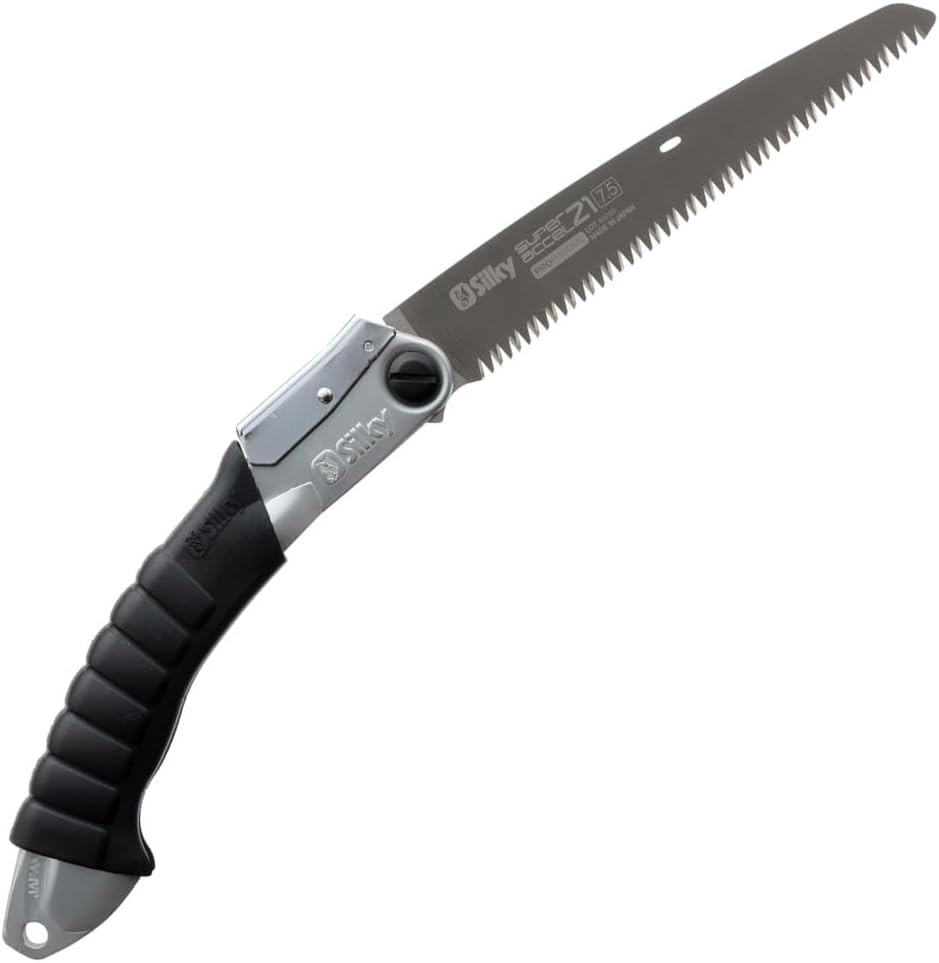
Processing deadfall for a backcountry fire usually forces a compromise between pack weight and actual mechanical advantage. Pocket chainsaws twist and snag, while standard folding utility saws bind the moment you push into green pine or wet birch. The Japanese pull-cut geometry on this folder cuts through that compromise by delivering full-size cutting authority in an eight-ounce package that rides clean in a pack bottle pocket.
At the core of the tool is a purpose-built 210-millimeter blade paired with a handle rake engineered to maximize pull stroke leverage without requiring excess wrist torque. Instead of fighting through a push-and-pull stroke, the teeth bite purely on the backward draw, letting the blade glide freely on the forward reset. For backpackers who want legitimate four- to six-inch log processing speed without carrying a dedicated pack bow saw, this hits the precise sweet spot between packability and raw utility.
Where it fits
Shoulder-season backcountry wood stove fueling
Clearing deadfall on remote wilderness corridors
Bushcraft shelter building and campcraft
Canoe and packraft expedition fire prep
Pros
Aggressive pull-cut teeth chew through seasoned logs with minimal effort
Extremely compact folded footprint slides into pack side pockets
Dual-angle locking mechanism enables flush ground cuts without scraping knuckles
Ergonomic rubberized grip maintains positive traction when wet or icy
Cons
Thin carbon steel blade will kink if jammed on an aggressive forward stroke
Impulse-hardened teeth cannot be sharpened with standard hand files in the field
Requires periodic oiling to prevent surface oxidation after wet trips
Backcountry travelers who depend on wood fires for heat or cookery will get the most out of this blade. It is tailor-made for solo hikers, canoe campers, and packrafters who routinely need to clear deadfall up to six inches in diameter without carrying the bulk of an external-frame bow saw. Ultralight purists who only boil water over alcohol stoves can safely leave it at home, but anyone traversing unmaintained wilderness corridors or winter routes where firewood is a safety margin will appreciate the reliable output per ounce.
Blade Architecture and Materials
The cutting performance comes down to proprietary impulse-hardened teeth ground without alternate setting, meaning the tooth edge is marginally thicker than the blade body. This tapered grind drastically reduces friction along the kerf walls and prevents sap and damp sawdust from binding up the cut. The teeth undergo localized heating that leaves them exceptionally hard for edge retention while keeping the spine ductile enough to flex rather than snap under moderate stress. Because the teeth are induction hardened, field sharpening with a standard file is out of the picture; when the edge eventually tires after seasons of hard use, swapping in a factory replacement blade is the intended path.
Field Performance and Cutting Speed
On the trail, the tool rips through seasoned oak, pitchy pine, and wet spruce with astonishing velocity if you let the teeth do the work. The angled grip tilts the blade slightly downward, naturally aligning your forearm with the pull stroke and keeping the teeth seated in the kerf. Operators used to Western push saws often make the mistake of muscling the forward stroke, which can pinch or bow the high-carbon steel. Relax your grip on the return stroke and focus all pressure on the draw, and you will sever a four-inch hardwood branch in under thirty clean seconds.
Packability and Ergonomics
Weighing roughly seven ounces and folding down to around nine and a half inches, this folder slips effortlessly into side water bottle sleeves, hydration pockets, or top lids. The textured rubber elastomer molded over the aluminum handle stays grippy even when soaked in freezing rain or handled with heavy leather work gloves. The locking lever operates via a straightforward spring-loaded rocker with positive engagement in two positions: standard inline for level cutting and an upward tilt designed for sawing flat against the ground or overhead without knuckle strikes.
Durability and Field Vulnerabilities
While the high-carbon steel offers world-class edge retention, it demands basic mechanical sympathy and maintenance. High-carbon steel will develop surface rust if packed away wet, so a quick wipe-down with camp oil or dry rag is necessary after rainy chores. More critically, the thin-tapered blade can bend or snap if torqued sideways while wedged in a shifting log. If the cut pinches, pushing forward with force will kink the blade instantly. Treat it like a precision cutting implement rather than an axe or pry tool, and the original blade will last years of steady service.
The Competitive Trade-Offs
The standard benchmark in this category has long been the Bahco Laplander, which costs less, tolerates bad cutting form better, and uses a coated blade that cuts on both strokes. However, the Laplander is substantially slower and feels sluggish on dense hardwood compared to this Japanese pull-cut profile. On the other end, larger folding saws like the Gomboy offer more reach but carry extra bulk that many ultralight pack setups cannot accommodate. For the majority of three-season and shoulder-season backpackers, the 210-millimeter length represents the gold standard ratio of real cutting speed to carry footprint.
As an Amazon Associate, Wild10 earns from qualifying purchases.
No ratings yet
Pick 02Research-based review
PocketBoy 130 Medium Teeth
Silky
PocketBoy 130 Medium Teeth
Silky
Blade Length
130 mm (5.1 inches)
Tooth Pitch
Medium (10 teeth per 30 mm / 8.5 TPI)
Blade Material
SK4 high carbon Japanese steel
Action
Pull stroke only
Locking Mechanism
Spring-loaded thumb lock with two positions
Tool Weight
Approximately 5.8 oz (165 g)
The appeal of this compact folder lies in its refusal to compromise cutting geometry simply because it fits inside a hip-belt pocket. When weight-conscious backpackers need reliable wood-processing capability for small-diameter fuel, downsizing usually means settling for flimsy stamped blades or flexible sheet steel. This model sidesteps those compromises by packing the manufacturer's renowned non-set, impulse-hardened teeth into a rigid five-inch blade that out-cuts tools twice its size.
Operating strictly on the pull stroke, the blade tracks true and bites deep into green and seasoned wood alike. It is not designed to fell standing deadwood or process winter wall-tent logs, but for solo hikers feeding a titanium twig stove or maintaining a modest three-season campfire, it eliminates the bulk and heft of traditional pack saws. The chassis feels solid in hand, thanks to a steel backbone clad in grooved rubber that stays secure even when working in freezing rain.
Where it fits
Ultralight solo backpacking
Twig stove fuel preparation
Bikepacking trail maintenance
Emergency daypack fire kit
Pros
Remarkable cutting speed through hardwood and softwood up to three inches thick
Impulse-hardened teeth hold a sharp edge far longer than stamped carbon blades
Two-position locking spine enables clean flush cuts near ground level
Compact folded footprint slips effortlessly into pants or hip-belt pockets
Cons
Short five-inch blade limits efficient timber diameter to roughly wrist-size
Thin high-carbon steel will bind and bend if forced on the push stroke
Hardened teeth cannot be sharpened with field files and require blade replacement
The foundation of this saw is a taper-ground, SK4 high carbon steel blade featuring teeth that undergo an impulse-hardening process. This localized electrical heating makes the cutting edge exceptionally hard while keeping the spine ductile enough to absorb working stress. Unlike conventional Western blades with offset teeth, the profile is thicker at the edge and narrows toward the spine, creating a naturally clean kerf without wasted friction. The handle is built around a rigid metal frame enveloped in a vulcanized rubber compound that isolates hand shock and provides positive traction in wet conditions. A stout brass pivot pin maintains lateral rigidity and allows easy disassembly for cleaning sap and debris, while the spring-actuated lock engages with a firm, audible click in two open configurations.
Real-World Cutting Performance
On the trail, the tool behaves like a precision surgical instrument rather than a blunt-force chopping implement. It clears three-inch hardwood branches in fewer than a dozen relaxed pull strokes, self-clearing sawdust rapidly thanks to the mirrored tooth geometry. The medium tooth configuration proves to be the sweet spot for mixed backcountry timber, tearing cleanly through damp softwood without catching and chewing through dry oak without skipping. Because the cutting happens purely on the draw, users must unlearn Western sawing habits; attempting to force the blade forward under downward pressure is an invitation to bind or buckle the relatively thin steel. Letting the weight of the tool do the work yields effortless, square cuts that simplify camp building and fire prep.
Weight and Trail Packability
Tipping the scales just shy of six ounces, the folder sits in an enviable weight bracket for backpackers who normally carry only a fixed blade knife. It folds down to roughly six and a half inches, sliding seamlessly into an exterior mesh pocket, a cook-kit pouch, or an ultralight fanny pack without creating an awkward pressure point against your body. The included hard plastic flip case adds roughly an ounce and a half; while durable and equipped with a functional belt clip, most minimalist hikers leave it at home and slip the folded tool directly into their pack. The rounded edges of the folded rubber handle prevent it from snagging on fragile silnylon shelters or merino layers, making it exceptionally safe to stow loosely inside a pack liner.
Durability and Field Upkeep
The impulse-hardened teeth remain razor sharp through multiple seasons of regular trail maintenance and firewood gathering. The trade-off is that these teeth cannot be touched up in the field with a standard triangular file; once dull, the blade must be replaced as a modular unit. Fortunately, single replacement blades are readily available and swap out with a flathead screwdriver or coin. Because the carbon steel lacks chromium, sap and moisture will induce surface rust if the saw is packed away damp. A quick wipe with mineral oil or camp stove fuel after heavy pine processing keeps the flank slick and clean. The pivot mechanism handles fine dirt well, though a seasonal wash and drop of lubricant prevents the lock button from feeling gritty.
Field Trade-Offs
The primary restriction is physical stroke length. With only five inches of usable cutting edge, tackling timber wider than three or four inches requires sawing around the circumference in stages, which wastes time and tires out the wrist. Working in cramped brush or close to ground level can also be tricky; if the short tip catches on an errant root mid-stroke, the backward momentum can bend the blade. Users who frequently encounter thick downfall across remote pack trails will find the stroke too truncated for sustained labor. Additionally, the aggressive bite can feel grabby on flexible, springy green saplings, which vibrate intensely unless firmly stabilized with an off-hand well clear of the cutting line.
Comparable Alternatives
Hikers weighing options at this price point frequently cross-shop the Bahco Laplander. The Bahco offers a longer blade and cuts on both the push and pull strokes with softer, resharpenable steel, making it far more forgiving of sloppy technique or accidental bending. However, the Laplander weighs nearly two ounces more, cuts significantly slower, and lacks the clinical precision of Japanese tooth geometry. Another in-house alternative is the larger 170mm or 210mm variants from the same brand; while those provide a longer draw that handles wrist-thick logs with far less effort, they push weight past eight ounces and cannot slip discreetly into a pants pocket. For true ounce-counters, this 130mm format remains the benchmark for size-to-speed efficiency.
As an Amazon Associate, Wild10 earns from qualifying purchases.
No ratings yet
Pick 03Research-based review
F180 Large Teeth
Silky
F180 Large Teeth
Silky
Blade Length
180mm (approx. 7.1 inches)
Blade Material
SK4 high-carbon Japanese steel
Tooth Configuration
Large (approx. 6.4 teeth per 30mm)
Cutting Stroke
Pull stroke only
Handle Construction
Fiberglass polypropylene with rubber grip
Locking Mechanism
Two-position spring-loaded lock
Silky folding saws like the Pocketboy and Gomboy earn most of the fanfare in trail and bushcraft communities, but the F180 quietly offers nearly identical cutting performance for a fraction of the cost. By swapping the full metal internal frame for a molded fiberglass-reinforced composite chassis, Silky cut both production costs and pack weight without downgrading the Japanese high-carbon pull-stroke steel that sets their cutting tools apart.
For backcountry travelers who regularly process wrist- to forearm-thick deadfall rather than clearing heavy logging blowdowns, this 180mm blade hits the practical sweet spot. It packs flat against an internal frame stay or slides easily into an exterior water bottle pocket, unfolding with an authoritative click into two distinct locking angles to handle both waist-height bucking and awkward, ground-level flush cuts.
Where it fits
Processing backcountry campfire wood
Solo and tandem wilderness backpacking
Clearing trail deadfall and brush
Lightweight canoe and packraft camping
Pros
Class-leading cutting speed and efficiency for its price bracket
Noticeably lighter than metal-framed folding saws of similar capacity
Dual-angle blade lock keeps knuckles clear of the ground during cuts
Tacky overmolded handle maintains secure grip in cold, wet weather
Cons
Plastic handle exhibits slight flex under heavy torsional strain
Thin Japanese blade stock bends if forced carelessly on the push stroke
Impulse-hardened teeth cannot be sharpened with field files
This saw is built for backpackers, packrafters, and hunters who value fast, clean wood processing on trail but refuse to pay premium prices for an arborist-grade aluminum folder. It caters directly to hikers who rely on small campfires for warmth or cooking and regularly cut dead, downed branches up to five inches in diameter. If you demand a featherweight pack load yet still want genuine firewood-processing capability beyond what a pocketknife or multitool saw can offer, this hits the exact intersection of low carry weight and legitimate cutting utility.
Blade Dynamics and Cutting Speed
The impulse-hardened, non-set teeth are taper-ground so that only the tooth edge contacts the wood, drastically reducing friction and binding in fresh or seasoned deadfall. Cutting occurs solely on the pull stroke, using the natural mechanics of your arm to sink the teeth deep into the grain with minimal downward pressure. Clearing wood chips is exceptionally fast on softwoods and dry birch, producing clean cuts in seconds. Attempting to force the blade forward under pressure is unnecessary and counterproductive, as the blade relies on smooth, rhythmic draw strokes to do the work.
Materials and Handle Construction
To keep the price accessible and shave ounces, the chassis abandons the full aluminum liner seen on the Gomboy in favor of rigid fiberglass-reinforced polypropylene. An overmolded rubber grip wraps the handle, delivering dependable traction when your hands are slick with rain or sweat. The spine houses a straightforward rocker-arm locking plate that seats the blade solidly in either a standard straight position or a slightly upward-angled orientation that protects your knuckles when sawing close to the dirt or against a log pile.
Packability and Trail Weight
Weighing roughly six ounces, the tool rides unnoticed in an outer pack sleeve or under top-lid compression straps. Fused plastic construction means there are no sharp metal corners on the frame to abrade lightweight nylon pack bags. Folded closed, the teeth sit entirely recessed within the composite handle, eliminating the strict necessity of carrying a bulky separate plastic sheath into the backcountry. It delivers full-size bucking authority without occupying the volume or weight of traditional camp bow saws.
Durability and Field Limits
The high-carbon steel edge holds sharpness through cords of campfire prep, but impulse hardening means the individual teeth cannot be touched up with a standard saw file once worn out. When the edge eventually dulls, replacing the blade is the only option. Furthermore, the thinner blade profile demands disciplined cutting technique. If you bind the blade and aggressively shove the handle forward, you risk bending or snapping the steel. Treating it strictly as a tension-based pull saw is vital for long-term field reliability.
Price Point and Alternatives
At roughly half the cost of premium Japanese folders, this saw easily outcuts hardware-store pruning saws and generic camp tools. Its primary rival at this price is the venerable Bahco Laplander. The Laplander features a thicker blade that cuts in both directions and tolerates abusive, sloppy technique far better, making it more forgiving for beginners. However, for users with proper pull-stroke discipline, this model cuts nearly twice as fast while weighing noticeably less, cementing its status as the performance-per-dollar benchmark.
As an Amazon Associate, Wild10 earns from qualifying purchases.
No ratings yet
Pick 04Research-based review
Gomboy Professional 210 Medium Teeth
Silky
Gomboy Professional 210 Medium Teeth
Silky
Blade Length
210 mm (8.3 inches)
Tooth Pitch
10 teeth per 30 mm (Medium)
Action
Japanese pull stroke
Blade Steel
SK4 high-carbon steel, chrome plated
Handle
Rubber-padded aluminum chassis
Locking Positions
Two-position spring lock
The sweet spot between packable folding saw and full-fledged camp wood processor is notoriously narrow, but this tool hits it with precision. It sits right at the threshold where weight-conscious backpackers stop debating whether to bring a cutting tool at all. While strict ounce-counters might raise an eyebrow at carrying a steel folder, anyone who relies on campfire heat or regular trail maintenance quickly realizes why Japanese pull saws dominate experienced backcountry kits.
Silky builds the platform around premium Japanese high-carbon steel, employing an impulse-hardening treatment on the teeth that keeps them functional through seasons of deadfall processing. The pull-stroke design allows for a remarkably thin blade kerf, meaning less wasted muscle energy and faster cuts through seasoned oak, birch, and pitch-heavy pine alike.
Sitting comfortably as our premier all-around pick, this size foregoes extreme ultralight minimalism in exchange for genuine camp utility. It slips into an exterior pack sleeve without snagging, balances naturally in cold or gloved hands, and cuts cleanly enough to handle both routine firewood bucking and shelter construction without missing a beat.
Where it fits
Cold weather backcountry trips
Processing campfire deadfall
Clearing trail blowdowns
Primitive shelter construction
Pros
Incredible cutting speed through wrist-thick hardwood and soft conifer
Impulse-hardened teeth maintain an aggressive edge through seasons of hard use
Two-position locking handle allows flush cutting against logs and ground
Textured rubber grip provides dependable traction in freezing, wet conditions
Cons
Thin carbon blade will bend or snap if forced aggressively on the push stroke
Impulse-hardened tooth geometry cannot be sharpened with standard hand files
Roughly eight ounces is heavy for strict ultralight minimalist itineraries
This tool is aimed squarely at backpackers who actually burn wood rather than rely solely on canister stoves, as well as hunters and trail runners who need to clear unexpected blowdowns. If your trip style revolves around sub-eight-pound base weights and eating cold-soaked oats, you can leave it at home. However, for shoulder-season outings, wet climates where dry fuel sits beneath outer bark, and multi-day group trips where a campfire boosts morale, it is an indispensable workhorse. It bridges the gap between pocket-sized novelties that struggle on four-inch logs and bulky bow saws that refuse to fit inside a streamlined pack.
Steel and Tooth Geometry
The foundation of the cutting action is Japanese SK4 carbon steel coated in hard chrome to ward off rust and tree resin. Silky uses a non-set tooth profile with four distinct cutting angles, creating razor-sharp chisel edges that shave wood out of the cut rather than tearing fibers apart. The teeth undergo localized impulse hardening, leaving the tooth tips extremely hard while preserving ductile flexibility in the spine of the blade. The trade-off is field maintenance: once these teeth eventually dull after years of heavy use, you cannot touch them up with a standard saw file; you simply replace the blade.
Real-World Cutting Dynamics
Operating a Japanese pull saw requires retraining muscle memory if you are accustomed to Western utility saws. The cutting stroke occurs strictly as you draw the handle toward your chest. The forward stroke should be feather-light, merely resetting the teeth in the kerf. When operated properly, the saw glides through wrist-thick deadwood in half a dozen strokes. Attempting to force the blade forward or torquing it sideways while stuck in green wood will bow or permanently kink the thin steel. Treat the pull stroke with firm authority and the push stroke with zero pressure, and it will outcut traditional camp saws twice its size.
Weight and Pack Integration
Weighing roughly eight and a half ounces, this model carries enough heft that you will feel it if you are counting every gram, but it pays for that mass the first time you need to process an evening's worth of fuel. Fused into a rigid aluminum chassis, the tool folds completely into itself, hiding the teeth inside the handle channel to protect pack liners from abrasion. The overall folded length slips vertically into side water bottle pockets alongside trekking poles, secured with a single compression strap. It deploys instantly without thumb screws, wing nuts, or loose tensioning parts to drop into the leaf litter.
Durability and Field Care
The textured rubberized grip over aluminum absorbs shock well and provides reliable purchase when your hands are wet or caked in sap. The mechanical lock snaps cleanly into two open angles, with the second angle tilting the blade slightly upward for easier flush cuts against standing trunks or low ground. Durability is exceptional on clean wood, but dirt and embedded grit will chew through the edge quickly. Pitch accumulation can gum up the kerf on resinous evergreens, requiring an occasional wipe with rubbing alcohol or a camp solvent to restore frictionless cutting.
Market Alternatives and Trade-Offs
The most common comparison in this price bracket is the classic Bahco Laplander. The Bahco features softer Swedish steel with standard set teeth that cut in both directions, making it more forgiving of bad technique and clumsy camp mates who push too hard. However, the Bahco cuts significantly slower and leaves a rougher, ragged kerf. Step down to a smaller 170mm pocket saw, and you shed two ounces but lose the stroke length required to efficiently drop wrist-thick branches. Step up to a larger 240mm or 270mm model, and packability suffers. This 210mm medium-tooth configuration remains the practical benchmark for general wilderness travel.
As an Amazon Associate, Wild10 earns from qualifying purchases.
No ratings yet
Pick 05Research-based review
Ultra Accel 240 Straight
Silky
Ultra Accel 240 Straight
Silky
Blade Length
240 mm (9.4 inches)
Cutting Action
Japanese pull-stroke
Chassis Material
Die-cast aluminum with rubberized overmold
Locking Mechanism
Two-position spring-loaded thumb lock
Tooth Profile
Mirai-Me impulse-hardened non-set teeth
Weight Class
Mid-weight pack saw (~10.4 oz)
Most ultralight backpackers settle for tiny pocket saws with six-inch blades to save weight, only to spend twenty frustrating minutes gnawing through an arm-thick log. The Ultra Accel 240 flips that compromise on its head. By pairing a generous 240mm blade with a rigid aluminum frame, this folder gives you the stroke length required to buck serious firewood without demanding the dedicated pack space or awkward carry of a traditional buck saw.
While Silky offers curved variants for faster overhead and green-wood cutting, this straight-blade iteration favors deliberate control and versatility. It excels at controlled, flat cuts on deadfall, making it just as capable for camp craft and shelter notching as it is for feeding a solo wood stove. It sits at number five on our list because it crosses the boundary of true minimalist gear, trading a few extra ounces of pack weight for massive returns in cutting efficiency.
Where it fits
Winter hot-tent firewood prep
Shoulder-season group campfires
Backcountry blowdown trail clearing
Bushcraft shelter notching
Pros
Full 240mm stroke length clears wrist-to-thigh-thick deadfall quickly
Rigid cast-aluminum frame eliminates handle flex during heavy draws
Two-position blade lock allows clean, flush cuts close to the ground
Impulse-hardened teeth retain razor sharpness across seasons of dry wood
Cons
Carries a noticeable weight penalty over sub-six-ounce pocket saws
Thin pull-cut blade will bend or snap if bound on an aggressive push
Impulse-hardened teeth require factory blade replacement rather than filing
This saw targets backpackers who prioritize fire as a functional tool rather than an occasional luxury. If you travel in shoulder seasons, rely on a titanium wood stove inside a hot tent, or hike through blowdown-prone wilderness where trail maintenance is nonexistent, tiny folding saws fall short. The extended blade length allows you to comfortably tackle four-to-six-inch deadfall that would exhaust smaller blades. It is designed for backcountry travelers who want real camp capability and do not mind carrying a half-pound tool to get it, bridging the divide between gram-counting thru-hikers and traditional bushcrafters.
Materials and Construction
Instead of the plastic or composite handles typical of pocket saws, the chassis uses lightweight cast aluminum wrapped in a grippy, textured rubber overmold. This gives the handle exceptional torsional rigidity, preventing the flex that often binds folding saws mid-cut. The blade is stamped from premium Japanese carbon steel and treated with a hard chrome plating to resist sap and rust. Silky uses impulse-hardened, non-set teeth with four cutting angles along the blade. The lock mechanism relies on a sturdy steel spring plate that engages the blade tang with a loud, confidence-inspiring click into one of two working angles.
Real-World Performance
On the trail, the difference between a 170mm blade and this 240mm profile is immediately obvious. Each pull stroke draws significantly more teeth through the kerf, letting you clean-cut dried pine and seasoned birch rounds with minimal physical effort. Because Japanese saws cut exclusively on the pull, the blade can afford to be relatively thin, slicing narrow paths without wasting energy turning wood into excessive sawdust. The straight blade profile tracks exceptionally true, avoiding the diving tendency sometimes experienced with aggressively curved blades when bucking logs resting flat on the ground. The secondary upward locking angle is particularly useful for ground-level cuts where knuckles usually strike dirt.
Weight and Packability
At roughly ten and a half ounces, this is not a piece of gear for strict sub-eight-pound base weights. It occupies roughly a foot of vertical space when closed, meaning it will not slide into an interior hip-belt pocket. However, it fits neatly into exterior pack side pockets alongside a water bottle or slides down between your internal pack liner and frame sheet. For winter trips where gathering dead standing fuel is critical to group warmth, the weight penalty over an ultralight four-ounce pocket saw easily justifies itself within the first ten minutes of gathering evening kindling.
Durability and Field Care
The build quality is exceptional, but the tool demands proper technique. Thin Japanese steel blades are hard and brittle; forcing the saw on the push stroke or twisting it inside a pinched kerf can bend or snap the metal near the pivot. Letting the weight of your arm do the pulling preserves tooth geometry and keeps the blade straight for years. The impulse-hardened teeth hold an edge far longer than standard stamped steel, but they cannot be filed in the field with a common triangular file. When the blade eventually dulls after seasons of hard use, replacement blades drop in via a simple flathead pivot bolt.
Comparable Alternatives
Within the same brand family, the Gomboy 240 offers the same cutting length with a slightly lighter rubber-coated steel handle, but it lacks the rigid aluminum backbone of this model and feels more prone to flex under load. If weight savings remain your top priority, the smaller Silky Pocketboy 170 shaves over four ounces while sacrificing stroke reach on thicker logs. On the modular side, folding bow saws like the Agawa BOREAL21 clear wood faster on both push and pull strokes, but they add bulk, mechanical complexity, and substantial weight compared to this simple, self-contained folder.
As an Amazon Associate, Wild10 earns from qualifying purchases.
No ratings yet
Pick 06Research-based review
No.12 Carbon Steel Folding Saw
Opinel
No.12 Carbon Steel Folding Saw
Opinel
Blade Material
High-carbon steel
Handle Material
Varnished French beechwood
Lock Style
Virobloc rotating safety ring
Tooth Pattern
Double-row Japanese pull-cut
Country of Origin
France
Ideal Diameter
Wood up to 3 inches thick
For hikers who resent carrying a pound of steel just to feed a titanium twig stove, the Opinel No.12 Folding Saw presents an elegant, minimalist compromise. It scales down the traditional pocket knife format to hold a purpose-built carbon blade with aggressive, double-row teeth. Rather than copying modern ergonomic pruning tools built for arborists, this tool strips trail clearing down to the bare essentials: a block of French beechwood, a rotating safety collar, and an exceptionally thin pull-stroke saw blade.
You sacrifice raw cutting speed and maximum branch diameter, but the reward is a tool that virtually disappears into a shoulder pocket or ditty bag. It is not designed for processing winter cords or clearing downed trunks across the trail. Instead, it hits the sweet spot for breaking down wrist-thick deadfall into uniform cooking lengths without battering your shelter stakes or dulling your primary belt knife.
Outdoor gear trends constantly tilt toward indestructible synthetic polymers and overbuilt framing, yet this traditional tool endures because it works within clearly defined limits. Keep your cuts deliberate, keep moisture away from the carbon steel, and it delivers surprising backcountry efficiency for minimal pack weight.
Where it fits
Ultralight twig stove processing
Fast-and-light solo backpacking
Minimalist camp kindling prep
Light trail clearance
Pros
Significantly lighter and less bulky than conventional pruning saws
Japanese-style pull teeth chew quickly through dry kindling
Enclosed folding design eliminates the need for an external sheath
Virobloc safety ring securely locks the blade both open and closed
Cons
Carbon blade will rust without prompt field cleaning and oiling
Beechwood handle can swell and bind the pivot when soaked
Thin blade stock is vulnerable to bending if pushed into a bind
This saw caters directly to ultralight backpackers, solo bushcrafters, and wood-burning stove users who want real cutting teeth without the mass of a professional forestry tool. If your camp chores revolve around feeding an Emberlit or Firebox with dry thumb- to wrist-thick sticks, carrying an eight-ounce saw is dead weight. The No.12 offers just enough blade to process adequate fuel for boil times and evening warmth without weighing down a fast-and-light kit. Thru-hikers navigating overgrown corridors can clear pesky eye-level snags without breaking stride. However, if your trip demands building full log shelters, processing green timber, or maintaining established winter camps, this tool is fundamentally outmatched.
Blade Geometry and Performance
The cutting action relies strictly on a pull stroke, matching the geometry popularized by Japanese pruning saws. Two rows of offset, razor-sharp teeth bite aggressively into dry softwood and seasoned hardwoods alike, self-clearing sawdust on each backward draw. Because the carbon stock is relatively thin, lateral pressure or pushing into a bind can easily kink or warp the blade. The technique requires a relaxed grip and a steady cadence, letting the teeth shave wood rather than forcing the stroke. In dry deadfall under three inches, it slices smoothly and creates clean end cuts, though green pine resin can gum up the tooth gullets relatively quickly.
The Wooden Handle Reality
The varnished beechwood handle provides a warm, comfortable grip in freezing temperatures that bare metal or rigid composite frames cannot replicate. That said, organic materials introduce clear field limitations in wet environments. If the tool takes an unexpected soak or endures prolonged high humidity, the wood around the pivot slot can swell slightly. When this happens, pivoting the blade open or rotating the steel Virobloc collar can become tight and frustrating until the wood dries out. Keeping the handle lightly conditioned and storing the tool inside a dry bag during sustained downpours prevents swelling and ensures the collar turns smoothly.
Packability and Field Weight
The greatest asset of the No.12 is pack volume. Because it folds completely into the wooden handle, the blade teeth are fully enclosed, eliminating the need for a separate plastic scabbard or reinforced nylon sheath that adds unnecessary bulk. It slides easily into an exterior pack pocket, hip-belt pouch, or pants cargo pocket without printing or snagging on brush. For hikers who weigh every piece of gear on a kitchen scale before departing, this folding saw occupies that rare middle ground between a heavy dedicated folding bow saw and the nearly useless wire saws sold in emergency survival tins.
Maintenance and Steel Care
The high-carbon steel holds a fierce edge through substantial dry wood processing, but it demands consistent discipline from the user. It lacks the chromium content of stainless steel, meaning ambient moisture, tree sap, and wet bark will trigger surface rust and patina if left unchecked. At the end of every trip, the blade needs cleaning with mineral oil or camellia oil, and resin should be scraped out from between the teeth with a stiff bristle brush. You cannot easily sharpen these impulse-hardened teeth with a standard triangular file; instead, the blade must be replaced once dull, though replacement units are readily available and simple to install.
The Competitive Landscape
At this general price point, the primary alternatives are heavyweights like the Bahco Laplander or entry-level Silky models like the Pocketboy. Those modern saws feature rugged plastic handles, thicker blades, and faster cutting strokes across larger logs, making them far more forgiving of poor technique or wet conditions. Yet they also weigh two to three times as much as the No.12 and occupy significantly more pack room. Choosing this classic French saw over modern competitors is an active trade-off: you accept deliberate, careful sawing on smaller wood in exchange for cutting your pack weight down to the absolute bare minimum.
As an Amazon Associate, Wild10 earns from qualifying purchases.
No ratings yet
Pick 07Research-based review
RazorTOOTH Folding Pruning Saw 7 in. (RS16120)
Corona
RazorTOOTH Folding Pruning Saw 7 in. (RS16120)
Corona
Blade Length
7 inches, curved
Cutting Action
Pull stroke
Tooth Design
Triple-ground, impulse-hardened
Handle
Co-molded rubberized polymer
Lock Style
Top push-button lock
Weight
Approximately 9.6 oz
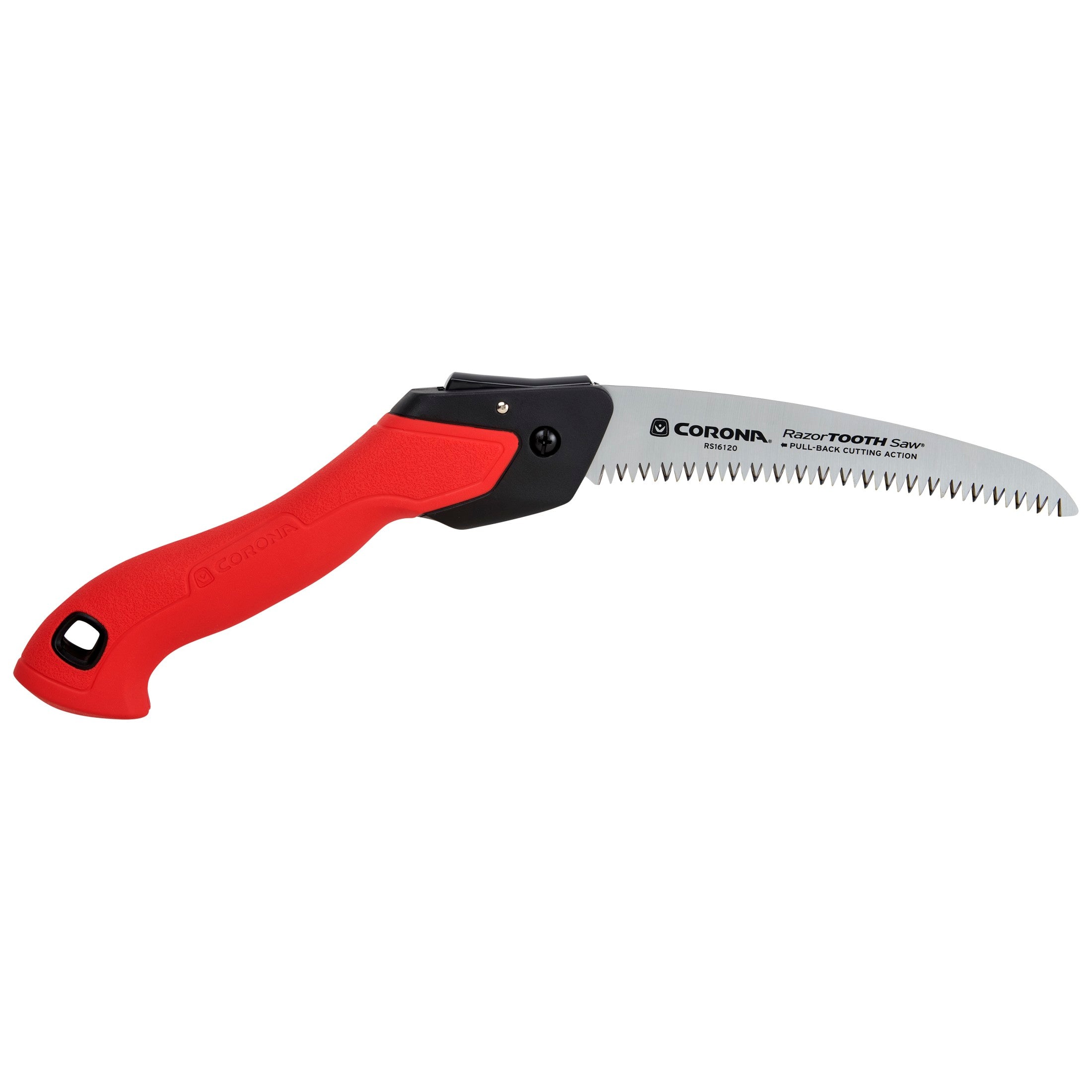
Corona built its reputation in orchards and commercial landscaping, but the RazorTOOTH 7-inch folder has quietly become a staple among backpackers who want real wood-cutting capability without boutique pricing. Instead of paring down every fraction of an ounce at the expense of usability, this saw retains a full-sized, deeply hooked handle and an aggressive, pull-stroke Japanese-style tooth pattern. It enters the pack as a dedicated trail tool rather than an emergency novelty.
The defining characteristic in the field is cutting speed. While ultralight wire saws and ultrathin straight blades twist and bind on seasoned oak or knotty pine, this curved carbon steel blade bites hard on the pull stroke and clears chips fast. The curved geometry naturally drives the teeth into the cut without demanding excessive downward shoulder pressure, keeping your energy reserves intact after a long day under a pack.
At roughly nine and a half ounces, it will not win praise from gram-counting purists chasing sub-five-pound base weights. But for shoulder-season outings, wet-weather backpacking, or small groups reliant on wood fires for heat and cooking, the trade-off favors the saw. It outperforms smaller tools by a wide margin, making quick work of wrist-to-forearm-thick deadfall while keeping replacement blades affordable and readily available at common supply shops.
Where it fits
Shoulder-season campfire fuel prep
Small group backcountry trips
Trail clearing and maintenance
Wet-weather wilderness shelter building
Pros
Deeply hooked rubber grip prevents hand slip in freezing or wet weather
Aggressive triple-ground teeth clear green and wet deadfall exceptionally fast
User-serviceable pivot bolt permits quick blade changes in the field
Priced low enough to handle rugged trail clearing without babying the steel
Cons
Noticeably heavier and bulkier than minimalist ultralight folding saws
Curved profile makes low ground-level cuts awkward without striking soil
Impulse-hardened teeth cannot be touched up with a standard file
The cutting action relies on three-sided, impulse-hardened teeth designed to cut purely on the backward pull. This configuration allows for a thinner kerf than standard push-cut saws, reducing friction against the green or wet wood fibers common around backcountry campsites. In dry pine, birch, and dead hardwood limbs up to four inches across, the blade tracks cleanly without chattering. The impulse-hardening process heat-treats only the tooth tips, keeping the body of the blade ductile enough to absorb moderate torsional flex without snapping. While you must remember never to muscle the blade forward on the push stroke—which risks buckling the steel—the natural balance of the pull stroke clears wood chips rapidly and minimizes binding in deep cuts.
Grip Geometry and Fatigue Prevention
Ergonomics are where this tool outclasses nearly every other sub-thirty-dollar folding saw on the market. The handle features an exaggerated rear hook and a tacky thermoplastic rubber overlay that completely eliminates slip, even when wearing damp leather work gloves or operating in freezing drizzle. Because the grip fills the palm rather than mimicking a narrow pocket-knife handle, your forearm tendons do not knot up after bucking a stack of fuel for the evening fire. The curved butt acts as a secure anchor point, allowing you to use a loose, relaxed three-finger grip on the pull stroke, letting the blade's weight and tooth profile do the manual labor rather than brute force.
Weight and Backcountry Packability
Carrying nearly ten ounces of saw steel requires an intentional choice about how you run your camp. The folded length sits just under nine inches, fitting comfortably inside an exterior water-bottle sleeve or sliding vertically against the frame sheet inside an internal organizer pocket. Because the blade folds entirely into the handle channel, the sharpened edges are safely shrouded from synthetic pack fabrics without requiring a heavy supplemental sheath. Minimalist hikers attempting fast summer traverses will view the mass as dead weight, but hikers building evening hearths in damp autumn conditions quickly realize that two minutes of easy cutting saves hours of scouring the forest floor for brittle kindling.
Durability and Field Upkeep
Hardened carbon steel holds a keen edge across multiple seasons of steady trail clearing and wood gathering, resisting premature dulling even when tackling grit-dusted bark. However, the steel is not stainless; leaving it caked in damp pine sap will cause surface oxidation and increase friction along the blade flanks. An occasional wipe with mineral oil or alcohol dissolves the resin and preserves the factory glide. The pivot assembly uses a threaded bolt and lock nut rather than a pressed rivet, allowing you to tighten out lateral wobble or swap in a factory replacement blade in under five minutes with a multi-tool when the teeth eventually wear down.
Budget Alternatives and Field Value
In the budget tier, the primary alternatives are the Bahco Laplander and various entry-level pruning tools. The Laplander offers a thinner, straight blade with a non-stick coating that is somewhat more forgiving of sloppy bidirectional sawing, but it cuts noticeably slower through dense green limbs than this curved profile. Stepping up to a premium Japanese brand like Silky yields finer blade grinds and smoother cuts, but often at double or triple the price tag. For general wilderness firewood processing, the performance gap between this workhorse and premium Japanese alternatives does not justify the price jump for hikers who prioritize durable utility over surgical cabinet-maker finishes.
Practical Trade-Offs to Expect
The pronounced curve that makes this saw efficient on overhead limbs and mid-air branches creates challenges on the ground. Making clean flush cuts against flat logs or cutting close to rock-strewn dirt often results in the tip striking the soil, which dulls impulse-hardened teeth instantly since they cannot be sharpened with a standard mill bastard file. Additionally, the top-mounted spring lock button can collect trail grit and congealed tree sap, requiring periodic flushing with water to ensure it seats completely. Treat it as a purpose-built limb bucker rather than an all-around bushcraft carving knife, and these geometric limitations will rarely hinder your campsite chores.
As an Amazon Associate, Wild10 earns from qualifying purchases.
No ratings yet
Pick 08Research-based review
Freescape Camp Saw
Gerber
Freescape Camp Saw
Gerber
Weight
15.2 oz (431 g)
Blade Length
12 in (30.5 cm)
Frame Material
Glass-filled nylon and forged steel
Folded Profile
13.8 x 1.8 x 1.1 in
Blade Compatibility
Standard 12-inch bow saw blades
Handle Grip
Textured rubber overmold
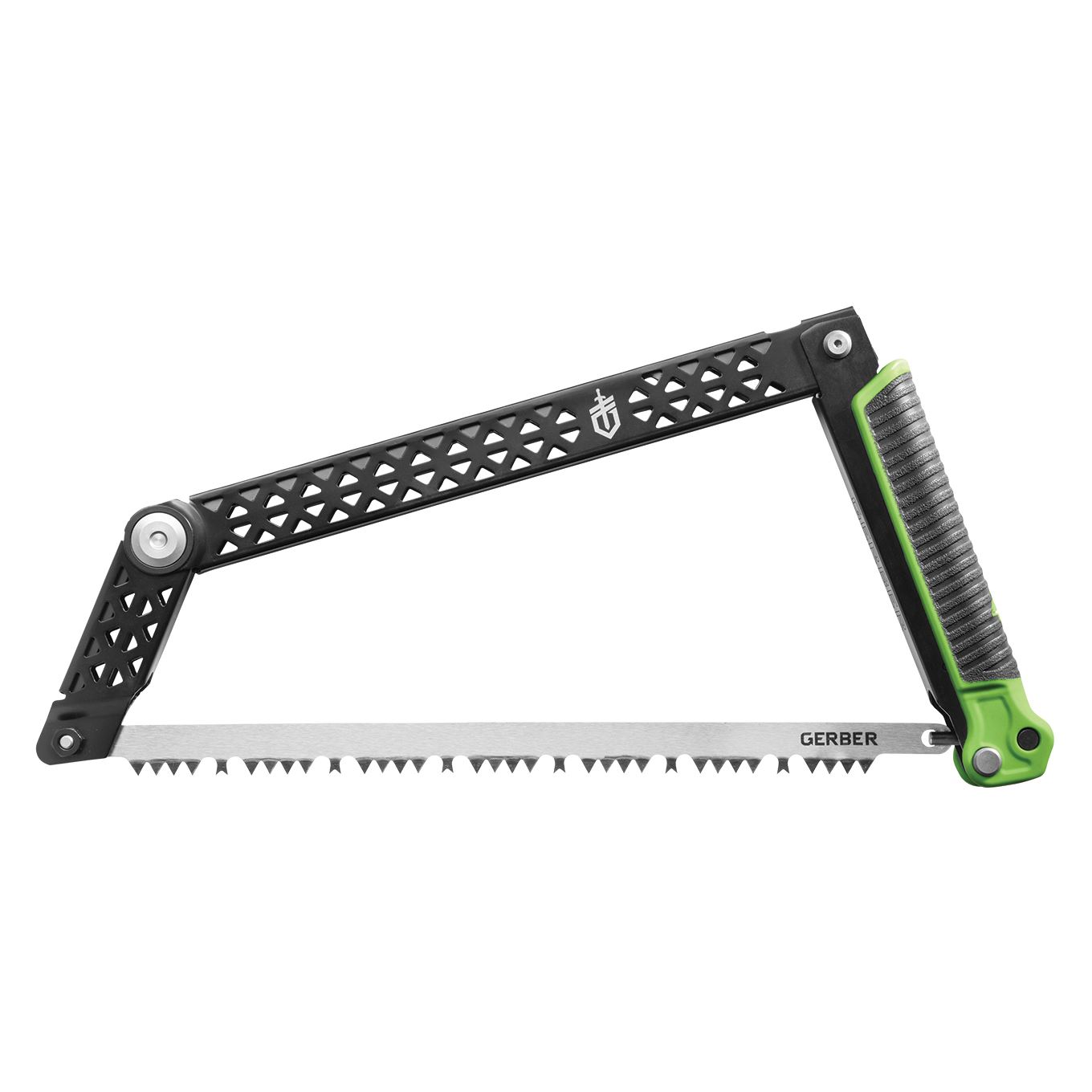
The Gerber Freescape Camp Saw occupies a unique niche on an ultralight gear list. Traditional bow saws offer superior cutting geometry and stroke efficiency over folding pocket saws, but they are historically notorious for finicky wing nuts and loose frame pieces that love to vanish into leaf litter. Gerber solved that mechanical headache with a linkage design that collapses completely flat while keeping the blade safely shielded inside the frame, all without disassembling a single component.
At a shade under a pound, it stretches the strict definition of ultralight. Thru-hikers surviving on cold soak and alcohol stoves will rightfully pass. However, if your backcountry itinerary involves running a packable titanium wood stove, clearing seasonal deadfall across primitive trails, or splitting campfire duties across a two-person team, this saw pays for its modest weight penalty. It turns limb-processing chores that would bind up a flexible pull saw into straightforward work.
What sets the design apart in long-term ownership is independence from proprietary consumables. Because the frame tensions around any standard 12-inch bow saw blade, you are never held hostage by expensive manufacturer replacements. A cheap trip to any rural hardware store gets you back in action with fresh, aggressive steel.
Where it fits
Winter hot-tent camping
Two-person backpacking wood processing
Canoe and packraft trips
Primitive trail clearing patrols
Pros
Folds completely flat without disassembly or risk of losing hardware
Accepts inexpensive, widely available standard 12-inch bow saw blades
Deep frame clearance permits bucking four-inch logs without binding
Enclosed blade storage keeps pack liners and dry bags safe from punctures
Comfortable rubberized grip insulates cold hands during winter use
Cons
Heavier than minimalist folding pocket pull saws
Coarse cutting teeth leave rough ends and wider kerf paths
Frame linkages can collect grit and need periodic rinsing
The standout feature of this tool is its four-pivot structural linkage. When folded, the saw resembles a harmless, oversized baton with the sharp cutting edge recessed entirely within the upper frame bar. Opening it requires popping open the rear latch, swinging the structural arms out into their triangular bow configuration, and locking the handle cam down to establish tension. There are zero loose bolts, wing nuts, or detachment pins to drop in deep snow or dark duff. Tensioning takes roughly ten seconds once muscle memory sets in. The locking toggle cam pulls the blade tight enough to prevent noticeable blade flex during hard push strokes, provided the factory pivot pins remain clean and free of packed grit.
Real-World Cutting Performance
A bow saw cuts on both the push and pull strokes, fundamentally altering your cutting cadence compared to the Japanese-style pull saws dominating the lightweight scene. With a full 12 inches of usable stroke and generous frame clearance, you can cut entirely through four- to five-inch logs without the frame bottoming out against the bark. The included factory blade features an aggressive raker-and-peg tooth pattern that handles green wood and sodden deadfall without gumming up immediately. While it leaves a rough, fibrous kerf compared to the surgical, razor-clean slices of a Silky blade, it clears chips aggressively and refuses to bind when the log settles under its own weight during a careless cut.
Packability and Trail Weight
Carrying just under a pound of dedicated cutting hardware is an intentional choice that requires justification in a lightweight pack. The collapsed rectangular profile slides cleanly into external water bottle pockets or against the frame sheet inside an internal compartment, eliminating the puncture hazard common to bare blades. Because the steel components are concentrated in the linkages and tensioning hooks while the main body utilizes glass-filled nylon, the saw feels dense rather than cumbersome. For solo weekend jaunts in fair weather, a six-ounce folding pocket saw is mathematically smarter. But for winter overnights where fuel processing equals warmth and safety, the energy saved by using this rigid frame easily offsets its pack weight.
Ergonomics and Field Handling
Gerber equipped the handle section with a rubberized Freescape overmold featuring subtle grip texturing and bright safety-green accents. The high-contrast color makes the tool easy to spot when set down on dead leaves or in failing dusk light. In cold weather, the polymer contact points insulate your hands from freezing metal, which prevents premature hand fatigue during extended wood-bucking sessions. The handle angle sits fairly neutral relative to the blade line, encouraging a natural wrist position that drives force straight down through the stroke. It accommodates heavy insulated winter gloves without pinching your knuckles against the rear frame strut, a common flaw in more compact folding saws.
Blade Universalism and Durability
Proprietary parts are the bane of backcountry gear, and this is where the Freescape quietly beats almost every competitor. The tension pins accept standard universal 12-inch bow saw blades that cost a fraction of specialty Japanese steel. You can swap in dry-wood blades, aggressive wet-timber blades, or even a hacksaw blade for improvised utility work. The glass-filled nylon chassis withstands significant drops onto granite without cracking, though prolonged sub-zero temperatures do make the plastic latch somewhat stiffer to actuate. If you run the saw hard enough to loosen the factory pivot rivets after seasons of heavy bucking, gently peening them restores solid structural rigidity.
Comparable Alternatives and Trade-Offs
At this price and weight class, the natural comparisons are the Sven-Saw 15-inch and mid-sized folding pull saws like the Silky Gomboy 210. The Sven-Saw offers a slightly longer cutting stroke but relies on a separate wing nut that can be lost in the woods, along with a triangular frame that restricts your cutting depth midway through larger logs. The Silky cuts faster with less effort in small-diameter dry wood, but its thin blade can snap under an inexperienced push stroke, and replacements are costly. The Freescape strikes a middle ground: bulletproof reliability and forgiving bow geometry at the expense of a slightly heavier, wider-kerf profile.
As an Amazon Associate, Wild10 earns from qualifying purchases.
No ratings yet
Pick 09Research-based review
Gomboy 240 (Medium Teeth)
Silky
Gomboy 240 (Medium Teeth)
Silky
Blade Length
240 mm (9.4 inches)
Tooth Configuration
Medium (8.5 teeth per 30mm)
Blade Type
Impulse Hardened, Chromium Plated
Cutting Action
Pull-stroke
Folded Length
13 inches (approx.)
Weight
8.8 oz (250g)
The Silky Gomboy 240 (Medium Teeth) isn't just a saw; it's a statement about efficiency and reliable performance in the backcountry. For years, Silky has set the benchmark for pull-stroke saws, and the Gomboy 240 embodies everything that makes them exceptional. This isn't a tool that tries to be everything to everyone; it's a purpose-built cutting machine designed for serious work in the woods. Its remarkable cutting speed for its size often surprises first-time users, making quick work of tasks that would bog down lesser tools.
What truly distinguishes the Gomboy 240 is its uncanny balance of power and portability. It’s small enough to disappear into a daypack or lashed to a frame, yet it delivers the kind of performance you'd expect from a much larger saw. This particular model, with its medium teeth configuration, strikes an ideal balance, handling both green, sappy wood and seasoned hardwoods with equal aplomb. It's the kind of tool that, once you own it, you wonder how you ever managed without it, solidifying its place as the top choice for anyone serious about campcraft.
Where it fits
Firewood processing
Trail clearing
Shelter building
Camp setup
Pruning
Pros
Unmatched cutting speed for its size
Exceptional durability and blade retention
Compact, safe folding design for transport
Comfortable, non-slip handle for extended use
Replaceable blades extend product lifespan
Cons
Not suitable for felling larger trees (over 6-7 inches)
This saw is for the dedicated camper, bushcrafter, or overlander who needs a reliable, effective tool for processing firewood and light trail maintenance without carrying a full-sized axe or chainsaw. It's for those who prioritize efficiency and durability in their gear. If you regularly build fires, clear small downed trees, or prepare camp sites, the Gomboy 240 will quickly become indispensable. It's also an excellent choice for backyard pruning or emergency kit inclusion due to its compact size and powerful performance, appealing to both seasoned outdoorspeople and practical homeowners alike.
Materials & Construction
The Gomboy's blade is crafted from high-carbon steel, undergoing an impulse hardening process that selectively hardens the tooth tips while maintaining flexibility in the rest of the blade. This results in exceptional edge retention without making the blade brittle. A chromium plating protects against rust and sap buildup, ensuring smooth operation. The handle, typically made from a synthetic, slip-resistant material, provides a secure grip even when wet or cold. The robust locking mechanism, a simple yet effective metal lever, holds the blade rigidly in place during use, inspiring confidence in its structural integrity.
Real-World Performance
In the field, the Gomboy 240 excels. Its pull-stroke action, combined with razor-sharp, impulse-hardened teeth, allows for incredibly fast and clean cuts. The medium tooth pitch is the sweet spot, minimizing binding in green wood while still efficiently slicing through denser, seasoned timber up to about 5-6 inches in diameter. Processing a pile of firewood feels less like a chore and more like an enjoyable task. It requires less effort than pushing a saw, allowing for longer work sessions with less fatigue. The slim blade profile also contributes to its speed, reducing friction.
Weight & Packability
Weighing in at just under 9 ounces and folding down to roughly 13 inches, the Gomboy 240 is exceptionally packable. It slips easily into most backpack side pockets, top lids, or can be secured to external webbing. Its slender profile means it takes up minimal space, a critical factor for any gear destined for the backcountry. Unlike a hatchet or axe, its folded design eliminates any exposed sharp edges, making it safer to transport. This combination of low weight and compact form factor ensures it's always available when you need it without being a burden.
Durability & Longevity
Silky saws are renowned for their durability, and the Gomboy 240 is no exception. The impulse-hardened teeth maintain their sharpness for an impressively long time, resisting dulling even with heavy use. While eventually any saw blade will dull, replacement blades are readily available and simple to swap out, effectively giving you a new saw. The robust handle and locking mechanism are built to withstand the rigors of outdoor use, shrugging off bumps and drops. Proper cleaning and occasional oiling of the blade will ensure years of reliable service.
As an Amazon Associate, Wild10 earns from qualifying purchases.
No ratings yet
Pick 10Research-based review
BigBoy 2000 (360 mm)
Silky
BigBoy 2000 (360 mm)
Silky
Manufacturer
Silky
Model
BigBoy 2000
Blade Length
360 mm (14.2 inches)
Folded Length
405 mm (15.9 inches)
Weight
450 g (1 lb)
Blade Type
Curved, Impulse-Hardened
Handle
Rubberized, Two-Hand
The Silky BigBoy 2000, specifically the 360 mm model, occupies a unique space in the realm of outdoor cutting tools. It's essentially a compact bucksaw without the cumbersome frame, offering serious leverage in a package that still folds down. This saw is for those who need to process significant amounts of wood, beyond what a small folding saw can manage, but aren't keen on carrying an axe or a dedicated bucksaw. Its straight blade and aggressive tooth pattern are designed for efficiency, making short work of larger diameter deadfall that would exhaust you with smaller tools. It’s a workhorse, plain and simple, built for sustained effort and delivering results.
We’ve put this saw through its paces on numerous trips, from clearing trails to bucking firewood for extended basecamp stays. It consistently performs, cutting smoothly and deeply with each stroke, even through tough, seasoned hardwood. While it’s not a precision instrument for fine carpentry, it excels at its intended purpose: breaking down substantial timber in the field. The two-handed grip is a game-changer, allowing for much greater power and control than single-handed saws, reducing fatigue during prolonged use. This isn't a casual carry; it's a deliberate choice for serious wood processing.
Where it fits
Basecamp firewood processing
Trail clearing and maintenance
Bushcraft and shelter building
Car camping wood prep
Survival kit inclusion for heavy work
Pros
Exceptional cutting power for its class
Effective two-handed grip for leverage and control
This saw is purpose-built for the serious outdoors enthusiast who regularly encounters the need to cut larger diameter wood, typically 4 to 8 inches, or even larger with patience. Think car camping, basecamp bushcraft, remote cabin living, or even trail maintenance. It’s overkill for small kindling or casual day hikes where only minor limb clearing is needed. Its size and power make it unsuitable for ultralight backpacking, but for anyone setting up a more substantial camp or working with significant wood resources, the BigBoy 2000 justifies its space in the pack. It caters to those who value efficient wood processing over minimal carry weight.
Materials & Build
Silky's hallmark high-carbon steel is evident here, providing a blade that holds an edge through considerable use. The impulse-hardened teeth are exceptionally durable, resisting dulling even when cutting through grimy or resinous wood. The rubberized handle is robust and offers a secure, comfortable two-handed grip, even when wet or with gloves. The folding mechanism is solid, locking the blade securely in both open and closed positions, which is critical for safety and performance. There's no flex or wobble in the blade-to-handle connection, inspiring confidence during aggressive cutting. This is a tool designed for work, not gentle handling.
Real-World Performance
The BigBoy 2000 lives up to its name. With its aggressive tooth pattern and long blade, it bites deep and clears chips efficiently, making quick work of deadfall. We’ve used it to cut through 8-inch seasoned oak and pine, and while it requires effort, the saw doesn't bind or snag excessively. The curved blade helps maintain contact and leverage, particularly on larger logs. Its two-handed operation is a significant advantage, allowing users to apply more power and maintain better control, which translates to faster, cleaner cuts and less fatigue. It handles both push and pull strokes with equal efficacy, but the Japanese pull-stroke design is where it truly shines.
Durability & Longevity
Silky saws are known for their durability, and the BigBoy 2000 is no exception. The blade steel is tough and resilient, shrugging off impacts that might bend a lesser saw. We've seen these saws endure years of hard use with proper care. The only real wear items are the teeth, which eventually dull, but given the impulse-hardening, this takes a very long time. Replacement blades are available, extending the life of the tool significantly. The rubber handle and locking mechanism are also built to last, showing minimal wear even after extended periods in various weather conditions. This is a buy-it-for-life kind of tool if treated right.
Alternatives & Trade-offs
At this price point, alternatives include smaller bucksaws or heavier, more compact fixed-blade saws. For sheer cutting efficiency on larger diameter wood in a folding package, the BigBoy 2000 is hard to beat. A dedicated bucksaw might offer slightly more power with less effort for very large logs, but at the cost of packability and setup time. Smaller folding saws, while lighter and more portable, simply can't handle the same diameter wood with the same speed or ease. The primary trade-off here is size and weight compared to smaller folding saws; it's not a featherlight option for minimalist trips.
Compact folding saws for backpackers, paddlers and campers who need to clear deadfall and process small firewood without carrying a bucksaw, led by five Silky models.
Key takeaways
#1 Super Accel 210 — Silky
#2 PocketBoy 130 Medium Teeth — Silky
#3 F180 Large Teeth — Silky
#4 Gomboy Professional 210 Medium Teeth — Silky
#5 Ultra Accel 240 Straight — Silky
#6 No.12 Carbon Steel Folding Saw — Opinel
Intended uses
Gear
Verification notes
Editorial ranked list, 10 entries. Evidence mix — 10 research only. Buy links open the maker or a retailer search.
How we chose
Last updated
Ranked by Wild10 Editorial Team, Research desk
We compared widely available ultralight backpacking saws using maker specifications, retailer listings and published reviews, then ranked 10 against the same criteria below. This is desk research unless a pick is marked field tested. Rankings are editorial. No brand pays for placement, and affiliate links never move a pick up or down.
Edge geometry and steel
Grind, stock thickness, and how the steel behaves between sharpenings in real camp tasks.
Load carriage
How the suspension handles the loads the pack is actually rated for, over long days.
Real-world durability
How the material, stitching, or steel holds up after a season of hard use — not how it looks new.
Performance in bad conditions
Wind, rain, cold, and grit are the test. Anything that only works on a nice day gets marked down.
Weight and packability
Every ounce has to earn its place in the pack, but not at the cost of something that fails in the field.
Ease of use
Setup, adjustment, and maintenance with cold hands, in the dark, without the manual.
How often we recheck this: Reviewed on a rolling basis and rechecked at least once a year, or sooner if a pick is discontinued, revised, or beaten by something new.
Deep-dive product reviews
Catalog specifications, photos and reader ratings for 2 picks.
Our editors test the gear, pick the ten, and set the order the day a list publishes. After that, the ranking is live: every member star rating feeds the community order, so picks climb or slide as real owners report back. Editorial judgment decides what earns a spot — you help decide where it sits.
Editors set the field
Verified specs, feature and use-case comparison, and outside sources choose the ten and the published order; field-tested picks are labeled.
Readers re-rank it
Your 1–5 star ratings drive the community order on every list.
Rankings keep moving
Picks rise or fall over time — nothing is frozen at launch day.
Award picks
The ranking above is price-blind and judged on merit. These awards call out the pick we'd hand a specific person with a specific need.
The Silky Super Accel 210 is the best all-round backpacking saw. The PocketBoy 130 is the lightest Silky pick, the Opinel No.12 and Corona RazorTOOTH are the budget choices, and the Gomboy Professional 210 and Ultra Accel 240 cut faster when a little extra weight is fine. Step up to the Gomboy 240 or BigBoy 2000 when you need to cut real firewood.
How to choose ultralight backpacking saws
Every pick on this page was judged against the same criteria. If you want the short answer, Super Accel 210 by Silky is the one we point most people at. If you want to decide for yourself, here is what actually separates a good ultralight backpacking saw from an expensive one.
Edge geometry and steel
Grind, stock thickness, and how the steel behaves between sharpenings in real camp tasks.
Load carriage
How the suspension handles the loads the pack is actually rated for, over long days.
Real-world durability
How the material, stitching, or steel holds up after a season of hard use — not how it looks new.
Performance in bad conditions
Wind, rain, cold, and grit are the test. Anything that only works on a nice day gets marked down.
Weight and packability
Every ounce has to earn its place in the pack, but not at the cost of something that fails in the field.
Ease of use
Setup, adjustment, and maintenance with cold hands, in the dark, without the manual.
Match the pick to your use
The right ultralight backpacking saws depends on what you are actually doing with it: Shoulder-season backcountry wood stove fueling; Clearing deadfall on remote wilderness corridors; Bushcraft shelter building and campcraft; Canoe and packraft expedition fire prep; Ultralight solo backpacking; Twig stove fuel preparation. Start from the use case, then work down the ranking until you hit the first pick that covers it.
Common mistakes
Buying the lightest ultralight backpacking saws you can find and discovering it cannot take a season of hard use.
Paying for a specialist feature you will use once a year instead of the versatile option.
Comparing headline specs across tiers instead of within the same class.
Skipping fit, sizing, or adjustment checks that decide whether you actually carry it.
Frequently asked questions
What is the best ultralight backpacking saws?
Super Accel 210 by Silky takes the top spot. Best overall
How did The Wild10 choose and rank these ultralight backpacking saws?
We judged every pick against the same criteria — edge geometry and steel, load carriage, real-world durability, performance in bad conditions — and ranked them on merit regardless of price. Compact folding saws for backpackers, paddlers and campers who need to clear deadfall and process small firewood without carrying a bucksaw, led by five Silky models.
What is the best budget ultralight backpacking saws?
F180 Large Teeth by Silky — Best value Silky
Super Accel 210 vs PocketBoy 130 Medium Teeth — which should I pick?
Super Accel 210 ranks first: Best overall PocketBoy 130 Medium Teeth is the close second: Best compact Silky Our full head-to-head compares them side by side.
How often is this list updated?
We review this ranking on a rolling basis and update it whenever a pick is discontinued, meaningfully revised, or beaten by something new. Rankings are editorial — brands do not see them before publication and affiliate links never change the order.