


#1 on this list
DELTA 3 Plus
EcoFlow
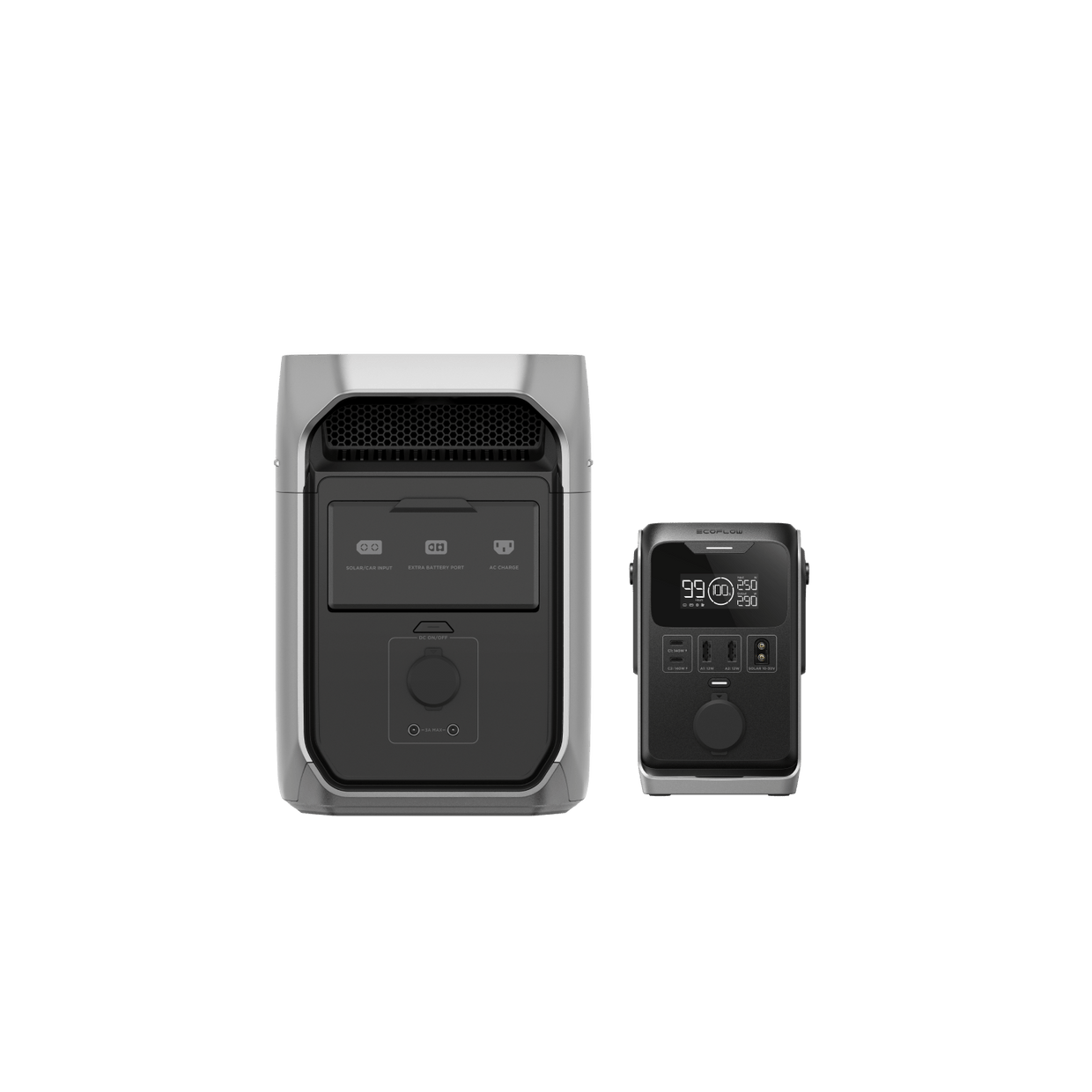
The EcoFlow DELTA 3 Plus sets the current standard for the competitive one-kilowatt-hour class. Built around durable LiFePO4 battery chemistry, it strikes the best balance of fast wall recharging, heavy inverter output, and manageable exterior dimensions for car campers and overland rigs. Its pure sine-wave inverter easily shoulders demanding basecamp draws like electric skillets, coffee makers, and power tools without tripping circuit breakers. In the field, usable capacity reliably runs a typical 12-volt compressor camping fridge for two to three days without supplemental solar input. For medical gear, it easily delivers multiple nights of CPAP use, even when running heated tubing. EcoFlow continues to lead the industry in recharge speed; plugging into a standard wall outlet before a weekend trip tops off the pack from empty in around an hour, while the solar charge controller handles high-wattage panel arrays efficiently under direct sun. The build feels dense and robust, with recessed carry handles integrated into the outer shell that make stowing it in a packed trunk straightforward. The companion app offers deep control over charging speeds and output ports, though the display screen alone gives you the necessary watt-hour telemetry at a glance. The main compromise comes down to thermal management: under full-tilt fast charging or heavy AC loads, internal cooling fans kick in aggressively and can be noisy in an otherwise quiet campsite. **Highlights** - Durable LiFePO4 chemistry rated for years of regular cycling - High-output pure sine wave inverter handles high-draw heating appliances - Category-leading AC wall recharge speeds get you packed quickly - Robust solar input compatible with portable and roof-mounted panels - Clean digital display showing real-time input, output, and run times **Watch-outs** - Internal cooling fans are loud under peak loads and fast charging - At roughly 27 pounds, it is strictly for vehicle-supported outings
- Price
- Check current price
- Reader rating
- No reader votes yet
- How we assessed it
- Specification researched

#2 on this list
Explorer 1000 v2
Jackery
Jackery modernized its workhorse camp station by upgrading the Explorer 1000 v2 to long-life LiFePO4 cells, addressing the lifespan shortcomings of the original version. The redesign retains Jackery's trademark approachable ergonomics, featuring a folding carry handle that collapses completely flat for easier stacking in the back of an SUV. It is aimed squarely at traditional car campers who want dependable plug-and-play power without a steep technical learning curve. With just over 1,000 watt-hours on tap, this unit is an exceptional partner for a camp kitchen. It will easily run a 45-liter 12V fridge for a long weekend while keeping phones, lanterns, and GPS units topped off via front-facing USB-C ports. For CPAP users, running off the regulated 12-volt DC port avoids inverter conversion losses and delivers three to four full nights of humidification-free sleep. Jackery has also improved internal inverter capacity, allowing it to drive medium-draw camp appliances like immersion heaters and blenders. Recharge speeds from a home outlet are drastically faster than the original generation, turning this into a battery you can charge up on Friday afternoon while loading gear. Solar input is competent, though it utilizes proprietary DC connectors that often require adapters if you are not using Jackery's own SolarSaga panels. Fan noise is better controlled than on previous iterations, making it one of the quieter mid-sized stations to keep inside an enclosed camper or vehicle. **Highlights** - Upgraded LiFePO4 battery pack built for thousands of charge cycles - Folding handle design stows flat beneath other camp gear - Straightforward, high-contrast display with physical port toggles - High-wattage USB-C ports eliminate the need for wall bricks - Noticeably quieter cooling fan profile during moderate discharge **Watch-outs** - Solar input uses proprietary DC inputs requiring brand-specific adapters - Car 12V charging is slow, taking a full day of driving to replenish from flat
- Price
- Check current price
- Reader rating
- No reader votes yet
- How we assessed it
- Specification researched
Specs side by side
| Spec | DELTA 3 Plus | Explorer 1000 v2 |
|---|---|---|
| Battery Capacity | 1024 Wh LiFePO4 | 1,070Wh LiFePO4 |
| Continuous Output | 1800W pure sine wave (2400W surge) | — |
| Total Weight | 27.6 lbs (12.5 kg) | — |
| Wall Recharge Time | 0 to 100% in roughly 56 minutes | Approximately 1 hour on fast charge |
| Solar Input | Up to 1000W dual MPPT input | 400W max via DC8020 port |
| Cycle Life | 4,000 cycles to 80% original capacity | 4,000 cycles to 70% capacity |
| AC Inverter Output | — | 1,500W continuous (3,000W surge) |
| Unit Weight | — | 23.8 lbs (10.8 kg) |
What our reviewers liked and didn't
DELTA 3 Plus
- Class-leading AC wall recharge reaches full capacity in under an hour
- LiFePO4 cells deliver 4,000 cycles for unmatched long-term durability
- 1800-watt inverter reliably runs high-amperage camp cooking gear
- Dual solar input handles up to 1000W of field array power
- Cooling fans are loud under heavy inverter draws and fast wall charging
- At 27.6 pounds, the pack is too heavy for moving far from vehicles
- 12-volt car socket charging takes roughly ten hours from empty
Explorer 1000 v2
- Durable LiFePO4 chemistry rated for 4,000 cycles to 70 percent capacity
- Fold-down handle creates a flat, stackable surface in packed vehicle trunks
- AC wall charging recharges the pack from empty in about an hour
- Very quiet fan profile during low-draw DC CPAP and 12V fridge operation
- Proprietary DC solar inputs demand specific adapters for third-party panels
- Car 12-volt charging is slow, needing nearly half a day of driving to fill
- Lacks an official IP weather-resistance rating for wet outdoor use
Prices change constantly — the figure shown is the last verified catalog price, and the buy buttons always go to the current listing.