


#8 on this list
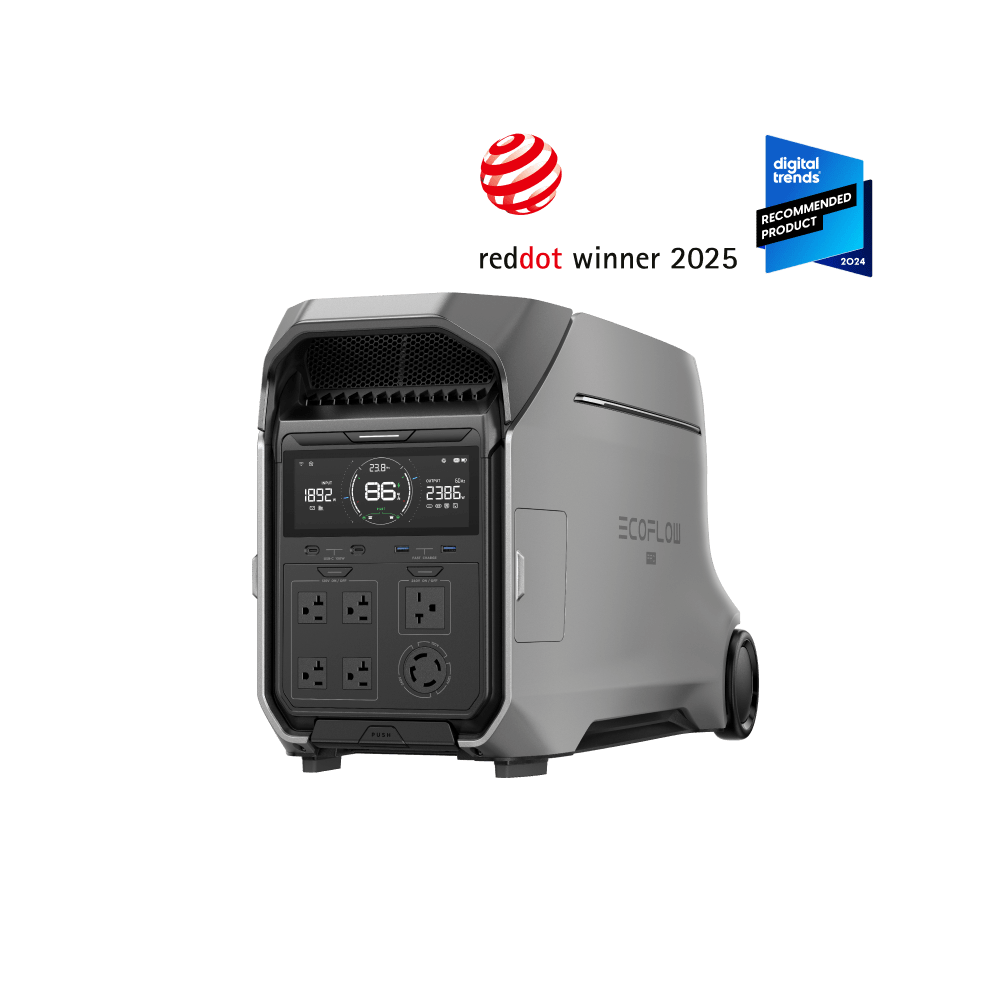
DELTA Pro 3
EcoFlow
The EcoFlow DELTA Pro 3 is not an everyday tent-camping battery; it is an industrial-grade basecamp powerhouse built for wall tents, overland rigs, off-grid cabins, and mobile expedition trailers. Packing a massive 4,096Wh LiFePO4 battery and a 4,000-watt AC inverter, it can run an entire multi-person camp simultaneously. It will power air conditioners, large RV refrigerators, induction cooktops, and high-draw shop tools without strain, operating more like a portable microgrid than a camp accessory. In field applications, runtime measurements shift from hours to days or weeks. A standard 12V overland compressor fridge can run for more than a week straight off this unit without any solar input. CPAP machines, even with full humidification and heated tubing turned to max, can run for over a week without needing a recharge. Charging capabilities are equally extreme: it accepts high-wattage solar arrays, plugs into standard RV hookup pedestals, and can even charge at Level 2 EV charging stations with an optional adapter. The obvious constraint is sheer physical mass. Weighing roughly 114 pounds, it is not a unit you hike away from your vehicle. EcoFlow integrated heavy-duty luggage-style rear wheels and a telescoping handle to help roll it across packed dirt, but lifting it into a lifted truck bed demands two capable adults. For users needing massive, quiet power without hauling a noisy gas generator, however, the Pro 3 is unmatched. **Highlights** - Massive 4,096Wh LiFePO4 capacity supports extended multi-day basecamps - Tremendous 4,000W AC output runs virtually any home or RV appliance - Integrated wheels and pull handle ease transport over level terrain - Supports multiple charging sources including solar, wall, and EV stations - Whisper-quiet operation relative to its enormous inverter capacity **Watch-outs** - Enormous 114-pound weight makes vehicle loading a strict two-person job - Physical dimensions consume substantial rear cargo and bed space
- Price
- Check current price
- Reader rating
- No reader votes yet
- How we assessed it
- Specification researched

#9 on this list
Yeti 500
Goal Zero
The redesigned Goal Zero Yeti 500 brings the brand's rugged basecamp aesthetic into the modern era with upgraded LiFePO4 battery chemistry and weather-resistant construction. Positioned between minimalist power packs and bulky 1,000Wh units, the Yeti 500 provides 499Wh of capacity and a 500-watt pure sine wave inverter. It is designed for campers who want proven hardware that can survive dirt, dust, and unexpected precipitation at the campsite. Goal Zero constructed this unit to an IPX4 water-resistance rating, meaning rain splashes and morning dew won't short out its internals—a rare feature in a market full of open, vented electronics. In practical terms, the Yeti 500 delivers two solid days of runtime for a high-efficiency 12V camp fridge or roughly two to three nights of unheated CPAP therapy. Output ports are clean and clearly marked, including dual 100W USB-C PD ports that easily charge laptops and camera gear directly. Wall recharging is reasonably quick, and the integrated solar charge controller pairs seamlessly with Goal Zero's Nomad and Boulder solar panels, as well as third-party arrays using standard adapters. With a weight of roughly 15 pounds, it is easy to shift between your truck, tent, and camp table. The trade-off is inverter wattage: at 500 watts, it will trip on blenders, hair dryers, or kettles. It is built strictly for personal electronics and low-draw refrigeration. **Highlights** - Durable LiFePO4 battery with an IPX4 water-resistance rating - Balanced 15-pound weight is easy to move around camp - Dual 100W USB-C ports eliminate bulky laptop power bricks - Regulated 12V port keeps compressor fridges running without dips - Tough anodized styling with protective rubber corner bumpers **Watch-outs** - 500W inverter cannot power any high-draw kitchen or heating gear - Slightly higher price point per watt-hour compared to direct competitors
- Price
- Check current price
- Reader rating
- No reader votes yet
- How we assessed it
- Specification researched
Specs side by side
| Spec | DELTA Pro 3 | Yeti 500 |
|---|---|---|
| Battery Chemistry | LiFePO4 (4,000+ cycles to 80% capacity) | — |
| Total Capacity | 4,096 Wh | — |
| Continuous Output | 4,000W (Surge 8,000W, 120V/240V split-phase) | — |
| Total Weight | 113.5 lbs (51.5 kg) | 15.2 lbs (6.9 kg) |
| Max Solar Input | 2,600W (Dual ports: 1,600W high-PV + 1,000W low-PV) | — |
| AC Recharge Time | Roughly 1.5 to 2 hours from wall outlet | — |
| Battery Capacity | — | 499Wh LiFePO4 |
| AC Inverter | — | 500W pure sine wave (1,000W surge) |
| Weather Rating | — | IPX4 splash and dust resistant |
| USB-C Output | — | Dual 100W Power Delivery ports |
| Cycle Life | — | 4,000+ cycles to 80% capacity |
What our reviewers liked and didn't
DELTA Pro 3
- Massive 4,096Wh capacity sustains heavy multi-day basecamp power demands
- 4,000W continuous output effortlessly runs induction stoves and RV AC units
- Dual solar ports accept up to 2,600W for remarkably fast off-grid charging
- LiFePO4 battery chemistry offers over 4,000 cycles to 80% health
- Weighs nearly 114 pounds, demanding two people for vehicle loading
- Substantial external dimensions take up major cargo space in truck beds
- Higher idle inverter draw requires mindful power management when dormant
Yeti 500
- IPX4 weather-resistant chassis shrugs off rain, morning dew, and dust
- Modern LiFePO4 battery delivers over 4,000 cycles to 80% original capacity
- Dual integrated 100W USB-C PD ports eliminate laptop power bricks
- Regulated 12V DC output reliably powers camp fridges without low-voltage cutoffs
- 500W inverter limit prevents use of coffee makers, skillets, or heaters
- Higher cost per watt-hour than budget-tier portable competitors
- Proprietary 8mm solar input requires adapters for common MC4 panels
Prices change constantly — the figure shown is the last verified catalog price, and the buy buttons always go to the current listing.