



#4 on this list
Yeti 1500X
Goal Zero
Goal Zero built the Yeti 1500X for long-term basecamp duty, off-grid outposts, and hunting cabins where maximum stored energy takes priority over frequent movement. Unlike the newer crop of LFP units, the Yeti 1500X relies on a high-density NMC lithium battery. This choice keeps the overall physical volume smaller for its generous 1,516Wh capacity, but it caps cycle life to roughly 500 complete charges before noticeable degradation sets in. In field use, the Yeti 1500X is an immovable rock. It powers heavy-draw appliances with its 2,000-watt AC inverter, handling table saws at a cabin build or running a full-size camp fridge alongside multiple heated CPAP machines for four or five days. Its 12-volt High Power Port (Anderson Powerpole) provides direct, high-amperage DC power for specialized overland wiring and vehicle setups, an area where standard cigarette-lighter sockets fall short. The trade-offs center around weight, bulk, and recharge times. Weighing around 45 pounds, hoisting it in and out of a truck bed requires real effort. The aluminum roll-cage frame is undeniably durable, but the standard wall charger takes several hours to replenish the pack; getting fast charging requires buying an upgraded external power brick. For fixed basecamps with dedicated solar arrays, however, the Yeti 1500X remains a rugged, field-tested staple. **Highlights** - Massive 1,516Wh capacity for multi-day vehicle camping or cabin use - 2,000W AC pure sine wave inverter powers demanding tools and gear - High-amperage Anderson Powerpole 12V port for professional DC rigs - Bombproof anodized aluminum chassis built for harsh conditions - High energy density keeps the footprint manageable for its capacity **Watch-outs** - Older NMC chemistry provides fewer total charge cycles than LiFePO4 - Heavy 45-pound chassis makes regular relocation difficult - Fast AC wall charging requires an expensive optional power supply
- Price
- Check current price
- Reader rating
- No reader votes yet
- How we assessed it
- Specification researched
#5 on this list
RIVER 3 Plus
EcoFlow
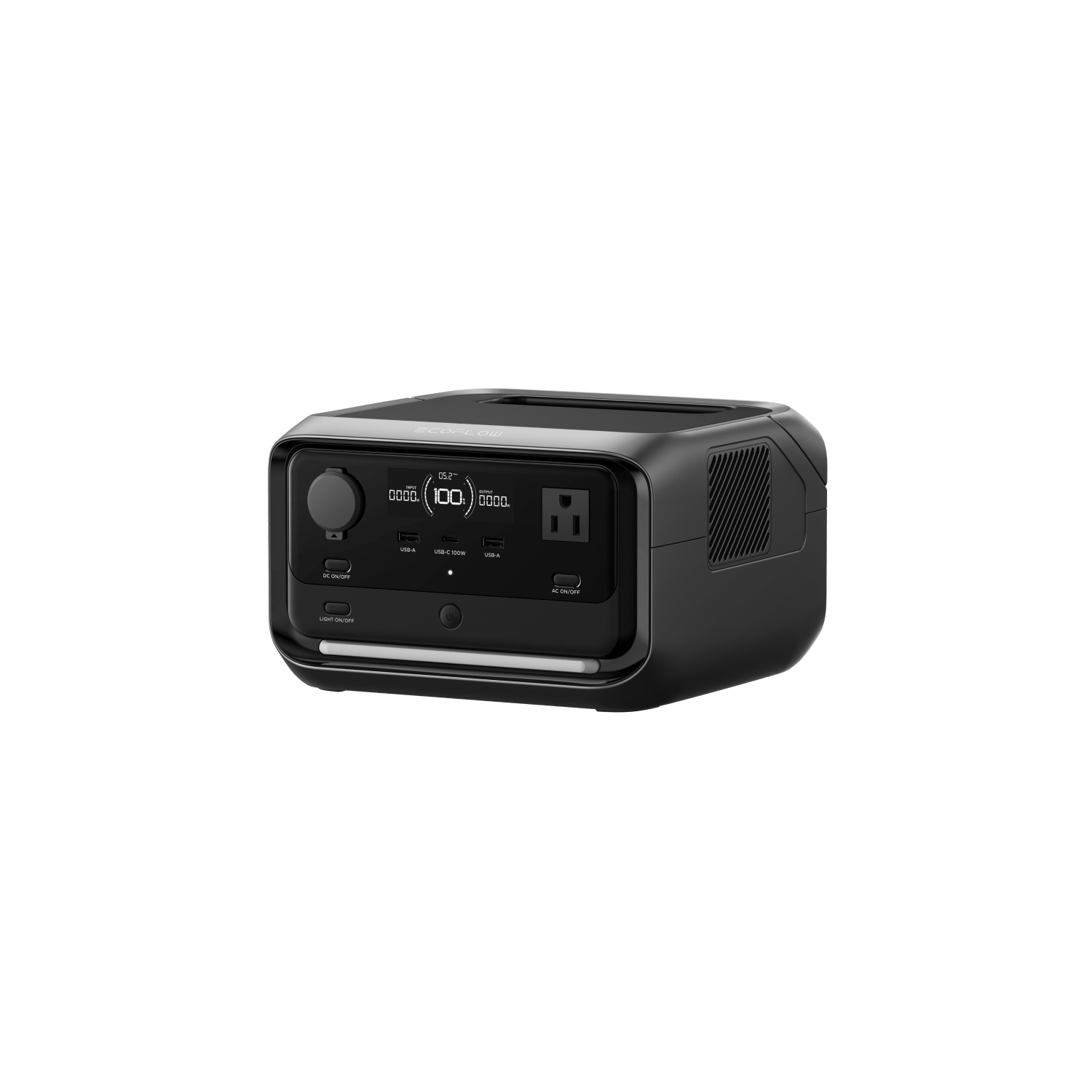
The EcoFlow RIVER 3 Plus targets campers who want modern LiFePO4 battery security without lugging a crate-sized box into the woods. Packed into a chassis roughly the size of a lunchbox, this unit offers around 286Wh of capacity—just right for weekend tent trips where your primary needs are keeping headlamps, smartphones, cameras, and drone batteries alive. It brings fast-charging technology down to a format that solo adventurers and weekend couples can easily manage. Despite its compact footprint, the RIVER 3 Plus includes an AC inverter capable of powering standard small electronics, small fans, or low-draw laptop chargers. It can run a basic 12-volt CPAP machine without supplemental heat for a full night, serving as a dependable travel backup for light medical needs. When paired with a portable folding solar panel, it tops off in a few hours of midday sun, making it viable for sustained, minimalist off-grid camping. EcoFlow's signature fast AC charging remains its standout feature: you can take it from empty to full in less than an hour from a wall outlet before heading out the door. The housing is clean and portable, featuring a built-in top handle and a crisp display showing battery percentage and load draw. Naturally, it will not power electric cooktops, space heaters, or full-sized coolers for extended periods, but for low-draw device maintenance, it cuts out dead weight. **Highlights** - Highly packable sub-10-pound chassis perfect for tent camping - Modern LiFePO4 battery architecture ensures long-term cell life - Blazing AC recharge speeds top off the unit in under 60 minutes - High-output USB-C ports charge modern laptops directly without bricks - Simple integrated handle makes carrying and loading effortless **Watch-outs** - Low watt-hour capacity will not sustain a camp fridge beyond a few hours - Limited AC inverter output trips instantly on high-draw heat appliances
- Price
- Check current price
- Reader rating
- No reader votes yet
- How we assessed it
- Specification researched
Specs side by side
| Spec | Yeti 1500X | RIVER 3 Plus |
|---|---|---|
| Battery Capacity | 1,516Wh (NMC Lithium) | — |
| AC Inverter | 2,000W continuous, 3,500W surge (Pure Sine) | — |
| Total Weight | 45.6 lbs (20.7 kg) | — |
| Cycle Life | 500 cycles to 80% capacity | — |
| Max Solar Input | 600W (via integrated MPPT controller) | — |
| Stock Wall Charge | Approx. 14 hours (with included 120W brick) | — |
| Battery Chemistry | — | LiFePO4 (3,000+ cycles to 80% capacity) |
| Storage Capacity | — | 286Wh |
| Continuous AC Output | — | 600W (1200W surge) |
| Weight | — | 10.4 lbs (4.7 kg) |
| Wall Recharge Time | — | 0 to 100% in approximately 60 minutes |
| Solar Input Limit | — | 110W Max (11-30V, 8A) |
What our reviewers liked and didn't
Yeti 1500X
- Rugged anodized aluminum roll cage and recessed grab handles
- High-amperage 12V 30A Anderson Powerpole port for overland builds
- 2,000W pure sine inverter easily handles tools and appliances
- Compact physical footprint relative to its 1,516Wh capacity
- 500-cycle NMC chemistry lags behind modern LiFePO4 longevity
- Included 120W wall charger requires roughly 14 hours for a full charge
- Heavy 45.6-pound weight makes solo hand-carrying strenuous
RIVER 3 Plus
- Full AC wall recharge takes roughly 60 minutes for rapid camp departures
- LiFePO4 chemistry delivers 3,000+ cycles for exceptional long-term lifespan
- Compact 10.4-pound footprint packs easily into tight vehicle trunks
- Clean 600W pure sine wave inverter powers demanding small electronics safely
- 286Wh capacity cannot sustain a 12V fridge beyond a single day without solar
- Solar charging input is capped at 110W, limiting speed in partial cloud cover
- Internal cooling fan is distinctly audible under heavy charging and high draw
Prices change constantly — the figure shown is the last verified catalog price, and the buy buttons always go to the current listing.