



#9 on this list
Yeti 500
Goal Zero
The redesigned Goal Zero Yeti 500 brings the brand's rugged basecamp aesthetic into the modern era with upgraded LiFePO4 battery chemistry and weather-resistant construction. Positioned between minimalist power packs and bulky 1,000Wh units, the Yeti 500 provides 499Wh of capacity and a 500-watt pure sine wave inverter. It is designed for campers who want proven hardware that can survive dirt, dust, and unexpected precipitation at the campsite. Goal Zero constructed this unit to an IPX4 water-resistance rating, meaning rain splashes and morning dew won't short out its internals—a rare feature in a market full of open, vented electronics. In practical terms, the Yeti 500 delivers two solid days of runtime for a high-efficiency 12V camp fridge or roughly two to three nights of unheated CPAP therapy. Output ports are clean and clearly marked, including dual 100W USB-C PD ports that easily charge laptops and camera gear directly. Wall recharging is reasonably quick, and the integrated solar charge controller pairs seamlessly with Goal Zero's Nomad and Boulder solar panels, as well as third-party arrays using standard adapters. With a weight of roughly 15 pounds, it is easy to shift between your truck, tent, and camp table. The trade-off is inverter wattage: at 500 watts, it will trip on blenders, hair dryers, or kettles. It is built strictly for personal electronics and low-draw refrigeration. **Highlights** - Durable LiFePO4 battery with an IPX4 water-resistance rating - Balanced 15-pound weight is easy to move around camp - Dual 100W USB-C ports eliminate bulky laptop power bricks - Regulated 12V port keeps compressor fridges running without dips - Tough anodized styling with protective rubber corner bumpers **Watch-outs** - 500W inverter cannot power any high-draw kitchen or heating gear - Slightly higher price point per watt-hour compared to direct competitors
- Price
- Check current price
- Reader rating
- No reader votes yet
- How we assessed it
- Specification researched
#10 on this list
Explorer 240 v2
Jackery
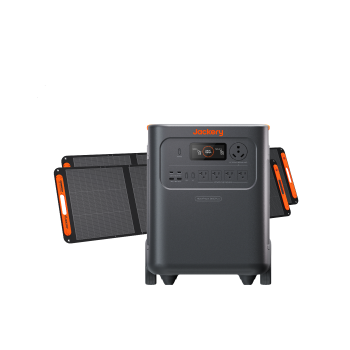
The Jackery Explorer 240 v2 updates one of the most widely sold entry-level power stations in outdoor history, replacing old NMC cells with a long-life LiFePO4 battery pack. Holding around 256Wh of capacity and delivering 300 watts of continuous AC output, this unit is engineered for budget-conscious car campers, festivalgoers, and emergency kits. It gives up the bells and whistles of larger stations to deliver dead-simple, reliable portable power in a package that weighs less than eight pounds. In camp, the 240 v2 functions as an organized centralized charging station. It will keep phones, headlamps, camp lanterns, Kindle readers, and GPS units charged for an entire four-day weekend. While its capacity is too low to run an overland fridge for long periods, it can run a 12V CPAP without humidification for a single night, making it an affordable backup power source for campers with mild sleep apnea. Jackery included a 100W USB-C port, a massive upgrade over the sluggish USB ports of the first-generation 240. Recharging is straightforward: it takes under two hours on a standard wall outlet and can be kept topped off during day trips with a 40W to 100W folding solar panel. The bright orange-and-black chassis is sturdy, featuring a fixed carry handle that feels secure in hand. The trade-offs are obvious: limited capacity and a 300-watt inverter ceiling mean zero cooking appliances and limited runtime on high-drain gear. But as an accessible entry point, it delivers solid utility. **Highlights** - Upgraded LiFePO4 chemistry brings extended longevity to an entry-level unit - Ultra-portable weight under 8 pounds makes packing effortless - High-speed 100W USB-C port handles modern laptops and tablets - Clear, legible digital display tracks remaining percentage accurately - Budget-friendly price tag lowers the barrier to off-grid battery power **Watch-outs** - Limited 256Wh capacity cannot sustain multi-day camp refrigeration - Fixed top handle prevents other gear from being stacked on top
- Price
- Check current price
- Reader rating
- No reader votes yet
- How we assessed it
- Specification researched
Specs side by side
| Spec | Yeti 500 | Explorer 240 v2 |
|---|---|---|
| Battery Capacity | 499Wh LiFePO4 | 256Wh |
| AC Inverter | 500W pure sine wave (1,000W surge) | — |
| Total Weight | 15.2 lbs (6.9 kg) | — |
| Weather Rating | IPX4 splash and dust resistant | — |
| USB-C Output | Dual 100W Power Delivery ports | — |
| Cycle Life | 4,000+ cycles to 80% capacity | — |
| Battery Chemistry | — | LiFePO4 (3,000+ cycles to 80% capacity) |
| Continuous Output | — | 300W (600W peak surge) |
| Unit Weight | — | 7.9 lbs (3.6 kg) |
| AC Recharge Time | — | 1.7 to 2 hours via standard wall outlet |
| Solar Input | — | 100W maximum (MPPT controller, 12-27V) |
What our reviewers liked and didn't
Yeti 500
- IPX4 weather-resistant chassis shrugs off rain, morning dew, and dust
- Modern LiFePO4 battery delivers over 4,000 cycles to 80% original capacity
- Dual integrated 100W USB-C PD ports eliminate laptop power bricks
- Regulated 12V DC output reliably powers camp fridges without low-voltage cutoffs
- 500W inverter limit prevents use of coffee makers, skillets, or heaters
- Higher cost per watt-hour than budget-tier portable competitors
- Proprietary 8mm solar input requires adapters for common MC4 panels
Explorer 240 v2
- Long-life LiFePO4 chemistry provides over 3,000 cycles to 80% capacity.
- Lightweight 7.9-pound build is easy to carry and store in tight trunks.
- Fast 100W USB-C port charges modern laptops without bulky AC adapters.
- Wall recharge from flat to full takes under two hours with no heavy power brick.
- 256Wh capacity cannot run 12V camp fridges for more than a few hours.
- Fixed top handle prevents stacking other gear bins on top of the unit.
- 300W continuous inverter ceiling cannot power electric cooking appliances.
Prices change constantly — the figure shown is the last verified catalog price, and the buy buttons always go to the current listing.