


Reader rating
Rate it and you move it. Community ratings re-rank this product inside its Top 10 list.
Expert-picked, reader-ranked. Our editors choose the products and the launch order; member star ratings move picks up or down over time.
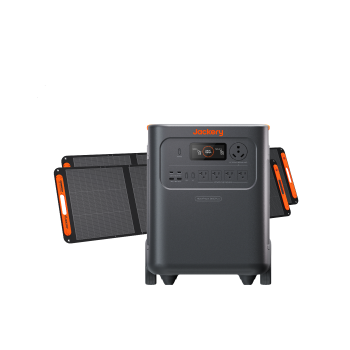
The Jackery Explorer 240 v2 updates one of the most widely sold entry-level power stations in outdoor history, replacing old NMC cells with a long-life LiFePO4 battery pack. Holding around 256Wh of capacity and delivering 300 watts of continuous AC output, this unit is engineered for budget-conscious car campers, festivalgoers, and emergency kits. It gives up the bells and whistles of larger stations to deliver dead-simple, reliable portable power in a package that weighs less than eight pounds. In camp, the 240 v2 functions as an organized centralized charging station. It will keep phones, headlamps, camp lanterns, Kindle readers, and GPS units charged for an entire four-day weekend. While its capacity is too low to run an overland fridge for long periods, it can run a 12V CPAP without humidification for a single night, making it an affordable backup power source for campers with mild sleep apnea. Jackery included a 100W USB-C port, a massive upgrade over the sluggish USB ports of the first-generation 240. Recharging is straightforward: it takes under two hours on a standard wall outlet and can be kept topped off during day trips with a 40W to 100W folding solar panel. The bright orange-and-black chassis is sturdy, featuring a fixed carry handle that feels secure in hand. The trade-offs are obvious: limited capacity and a 300-watt inverter ceiling mean zero cooking appliances and limited runtime on high-drain gear. But as an accessible entry point, it delivers solid utility. **Highlights** - Upgraded LiFePO4 chemistry brings extended longevity to an entry-level unit - Ultra-portable weight under 8 pounds makes packing effortless - High-speed 100W USB-C port handles modern laptops and tablets - Clear, legible digital display tracks remaining percentage accurately - Budget-friendly price tag lowers the barrier to off-grid battery power **Watch-outs** - Limited 256Wh capacity cannot sustain multi-day camp refrigeration - Fixed top handle prevents other gear from being stacked on top
Pros
- Long-life LiFePO4 chemistry provides over 3,000 cycles to 80% capacity.
- Lightweight 7.9-pound build is easy to carry and store in tight trunks.
- Fast 100W USB-C port charges modern laptops without bulky AC adapters.
- Wall recharge from flat to full takes under two hours with no heavy power brick.
Cons
- 256Wh capacity cannot run 12V camp fridges for more than a few hours.
- Fixed top handle prevents stacking other gear bins on top of the unit.
- 300W continuous inverter ceiling cannot power electric cooking appliances.
Best uses
- Weekend Tent Camping
- Single-Night 12V CPAP Backup
- Mobile Field Work
- Emergency Storm Kits
Specifications
- Battery Chemistry
- LiFePO4 (3,000+ cycles to 80% capacity)
- Battery Capacity
- 256Wh
- Continuous Output
- 300W (600W peak surge)
- Unit Weight
- 7.9 lbs (3.6 kg)
- AC Recharge Time
- 1.7 to 2 hours via standard wall outlet
- Solar Input
- 100W maximum (MPPT controller, 12-27V)
Pricing
We don't publish a price we haven't verified. The retailer links below open the live listing for this exact model.
Full catalog listing & offersBest for
Weekend Tent Camping, Single-Night 12V CPAP Backup, Mobile Field Work, Emergency Storm Kits
Where to buy the Explorer 240 v2
We don't have a direct Amazon listing on file yet — this opens an Amazon search for the exact make and model.
Some links are affiliate links. Buying through them supports our testing at no extra cost to you.
The Jackery Explorer 240 v2 takes the most ubiquitous entry-level power station in modern camping history and finally fixes its greatest weakness: cell chemistry. Where the original Explorer 240 relied on older NMC cells that degraded after a few hundred cycles, the v2 swaps in a 256-watt-hour LiFePO4 pack rated for over 3,000 cycles. That shift turns a disposable budget gadget into an appliance that will comfortably outlive your current vehicle. Paired with a bumped 300-watt continuous pure sine wave inverter and a fast bidirectional 100-watt USB-C port, it transforms from a sluggish phone bank into a practical camp workhorse. At just under eight pounds, this is not a basecamp powerhouse meant to run 12-volt induction cookers or sustain heavy refrigeration rigs through a heatwave. It is built for tent campers, stargazers, and weekend warriors who want a centralized hub for headlamps, phones, drones, camera batteries, and the occasional night of 12-volt CPAP power. The design remains classic Jackery with bright orange accents, rugged outer casing, and an uncompromising rigid carry handle. It sacrifices stackability and massive reserve capacity in exchange for foolproof operation and a price tag that leaves money in the fuel tank.
Chemistry and Usable Capacity
The shift to Lithium Iron Phosphate is the defining technical upgrade of the 240 v2. Older budget stations suffered from steep cycle degradation, often losing twenty percent of their capacity within two years of regular camping trips. The 256Wh LiFePO4 pack inside this chassis is rated for 3,000 cycles to 80 percent health. In real-world camp conditions, that means a decade of weekend use without measurable battery fade. Factoring in typical inverter conversion losses, expect roughly 215 to 225 usable watt-hours through the AC port and closer to 240 watt-hours over native DC and USB connections. The internal battery management system prevents deep discharge gracefully, cutting off loads before low cell voltage causes permanent damage. For small electronics, headlamps, and portable radios, that gives you ample headroom across a four-day weekend without needing a recharge.
Field Performance and Output
The upgraded 300-watt pure sine wave inverter offers noticeable breathing room over the 200-watt ceiling of its predecessor. It will not run coffee makers or space heaters, but it easily powers camera battery chargers, small drone hubs, and camp accessories without tripping breakers. The 100-watt USB-C port is the real star for creators; it juices modern laptops at full speed without needing an inefficient AC charging brick. Noise levels remain whisper-quiet in field conditions. The internal cooling fan only spools up when sustained inverter draw exceeds 150 watts or during high-rate AC recharging, producing a low hum around 35 decibels that goes unnoticed outside a quiet tent. For running sensitive audio gear or low-draw campsite string lights, the clean power delivery shows zero voltage ripple or annoying circuit buzz.
CPAP and Fridge Realities
Anyone buying a sub-300Wh station needs realistic expectations regarding refrigeration and medical devices. An overland compressor fridge drawing 35 to 45 watts periodically will deplete this battery in roughly six to eight hours in warm summer weather, making it unsuitable for off-grid cooler duty unless mated to constant sunshine. However, it excels as a single-night emergency bridge for CPAP users. When connected via an efficient 12-volt DC converter cable with heated humidification and tube heating disabled, a typical pressure setting draws between 20 and 30 watts. That translates to roughly seven to eight hours of continuous run time. Attempting to run that same machine through the AC inverter burns extra wattage on internal conversion losses, dropping runtime to barely five hours. Dedicated DC cables are mandatory here.
Recharge Rates and Solar
Jackery cut AC recharge times dramatically compared to older designs that relied on clumsy external power bricks. The 240 v2 plugs straight into mains power with a standard cable, pulling around 280 watts to achieve a flat-to-full cycle in just under two hours. If you are packing late before a trip, that rapid turnaround is invaluable. In vehicles, the 12-volt auxiliary port will top off the unit in approximately three to four hours of highway driving. For off-grid replenishment, the built-in MPPT controller accepts up to 100 watts of solar input. Mated to a matching 100-watt folding panel on a clear summer afternoon, the pack fills from empty in around three and a half hours. The charge controller handles intermittent tree shade without tripping offline or stalling.
Build Quality and Chassis
Jackery sticks to its proven ABS plastic enclosure, which resists scuffs and shrugs off being tossed in a cargo box with tent stakes and cast iron. The rubberized corner bumpers absorb minor bumps, and the control layout is intuitive, featuring tactile push buttons that illuminate individual port clusters. The digital display provides a direct readout of input wattage, output wattage, and remaining battery percentage without needing a smartphone app to decipher basic health. The primary ergonomic critique remains the rigid top handle. Because it does not fold flat, you cannot rest anything directly on top of the 240 v2 inside a packed vehicle trunk or camp storage bin. You trade packing convenience for an undeniably sturdy grip that feels bombproof in greasy or wet hands.
Value and Market Alternatives
Sitting around the two-hundred-dollar mark, the Explorer 240 v2 faces direct competition from the EcoFlow River 2 and Bluetti EB3A. The River 2 matches the 256Wh LiFePO4 capacity and offers a flat top for easier vehicle packing, but Jackery maintains a simpler interface and reliable field longevity. The Bluetti EB3A packs a slightly larger inverter, though it runs hotter and suffers from a quirkier mobile application. The 240 v2 wins on sheer dependability and simplicity: you press the button, and power flows. It represents the quintessential glovebox or utility-closet station. It is small enough to live in the vehicle year-round, safe from thermal degradation thanks to the LiFePO4 chemistry, and inexpensive enough to treat like genuine field equipment rather than fragile luxury electronics.
How we picked
We started with a long list of portable power stations that people actually buy, cut anything that could not clear our baseline for durability and field performance, then ranked the 10 that were left against the same criteria. Rankings are editorial. No brand pays for placement, and affiliate links never move a pick up or down.
- Real-world durability
- How the material, stitching, or steel holds up after a season of hard use — not how it looks new.
- Performance in bad conditions
- Wind, rain, cold, and grit are the test. Anything that only works on a nice day gets marked down.
- Weight and packability
- Every ounce has to earn its place in the pack, but not at the cost of something that fails in the field.
- Ease of use
- Setup, adjustment, and maintenance with cold hands, in the dark, without the manual.
- Value at its price point
- Compared against the closest competitors in the same tier, not against cheaper gear in a different class.
- Repairability and support
- Field-fixable design, available parts, and a warranty the maker actually honors.
Explorer 240 v2 — frequently asked questions
- Is the Explorer 240 v2 worth it?
- We rank it #10 in Portable Power Stations. The Jackery Explorer 240 v2 updates one of the most widely sold entry-level power stations in outdoor history, replacing old NMC cells with a long-life LiFePO4 battery pack. Holding around 256Wh of capacity and delivering 300 watts of continuous AC output, this unit is engineered for budget-conscious car campers,…
- What is the Explorer 240 v2 best for?
- Best for weekend tent camping, single-night 12v cpap backup, mobile field work and emergency storm kits. Standouts: long-life lifepo4 chemistry provides over 3,000 cycles to 80% capacity. and lightweight 7.9-pound build is easy to carry and store in tight trunks..
- What are the downsides of the Explorer 240 v2?
- 256Wh capacity cannot run 12V camp fridges for more than a few hours., Fixed top handle prevents stacking other gear bins on top of the unit. and 300W continuous inverter ceiling cannot power electric cooking appliances..
- What are the key specs of the Explorer 240 v2?
- Battery Chemistry: LiFePO4 (3,000+ cycles to 80% capacity) · Battery Capacity: 256Wh · Continuous Output: 300W (600W peak surge) · Unit Weight: 7.9 lbs (3.6 kg) · AC Recharge Time: 1.7 to 2 hours via standard wall outlet
- Chemistry and Usable Capacity — what should I know about the Explorer 240 v2?
- The shift to Lithium Iron Phosphate is the defining technical upgrade of the 240 v2. Older budget stations suffered from steep cycle degradation, often losing twenty percent of their capacity within two years of regular camping trips.
- Field Performance and Output — what should I know about the Explorer 240 v2?
- The upgraded 300-watt pure sine wave inverter offers noticeable breathing room over the 200-watt ceiling of its predecessor. It will not run coffee makers or space heaters, but it easily powers camera battery chargers, small drone hubs, and camp accessories without tripping breakers.
Compare side by side
Put the Explorer 240 v2 against any other pick on this list — specs, price, pros, cons and reader ratings.