


Reader rating
Rate it and you move it. Community ratings re-rank this product inside its Top 10 list.
Expert-picked, reader-ranked. Our editors choose the products and the launch order; member star ratings move picks up or down over time.
Best all-round cold boot: 8mm neoprene bootie, fleece lining and thermal foam underfoot.
Pros
- Uncompromising dead-of-winter warmth built for motionless cold-weather sits
- Thick underfoot thermal barrier stops conductive heat loss from frozen steel
- Closed-cell neoprene construction resists packing out over repeated seasons
- Self-cleaning lug outsole delivers dependable traction in deep muck and slush
Cons
- Heavy build causes noticeable leg fatigue on walks exceeding two miles
- Exposed upper neoprene remains vulnerable to tears from thorns and wire
- Quickly traps foot perspiration if worn during high-exertion hikes
Best uses
- Late-Season Treestand Sits
- Hardwater Ice Fishing
- Sub-Zero Box Blind Hunts
- Winter Farm and Trail Chores
Specifications
- Insulation
- 8mm neoprene with fleece lining
- Footbed Barrier
- 2mm thermal foam underlay
- Outsole
- Molded Bob-Tracker lugged rubber
- Shaft Material
- Extended rubber overlay and flexible neoprene
- Collar Style
- Snug stretch-fit topline binding
- Waterproof Rating
- 100% waterproof to top of shaft
Pricing
We don't publish a price we haven't verified. The retailer links below open the live listing for this exact model.
Best for
Late-Season Treestand Sits, Hardwater Ice Fishing, Sub-Zero Box Blind Hunts, Winter Farm and Trail Chores
Where to buy the Men's Arctic Pro Insulated Boot
We don't have a direct Amazon listing on file yet — this opens an Amazon search for the exact make and model.
Some links are affiliate links. Buying through them supports our testing at no extra cost to you.
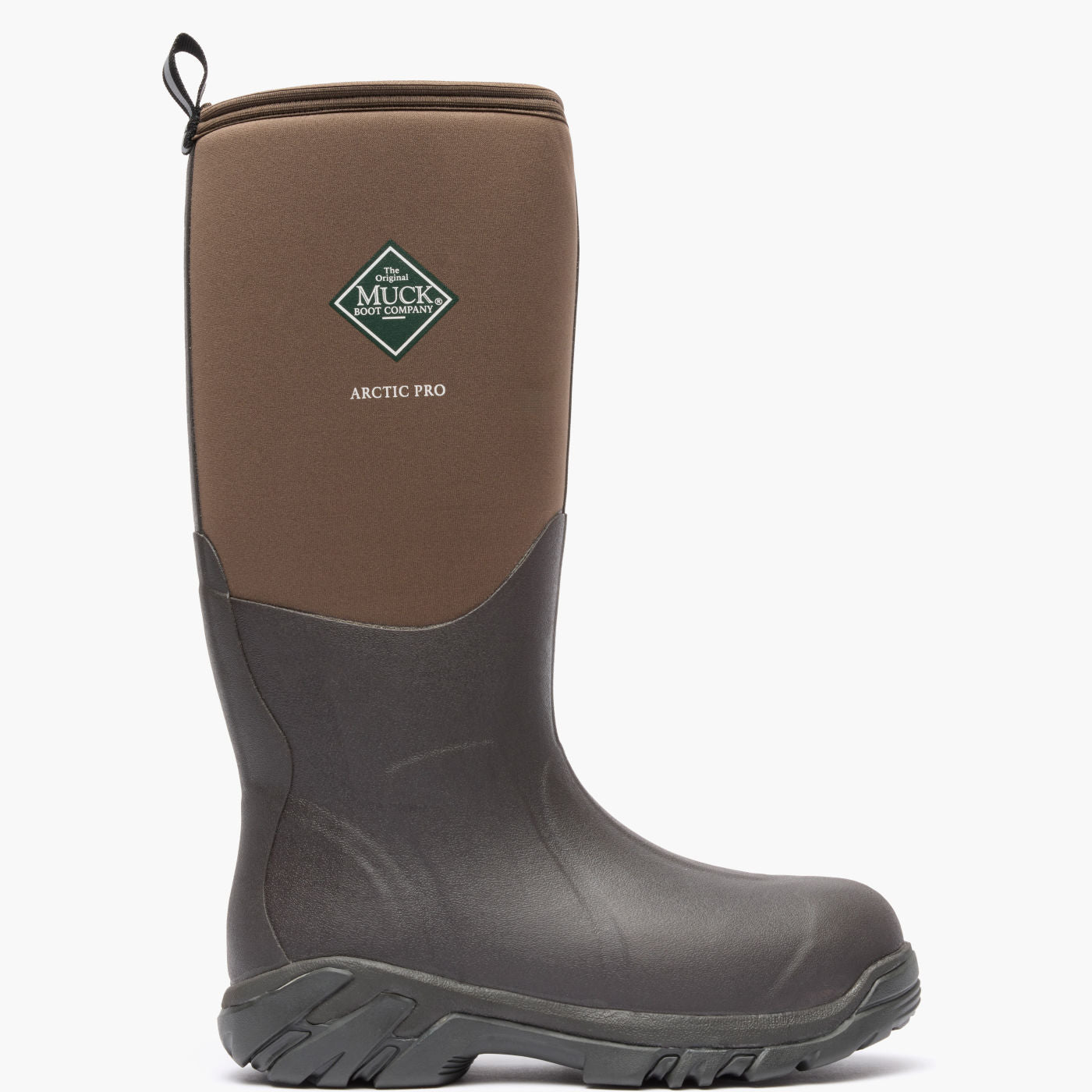
When mid-November gives way to deep January freezes, standard uninsulated or lightly lined rubber boots become liability traps. Sitting motionless on a frigid metal tree stand platform strips warmth through the soles faster than most hunters anticipate. The Original Muck Boot Company designed the Arctic Pro specifically to solve that dead-stop cold issue, combining high-grade vulcanized rubber with an exceptionally thick insulating core. At the heart of the design is an 8mm neoprene inner bootie backed by a soft fleece lining and a 2mm thermal foam underlay nestled beneath the footbed. This construction creates an impermeable, heavy-duty barrier that traps body heat while locking out sub-zero slush, standing water, and biting wind. The stretch-fit collar hugs the calf to retain rising warmth and keep falling snow out of the shaft. While this heavy build makes the boot an absolute powerhouse for stationary vigils, it demands a deliberate compromise on mobility. The generous profile and substantial weight will wear on your legs during long mountain pack-ins. For hunters who prioritize pure thermal defense during sub-zero stakeouts over nimble mountain pacing, this boot remains a benchmark workhorse.
Thermal Architecture and Underfoot Insulation
The primary reason hunters reach for this boot is pure thermal mass. Most insulated hunting boots rely on synthetic fills packed around the foot, but here the entire chassis is formed from 8mm neoprene encased in a vulcanized rubber shield. That thick foam wall delivers uniform insulation across the toes, instep, and lower shin, eliminating the cold spots common in multi-seam stitched boots. Crucially, the maker inserted a 2mm thermal barrier under the footbed to cut off conductive heat loss. When standing on frozen soil, snow-packed logs, or bare steel treestand grates for five uninterrupted hours, that underfoot barrier makes the difference between maintaining sensation in your toes and cutting the sit short. The fleece lining accelerates warmth build-up, though it also means managing internal moisture requires disciplined wool sock selection.
Shaft Ergonomics and Calf Fit
Pulling this boot on reveals a distinct contrast between the rigid rubber lower and the pliable neoprene upper. The high rubber coverage runs well up the calf before transitioning to raw neoprene, providing rigid protection against punctures while allowing the shaft to flex with each stride. The topline collar features a heavy stretch binding designed to gather snugly around the calf or over thick base layers. This seal effectively keeps out drifting powder, burs, and freezing drafts without choking circulation. However, hunters with particularly large calves may find the initial squeeze tight, requiring them to roll the neoprene down slightly before stepping into the footbed. The rear pull loop is stout enough to take full body weight when hauling the boot on over thick winter socks.
Traction Across Winter Slush and Mud
The undercarriage features the aggressive Bob-Tracker outsole, a molded lug pattern that uses wide spacing to shed packed mud, snow, and wet clay. In deep snow and muddy logging roads, the perimeter lugs bite into the terrain reliably, preventing the slick, skate-like sensation typical of shallower work boots. The rubber compound stays relatively pliable in sub-freezing temperatures, avoiding the hard plastic feel that causes slips on hidden creek ice or wet rungs of a climbing stick. While the outsole excels in soft, sloppy conditions, it does lack the sharp, biting edge control found on stiff mountain hunting boots. For flat bottomlands, soggy marsh edges, and rolling timber, the grip inspires total confidence, but sidehilling steep, frozen scree is not its native environment.
Weight and Long-Haul Mobility
Carrying an 8mm neoprene boot layered in thick vulcanized rubber incurs an undeniable weight tax. Each step requires lifting noticeable bulk, and over a two-mile hike through rolling cut-overs or knee-deep crust, that mass translates directly to leg fatigue. Rubber boots inevitably exhibit some heel slip because they lack the ankle-locking power of traditional laces, and this boot is no exception. If you hike aggressively in these, your feet will quickly sweat out the fleece lining, creating internal dampness that freezes once you finally climb up into your stand. The boot rewards the hunter who walks in at a measured, deliberate pace to prevent overheating, reserving its heavy thermal payload for the long, motionless hours that follow.
Puncture Resistance and Material Durability
The high rubber overlay does an exceptional job shielding the vulnerable foot and ankle regions from submerged sticks, broken beaver dams, and jagged rocks. The vulcanized rubber holds up against repeated bending without checking or cracking, provided it is kept clean and stored away from direct heat sources. The exposed neoprene shaft on the upper third of the boot, however, represents the predictable weak link. While neoprene provides natural flex and insulation, it is susceptible to snags from dense greenbrier, locust thorns, or barbed wire fences. Tearing the upper neoprene will not compromise the fully waterproof lower foot box, but it will ruin the clean thermal wrap. Sticking to established trails or wearing heavy brush gaiters over the shaft preserves the outer foam.
Market Context and Alternative Builds
Within the realm of sub-zero rubber footwear, the Arctic Pro squares off directly against high-ounce Thinsulate-lined rubber models like the LaCrosse Alphaburly Pro. The primary distinction lies in how the insulation behaves over time. Thinsulate-lined boots generally offer a tighter, more athletic ankle contour that reduces heel slop for longer treks, but their insulation can mat down and lose loft over seasons of hard compression. The 8mm closed-cell neoprene inside this boot cannot pack out or collapse, guaranteeing the exact same dead-air space and thermal performance year after year. For pure, brutal cold where walking is secondary to survival-level warmth during zero-degree sits, the simplicity and unrelenting thermal bulk of this platform consistently edge out narrower athletic designs.
How we chose
We compared widely available rubber hunting boots using maker specifications, retailer listings and published reviews, then ranked 10 against the same criteria below. This is desk research unless a pick is marked field tested. Rankings are editorial. No brand pays for placement, and affiliate links never move a pick up or down.
- Fabric behavior over time
- Breathability, DWR life, loft retention, and how the piece performs after repeated washing.
- Real-world durability
- How the material, stitching, or steel holds up after a season of hard use — not how it looks new.
- Performance in bad conditions
- Wind, rain, cold, and grit are the test. Anything that only works on a nice day gets marked down.
- Weight and packability
- Every ounce has to earn its place in the pack, but not at the cost of something that fails in the field.
- Ease of use
- Setup, adjustment, and maintenance with cold hands, in the dark, without the manual.
- Value at its price point
- Compared against the closest competitors in the same tier, not against cheaper gear in a different class.
Men's Arctic Pro Insulated Boot — frequently asked questions
- Is the Men's Arctic Pro Insulated Boot worth it?
- We rank it #2 in Rubber Hunting Boots. Best all-round cold boot: 8mm neoprene bootie, fleece lining and thermal foam underfoot.
- What is the Men's Arctic Pro Insulated Boot best for?
- Best for late-season treestand sits, hardwater ice fishing, sub-zero box blind hunts and winter farm and trail chores. Standouts: uncompromising dead-of-winter warmth built for motionless cold-weather sits and thick underfoot thermal barrier stops conductive heat loss from frozen steel.
- What are the downsides of the Men's Arctic Pro Insulated Boot?
- Heavy build causes noticeable leg fatigue on walks exceeding two miles, Exposed upper neoprene remains vulnerable to tears from thorns and wire and Quickly traps foot perspiration if worn during high-exertion hikes.
- What are the key specs of the Men's Arctic Pro Insulated Boot?
- Insulation: 8mm neoprene with fleece lining · Footbed Barrier: 2mm thermal foam underlay · Outsole: Molded Bob-Tracker lugged rubber · Shaft Material: Extended rubber overlay and flexible neoprene · Collar Style: Snug stretch-fit topline binding
- Thermal Architecture and Underfoot Insulation — what should I know about the Men's Arctic Pro Insulated Boot?
- The primary reason hunters reach for this boot is pure thermal mass. Most insulated hunting boots rely on synthetic fills packed around the foot, but here the entire chassis is formed from 8mm neoprene encased in a vulcanized rubber shield.
- Shaft Ergonomics and Calf Fit — what should I know about the Men's Arctic Pro Insulated Boot?
- Pulling this boot on reveals a distinct contrast between the rigid rubber lower and the pliable neoprene upper. The high rubber coverage runs well up the calf before transitioning to raw neoprene, providing rigid protection against punctures while allowing the shaft to flex with each stride.
Compare side by side
Put the Men's Arctic Pro Insulated Boot against any other pick on this list — specs, price, pros, cons and reader ratings.