


Reader rating
Rate it and you move it. Community ratings re-rank this product inside its Top 10 list.
Expert-picked, reader-ranked. Our editors choose the products and the launch order; member star ratings move picks up or down over time.
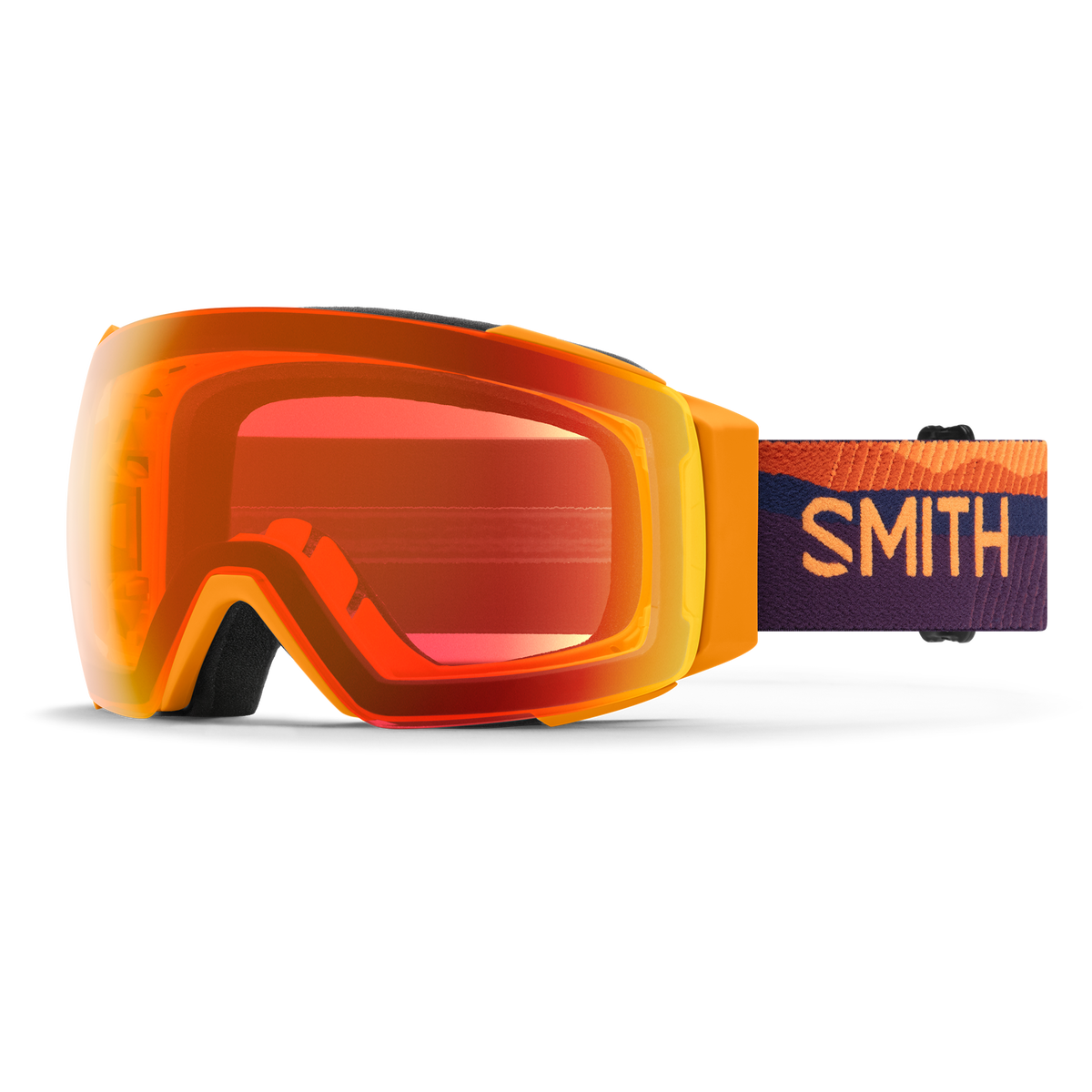
The Smith I/O Mag with Chromapop Lens represents one of the most reliable and universally recommended snow goggles on the market. Sitting in the sweet spot of Smith's performance lineup, it provides the standard medium fit that suits the broadest cross-section of skiers. Review outlets frequently award it top honors for overall usability because it brings elite optical clarity and foolproof magnetic interchange down to a proven, comfortable platform. The centerpiece remains ChromaPop, which filters overlapping color spectrums to clarify details in variable alpine lighting. The lens curvature balances an open field of view with a compact physical profile that nests seamlessly into modern helmet brims without pinching down across the nasal bridge. The magnetic guide system pulls the lens into exact alignment, while dual mechanical latches lock the corners tight, ensuring the lens will not dislodge during rough terrain or tumble falls. While this goggle handles nearly every resort day with ease, it lacks the specialized lower curvature found on the more expensive 4D Mag. The medium frame dimensions may also feel slightly tight on wider facial structures, which might be better served by the XL version of the platform. However, for everyday skiers wanting dependable performance without fuss, its reputation is well-earned. **Highlights** - ChromaPop lens technology separates color wavelengths for exceptional clarity - Mag system pairs magnetic auto-alignment with mechanical locking latches - Responsive AirEvac venting prevents hot air from getting trapped under the helmet brim - Medium frame sizing fits a very broad spectrum of adult facial shapes - Comes stock with two separate lenses for bright sun and low-light storm days **Watch-outs** - Downward peripheral field is narrower than the specialized 4D Mag - Riders with wider faces or higher cheekbones may prefer the dedicated XL size - High investment cost compared to entry-level resort goggles
Pros
- ChromaPop filters overlapping light to highlight subtle snow surface relief
- Dual mechanical latches ensure the magnetic lens cannot detach in heavy falls
- Comes standard with two purpose-built lenses for sun and flat-light storm days
- AirEvac system works seamlessly with most helmets to manage moist airflow
Cons
- Price point near $280 is a substantial investment for infrequent resort skiers
- Downward peripheral visibility is standard compared to newer drop-lens designs
- Medium frame volume can pinch slightly across wider cheekbones and temples
Best uses
- All-mountain resort skiing
- Variable light winter riding
- Storm day tree skiing
- Standard medium helmet pairing
Specifications
- Frame Size
- Medium fit
- Lens Style
- Spherical Carbonic-x with ChromaPop
- Swap System
- Magnetic alignment with mechanical locks
- Included Lenses
- Two ChromaPop lenses (everyday and storm)
- Face Foam
- Three-layer DriWix moisture-wicking foam
- Strap
- Silicone-backed ultra-wide strap
Pricing
We don't publish a price we haven't verified. The retailer links below open the live listing for this exact model.
Full catalog listing & offersBest for
All-mountain resort skiing, Variable light winter riding, Storm day tree skiing, Standard medium helmet pairing
Where to buy the I/O Mag with Chromapop Lens
Prices and stock change often, so check the current Amazon offer before you buy.
Some links are affiliate links. Buying through them supports our testing at no extra cost to you.
The Smith I/O Mag with ChromaPop stands as an industry benchmark for mid-sized alpine goggles, balancing optical definition with foolproof lens swapping. Developed as an evolution of Smith's pioneering interchangeable I/O series, the Mag version replaces the older, finger-pinching mechanical release tabs with an intuitive hybrid system. Rare-earth magnets guide the lens into the chassis, while two mechanical locking levers anchor the corners to eliminate the risk of separation during hard falls. Optically, the platform relies on Smith's proprietary ChromaPop technology. By filtering the intersection between green and red, and blue and green light wavelengths, the lens reduces color confusion to help skiers read micro-variations in snow texture and terrain relief. The goggle ships standard with two lenses—one tuned for high-glare sunny days and another high-contrast tint optimized for overcast storm cycles. While newer halo products offer specialized curvatures for extended downward sightlines, the standard I/O Mag remains the most balanced, universally fitting option in Smith's lineup. It avoids the oversized bulk of wide-frame goggles while maintaining ample peripheral coverage, making it a reliable, high-end workhorse for skiers who prioritize optical reliability over flashy design novelties.
Target User and Intent
The I/O Mag targets dedicated resort skiers and backcountry riders who want premium optical clarity without dealing with an overly bulky frame. Sized specifically as a medium profile, it serves users who find modern oversized frames cumbersome or prone to pushing down on the bridge of their nose. It is engineered for people who regularly encounter varying weather conditions and need a reliable, two-lens quiver in a single package. Because it includes both a low-light and an everyday sun lens from the factory, it suits skiers who transition frequently between bright, open bowls and shaded tree lines or stormy afternoon whiteouts. Casual skiers who only visit the mountain once or twice a year in spring conditions will find the steep investment hard to justify, but frequent riders will benefit daily from the swift lens interchanges and reliable optics.
Optical Clarity and Contrast
Smith's ChromaPop lens tech delivers consistent real-world advantages by sharpening contrast across flat-light snowfields. The spherical Carbonic-x outer lens mimics the natural curvature of the human eye, which minimizes peripheral distortion and optical fatigue over long days. By filtering overlapping light frequencies where the eye struggles to distinguish contrast, the lens highlights terrain traps, buried rocks, and wind-drifted ruts that standard tinted polycarbonate lenses tend to wash out. The included secondary storm lens provides exceptional contrast in heavy overcast conditions without casting an overly unnatural or harsh color tone. The inner lens features Smith's 5X anti-fog treatment, an etched hydrophilic surface that absorbs and disperses condensation far more effectively than basic spray-on coatings, maintaining crisp vision during heavy exertion.
Materials and Swap Mechanism
The construction of the I/O Mag balances structural rigidity with facial flexibility using a responsive polyurethane frame. The magnetic swapping mechanism utilizes multiple perimeter contact magnets to snap the lens into alignment with minimal handling. Crucially, Smith avoids relying solely on magnetic force. Two physical locking levers positioned at the frame hinges secure the lens mechanically, preventing the outer lens from detaching if you take a high-speed fall in deep snow or strike low-hanging tree branches. Changing lenses involves sliding the dual mechanical levers upward, pulling the lens away from the frame, and snapping the replacement into place. The entire operation can be executed with lightweight gloves on, protecting the inner lens surface from oily fingerprints and moisture contact during transition periods on the chairlift.
Ventilation and Fog Management
Fog prevention relies heavily on Smith's AirEvac integration, designed to create a unified venting channel with modern ski helmets. Warm, moist air rising from the top of the goggle frame is drawn into the brim vents of the helmet rather than getting trapped along the upper foam boundary. The frame is lined with three-layer DriWix foam, which pulls sweat away from the face while maintaining an airtight seal along the cheeks and nasal bridge. In high-output backcountry touring scenarios or humid wet-snow storms, the ventilation performs best when the goggle remains pressed against the face rather than propped open on a wet helmet brim. Provided the top vents remain clear of packed powder, the combination of active venting and interior lens etching keeps the visual field clear of persistent condensation.
Fit Dynamics and Ergonomics
The medium chassis profile of the I/O Mag makes it one of the most universally compatible goggles on the market. It interfaces seamlessly with virtually all medium to large helmets, eliminating the dreaded forehead gap without forcing the nose bridge downward to restrict nasal breathing. The wide, silicone-backed strap features a dual-slide adjustment system that stays anchored on smooth helmet shells without migrating. However, fit tuning requires attention for riders at the extremes of facial dimensions. Those with distinctly wide jawlines, broad foreheads, or higher cheekbones may experience pressure points or restricted peripheral vision, making the I/O Mag XL a more suitable alternative. Conversely, riders with smaller, narrower bone structures will find a cleaner seal in the I/O Mag S.
Market Comparisons and Trade-Offs
Priced around $280, the I/O Mag competes directly with flagship offerings like the Anon M4 and the Oakley Flight Deck. The Anon M4 relies on an entirely latchless magnetic system that swaps slightly faster and includes integrated magnetic facemasks, but Smith's mechanical latches provide greater structural peace of mind against lens loss in violent crashes. Oakley's Prizm optics rival ChromaPop in sheer contrast, but Oakley's lens change systems remain slower and more cumbersome to operate on the mountain. The primary trade-off with the I/O Mag is that it retains a standard spherical profile rather than the radical curved lower geometry of the more expensive Smith 4D Mag, which offers superior downward vision. For most skiers, however, the I/O Mag offers the ideal balance of field of view, security, and proven durability.
How we picked
We started with a long list of snow goggles that people actually buy, cut anything that could not clear our baseline for durability and field performance, then ranked the 10 that were left against the same criteria. Rankings are editorial. No brand pays for placement, and affiliate links never move a pick up or down.
- Real-world durability
- How the material, stitching, or steel holds up after a season of hard use — not how it looks new.
- Performance in bad conditions
- Wind, rain, cold, and grit are the test. Anything that only works on a nice day gets marked down.
- Weight and packability
- Every ounce has to earn its place in the pack, but not at the cost of something that fails in the field.
- Ease of use
- Setup, adjustment, and maintenance with cold hands, in the dark, without the manual.
- Value at its price point
- Compared against the closest competitors in the same tier, not against cheaper gear in a different class.
- Repairability and support
- Field-fixable design, available parts, and a warranty the maker actually honors.
I/O Mag with Chromapop Lens — frequently asked questions
- Is the I/O Mag with Chromapop Lens worth it?
- We rank it #7 in Snow Goggles. The Smith I/O Mag with Chromapop Lens represents one of the most reliable and universally recommended snow goggles on the market. Sitting in the sweet spot of Smith's performance lineup, it provides the standard medium fit that suits the broadest cross-section of skiers.
- What is the I/O Mag with Chromapop Lens best for?
- Best for all-mountain resort skiing, variable light winter riding, storm day tree skiing and standard medium helmet pairing. Standouts: chromapop filters overlapping light to highlight subtle snow surface relief and dual mechanical latches ensure the magnetic lens cannot detach in heavy falls.
- What are the downsides of the I/O Mag with Chromapop Lens?
- Price point near $280 is a substantial investment for infrequent resort skiers, Downward peripheral visibility is standard compared to newer drop-lens designs and Medium frame volume can pinch slightly across wider cheekbones and temples.
- What are the key specs of the I/O Mag with Chromapop Lens?
- Frame Size: Medium fit · Lens Style: Spherical Carbonic-x with ChromaPop · Swap System: Magnetic alignment with mechanical locks · Included Lenses: Two ChromaPop lenses (everyday and storm) · Face Foam: Three-layer DriWix moisture-wicking foam
- Target User and Intent — what should I know about the I/O Mag with Chromapop Lens?
- The I/O Mag targets dedicated resort skiers and backcountry riders who want premium optical clarity without dealing with an overly bulky frame. Sized specifically as a medium profile, it serves users who find modern oversized frames cumbersome or prone to pushing down on the bridge of their nose.
- Optical Clarity and Contrast — what should I know about the I/O Mag with Chromapop Lens?
- Smith's ChromaPop lens tech delivers consistent real-world advantages by sharpening contrast across flat-light snowfields. The spherical Carbonic-x outer lens mimics the natural curvature of the human eye, which minimizes peripheral distortion and optical fatigue over long days.
Compare side by side
Put the I/O Mag with Chromapop Lens against any other pick on this list — specs, price, pros, cons and reader ratings.