


Reader rating
Rate it and you move it. Community ratings re-rank this product inside its Top 10 list.
Expert-picked, reader-ranked. Our editors choose the products and the launch order; member star ratings move picks up or down over time.
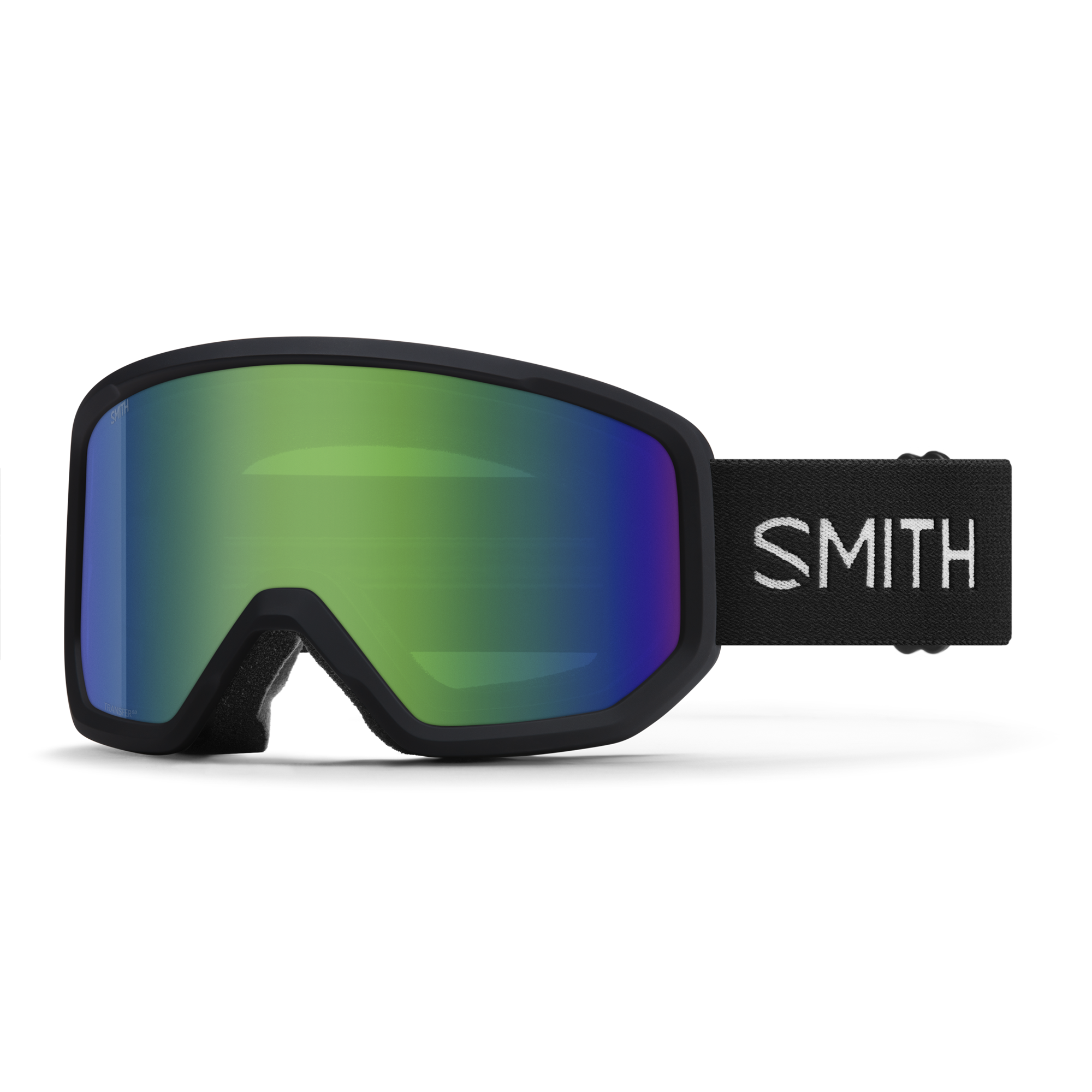
The Smith Transfer Goggle is built for skiers and snowboarders who want Smith's trusted frame quality and fog resistance without paying the steep premium for magnetic interchange tech or high-end color-tuning filters. Positioned as an accessible, workhorse option, the Transfer relies on a classic cylindrical lens profile that keeps the design low-profile, reliable, and exceptionally lightweight. It is an ideal pick for occasional resort visitors, youth riders, or anyone seeking a dependable backup. The frame uses flexible polyurethane that molds smoothly to facial contours, paired with dual-layer face foam that effectively seals out wind and snow. Airflow is handled via integrated top and bottom frame ports, backed by Smith's Fog-X treatment, an etched surface on the inner lens that physically absorbs moisture rather than relying purely on a superficial chemical spray. Helmet integration is clean and standard, sitting flush against most major ski helmet shapes. The obvious compromise is in optical features and lens swapping. The Transfer uses standard tinting rather than ChromaPop high-contrast filtering, meaning definition can feel somewhat flat when navigating gray, overcast conditions. Changing the lens involves manually pulling the frame away from the lens notches, a slow, stiff process that you will not want to attempt out on a freezing chairlift. **Highlights** - Accessible price point backed by Smith's proven build quality - Low-profile cylindrical lens design reduces weight and bulk - Fog-X hydrophilic inner lens treatment resists fogging without washing off - Dual-layer face foam creates a reliable windproof facial seal - Universal frame shape fits smoothly under standard ski helmets **Watch-outs** - Lacks ChromaPop contrast-enhancing optical filters for flat light - Manual snap-in lens swapping is rigid and inconvenient in the cold - Dual-layer foam is thinner and less plush than triple-layer DriWix foam
Pros
- Accessible price point backed by Smith manufacturing consistency
- Fog-X hydrophilic inner lens treatment resists fogging without wiping off
- Low-profile cylindrical design integrates cleanly with standard helmets
- Flexible polyurethane frame conforms smoothly across various face shapes
Cons
- Standard optical tint lacks contrast enhancement for flat-light conditions
- Manual snap-in lens swapping is stiff and inconvenient in the cold
- Dual-layer foam is less plush and absorbs less sweat than triple-layer foam
Best uses
- Casual resort skiing
- Occasional weekend snowboarding
- Clear-weather slope cruising
- Backup gear bag optic
Specifications
- Lens Shape
- Cylindrical
- Frame Material
- Flexible molded polyurethane
- Face Foam
- Dual-layer compression foam
- Anti-Fog Tech
- Fog-X hydrophilic inner lens
- Strap Design
- Silicone-backed adjustable strap
- Helmet Fit
- Medium universal fit
Pricing
We don't publish a price we haven't verified. The retailer links below open the live listing for this exact model.
Full catalog listing & offersBest for
Casual resort skiing, Occasional weekend snowboarding, Clear-weather slope cruising, Backup gear bag optic
Where to buy the Transfer Goggle
We don't have a direct Amazon listing on file yet — this opens an Amazon search for the exact make and model.
Some links are affiliate links. Buying through them supports our testing at no extra cost to you.
The Smith Transfer sits firmly in the entry-level tier of snow optics, offering core eye protection without the steep price tag associated with premium designs. Designed as an accessible workhorse, it caters primarily to weekend resort skiers, casual snowboarders, and budget-conscious outdoor enthusiasts who prioritize dependable fog prevention and basic optical clarity over advanced color filtration or modular magnetic interchange systems. At its core, the goggle utilizes a traditional cylindrical lens geometry paired with a pliable polyurethane frame. Rather than pursuing the bulbous, ultra-wide field of view found on spherical alternatives, the Transfer retains a compact, low-profile footprint that keeps bulk and overall weight to a minimum. It focuses on the functional fundamentals: reliable tinting, active perimeter ventilation ports, and an effective seal against wind and blowing snow. While it intentionally foregoes Smith's proprietary contrast-enhancing ChromaPop lens treatments and plush triple-density foams, the Transfer benefits from the brand's established manufacturing consistency. For occasional trips to the ski hill or as an emergency backup pair stashed permanently inside a gear duffel, it delivers dependable baseline performance without requiring an oversized financial commitment.
Target Audience and Use Case
The Smith Transfer is specifically tailored for occasional winter athletes who hit the mountain a handful of times per season. It meets the needs of riders who do not require rapid lens-swapping capabilities on the chairlift or specialized optics for navigating severe whiteout conditions. Beginners, adolescents stepping up to adult frame sizes, and budget-conscious casual skiers represent the primary demographic. Additionally, seasoned backcountry or resort riders often select the Transfer as a zero-fuss backup goggle to keep inside a pack in case primary optics suffer damage or icing. Because it lacks high-end optical filters, it performs best during moderate weather, spring resort laps, or clear-to-partly-cloudy days where terrain definition remains naturally pronounced without artificial visual amplification.
Materials and Chassis Construction
Smith constructs the Transfer frame from a flexible polyurethane blend that retains elasticity even in freezing temperatures. This flexibility allows the frame to conform naturally to varying facial structures without pinching the bridge of the nose. Padding relies on a dual-layer face foam setup. While functional, it is distinctly thinner and less plush than the multi-density DriWix foam found on Smith's flagship models, offering slightly less sweat absorption during high-output riding. The strap is standard woven elastic equipped with an interior silicone bead to prevent slippage against slick helmet surfaces. Venting channels etched along the brow and lower frame use open-cell porous foam to keep windblown powder out while maintaining continuous air movement across the inner lens.
Optical Clarity and Fog Management
The optical package relies on a standard cylindrical polycarbonate lens that curves horizontally across the face while remaining vertically flat. Visual distortion is well-controlled through the center of the field, though slight peripheral warping is inherent to the entry-level cylindrical format. To manage condensation, the Transfer utilizes Smith's proprietary Fog-X hydrophilic inner lens surface. Unlike basic chemical anti-fog coatings that degrade if wiped with a microfiber cloth, Fog-X is physically etched into the lens surface to absorb moisture directly. Paired with regular air exchange from top and bottom vents, the goggle effectively mitigates fogging during typical downhill runs, provided the rider avoids pulling a wet neck gaiter up beneath the frame rim.
Fit, Foam, and Helmet Integration
The Transfer is scaled as a standard medium fit, working well for a broad cross-section of adult face shapes without crowding the cheekbones. Its frame height and curved upper rim interface cleanly with the majority of modern ski and snowboard helmets, leaving minimal gap along the browline. The dual-layer foam creates an airtight perimeter against wind chill, though riders with flatter nasal profiles may notice slight air intrusion around the nose bridge due to the lack of an articulating fit mechanism. The strap outriggers are stationary rather than hinged, meaning the strap pulls directly on the frame edges; on wider helmets, this can slightly alter frame tension across the face.
Durability and Everyday Maintenance
Given its straightforward construction, the Transfer exhibits strong mechanical durability with few failure points. The flexible frame absorbs impacts without snapping, and the outer lens surface withstands minor branches and routine handling. However, because the inner Fog-X surface functions via microscopic etched pores, care is required when the lens gets wet. Rubbing the wet interior with rough gloves or paper towels will damage the anti-fog layer permanently; it must be dabbed gently or allowed to air dry. Swapping lenses requires manually pulling the frame edge away from locking notches along the lens perimeter. This snap-in design is durable over time, but the process is stiff, slow, and best executed indoors before heading out.
Market Alternatives and Value Trade-Offs
When evaluating sub-seventy-dollar goggles, the Transfer competes directly with options like the Giro Cruz and Scott Fact. The Giro Cruz offers an equally reliable cylindrical build with a slightly wider vertical field of view, while the Scott Fact delivers comparable dual-layer foam and basic contrast tints. The primary trade-off with the Transfer is the absence of Smith's ChromaPop technology. In flat or overcast lighting, snow contours blend together, making it harder to spot hidden ruts and ice patches compared to goggles with contrast-enhancing filters. For riders willing to spend more, stepping up into mid-tier territory provides better flat-light definition and plush triple-layer moisture management.
How we picked
We started with a long list of snow goggles that people actually buy, cut anything that could not clear our baseline for durability and field performance, then ranked the 10 that were left against the same criteria. Rankings are editorial. No brand pays for placement, and affiliate links never move a pick up or down.
- Real-world durability
- How the material, stitching, or steel holds up after a season of hard use — not how it looks new.
- Performance in bad conditions
- Wind, rain, cold, and grit are the test. Anything that only works on a nice day gets marked down.
- Weight and packability
- Every ounce has to earn its place in the pack, but not at the cost of something that fails in the field.
- Ease of use
- Setup, adjustment, and maintenance with cold hands, in the dark, without the manual.
- Value at its price point
- Compared against the closest competitors in the same tier, not against cheaper gear in a different class.
- Repairability and support
- Field-fixable design, available parts, and a warranty the maker actually honors.
Transfer Goggle — frequently asked questions
- Is the Transfer Goggle worth it?
- We rank it #8 in Snow Goggles. The Smith Transfer Goggle is built for skiers and snowboarders who want Smith's trusted frame quality and fog resistance without paying the steep premium for magnetic interchange tech or high-end color-tuning filters. Positioned as an accessible, workhorse option, the Transfer relies on a classic cylindrical lens…
- What is the Transfer Goggle best for?
- Best for casual resort skiing, occasional weekend snowboarding, clear-weather slope cruising and backup gear bag optic. Standouts: accessible price point backed by smith manufacturing consistency and fog-x hydrophilic inner lens treatment resists fogging without wiping off.
- What are the downsides of the Transfer Goggle?
- Standard optical tint lacks contrast enhancement for flat-light conditions, Manual snap-in lens swapping is stiff and inconvenient in the cold and Dual-layer foam is less plush and absorbs less sweat than triple-layer foam.
- What are the key specs of the Transfer Goggle?
- Lens Shape: Cylindrical · Frame Material: Flexible molded polyurethane · Face Foam: Dual-layer compression foam · Anti-Fog Tech: Fog-X hydrophilic inner lens · Strap Design: Silicone-backed adjustable strap
- Target Audience and Use Case — what should I know about the Transfer Goggle?
- The Smith Transfer is specifically tailored for occasional winter athletes who hit the mountain a handful of times per season. It meets the needs of riders who do not require rapid lens-swapping capabilities on the chairlift or specialized optics for navigating severe whiteout conditions.
- Materials and Chassis Construction — what should I know about the Transfer Goggle?
- Smith constructs the Transfer frame from a flexible polyurethane blend that retains elasticity even in freezing temperatures. This flexibility allows the frame to conform naturally to varying facial structures without pinching the bridge of the nose.
Compare side by side
Put the Transfer Goggle against any other pick on this list — specs, price, pros, cons and reader ratings.