


#2 on this list
Evo Trail
MSR
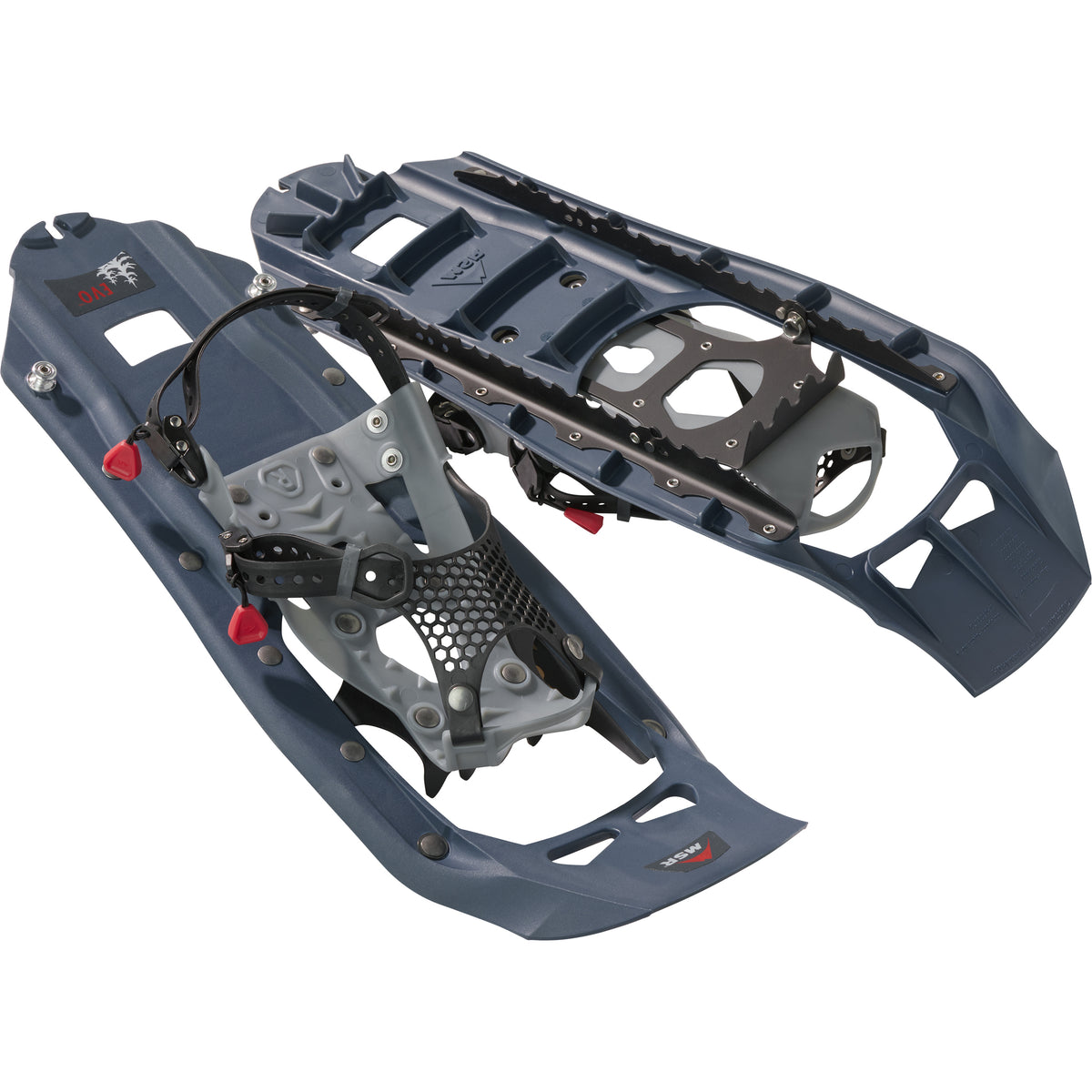
The MSR Evo Trail is widely regarded as the benchmark for entry-level to mid-range winter hikers who want bombproof durability without paying technical alpine prices. Built around an injection-molded plastic UniBody deck with steel traction rails running along the underside, this snowshoe is virtually indestructible. It thrives on rolling forest trails, frozen lakes, and packed snowpack where rocks, roots, and hidden debris might easily puncture a softer fabric deck. While simpler than high-end backcountry models, the Evo Trail does not cut corners on security. Its DuoFit binding system relies on straightforward, freeze-resistant elastomer straps that secure a wide variety of footwear, from standard hiking boots to bulky pac boots. The forward crampon delivers reliable forward bite on moderate climbs, while molded brake bars integrated into the deck prevent sliding backward or sideways on packed routes. The trade-offs center on weight and flexibility. The rigid plastic frame can feel stiff and clattery underfoot over hardpack or icy trails, lacking the smooth, natural roll of flexible composite decks. It also omits the heel lift bars found on steep-climbing models, making sustained ascents more tiring. Still, for dependable performance, minimal maintenance, and long service life at around $180, it offers the best value on the market. **Highlights** - Indestructible UniBody plastic deck resists rock strikes and punctures. - Full-length steel side traction rails provide solid grip on hardpack. - Simple DuoFit elastomer bindings remain pliable in extreme cold. - Modular tail compatibility allows added flotation when carrying heavier packs. - Molded-in deck brake bars assist with downhill control. **Watch-outs** - Rigid plastic deck is loud and stiff on hard, crusted trails. - Lacks a heel lift for comfortable sustained climbing.
- Price
- Check current price
- Reader rating
- No reader votes yet
- How we assessed it
- Specification researched

#3 on this list
Mountaineer
Tubbs
The Tubbs Mountaineer is built for deep powder, rolling wilderness treks, and carrying heavy winter loads. Unlike the narrow, technical snowshoes favored by alpine climbers, the Mountaineer relies on a broad, traditional tubular aluminum frame that prioritizes pure surface area. It is the go-to platform for off-trail winter backpackers, hunters, and larger individuals who consistently sink deep into untracked snow when using standard trail shoes. Underneath, Tubbs outfits the Mountaineer with its aggressive Anaconda toe crampon and full-length perimeter teeth, providing ample bite when you encounter crusted layers beneath the powder. The ActiveFit 2.0 binding cradles the foot with a wide, padded strap and an intuitive cinch mechanism that stays centered, distributing pressure evenly across the instep. When the trail tilts upward, an integrated heel lift bar flips up to relieve stress on the calves and Achilles tendons. The trade-off for this massive flotation and robust construction is sheer bulk. Weighing well over four pounds per pair and featuring a wide, elongated footprint, the Mountaineer requires a slightly wider gait and can feel clumsy in dense brush or on narrow, packed singletrack. If you primarily walk groomed loops, this shoe will feel like overkill; if you break trail through deep northern snowfields with a heavy pack, its performance is unmatched. **Highlights** - Generous surface area provides industry-leading flotation in deep powder. - Robust tubular aluminum frame supports heavy gear and body weight. - Anaconda carbon steel toe crampon bites through hard crust and packed snow. - ActiveFit 2.0 binding delivers secure hold and simple adjustment with gloves. - Built-in heel lift bar reduces fatigue on steep wilderness climbs. **Watch-outs** - Noticeably heavy and bulky on packed or narrow trails. - Wide frame requires an adjusted stride to prevent clacking decks.
- Price
- Check current price
- Reader rating
- No reader votes yet
- How we assessed it
- Specification researched
Specs side by side
| Spec | Evo Trail | Mountaineer |
|---|---|---|
| Deck Material | Injection-molded UniBody plastic | — |
| Weight | 3 lbs. 8 oz. per pair | — |
| Traction System | Full-length steel rails and steel toe crampon | — |
| Binding Style | DuoFit freeze-resistant elastomer straps | — |
| Heel Lift | None | — |
| Flotation Expansion | Compatible with modular tails | — |
| Frame Material | — | Tubular aluminum |
| Measured Weight | — | 4.56 lbs per pair |
| Underfoot Traction | — | Anaconda carbon steel toe crampon and side rails |
| Binding System | — | ActiveFit 2.0 cinch strap harness |
| Heel Lifter | — | Integrated flip-up climbing wire |
| Approximate Price | — | $280 |
What our reviewers liked and didn't
Evo Trail
- Nearly indestructible injection-molded deck resists rocks and roots.
- Full-length steel rails deliver exceptional edge bite on hard crust.
- Freeze-resistant elastomer bindings fit standard boots and bulky pac boots.
- Modular design allows tail extensions for added flotation in powder.
- Lacks a heel lift bar for reducing fatigue on steep climbs.
- Rigid plastic frame is noticeably loud on hard, icy trails.
- Modest out-of-the-box flotation in deep, dry powder.
Mountaineer
- Class-leading flotation and surface area for deep, untracked powder
- Heavy-duty tubular aluminum frame reliably supports heavy pack weights
- Aggressive Anaconda toe crampon bites securely through crust and hardpack
- ActiveFit 2.0 binding distributes tension evenly without cold spots
- Heavier than technical alpine models at roughly 4.56 pounds per pair
- Wide frame requires an adjusted gait on packed or narrow singletrack
- Cumbersome maneuverability in dense deadfall and tight forest brush
Prices change constantly — the figure shown is the last verified catalog price, and the buy buttons always go to the current listing.