


Reader rating
Rate it and you move it. Community ratings re-rank this product inside its Top 10 list.
Expert-picked, reader-ranked. Our editors choose the products and the launch order; member star ratings move picks up or down over time.
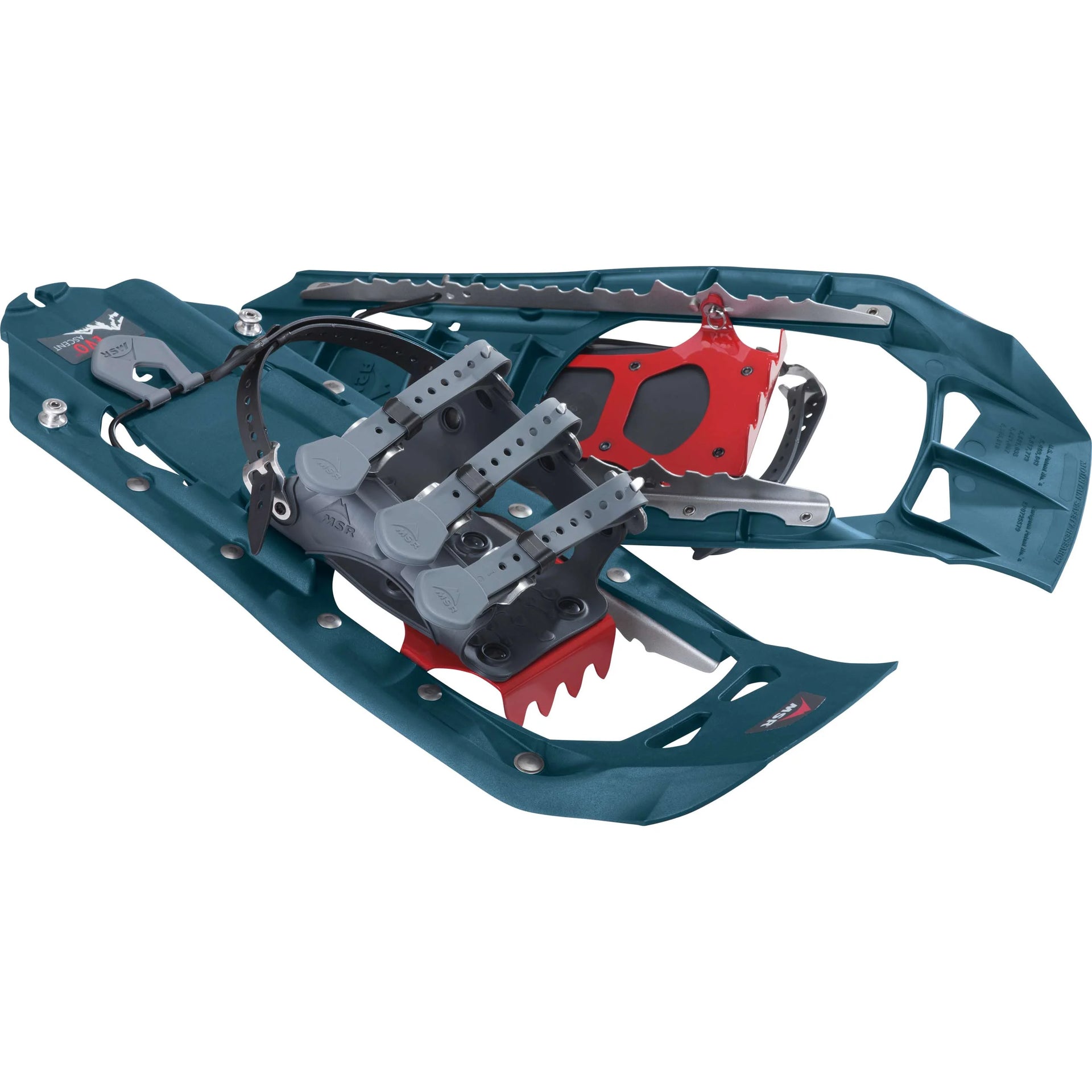
The MSR Evo Ascent takes the ultra-durable, cost-effective platform of the classic Evo Trail and equips it for steeper, more aggressive backcountry terrain. It is built specifically for snowshoers, winter peak baggers, and snowboarders who require the rock-defying toughness of a molded plastic UniBody deck but need technical climbing features to handle steep, icy terrain safely. The key upgrade over the base Evo Trail is the inclusion of the steel Ergo Televator heel lift bar. On sustained uphill climbs, engaging the heel lift keeps the foot in a neutral position, substantially reducing strain on calf muscles and tendons. Grip is provided by steel traction rails molded directly into the underside of the deck, paired with a robust steel toe crampon that drives deep into hard snowpack. The shoe utilizes MSR's secure, freeze-proof TriFit binding system, wrapping three rugged elastomer straps over the instep and one behind the heel. Because it shares the UniBody construction of the Evo line, the Evo Ascent is rigid and noticeably loud on firm, frozen crust. Its relatively short base length is nimble and easy to maneuver through thick trees, but heavier users or those in deep, uncompressed powder will definitely need to purchase the optional modular tails to stay afloat. For steep, rugged routes where durability is paramount, it is a proven workhorse. **Highlights** - UniBody plastic deck offers near-indestructible defense against rocks and roots. - Ergo Televator heel lift significantly eases steep mountain ascents. - Steel side rails and forward crampon provide aggressive hardpack grip. - Multi-strap elastomer binding remains flexible and reliable in deep sub-zero cold. - Compact frame enhances agility in dense forest cover. **Watch-outs** - Stiff plastic construction creates loud clatter on firm, crusty snow. - Short base footprint provides limited flotation without accessory tails.
Pros
- Molded UniBody plastic deck shrugs off direct hits from rocks and roots.
- Ergo Televator heel lift substantially reduces calf fatigue on sustained climbs.
- Full-length steel rails provide exceptional purchase during icy sidehill traverses.
- Freeze-proof elastomer straps remain completely flexible in severe cold.
Cons
- Rigid plastic deck is noticeably loud on hard, frozen crust.
- Short 22-inch footprint requires purchasing accessory tails for deep powder.
- Multiple individual straps take longer to secure than modern dial bindings.
Best uses
- Steep alpine climbing
- Winter peak bagging
- Rocky mixed terrain
- Backcountry snowboard approaches
Specifications
- Deck Material
- Injection-molded plastic
- Weight
- 3 lbs, 15 oz per pair
- Binding Style
- TriFit freeze-proof elastomer
- Traction System
- Steel side rails and toe crampon
- Heel Lift
- Ergo Televator wire bar
- Standard Length
- 22 inches
Pricing
We don't publish a price we haven't verified. The retailer links below open the live listing for this exact model.
Full catalog listing & offersBest for
Steep alpine climbing, Winter peak bagging, Rocky mixed terrain, Backcountry snowboard approaches
Where to buy the Evo Ascent
We don't have a direct Amazon listing on file yet — this opens an Amazon search for the exact make and model.
Some links are affiliate links. Buying through them supports our testing at no extra cost to you.
The MSR Evo Ascent takes the virtually indestructible molded platform of the classic Evo series and tunes it for steep, technical backcountry terrain. Designed primarily for winter peak baggers, alpine hikers, and backcountry snowboarders, this shoe trades the soft flexibility of tubular aluminum frames for the uncompromising rock-striking durability of an injection-molded UniBody plastic deck. It thrives where buried obstacles, exposed granite slabs, and refrozen crust would shred lightweight fabrics. To manage steep ascents, MSR equips the shoe with an Ergo Televator heel lift, which flips up under the boot to maintain a neutral ankle position on sustained climbs. Grip is delivered by toothed steel traction rails molded directly into the underside of the deck, paired with an aggressive forward crampon. Foot retention is handled by MSR's TriFit binding, a network of freeze-proof elastomer straps that will not pack with wet snow or stiffen in deep sub-zero conditions. The trade-offs are dictated by the rigid UniBody construction. The hard deck creates a noticeable plastic clatter across icy, windblown surfaces, and the baseline 22-inch length offers limited surface area for deep powder. Even so, for mixed alpine scrambles where equipment failure is not an option, the Evo Ascent remains an exceptionally reliable tool.
Target User Profile
The Evo Ascent is engineered for cold-weather hikers and winter mountaineers who regularly encounter steep, technical routes rather than flat park loops. If your trips involve scrambling over partially submerged granite, navigating wind-scoured ridgelines, or carrying heavy packs into alpine zones, this shoe fits the bill. The compact footprint makes it particularly practical for mountaineers who need agility in tight timber or on steep fall lines, as well as snowboarders who require a tough, packable approach shoe that resists damage from board edges. Casual recreationalists who stick strictly to rolling, groomed terrain will likely find its aggressive steel rails and rigid plastic build unnecessary for their needs.
Deck and Frame Construction
Instead of a traditional perimeter frame wrapped in fabric, the Evo Ascent utilizes a UniBody injection-molded plastic deck. This single-piece design incorporates molded plastic traction fins underneath alongside stamped steel perimeter rails. Because the deck has no fabric to rip, tear, or puncture, it can absorb direct impacts against jagged rock edges and hidden logs without structural compromise. The plastic compound is specifically formulated to retain flexibility in severe sub-zero weather, resisting cold-crack fractures. While this rigid design provides exceptional torsional strength when edging across hardpacked side-slopes, it yields a very stiff stride compared to flexible composite or aluminum-frame alternatives.
Traction and Climbing Mechanics
Where entry-level shoes rely solely on a toe crampon, the Evo Ascent provides full-length grip via two tempered steel traction rails running parallel beneath the footbed. These toothed rails bite deep during sidehill traverses, preventing the shoe from skidding sideways across hard, frozen snow. The forward toe crampon rotates under the ball of the foot to drive into crust on steep pitches. When climbing sustained slopes, the steel Ergo Televator heel lift bar can be flicked upward with a trekking pole grip. Raising the heel takes immediate strain off the calves and Achilles tendons, conserving significant muscular energy during long ascents.
Binding Security and Field Repair
MSR utilizes its TriFit binding system on the Evo Ascent, featuring three stretchy elastomer straps across the instep and one around the heel. Unlike mechanical ratchet buckles or dial systems that can jam with ice or break under impact, these urethane straps remain pliable well below zero and shed moisture effortlessly. Threading each strap into its pin-and-collar retainer takes more time to fasten with thick gloves than a single-pull system, but the security is absolute. If a strap fails in the backcountry, it can be swapped out in minutes with a standard replacement strap, keeping field repairs simple and tool-free.
Flotation and Powder Limitations
At 22 inches long, the base Evo Ascent is optimized for maneuverability and hardpack climbing rather than deep, unconsolidated powder. For an adult carrying a loaded winter backpack, the standard deck will sink significantly in fresh snow. MSR addresses this limitation with modular flotation tails, six-inch plastic deck extensions that attach to the rear with a thumbscrew. These optional accessories increase surface area on demand without requiring a second, larger pair of snowshoes. However, users frequently breaking trail through deep, bottomless powder without tails will struggle with flotation compared to shoes designed from the outset with 25- to 30-inch platforms.
Alternatives and Honest Trade-offs
Within MSR's catalog, the Lightning Ascent sits at a higher price point, offering a 360-degree aluminum frame that is marginally quieter and lighter, but far more vulnerable to denting on bare rock. Competitors like the Tubbs Flex VRT feature BOA closure dials and composite decks with natural tail flex, which provide a smoother, quieter rolling stride on packed trails. However, the mechanical complexity of BOA systems introduces potential failure points in sub-zero alpine settings. The main drawbacks of the Evo Ascent remain its loud clatter on hardpack crust, the manual effort required to secure four separate straps per foot, and the recurring need to buy modular tails for powder flotation.
How we picked
We started with a long list of snowshoes that people actually buy, cut anything that could not clear our baseline for durability and field performance, then ranked the 10 that were left against the same criteria. Rankings are editorial. No brand pays for placement, and affiliate links never move a pick up or down.
- Fabric behavior over time
- Breathability, DWR life, loft retention, and how the piece performs after repeated washing.
- Real-world durability
- How the material, stitching, or steel holds up after a season of hard use — not how it looks new.
- Performance in bad conditions
- Wind, rain, cold, and grit are the test. Anything that only works on a nice day gets marked down.
- Weight and packability
- Every ounce has to earn its place in the pack, but not at the cost of something that fails in the field.
- Ease of use
- Setup, adjustment, and maintenance with cold hands, in the dark, without the manual.
- Value at its price point
- Compared against the closest competitors in the same tier, not against cheaper gear in a different class.
Evo Ascent — frequently asked questions
- Is the Evo Ascent worth it?
- We rank it #5 in Snowshoes. The MSR Evo Ascent takes the ultra-durable, cost-effective platform of the classic Evo Trail and equips it for steeper, more aggressive backcountry terrain. It is built specifically for snowshoers, winter peak baggers, and snowboarders who require the rock-defying toughness of a molded plastic UniBody deck but need…
- What is the Evo Ascent best for?
- Best for steep alpine climbing, winter peak bagging, rocky mixed terrain and backcountry snowboard approaches. Standouts: molded unibody plastic deck shrugs off direct hits from rocks and roots. and ergo televator heel lift substantially reduces calf fatigue on sustained climbs..
- What are the downsides of the Evo Ascent?
- Rigid plastic deck is noticeably loud on hard, frozen crust., Short 22-inch footprint requires purchasing accessory tails for deep powder. and Multiple individual straps take longer to secure than modern dial bindings..
- What are the key specs of the Evo Ascent?
- Deck Material: Injection-molded plastic · Weight: 3 lbs, 15 oz per pair · Binding Style: TriFit freeze-proof elastomer · Traction System: Steel side rails and toe crampon · Heel Lift: Ergo Televator wire bar
- Target User Profile — what should I know about the Evo Ascent?
- The Evo Ascent is engineered for cold-weather hikers and winter mountaineers who regularly encounter steep, technical routes rather than flat park loops. If your trips involve scrambling over partially submerged granite, navigating wind-scoured ridgelines, or carrying heavy packs into alpine zones, this shoe fits the…
- Deck and Frame Construction — what should I know about the Evo Ascent?
- Instead of a traditional perimeter frame wrapped in fabric, the Evo Ascent utilizes a UniBody injection-molded plastic deck. This single-piece design incorporates molded plastic traction fins underneath alongside stamped steel perimeter rails.
Compare side by side
Put the Evo Ascent against any other pick on this list — specs, price, pros, cons and reader ratings.