


Reader rating
Rate it and you move it. Community ratings re-rank this product inside its Top 10 list.
Expert-picked, reader-ranked. Our editors choose the products and the launch order; member star ratings move picks up or down over time.
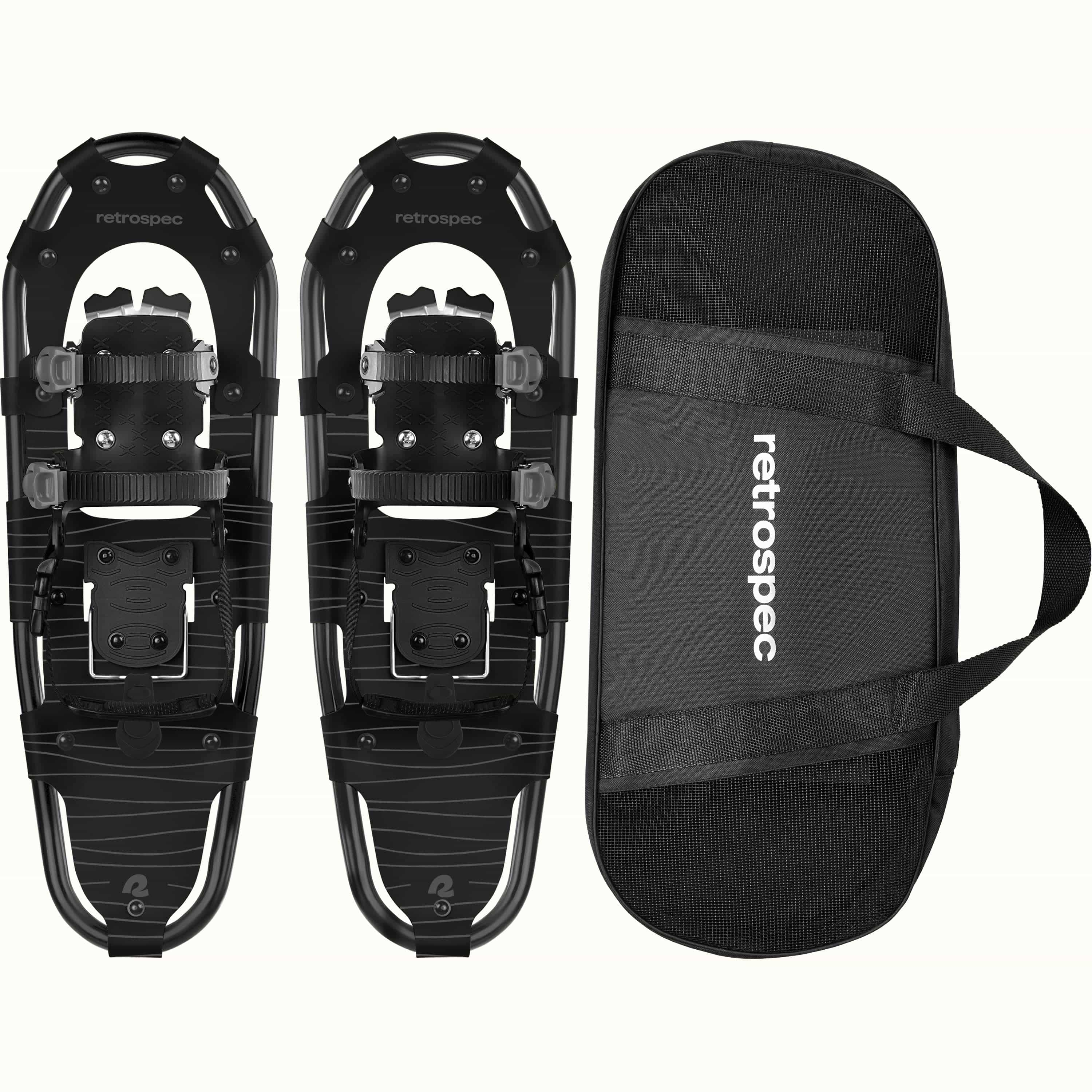
The Retrospec Drifter targets casual winter walkers, families, and budget-conscious hikers looking to explore packed trails, rolling parkland, and mild woodland terrain. Rather than chasing technical mountain summits, this snowshoe focuses on affordability and accessible ease of use. It is constructed with a classic round aluminum frame and a flexible polyethylene (HDPE) deck, a proven combination that keeps the initial cost well below that of technical models. On the snow, the Drifter performs reliably on flat to moderately rolling terrain. The aluminum frame provides reasonable flotation for its length, and the front and rear aluminum crampons offer adequate traction for packed snow and light crust. The binding system utilizes a dual-ratchet strap design over the instep paired with a molded heel band, making it relatively quick to put on and take off for beginners who do not want to wrestle with complex webbing setups. The limitations become evident if you take the Drifter outside its intended recreational comfort zone. The aluminum crampons wear faster on rock than hardened steel, and the absence of aggressive perimeter side rails means the shoe can slip sideways on steep or icy traverses. Additionally, it lacks a heel lift for sustained uphill climbing. For relaxed weekend outings on established trails, however, it delivers honest, capable performance at a wallet-friendly price. **Highlights** - High-value pricing makes winter hiking accessible for casual trail users. - Lightweight aluminum tubing frame paired with durable HDPE deck. - Double-ratchet binding system enables quick, intuitive adjustments. - Dual crampon layout handles packed trails and moderate rolling slopes. - Available in multiple sizing lengths to match different user weights. **Watch-outs** - Lacks edge traction rails for secure traversing on icy sidehills. - Aluminum crampons are prone to wearing down quickly on rocky stretches.
Pros
- Accessible price point makes winter trail exploration affordable
- Dual-ratchet bindings adjust easily even while wearing thick winter gloves
- Proven aluminum frame and HDPE deck deliver dependable flotation
- Available in three sizes to accommodate different body weights and loads
Cons
- No perimeter traction rails, causing slippage on icy sidehills
- Aluminum crampons wear quickly if exposed to rock or gravel
- Lacks an uphill heel television bar for sustained steep climbing
Best uses
- Packed woodland trail walking
- Flat nature center paths
- Casual rolling hill hiking
- Budget-friendly family winter recreation
Specifications
- Frame Material
- Round tubular aluminum
- Deck Material
- High-density polyethylene (HDPE)
- Available Lengths
- 21 in, 25 in, 30 in
- Weight per Pair
- 4 lb. 3 oz. (25 in.)
- Binding Style
- Dual ratchet straps with molded heel band
- Traction Type
- Front and rear aluminum crampons
Pricing
We don't publish a price we haven't verified. The retailer links below open the live listing for this exact model.
Full catalog listing & offersBest for
Packed woodland trail walking, Flat nature center paths, Casual rolling hill hiking, Budget-friendly family winter recreation
Where to buy the Drifter
Prices and stock change often, so check the current Amazon offer before you buy.
Some links are affiliate links. Buying through them supports our testing at no extra cost to you.
The Retrospec Drifter is designed specifically for casual winter trail walkers, families, and budget-conscious outdoor enthusiasts who want an accessible entry point into snowshoeing without spending several hundred dollars. Built around a traditional tubular aluminum frame and a durable high-density polyethylene deck, the Drifter focuses on simplicity and straightforward flotation over packed park trails, open meadows, and gentle woodland paths. Rather than competing with technical backcountry models engineered for alpine ascents, the Drifter prioritizes approachable usability. Its binding setup employs a straightforward dual-ratchet strap system over the instep alongside a flexible heel strap, allowing users to secure winter boots quickly without wrestling with finicky frozen straps. Underneath, aluminum toe and heel crampons provide the grip necessary to navigate consolidated snow. Inevitably, the wallet-friendly price point brings clear performance boundaries. The Drifter does not include side traction rails, aggressive steel teeth, or an uphill heel lift. On steep, icy sidehills or sustained climbs, it lacks the bite and mechanical leverage of dedicated mountaineering shoes. For flat to rolling recreational outings, however, it provides dependable flotation and reliable comfort that easily justify its modest investment.
Intended Terrain and User
The Retrospec Drifter caters to recreational walkers who spend their winter days on maintained park paths, local cross-country ski margins, or gently rolling forest reserves. It is neither intended nor engineered for technical alpine mountaineering, off-camber ridgelines, or deep wilderness expeditions. Instead, it serves users who need basic flotation to prevent postholing on weekend outings. For beginners, casual hikers, and households purchasing multiple pairs for occasional winter recreation, the Drifter provides an accessible, non-intimidating way to stay active in the snow. If your winter outings consist primarily of flat, scenic routes and modest inclines covered in packed or moderate powder, this platform delivers the necessary support without burdening you with high costs or excessive technical complexity.
Frame and Decking Construction
Retrospec relies on a time-tested design layout by pairing an anodized tubular aluminum perimeter with a flexible high-density polyethylene (HDPE) deck. This combination offers a healthy compromise between durability, flexibility, and overall mass. The aluminum tubing retains rigidity under load while offering enough flex to handle uneven ground without permanent deformation. Meanwhile, the HDPE decking is riveted securely along the frame perimeter, providing puncture resistance against buried branches and crusty snow layers. At roughly four pounds and three ounces for the 25-inch version, the Drifter is light enough that newer snowshoers will not suffer premature leg fatigue over a few miles of trail walking. The rounded tail shape tracks smoothly in deep snow without catching on brush.
Binding System and Fit
The Drifter uses a dual-ratchet binding layout reminiscent of classic snowboard bindings. Two wide, notched ladder straps sit across the top of the foot, tightening through mechanical ratchet buckles that can be worked while wearing heavy winter gloves. A molded heel band anchors the rear of the boot to prevent shifting. This harness system accepts standard winter hiking boots, insulated pac boots, or insulated trail running footwear across a broad spectrum of sizes. Because the binding pivots on a heavy-duty axle below the ball of the foot, the tail of the snowshoe sheds snow and drops naturally with each stride. While the straps can feel stiff in sub-zero temperatures, they deliver a secure hold that prevents excessive side-to-side slop on level ground.
Traction Capabilities and Limits
Traction on the Drifter is handled by stamped aluminum crampons positioned beneath the ball of the foot and the heel. In packed snow, loose powder over a firm base, or mild woodland crust, these teeth sink in sufficiently to provide forward drive and prevent backsliding. However, aluminum is softer than the carbon or stainless steel found on premium backcountry models, meaning the teeth will dull quickly if dragged across rocks, exposed gravel, or tarmac. Furthermore, the Drifter completely lacks lateral side rails or perimeter teeth. On hardpacked, off-camber traverses or icy hillsides, the deck can slip sideways, requiring the hiker to alter their route toward flatter, safer ground.
Durability and Value Assessment
At roughly $149, the Retrospec Drifter represents exceptional value in a category where premium options routinely exceed $300. In exchange for the lower cost, the consumer accepts materials that demand moderate care. The HDPE decking and aluminum tubing withstand typical recreational stress well, but prolonged use on sharp granite or hard ice will accelerate wear on the binding rivets and aluminum teeth. The plastic ratchet buckles require gentle operation when clearing frozen slush, as forced ratcheting on iced teeth can cause premature wear. Within its designed envelope of relaxed trail use, the Drifter offers reliable service life and avoids the brittle plastic failures common in ultra-cheap department store alternatives.
How we picked
We started with a long list of snowshoes that people actually buy, cut anything that could not clear our baseline for durability and field performance, then ranked the 10 that were left against the same criteria. Rankings are editorial. No brand pays for placement, and affiliate links never move a pick up or down.
- Fabric behavior over time
- Breathability, DWR life, loft retention, and how the piece performs after repeated washing.
- Real-world durability
- How the material, stitching, or steel holds up after a season of hard use — not how it looks new.
- Performance in bad conditions
- Wind, rain, cold, and grit are the test. Anything that only works on a nice day gets marked down.
- Weight and packability
- Every ounce has to earn its place in the pack, but not at the cost of something that fails in the field.
- Ease of use
- Setup, adjustment, and maintenance with cold hands, in the dark, without the manual.
- Value at its price point
- Compared against the closest competitors in the same tier, not against cheaper gear in a different class.
Drifter — frequently asked questions
- Is the Drifter worth it?
- We rank it #6 in Snowshoes. The Retrospec Drifter targets casual winter walkers, families, and budget-conscious hikers looking to explore packed trails, rolling parkland, and mild woodland terrain. Rather than chasing technical mountain summits, this snowshoe focuses on affordability and accessible ease of use.
- What is the Drifter best for?
- Best for packed woodland trail walking, flat nature center paths, casual rolling hill hiking and budget-friendly family winter recreation. Standouts: accessible price point makes winter trail exploration affordable and dual-ratchet bindings adjust easily even while wearing thick winter gloves.
- What are the downsides of the Drifter?
- No perimeter traction rails, causing slippage on icy sidehills, Aluminum crampons wear quickly if exposed to rock or gravel and Lacks an uphill heel television bar for sustained steep climbing.
- What are the key specs of the Drifter?
- Frame Material: Round tubular aluminum · Deck Material: High-density polyethylene (HDPE) · Available Lengths: 21 in, 25 in, 30 in · Weight per Pair: 4 lb. 3 oz. (25 in.) · Binding Style: Dual ratchet straps with molded heel band
- Intended Terrain and User — what should I know about the Drifter?
- The Retrospec Drifter caters to recreational walkers who spend their winter days on maintained park paths, local cross-country ski margins, or gently rolling forest reserves. It is neither intended nor engineered for technical alpine mountaineering, off-camber ridgelines, or deep wilderness expeditions.
- Frame and Decking Construction — what should I know about the Drifter?
- Retrospec relies on a time-tested design layout by pairing an anodized tubular aluminum perimeter with a flexible high-density polyethylene (HDPE) deck. This combination offers a healthy compromise between durability, flexibility, and overall mass.
Compare side by side
Put the Drifter against any other pick on this list — specs, price, pros, cons and reader ratings.