


Reader rating
Rate it and you move it. Community ratings re-rank this product inside its Top 10 list.
Expert-picked, reader-ranked. Our editors choose the products and the launch order; member star ratings move picks up or down over time.
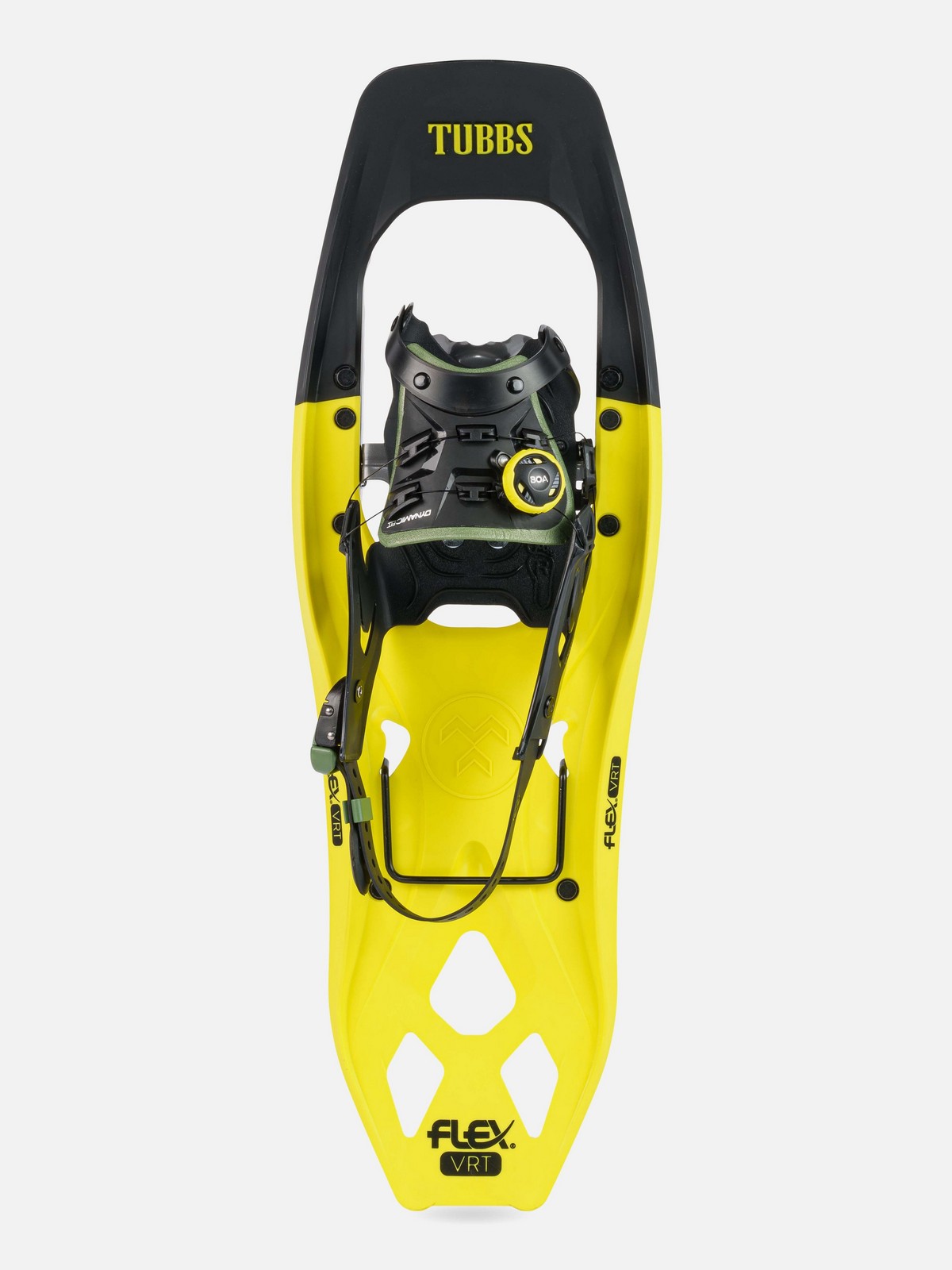
The Tubbs Flex VRT is designed for technical mountain ascents where agility, rapid adjustments, and a natural gait are critical. The core of this shoe is the Flex Deck, an ergonomic composite plastic frame that tapers toward the tail. By flexing naturally under the heel strike, the deck absorbs shock and allows the foot to roll through its natural motion, significantly reducing the joint stiffness common with fully rigid plastic or oversized aluminum snowshoes. Aggressive traction is a standout strength of the Flex VRT. It combines heavy-duty Viper 2.0 carbon steel toe crampons with curved 3D-Curved Traction Rails that run along the underside, biting firmly into wind-scoured ice, hard crust, and steep sidehill traverses. Its most defining feature, however, is the DynamicFit binding, which incorporates the BOA Fit System. A simple turn of the dial tightens an integrated cable harness evenly across the boot, creating an exceptionally precise, secure fit that can be micro-adjusted on the fly without removing gloves. With a shorter, tapered profile, the Flex VRT emphasizes grip and climbing efficiency over sheer powder flotation. In light, deep, bottomless snow, users will sink more than they would on a wider, traditional powder shoe like the Tubbs Mountaineer. Additionally, while the BOA system is fast and reliable, users should keep it clear of freezing wet slush. For steep, crusty mountain ascents, it remains an exceptionally nimble climber. **Highlights** - BOA Fit System provides micro-adjustable, glove-friendly binding security. - Torsionally flexible deck absorbs shock and enables a natural walking stride. - 3D-Curved Traction Rails deliver outstanding grip on steep sidehills. - Viper 2.0 carbon steel toe crampon bites deep into icy crust. - ActiveLift heel bar reduces calf strain during prolonged vertical ascents. **Watch-outs** - Tapered tail reduces surface area, limiting flotation in deep powder. - BOA mechanism requires care in slushy conditions to prevent icing.
Pros
- BOA Fit System allows rapid, even tensioning without removing heavy winter gloves.
- Flexible composite deck absorbs heel impact and supports a natural walking stride.
- Aggressive carbon steel crampons and 3D side rails bite reliably into steep ice.
- ActiveLift 19-degree heel riser substantially cuts calf fatigue on sustained climbs.
Cons
- Tapered frame provides limited flotation in deep, unconsolidated powder.
- BOA dial mechanism can be susceptible to icing if exposed to wet, slushy snow.
- Heavier than minimalist ultralight snowshoes at over 4 pounds 5 ounces per pair.
Best uses
- Steep mountain peak bagging
- Hard-packed winter trail hiking
- Technical icy alpine climbs
- Off-camber sidehill traverses
Specifications
- Weight Per Pair
- 4 lb. 5.9 oz. (Men's 25 in.)
- Deck Construction
- Molded composite plastic Flex Deck
- Binding System
- DynamicFit with BOA dial harness
- Traction Components
- Viper 2.0 toe crampon and 3D side rails
- Heel Lift
- ActiveLift 19-degree climbing bar
- Approximate Price
- $280
Pricing
We don't publish a price we haven't verified. The retailer links below open the live listing for this exact model.
Full catalog listing & offersBest for
Steep mountain peak bagging, Hard-packed winter trail hiking, Technical icy alpine climbs, Off-camber sidehill traverses
Where to buy the Flex VRT
We don't have a direct Amazon listing on file yet — this opens an Amazon search for the exact make and model.
Some links are affiliate links. Buying through them supports our testing at no extra cost to you.
The Tubbs Flex VRT is built for steep, firm, and variable mountain terrain where traction and agility matter far more than maximum flotation. Unlike traditional snowshoes constructed around wide aluminum perimeter frames, the Flex VRT uses a molded composite plastic deck that tapers sharply toward the tail. This profile is engineered to flex naturally under the heel strike, absorbing impact and encouraging an unencumbered stride across firm snowpack and crust. Its distinguishing mechanical feature is the DynamicFit binding, which incorporates a dial-based BOA Fit System. This setup replaces standard webbing straps with an integrated cable harness that draws evenly across the upper foot, allowing quick adjustments even while wearing bulky winter mittens. Coupled with full-length steel side rails and an aggressive toe crampon, the platform prioritizes control on icy ascents and off-camber traverses. Retailing around $280 and weighing approximately 4 pounds 6 ounces per pair in the 25-inch length, this shoe is not meant for leisurely trail walks or breaking trail in deep, untracked powder. Instead, it is a focused tool designed for winter hikers, peak baggers, and backcountry adventurers navigating firm, rolling, or technical mountain grades.
Target User and Ideal Terrain
The Flex VRT is designed specifically for winter hikers and peak baggers who regularly venture into steep, icy, or hard-packed alpine conditions. Because of its tapered composite frame and narrow profile, it excels when traversing firm wind-scoured ridgelines, hard crust, and packed winter hiking corridors. It caters directly to outdoorspeople who need an agile platform that does not force a wide, bowlegged gait. Conversely, casual walkers sticking to flat meadow trails or deep, unconsolidated powder fields will find this shoe overbuilt in grip and underbuilt in surface area. Hikers primarily seeking deep-snow flotation will quickly sink in soft powder, as the shorter, narrower design trades maximum surface area for maneuverability and precision. It belongs on technical vertical routes where foot placement and reliable bite underfoot take precedence over staying on top of feather-light snow.
Materials and Deck Construction
Built around Tubbs' proprietary Flex Deck architecture, the frame is molded from a resilient composite plastic that tolerates sub-zero temperatures without turning brittle. Unlike rigid plastic decks that feel like stiff planks underfoot, the tail of the Flex VRT is engineered with torsional flex. As your heel strikes the snow, the tail bends slightly, absorbing shock and encouraging a natural roll through the gait cycle. This flexibility also reduces rotational torque on knees and ankles when navigating uneven sidehills. Underneath, the snowshoe integrates Viper 2.0 carbon steel toe crampons designed to dig deeply into hard crust, complemented by 3D-Curved Traction Rails running along the length of the deck. These curved perimeter rails provide continuous biting edges, preventing slippage during lateral traverses where conventional flat-railed snowshoes often slide uncontrollably.
Binding Design and Dial Tuning
The DynamicFit binding is one of the Flex VRT's most distinctive attributes, driven by the BOA Fit System. Rather than relying on traditional multi-strap ratchets or rubber pull-tabs, the binding utilizes a single micro-adjustable dial connected to a durable cable routing system. Turning the dial pulls the binding evenly around the instep and forefoot, eliminating the pinpoint pressure spots commonly caused by stiff nylon straps. Releasing tension requires merely pulling up on the dial, making entry and exit remarkably fast at trailheads or transitional summits. The system is exceptionally friendly to heavy insulated gloves, sparing users from having to expose bare skin to freezing winds. The only notable operational vulnerability involves slushy wet snow that can occasionally pack into the dial teeth and freeze; keeping the mechanism free of wet slush ensures consistent performance.
Climbing Performance and Traction
On vertical terrain, the Flex VRT ranks among the most capable models in its class. The carbon steel toe crampons pivot smoothly with the foot to drive directly into steep slopes, providing dependable security on hard crust and refrozen alpine snow. Complementing the aggressive toe claw is the ActiveLift 19-degree heel riser bar. When flipped up, the riser supports the heel on sustained ascents, placing the calf muscles in a more neutral ergonomic position to significantly reduce strain and Achilles fatigue over thousands of vertical feet. The combination of the aggressive toe bite, full-length 3D traction rails, and rigid heel lift transforms steep, icy headwalls from grueling hazards into manageable ascents. Descending is equally stable, as rear deck traction teeth help arrest forward momentum when stepping downward onto firm slopes.
Flotation Limits and Durability
The primary compromise of the Flex VRT centers on its modest surface area. The tapered tail and narrow frame improve stride mechanics and agility, but they inevitably sacrifice buoyancy in deep, low-density powder. In fresh, bottomless snow, users carrying heavy overnight packs will experience noticeable postholing compared to wider aluminum-frame models. Durability, however, is a strong point. The heavy-gauge composite plastic deck withstands aggressive impacts against buried rocks and roots without cracking, and the carbon steel crampons maintain their sharp biting profile after extended mileage over mixed rock-and-ice terrain. While the BOA cable harness raises occasional concerns regarding field repairability compared to simple urethane straps, reports of cable snaps remain rare in standard winter mountaineering use. Proper maintenance simply requires clearing ice out of the mechanical dial before packing up.
Price and Market Competitors
Retailing near the $280 mark, the Flex VRT competes directly against technical alpine stalwarts such as the MSR Lightning Ascent and the MSR Evo Ascent. The MSR Lightning Ascent provides superior edge-to-edge grip on bulletproof ice courtesy of its 360-degree continuous perimeter frame, and it offers optional modular tails for variable snow depths. However, the Lightning Ascent is significantly more expensive and utilizes multiple rubber straps that can feel tedious to secure compared to the Flex VRT's instant BOA dial. Against the MSR Evo Ascent, the Flex VRT offers a far more comfortable, natural stride thanks to its shock-absorbing deck flexibility, whereas the Evo's rigid plastic construction can feel unyielding and clunky. For hikers prioritizing rapid binding adjustment, foot comfort, and steep-slope agility over pure powder flotation, the Flex VRT holds a strong value proposition.
How we picked
We started with a long list of snowshoes that people actually buy, cut anything that could not clear our baseline for durability and field performance, then ranked the 10 that were left against the same criteria. Rankings are editorial. No brand pays for placement, and affiliate links never move a pick up or down.
- Fabric behavior over time
- Breathability, DWR life, loft retention, and how the piece performs after repeated washing.
- Real-world durability
- How the material, stitching, or steel holds up after a season of hard use — not how it looks new.
- Performance in bad conditions
- Wind, rain, cold, and grit are the test. Anything that only works on a nice day gets marked down.
- Weight and packability
- Every ounce has to earn its place in the pack, but not at the cost of something that fails in the field.
- Ease of use
- Setup, adjustment, and maintenance with cold hands, in the dark, without the manual.
- Value at its price point
- Compared against the closest competitors in the same tier, not against cheaper gear in a different class.
Flex VRT — frequently asked questions
- Is the Flex VRT worth it?
- We rank it #7 in Snowshoes. The Tubbs Flex VRT is designed for technical mountain ascents where agility, rapid adjustments, and a natural gait are critical. The core of this shoe is the Flex Deck, an ergonomic composite plastic frame that tapers toward the tail.
- What is the Flex VRT best for?
- Best for steep mountain peak bagging, hard-packed winter trail hiking, technical icy alpine climbs and off-camber sidehill traverses. Standouts: boa fit system allows rapid, even tensioning without removing heavy winter gloves. and flexible composite deck absorbs heel impact and supports a natural walking stride..
- What are the downsides of the Flex VRT?
- Tapered frame provides limited flotation in deep, unconsolidated powder., BOA dial mechanism can be susceptible to icing if exposed to wet, slushy snow. and Heavier than minimalist ultralight snowshoes at over 4 pounds 5 ounces per pair..
- What are the key specs of the Flex VRT?
- Weight Per Pair: 4 lb. 5.9 oz. (Men's 25 in.) · Deck Construction: Molded composite plastic Flex Deck · Binding System: DynamicFit with BOA dial harness · Traction Components: Viper 2.0 toe crampon and 3D side rails · Heel Lift: ActiveLift 19-degree climbing bar
- Target User and Ideal Terrain — what should I know about the Flex VRT?
- The Flex VRT is designed specifically for winter hikers and peak baggers who regularly venture into steep, icy, or hard-packed alpine conditions. Because of its tapered composite frame and narrow profile, it excels when traversing firm wind-scoured ridgelines, hard crust, and packed winter hiking corridors.
- Materials and Deck Construction — what should I know about the Flex VRT?
- Built around Tubbs' proprietary Flex Deck architecture, the frame is molded from a resilient composite plastic that tolerates sub-zero temperatures without turning brittle. Unlike rigid plastic decks that feel like stiff planks underfoot, the tail of the Flex VRT is engineered with torsional flex.
Compare side by side
Put the Flex VRT against any other pick on this list — specs, price, pros, cons and reader ratings.