


Reader rating
Rate it and you move it. Community ratings re-rank this product inside its Top 10 list.
Expert-picked, reader-ranked. Our editors choose the products and the launch order; member star ratings move picks up or down over time.
Best overall
Pros
- Aggressive pull-cut teeth chew through seasoned logs with minimal effort
- Extremely compact folded footprint slides into pack side pockets
- Dual-angle locking mechanism enables flush ground cuts without scraping knuckles
- Ergonomic rubberized grip maintains positive traction when wet or icy
Cons
- Thin carbon steel blade will kink if jammed on an aggressive forward stroke
- Impulse-hardened teeth cannot be sharpened with standard hand files in the field
- Requires periodic oiling to prevent surface oxidation after wet trips
Best uses
- Shoulder-season backcountry wood stove fueling
- Clearing deadfall on remote wilderness corridors
- Bushcraft shelter building and campcraft
- Canoe and packraft expedition fire prep
Specifications
- Weight
- 7.1 oz (approx. 200 g)
- Blade Length
- 210 mm (8.3 in)
- Cutting Stroke
- Japanese pull-cut action
- Handle Construction
- Aluminum frame with textured rubber overlay
- Blade Steel
- Impulse-hardened Japanese high-carbon steel
- Locking Positions
- Two-position spring-loaded rocker lock
Pricing
We don't publish a price we haven't verified. The retailer links below open the live listing for this exact model.
Best for
Shoulder-season backcountry wood stove fueling, Clearing deadfall on remote wilderness corridors, Bushcraft shelter building and campcraft, Canoe and packraft expedition fire prep
Where to buy the Super Accel 210
We don't have a direct Amazon listing on file yet — this opens an Amazon search for the exact make and model.
Some links are affiliate links. Buying through them supports our testing at no extra cost to you.
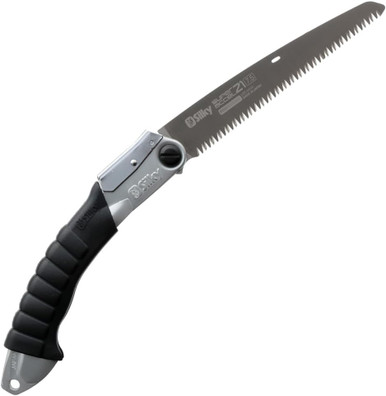
Processing deadfall for a backcountry fire usually forces a compromise between pack weight and actual mechanical advantage. Pocket chainsaws twist and snag, while standard folding utility saws bind the moment you push into green pine or wet birch. The Japanese pull-cut geometry on this folder cuts through that compromise by delivering full-size cutting authority in an eight-ounce package that rides clean in a pack bottle pocket. At the core of the tool is a purpose-built 210-millimeter blade paired with a handle rake engineered to maximize pull stroke leverage without requiring excess wrist torque. Instead of fighting through a push-and-pull stroke, the teeth bite purely on the backward draw, letting the blade glide freely on the forward reset. For backpackers who want legitimate four- to six-inch log processing speed without carrying a dedicated pack bow saw, this hits the precise sweet spot between packability and raw utility.
Who It Is For
Backcountry travelers who depend on wood fires for heat or cookery will get the most out of this blade. It is tailor-made for solo hikers, canoe campers, and packrafters who routinely need to clear deadfall up to six inches in diameter without carrying the bulk of an external-frame bow saw. Ultralight purists who only boil water over alcohol stoves can safely leave it at home, but anyone traversing unmaintained wilderness corridors or winter routes where firewood is a safety margin will appreciate the reliable output per ounce.
Blade Architecture and Materials
The cutting performance comes down to proprietary impulse-hardened teeth ground without alternate setting, meaning the tooth edge is marginally thicker than the blade body. This tapered grind drastically reduces friction along the kerf walls and prevents sap and damp sawdust from binding up the cut. The teeth undergo localized heating that leaves them exceptionally hard for edge retention while keeping the spine ductile enough to flex rather than snap under moderate stress. Because the teeth are induction hardened, field sharpening with a standard file is out of the picture; when the edge eventually tires after seasons of hard use, swapping in a factory replacement blade is the intended path.
Field Performance and Cutting Speed
On the trail, the tool rips through seasoned oak, pitchy pine, and wet spruce with astonishing velocity if you let the teeth do the work. The angled grip tilts the blade slightly downward, naturally aligning your forearm with the pull stroke and keeping the teeth seated in the kerf. Operators used to Western push saws often make the mistake of muscling the forward stroke, which can pinch or bow the high-carbon steel. Relax your grip on the return stroke and focus all pressure on the draw, and you will sever a four-inch hardwood branch in under thirty clean seconds.
Packability and Ergonomics
Weighing roughly seven ounces and folding down to around nine and a half inches, this folder slips effortlessly into side water bottle sleeves, hydration pockets, or top lids. The textured rubber elastomer molded over the aluminum handle stays grippy even when soaked in freezing rain or handled with heavy leather work gloves. The locking lever operates via a straightforward spring-loaded rocker with positive engagement in two positions: standard inline for level cutting and an upward tilt designed for sawing flat against the ground or overhead without knuckle strikes.
Durability and Field Vulnerabilities
While the high-carbon steel offers world-class edge retention, it demands basic mechanical sympathy and maintenance. High-carbon steel will develop surface rust if packed away wet, so a quick wipe-down with camp oil or dry rag is necessary after rainy chores. More critically, the thin-tapered blade can bend or snap if torqued sideways while wedged in a shifting log. If the cut pinches, pushing forward with force will kink the blade instantly. Treat it like a precision cutting implement rather than an axe or pry tool, and the original blade will last years of steady service.
The Competitive Trade-Offs
The standard benchmark in this category has long been the Bahco Laplander, which costs less, tolerates bad cutting form better, and uses a coated blade that cuts on both strokes. However, the Laplander is substantially slower and feels sluggish on dense hardwood compared to this Japanese pull-cut profile. On the other end, larger folding saws like the Gomboy offer more reach but carry extra bulk that many ultralight pack setups cannot accommodate. For the majority of three-season and shoulder-season backpackers, the 210-millimeter length represents the gold standard ratio of real cutting speed to carry footprint.
How we chose
We compared widely available ultralight backpacking saws using maker specifications, retailer listings and published reviews, then ranked 10 against the same criteria below. This is desk research unless a pick is marked field tested. Rankings are editorial. No brand pays for placement, and affiliate links never move a pick up or down.
- Edge geometry and steel
- Grind, stock thickness, and how the steel behaves between sharpenings in real camp tasks.
- Load carriage
- How the suspension handles the loads the pack is actually rated for, over long days.
- Real-world durability
- How the material, stitching, or steel holds up after a season of hard use — not how it looks new.
- Performance in bad conditions
- Wind, rain, cold, and grit are the test. Anything that only works on a nice day gets marked down.
- Weight and packability
- Every ounce has to earn its place in the pack, but not at the cost of something that fails in the field.
- Ease of use
- Setup, adjustment, and maintenance with cold hands, in the dark, without the manual.
Super Accel 210 — frequently asked questions
- Is the Super Accel 210 worth it?
- We rank it #1 in Ultralight Backpacking Saws. Best overall
- What is the Super Accel 210 best for?
- Best for shoulder-season backcountry wood stove fueling, clearing deadfall on remote wilderness corridors, bushcraft shelter building and campcraft and canoe and packraft expedition fire prep. Standouts: aggressive pull-cut teeth chew through seasoned logs with minimal effort and extremely compact folded footprint slides into pack side pockets.
- What are the downsides of the Super Accel 210?
- Thin carbon steel blade will kink if jammed on an aggressive forward stroke, Impulse-hardened teeth cannot be sharpened with standard hand files in the field and Requires periodic oiling to prevent surface oxidation after wet trips.
- What are the key specs of the Super Accel 210?
- Weight: 7.1 oz (approx. 200 g) · Blade Length: 210 mm (8.3 in) · Cutting Stroke: Japanese pull-cut action · Handle Construction: Aluminum frame with textured rubber overlay · Blade Steel: Impulse-hardened Japanese high-carbon steel
- Who It Is For?
- Backcountry travelers who depend on wood fires for heat or cookery will get the most out of this blade. It is tailor-made for solo hikers, canoe campers, and packrafters who routinely need to clear deadfall up to six inches in diameter without carrying the bulk of an external-frame bow saw.
- Blade Architecture and Materials — what should I know about the Super Accel 210?
- The cutting performance comes down to proprietary impulse-hardened teeth ground without alternate setting, meaning the tooth edge is marginally thicker than the blade body. This tapered grind drastically reduces friction along the kerf walls and prevents sap and damp sawdust from binding up the cut.
Compare side by side
Put the Super Accel 210 against any other pick on this list — specs, price, pros, cons and reader ratings.