


Reader rating
Rate it and you move it. Community ratings re-rank this product inside its Top 10 list.
Expert-picked, reader-ranked. Our editors choose the products and the launch order; member star ratings move picks up or down over time.
Best longer-blade folder
Pros
- Full 240mm stroke length clears wrist-to-thigh-thick deadfall quickly
- Rigid cast-aluminum frame eliminates handle flex during heavy draws
- Two-position blade lock allows clean, flush cuts close to the ground
- Impulse-hardened teeth retain razor sharpness across seasons of dry wood
Cons
- Carries a noticeable weight penalty over sub-six-ounce pocket saws
- Thin pull-cut blade will bend or snap if bound on an aggressive push
- Impulse-hardened teeth require factory blade replacement rather than filing
Best uses
- Winter hot-tent firewood prep
- Shoulder-season group campfires
- Backcountry blowdown trail clearing
- Bushcraft shelter notching
Specifications
- Blade Length
- 240 mm (9.4 inches)
- Cutting Action
- Japanese pull-stroke
- Chassis Material
- Die-cast aluminum with rubberized overmold
- Locking Mechanism
- Two-position spring-loaded thumb lock
- Tooth Profile
- Mirai-Me impulse-hardened non-set teeth
- Weight Class
- Mid-weight pack saw (~10.4 oz)
Pricing
We don't publish a price we haven't verified. The retailer links below open the live listing for this exact model.
Best for
Winter hot-tent firewood prep, Shoulder-season group campfires, Backcountry blowdown trail clearing, Bushcraft shelter notching
Where to buy the Ultra Accel 240 Straight
We don't have a direct Amazon listing on file yet — this opens an Amazon search for the exact make and model.
Some links are affiliate links. Buying through them supports our testing at no extra cost to you.
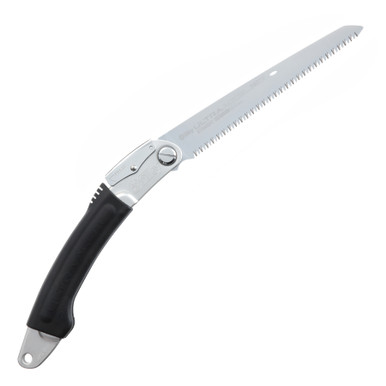
Most ultralight backpackers settle for tiny pocket saws with six-inch blades to save weight, only to spend twenty frustrating minutes gnawing through an arm-thick log. The Ultra Accel 240 flips that compromise on its head. By pairing a generous 240mm blade with a rigid aluminum frame, this folder gives you the stroke length required to buck serious firewood without demanding the dedicated pack space or awkward carry of a traditional buck saw. While Silky offers curved variants for faster overhead and green-wood cutting, this straight-blade iteration favors deliberate control and versatility. It excels at controlled, flat cuts on deadfall, making it just as capable for camp craft and shelter notching as it is for feeding a solo wood stove. It sits at number five on our list because it crosses the boundary of true minimalist gear, trading a few extra ounces of pack weight for massive returns in cutting efficiency.
Who It Is For
This saw targets backpackers who prioritize fire as a functional tool rather than an occasional luxury. If you travel in shoulder seasons, rely on a titanium wood stove inside a hot tent, or hike through blowdown-prone wilderness where trail maintenance is nonexistent, tiny folding saws fall short. The extended blade length allows you to comfortably tackle four-to-six-inch deadfall that would exhaust smaller blades. It is designed for backcountry travelers who want real camp capability and do not mind carrying a half-pound tool to get it, bridging the divide between gram-counting thru-hikers and traditional bushcrafters.
Materials and Construction
Instead of the plastic or composite handles typical of pocket saws, the chassis uses lightweight cast aluminum wrapped in a grippy, textured rubber overmold. This gives the handle exceptional torsional rigidity, preventing the flex that often binds folding saws mid-cut. The blade is stamped from premium Japanese carbon steel and treated with a hard chrome plating to resist sap and rust. Silky uses impulse-hardened, non-set teeth with four cutting angles along the blade. The lock mechanism relies on a sturdy steel spring plate that engages the blade tang with a loud, confidence-inspiring click into one of two working angles.
Real-World Performance
On the trail, the difference between a 170mm blade and this 240mm profile is immediately obvious. Each pull stroke draws significantly more teeth through the kerf, letting you clean-cut dried pine and seasoned birch rounds with minimal physical effort. Because Japanese saws cut exclusively on the pull, the blade can afford to be relatively thin, slicing narrow paths without wasting energy turning wood into excessive sawdust. The straight blade profile tracks exceptionally true, avoiding the diving tendency sometimes experienced with aggressively curved blades when bucking logs resting flat on the ground. The secondary upward locking angle is particularly useful for ground-level cuts where knuckles usually strike dirt.
Weight and Packability
At roughly ten and a half ounces, this is not a piece of gear for strict sub-eight-pound base weights. It occupies roughly a foot of vertical space when closed, meaning it will not slide into an interior hip-belt pocket. However, it fits neatly into exterior pack side pockets alongside a water bottle or slides down between your internal pack liner and frame sheet. For winter trips where gathering dead standing fuel is critical to group warmth, the weight penalty over an ultralight four-ounce pocket saw easily justifies itself within the first ten minutes of gathering evening kindling.
Durability and Field Care
The build quality is exceptional, but the tool demands proper technique. Thin Japanese steel blades are hard and brittle; forcing the saw on the push stroke or twisting it inside a pinched kerf can bend or snap the metal near the pivot. Letting the weight of your arm do the pulling preserves tooth geometry and keeps the blade straight for years. The impulse-hardened teeth hold an edge far longer than standard stamped steel, but they cannot be filed in the field with a common triangular file. When the blade eventually dulls after seasons of hard use, replacement blades drop in via a simple flathead pivot bolt.
Comparable Alternatives
Within the same brand family, the Gomboy 240 offers the same cutting length with a slightly lighter rubber-coated steel handle, but it lacks the rigid aluminum backbone of this model and feels more prone to flex under load. If weight savings remain your top priority, the smaller Silky Pocketboy 170 shaves over four ounces while sacrificing stroke reach on thicker logs. On the modular side, folding bow saws like the Agawa BOREAL21 clear wood faster on both push and pull strokes, but they add bulk, mechanical complexity, and substantial weight compared to this simple, self-contained folder.
How we chose
We compared widely available ultralight backpacking saws using maker specifications, retailer listings and published reviews, then ranked 10 against the same criteria below. This is desk research unless a pick is marked field tested. Rankings are editorial. No brand pays for placement, and affiliate links never move a pick up or down.
- Edge geometry and steel
- Grind, stock thickness, and how the steel behaves between sharpenings in real camp tasks.
- Load carriage
- How the suspension handles the loads the pack is actually rated for, over long days.
- Real-world durability
- How the material, stitching, or steel holds up after a season of hard use — not how it looks new.
- Performance in bad conditions
- Wind, rain, cold, and grit are the test. Anything that only works on a nice day gets marked down.
- Weight and packability
- Every ounce has to earn its place in the pack, but not at the cost of something that fails in the field.
- Ease of use
- Setup, adjustment, and maintenance with cold hands, in the dark, without the manual.
Ultra Accel 240 Straight — frequently asked questions
- Is the Ultra Accel 240 Straight worth it?
- We rank it #5 in Ultralight Backpacking Saws. Best longer-blade folder
- What is the Ultra Accel 240 Straight best for?
- Best for winter hot-tent firewood prep, shoulder-season group campfires, backcountry blowdown trail clearing and bushcraft shelter notching. Standouts: full 240mm stroke length clears wrist-to-thigh-thick deadfall quickly and rigid cast-aluminum frame eliminates handle flex during heavy draws.
- What are the downsides of the Ultra Accel 240 Straight?
- Carries a noticeable weight penalty over sub-six-ounce pocket saws, Thin pull-cut blade will bend or snap if bound on an aggressive push and Impulse-hardened teeth require factory blade replacement rather than filing.
- What are the key specs of the Ultra Accel 240 Straight?
- Blade Length: 240 mm (9.4 inches) · Cutting Action: Japanese pull-stroke · Chassis Material: Die-cast aluminum with rubberized overmold · Locking Mechanism: Two-position spring-loaded thumb lock · Tooth Profile: Mirai-Me impulse-hardened non-set teeth
- Who It Is For?
- This saw targets backpackers who prioritize fire as a functional tool rather than an occasional luxury. If you travel in shoulder seasons, rely on a titanium wood stove inside a hot tent, or hike through blowdown-prone wilderness where trail maintenance is nonexistent, tiny folding saws fall short.
- Materials and Construction — what should I know about the Ultra Accel 240 Straight?
- Instead of the plastic or composite handles typical of pocket saws, the chassis uses lightweight cast aluminum wrapped in a grippy, textured rubber overmold. This gives the handle exceptional torsional rigidity, preventing the flex that often binds folding saws mid-cut.
Compare side by side
Put the Ultra Accel 240 Straight against any other pick on this list — specs, price, pros, cons and reader ratings.