


Reader rating
Rate it and you move it. Community ratings re-rank this product inside its Top 10 list.
Expert-picked, reader-ranked. Our editors choose the products and the launch order; member star ratings move picks up or down over time.
Best multipurpose
Pros
- Incredible cutting speed through wrist-thick hardwood and soft conifer
- Impulse-hardened teeth maintain an aggressive edge through seasons of hard use
- Two-position locking handle allows flush cutting against logs and ground
- Textured rubber grip provides dependable traction in freezing, wet conditions
Cons
- Thin carbon blade will bend or snap if forced aggressively on the push stroke
- Impulse-hardened tooth geometry cannot be sharpened with standard hand files
- Roughly eight ounces is heavy for strict ultralight minimalist itineraries
Best uses
- Cold weather backcountry trips
- Processing campfire deadfall
- Clearing trail blowdowns
- Primitive shelter construction
Specifications
- Blade Length
- 210 mm (8.3 inches)
- Tooth Pitch
- 10 teeth per 30 mm (Medium)
- Action
- Japanese pull stroke
- Blade Steel
- SK4 high-carbon steel, chrome plated
- Handle
- Rubber-padded aluminum chassis
- Locking Positions
- Two-position spring lock
Pricing
We don't publish a price we haven't verified. The retailer links below open the live listing for this exact model.
Best for
Cold weather backcountry trips, Processing campfire deadfall, Clearing trail blowdowns, Primitive shelter construction
Where to buy the Gomboy Professional 210 Medium Teeth
We don't have a direct Amazon listing on file yet — this opens an Amazon search for the exact make and model.
Some links are affiliate links. Buying through them supports our testing at no extra cost to you.
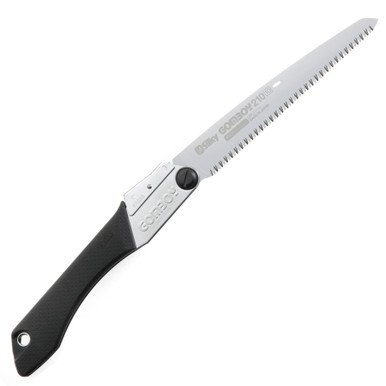
The sweet spot between packable folding saw and full-fledged camp wood processor is notoriously narrow, but this tool hits it with precision. It sits right at the threshold where weight-conscious backpackers stop debating whether to bring a cutting tool at all. While strict ounce-counters might raise an eyebrow at carrying a steel folder, anyone who relies on campfire heat or regular trail maintenance quickly realizes why Japanese pull saws dominate experienced backcountry kits. Silky builds the platform around premium Japanese high-carbon steel, employing an impulse-hardening treatment on the teeth that keeps them functional through seasons of deadfall processing. The pull-stroke design allows for a remarkably thin blade kerf, meaning less wasted muscle energy and faster cuts through seasoned oak, birch, and pitch-heavy pine alike. Sitting comfortably as our premier all-around pick, this size foregoes extreme ultralight minimalism in exchange for genuine camp utility. It slips into an exterior pack sleeve without snagging, balances naturally in cold or gloved hands, and cuts cleanly enough to handle both routine firewood bucking and shelter construction without missing a beat.
Target User and Intent
This tool is aimed squarely at backpackers who actually burn wood rather than rely solely on canister stoves, as well as hunters and trail runners who need to clear unexpected blowdowns. If your trip style revolves around sub-eight-pound base weights and eating cold-soaked oats, you can leave it at home. However, for shoulder-season outings, wet climates where dry fuel sits beneath outer bark, and multi-day group trips where a campfire boosts morale, it is an indispensable workhorse. It bridges the gap between pocket-sized novelties that struggle on four-inch logs and bulky bow saws that refuse to fit inside a streamlined pack.
Steel and Tooth Geometry
The foundation of the cutting action is Japanese SK4 carbon steel coated in hard chrome to ward off rust and tree resin. Silky uses a non-set tooth profile with four distinct cutting angles, creating razor-sharp chisel edges that shave wood out of the cut rather than tearing fibers apart. The teeth undergo localized impulse hardening, leaving the tooth tips extremely hard while preserving ductile flexibility in the spine of the blade. The trade-off is field maintenance: once these teeth eventually dull after years of heavy use, you cannot touch them up with a standard saw file; you simply replace the blade.
Real-World Cutting Dynamics
Operating a Japanese pull saw requires retraining muscle memory if you are accustomed to Western utility saws. The cutting stroke occurs strictly as you draw the handle toward your chest. The forward stroke should be feather-light, merely resetting the teeth in the kerf. When operated properly, the saw glides through wrist-thick deadwood in half a dozen strokes. Attempting to force the blade forward or torquing it sideways while stuck in green wood will bow or permanently kink the thin steel. Treat the pull stroke with firm authority and the push stroke with zero pressure, and it will outcut traditional camp saws twice its size.
Weight and Pack Integration
Weighing roughly eight and a half ounces, this model carries enough heft that you will feel it if you are counting every gram, but it pays for that mass the first time you need to process an evening's worth of fuel. Fused into a rigid aluminum chassis, the tool folds completely into itself, hiding the teeth inside the handle channel to protect pack liners from abrasion. The overall folded length slips vertically into side water bottle pockets alongside trekking poles, secured with a single compression strap. It deploys instantly without thumb screws, wing nuts, or loose tensioning parts to drop into the leaf litter.
Durability and Field Care
The textured rubberized grip over aluminum absorbs shock well and provides reliable purchase when your hands are wet or caked in sap. The mechanical lock snaps cleanly into two open angles, with the second angle tilting the blade slightly upward for easier flush cuts against standing trunks or low ground. Durability is exceptional on clean wood, but dirt and embedded grit will chew through the edge quickly. Pitch accumulation can gum up the kerf on resinous evergreens, requiring an occasional wipe with rubbing alcohol or a camp solvent to restore frictionless cutting.
Market Alternatives and Trade-Offs
The most common comparison in this price bracket is the classic Bahco Laplander. The Bahco features softer Swedish steel with standard set teeth that cut in both directions, making it more forgiving of bad technique and clumsy camp mates who push too hard. However, the Bahco cuts significantly slower and leaves a rougher, ragged kerf. Step down to a smaller 170mm pocket saw, and you shed two ounces but lose the stroke length required to efficiently drop wrist-thick branches. Step up to a larger 240mm or 270mm model, and packability suffers. This 210mm medium-tooth configuration remains the practical benchmark for general wilderness travel.
How we chose
We compared widely available ultralight backpacking saws using maker specifications, retailer listings and published reviews, then ranked 10 against the same criteria below. This is desk research unless a pick is marked field tested. Rankings are editorial. No brand pays for placement, and affiliate links never move a pick up or down.
- Edge geometry and steel
- Grind, stock thickness, and how the steel behaves between sharpenings in real camp tasks.
- Load carriage
- How the suspension handles the loads the pack is actually rated for, over long days.
- Real-world durability
- How the material, stitching, or steel holds up after a season of hard use — not how it looks new.
- Performance in bad conditions
- Wind, rain, cold, and grit are the test. Anything that only works on a nice day gets marked down.
- Weight and packability
- Every ounce has to earn its place in the pack, but not at the cost of something that fails in the field.
- Ease of use
- Setup, adjustment, and maintenance with cold hands, in the dark, without the manual.
Gomboy Professional 210 Medium Teeth — frequently asked questions
- Is the Gomboy Professional 210 Medium Teeth worth it?
- We rank it #4 in Ultralight Backpacking Saws. Best multipurpose
- What is the Gomboy Professional 210 Medium Teeth best for?
- Best for cold weather backcountry trips, processing campfire deadfall, clearing trail blowdowns and primitive shelter construction. Standouts: incredible cutting speed through wrist-thick hardwood and soft conifer and impulse-hardened teeth maintain an aggressive edge through seasons of hard use.
- What are the downsides of the Gomboy Professional 210 Medium Teeth?
- Thin carbon blade will bend or snap if forced aggressively on the push stroke, Impulse-hardened tooth geometry cannot be sharpened with standard hand files and Roughly eight ounces is heavy for strict ultralight minimalist itineraries.
- What are the key specs of the Gomboy Professional 210 Medium Teeth?
- Blade Length: 210 mm (8.3 inches) · Tooth Pitch: 10 teeth per 30 mm (Medium) · Action: Japanese pull stroke · Blade Steel: SK4 high-carbon steel, chrome plated · Handle: Rubber-padded aluminum chassis
- Target User and Intent — what should I know about the Gomboy Professional 210 Medium Teeth?
- This tool is aimed squarely at backpackers who actually burn wood rather than rely solely on canister stoves, as well as hunters and trail runners who need to clear unexpected blowdowns. If your trip style revolves around sub-eight-pound base weights and eating cold-soaked oats, you can leave it at home.
- Steel and Tooth Geometry — what should I know about the Gomboy Professional 210 Medium Teeth?
- The foundation of the cutting action is Japanese SK4 carbon steel coated in hard chrome to ward off rust and tree resin. Silky uses a non-set tooth profile with four distinct cutting angles, creating razor-sharp chisel edges that shave wood out of the cut rather than tearing fibers apart.
Compare side by side
Put the Gomboy Professional 210 Medium Teeth against any other pick on this list — specs, price, pros, cons and reader ratings.