



#2 on this list
Pivot Solo
Zpacks
The Zpacks Pivot Solo addresses one of the persistent complaints about ultralight solo shelters: cramped headroom and footboxes. Geared directly toward solo hikers who refuse to carry two-person weight just to avoid touching damp canopy walls, this shelter uses an asymmetrical pole orientation to maximize interior volume. For tall backpackers using thick inflatable sleeping pads, the architecture provides reliable verticality at the ends of the living compartment. Constructed from DCF, the Pivot Solo avoids the sag and water retention common to nylon silpolys when wet. Reviewers frequently single out its weather resistance, noting that the tensioned ridge design sheds wind smoothly when properly guyed out. At approximately one pound, it sits at the absolute cutting edge of single-person shelter weights without resorting to a bivy-style coffin profile. Setting up the Pivot Solo requires learning a non-traditional geometry. Trekking pole angles and corner tensioning must be dialed in carefully to prevent slack fabric panels, making site selection and stake placement critical on rocky or loose surfaces. Furthermore, like all single-wall shelters, venting must remain open during damp evenings to prevent condensation from transferring onto your sleeping bag. **Highlights** - Minimalist trail weight of roughly 1 pound 0.1 ounces - Asymmetrical geometry provides exceptional head and foot clearance for solo hikers - Fully waterproof, non-sagging Dyneema Composite Fabric construction - Integrated vestibule offers sheltered gear storage - Deep bathtub floor guards against ground splashback **Watch-outs** - Asymmetric pitch takes practice compared to classic A-frame shelters - Premium pricing for a dedicated single-person shelter - DCF requires deliberate rolling rather than tight, careless stuffing
- Price
- Check current price
- Reader rating
- No reader votes yet
- How we assessed it
- Specification researched
#3 on this list
X-Mid 1
Durston
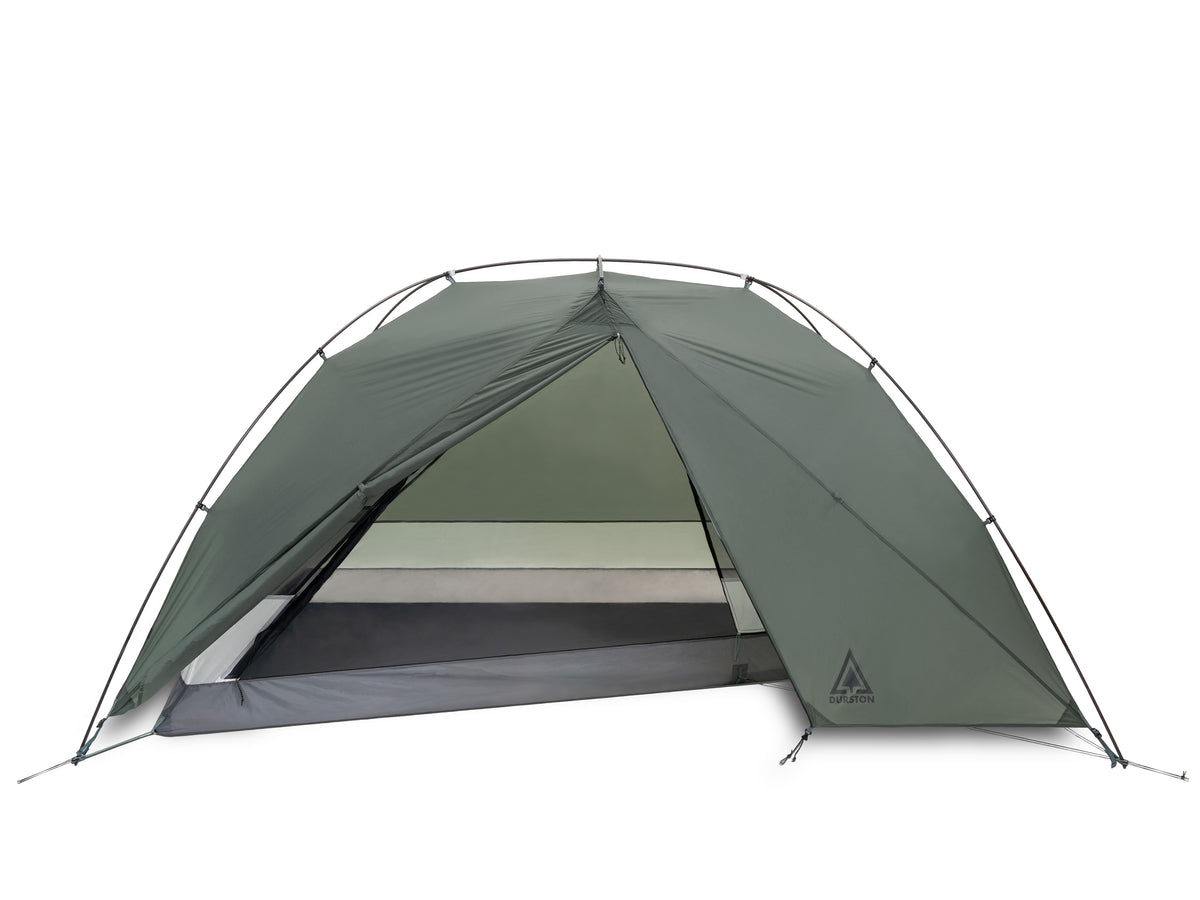
The Durston X-Mid 1 has fundamentally reshaped the budget-to-performance calculation in the ultralight tent market. Designed by an experienced long-distance hiker, the shelter uses an offset, twin-pole layout that creates a completely rectangular base. This design bypasses the fussy geometry of traditional trekking-pole tents, allowing hikers to stake out four base corners first and insert poles without touching a single guyline. Performance in wind and rain is exceptional due to the use of polyester fabric rather than nylon. Silpoly absorbs virtually no water, meaning it maintains pitch tension throughout cold, rainy nights and dries far faster on the trail. Because the X-Mid 1 is a true double-wall shelter, internal condensation stays entirely on the outer fly, keeping your sleeping quilt and gear protected from damp walls inside the mesh inner. At a modest packed size of roughly 13 by 6.5 inches and priced well below bespoke DCF shelters, it is the premier choice for hikers seeking low weight without fragile fabrics or steep price tags. The trade-off is pack weight compared to cuben fiber options; while light for a double-wall tent, it remains heavier than single-wall alternatives. **Highlights** - Straightforward four-stake rectangular setup with no required guylines for basic pitch - True double-wall construction isolates condensation completely from the living space - Polyester rainfly resists sagging and water absorption in heavy rains - Offset pole structure creates vertical side walls and ample headroom - Highly accessible price point compared to Dyneema alternatives **Watch-outs** - Heavier than comparable single-wall DCF solo shelters - Requires two trekking poles for setup despite being a one-person tent - Larger footprint requires a moderately clear, flat pitch area
- Price
- Check current price
- Reader rating
- No reader votes yet
- How we assessed it
- Specification researched
Specs side by side
| Spec | Pivot Solo | X-Mid 1 |
|---|---|---|
| Packed Weight | 1 lb 0.1 oz (456 g) | — |
| Shelter Design | Single-wall, non-freestanding | — |
| Canopy Fabric | Dyneema Composite Fabric (DCF) | Silpoly (silicone-coated polyester) |
| Support Mechanism | Trekking pole supported | — |
| Standard Capacity | 1 person | — |
| MSRP | Approximately $649 | — |
| Capacity | — | 1 person |
| Packed Size | — | 13 x 6.5 x 6.5 in |
| Shelter Style | — | Double-wall trekking pole tent |
| Poles Required | — | 2 trekking poles |
| Approximate Price | — | $269 |
What our reviewers liked and didn't
Pivot Solo
- Featherweight construction at approximately one pound
- Asymmetrical profile provides genuine clearance for tall sleepers
- DCF canopy eliminates midnight fabric sag in wet weather
- Fully factory-taped seams require no manual sealing
- Substantial financial investment for a dedicated solo shelter
- Asymmetrical geometry demands practice to pitch tautly
- Requires careful rolling rather than forceful stuffing to preserve fabric
X-Mid 1
- Simple four-corner pitch requires no immediate guylines to establish structure
- Polyester fabric resists water absorption and will not sag in sustained rain
- Double-wall build isolates interior living space completely from fly condensation
- Offset dual-pole design generates generous headroom and steep side walls
- Outstanding price-to-performance ratio compared to expensive Dyneema shelters
- Requires two trekking poles to set up a one-person shelter
- Heavier and bulkier than minimalist single-wall DCF shelters
- Relatively large fly footprint requires clear ground for a proper pitch
Prices change constantly — the figure shown is the last verified catalog price, and the buy buttons always go to the current listing.