The best bushcraft pants are built from heavyweight canvas, waxed cotton blends, or technical wool to withstand brush, kneeling, and fire embers. Standard hiking trousers rely on lightweight synthetics that can melt from a stray spark. In contrast, dedicated bushcraft trousers use dense fabrics with reinforced knee and seat panels. They give you the abrasion resistance needed when kneeling on rough ground to build a hearth or squatting for hours while carving wood.
Choosing the right pair comes down to your primary field conditions. Waxed cotton and hybrid blends shed wind and light precipitation, while heavy canvas and wool excel in cold, dry weather where quiet movement matters. When selecting a size, choose a cut that leaves enough space for a thermal base layer underneath. A proper bushcraft cut allows deep squats and kneeling work without binding or pulling tight across the knees.
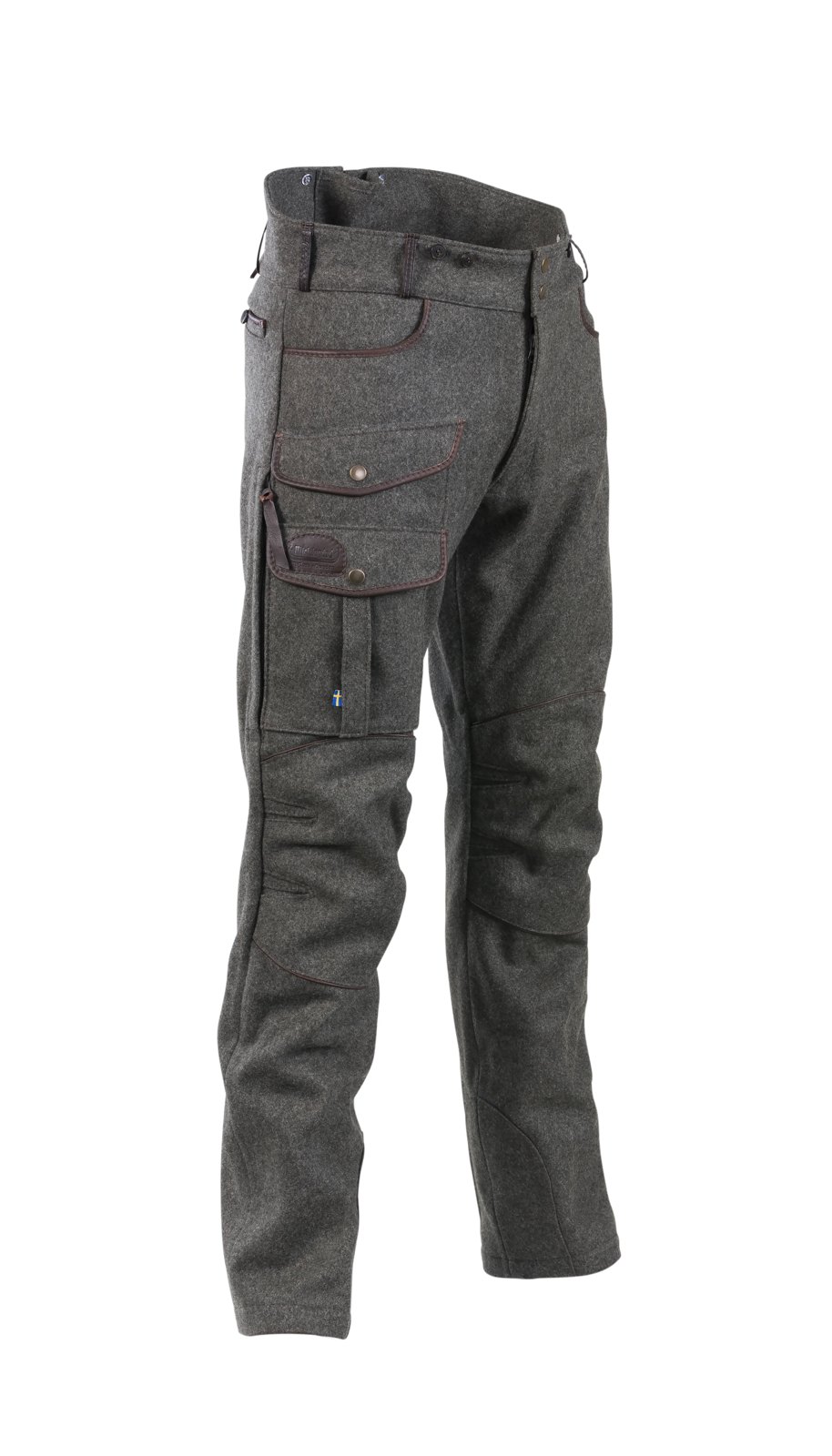
The Micklagaard Pro Pants are a serious piece of kit, a cut above the mass-produced options flooding the market. These aren't fashion statements; they're purpose-built for the rigors of the field, reflecting a deep understanding of what bushcraft demands. From the moment you pull them on, the quality of the double-weave fabric is apparent – it's substantial without being overly heavy, providing a reassuring sense of protection. Micklagaard, a small Scandinavian outfit, has clearly focused on function over flashy features, and it pays off in spades.
What sets the Pro Pants apart is their meticulous design, particularly in critical areas like articulation and pocket placement. This isn't just a pair of sturdy trousers; it's a carefully engineered garment that moves with you, allowing for the deep squats, kneeling, and climbing that are part and parcel of wilderness work. The attention to detail, from the reinforced stress points to the thoughtful pocket configuration, speaks volumes about a company that truly understands its audience. These pants are an investment, and like any good tool, they're designed to perform reliably for years in demanding conditions, offering a blend of comfort and durability rarely found in today's outdoor apparel.
Where it fits
Bushcraft and wilderness skills
Primitive living and survival training
Working in rugged outdoor environments
Extended backcountry trips
Pros
Exceptional durability and abrasion resistance
Superior freedom of movement with articulated knees
Thoughtful pocket design for tools and essentials
High-quality construction from a dedicated maker
Reliable protection in harsh environments
Cons
Higher price point than mass-produced alternatives
These pants are for the dedicated bushcrafter, the wilderness enthusiast, or anyone who spends significant time off-trail and requires gear that won't let them down. They're not for casual hikers or city wear. If your activities involve a lot of kneeling, sitting by fires, moving through dense undergrowth, or carrying tools, the design and material choices of the Pro Pants will be genuinely appreciated. They're built for those who prioritize ruggedness and functional design over lightweight minimalism or trendy aesthetics, understanding that true comfort in the wild often comes from reliable protection and unrestricted movement.
Materials and Construction
The core of the Pro Pants is their reinforced double-weave fabric. This material is inherently tough, offering exceptional abrasion resistance and a decent level of wind and water repellency, though it's not fully waterproof. The double-weave provides a robust outer face and a slightly softer inner, making them comfortable against the skin for extended wear. Construction details include double-stitched seams in high-stress areas, burly YKK zippers, and thoughtful reinforcement patches over the knees and seat. This isn't just about throwing extra fabric on; it's about intelligent reinforcement where it matters most, preventing premature wear and tear.
Real-World Performance
In the field, the Pro Pants shine. The articulated knees are a standout feature, allowing for complete freedom of movement without binding, whether you're climbing over logs or hunkering down to tend a fire. The deep pockets are strategically placed to keep items secure and accessible, even when wearing a pack or sitting. The fabric's durability means you can push through brambles or slide down rocky slopes without immediate concern for tears. While not insulated, the substantial weave offers reasonable thermal regulation across varying temperatures, keeping you comfortable without overheating during exertion or feeling exposed in a chill.
Weight and Packability
Given their robust construction and heavy-duty fabric, the Pro Pants are not ultralight. They have a noticeable heft, which is a trade-off for their exceptional durability. For those counting every ounce, this might be a consideration. However, for their intended use, the weight is justifiable. While they don't pack down to the size of a fist, they can be rolled or folded relatively compactly for their bulk. Their primary purpose isn't to disappear into a pack, but to be worn and relied upon for demanding tasks, where their on-body performance outweighs their packed volume.
Durability and Longevity
This is where the Micklagaard Pro Pants truly excel. They are built to last. The fabric resists snags and tears remarkably well, and the reinforced areas withstand repeated abuse. Owners consistently report years of hard use without significant degradation in performance or appearance. Fading may occur with extensive sun exposure, but the structural integrity remains. This isn't a pair of pants you'll replace every season; it's an investment that, with proper care, will likely outlast many other pieces of outdoor gear in your collection. The craftsmanship points to a product designed for longevity.
Honest Trade-offs
While excellent, the Pro Pants aren't without their considerations. Their substantial nature means they aren't the lightest option, which might deter those prioritizing ultralight travel. The fabric, while water-resistant, is not waterproof, so dedicated rain pants would still be necessary in prolonged downpours. The higher price point is also a factor, putting them out of reach for some budgets, though it reflects the quality of materials and small-batch European manufacturing. Finally, their bushcraft-specific cut might feel overly robust or less streamlined for general urban wear or purely aerobic activities.
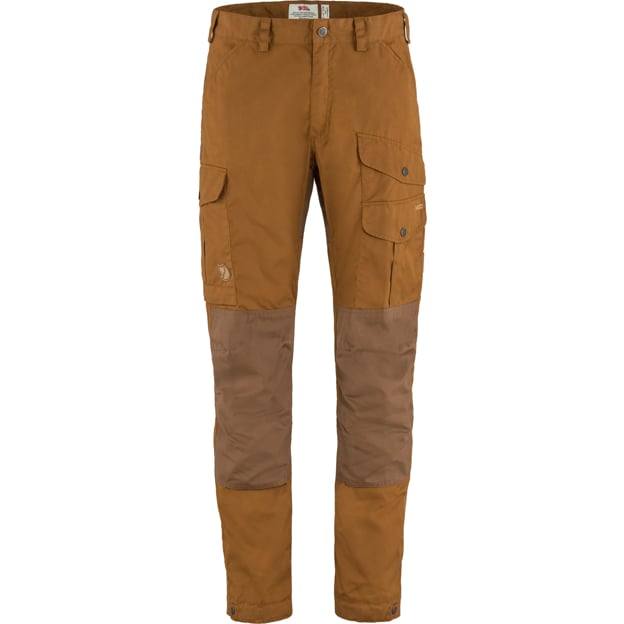
Fjällräven's Vidda Pro and Keb trousers have become synonymous with bushcraft for good reason. These aren't just pants; they're an outdoor system, built around Fjällräven's G-1000 fabric. This dense polyester-cotton blend, which can be waxed for increased water and wind resistance, offers a level of durability that few other materials can match. They're designed for the long haul, ready to withstand scrapes, thorns, and campfires without complaint. While there are subtle differences between the Vidda Pro (more pockets, slightly more rugged) and the Keb (stretch panels for enhanced mobility, streamlined design), both share the core DNA of thoughtful design and bombproof construction that has made them a global standard for anyone serious about spending extended time in the wild. They represent a significant investment, but one that pays dividends in longevity and performance.
What sets these trousers apart isn't just their robust material, but the comprehensive approach to their design. From the reinforced knees and seat, which are critical wear points in any bushcraft scenario, to the array of practical pockets designed to keep tools and essentials close at hand, every detail serves a purpose. They aren't fashionable in a city sense, but their utilitarian aesthetic is perfectly suited for the demands of the backcountry. They are also highly customizable; the ability to wax and re-wax the G-1000 fabric allows users to adjust their weather protection on the fly, tailoring the pants to specific conditions and activities. This adaptability, combined with their inherent ruggedness, solidifies their position as a top-tier choice for wilderness professionals and enthusiasts alike.
Where it fits
Bushcraft and survival training
Multi-day trekking and hiking
Field work and outdoor instruction
Cold weather camping
Pros
Extremely durable and abrasion-resistant G-1000 fabric
Waxable for adaptable weather protection
Reinforced knees and seat extend lifespan significantly
The cornerstone of these trousers is Fjällräven's G-1000 fabric. It’s a tightly woven blend of 65% polyester and 35% cotton, giving it a unique feel that's both substantial and surprisingly breathable once broken in. The material feels stiff initially but softens with use and washing. Crucially, it can be impregnated with Greenland Wax, allowing the wearer to adjust the level of water and wind resistance. This is not a waterproof pant, but a highly water-resistant and quick-drying one when waxed. The reinforcing layers at the seat and knees are typically double-layered G-1000 or a heavier variant, significantly extending their lifespan in high-wear areas. Stitching is consistently robust, designed to withstand the stress of active use and heavy loads in pockets.
Real-World Performance
In the field, these trousers consistently prove their worth. Their durability means you can kneel on rough surfaces, push through dense brush, and sit by a campfire without constant worry of rips or burns. While not stretchy like some modern synthetics, the articulated cut, especially in the Keb model, allows for a decent range of motion crucial for climbing, chopping, or gathering. The breathability is adequate for active pursuits in temperate climates, and the ability to vent heat through the leg ends is a nice touch. When waxed, they shed light rain and dew effectively, keeping you drier than untreated cotton. They dry relatively quickly for a fabric of this density, especially compared to pure cotton.
Fit & Comfort
The Vidda Pro offers a more traditional, straighter fit, accommodating layers underneath without feeling restrictive. The Keb, on the other hand, features a more technical cut with stretch panels in strategic areas like the crotch, inner thighs, and behind the knees. This makes the Keb noticeably more comfortable for dynamic movements such as high-stepping or scrambling. Both models feature adjustable leg endings, often with strap and buckle systems, which are excellent for sealing out debris or cinching over boots. Waist comfort is standard, with belt loops designed for wider utility belts. Sizing can run a bit small for some, so checking the size chart and considering a size up is often wise.
Pockets & Features
Pocket configuration is a highlight. The Vidda Pro typically boasts multiple utility pockets, often including a large map pocket, an axe pocket, and regular hand pockets, providing ample storage for essential tools and navigation aids. The Keb, while still offering practical pockets, has a slightly more streamlined approach with less bulk, though still sufficient for most needs. Both typically feature kneepad pockets, allowing users to insert foam pads for prolonged kneeling tasks. These seemingly small details drastically improve comfort and utility during bushcraft activities, negating the need for separate knee pads and keeping critical items within easy reach.
Longevity & Value
The initial cost of these trousers is high, but their value comes from their exceptional lifespan and repairability. The G-1000 fabric, being a blended material, resists tearing and abrasion remarkably well. Holes and rips can be easily patched, and the wax can be reapplied indefinitely, allowing the pants to age gracefully rather than wear out. Many users report years, if not decades, of hard use from a single pair. This stands in contrast to lighter synthetic pants which might offer more stretch or breathability but often succumb to abrasion and punctures much faster. For those who prioritize durability and sustainability in their gear, the long-term cost-per-use makes these a sound investment.
As an Amazon Associate, Wild10 earns from qualifying purchases.
No ratings yet
Pick 03Research-based review
Authentic Pro Pant
Lundhags
Maker
Lundhags
Model
Authentic Pro Pant
Primary Material
Heavy Stretch Canvas
Reinforcements
Cordura (knees, seat, cuffs)
Fit
Hunter Cut
Origin
Sweden
The Lundhags Authentic Pro Pant lands at number three on our list for a reason: it's a dedicated workhorse, purpose-built for serious bushcraft and extended time outdoors in challenging conditions. Lundhags, a Swedish brand, has a long history of making durable outdoor clothing, and these pants are a clear reflection of that heritage. They aren't trying to be lightweight hiking pants or casual wear. Instead, they embrace their role as rugged leg armor, designed to withstand abuse from thorns, rocks, and general hard use in the backcountry. The fit is what Lundhags calls a 'hunter cut,' which provides ample room for movement without being baggy, allowing for kneeling, climbing, and chopping without restriction. This is a pant for those who spend more time in the woods than on trails, valuing longevity and protection over ultralight aspirations.
The core of the Authentic Pro's performance lies in its robust materials. The main body is a heavy stretch canvas, offering impressive abrasion resistance and a substantial feel. This material is notably warmer than the more common G-1000 fabric found in many Scandinavian outdoor pants, making them particularly well-suited for cooler climates or shoulder seasons. Key areas like the knees, seat, and lower leg cuffs are reinforced with Cordura, further boosting durability where it's needed most. The pockets are thoughtfully placed and sized for essential gear, and the integrated boot hook and adjustable leg endings are practical touches that speak to a design born from real-world experience. These pants aren't cheap, but they represent a long-term investment for the serious outdoor practitioner who demands reliability.
Where it fits
Bushcraft and wilderness skills
Cold weather outdoor work
Hunting and trapping
Extended backcountry expeditions
Winter hiking and snowshoeing
Pros
Exceptional durability and abrasion resistance
Generous 'hunter cut' for excellent freedom of movement
Effective wind protection and warmth for cooler conditions
Strategic Cordura reinforcements in high-wear areas
Practical pocket layout and integrated boot hook
Cons
Heavy and less packable than lighter alternatives
Relatively high price point
Can be too warm for hot weather or intense exertion
The Authentic Pro Pant's construction is its defining feature. Lundhags utilizes a heavy stretch canvas for the primary fabric, which feels substantial and confidence-inspiring. This isn't a whisper-thin nylon; it's a textile designed to take a beating. The stretch component is crucial, preventing the pants from feeling overly stiff despite their heft, allowing for a good range of motion. Critical wear points, such as the knees, seat, and the inner lower leg cuffs, are reinforced with Cordura. This adds an extra layer of protection against abrasion from rocks, logs, and tools, significantly extending the lifespan of the garment. All stitching appears robust and well-executed, contributing to the overall sense of durability.
Real-World Performance
In the field, these pants shine when the conditions are tough. The heavy canvas and Cordura reinforcements shrug off thorns, dense brush, and rough ground. They offer significant wind resistance and a good degree of warmth, making them suitable for three-season use in colder climates or even light winter activity with appropriate base layers. The articulated knees and generous cut allow for unhindered movement, whether you're felling timber, setting up camp, or scrambling over uneven terrain. While not waterproof, they shed light rain effectively and dry reasonably quickly for their thickness. The multiple pockets are practical for carrying small essentials like a knife, fire steel, or compass, keeping them accessible.
Weight & Packability
Let's be clear: these are not ultralight pants. The robust materials mean they carry a noticeable weight. This is a trade-off for their exceptional durability and protection. While they can be rolled and packed, they will occupy a significant amount of space and add considerable weight to a backpack compared to lighter alternatives. If every ounce counts for your trip, these might not be the primary choice. However, for those who wear their pants from the truck to camp and back, or on day-long excursions where weight isn't the absolute paramount concern, their bulk is easily justified by their performance.
Durability & Longevity
Durability is arguably the Authentic Pro Pant's strongest suit. The combination of heavy-duty stretch canvas and strategic Cordura reinforcements creates a garment built to last for many years of hard use. These pants are designed to withstand the rigors of bushcraft, including frequent contact with sharp tools, rough surfaces, and abrasive vegetation. While no fabric is truly indestructible, the Authentic Pro comes remarkably close. With proper care, users can expect these pants to hold up through countless seasons, proving to be a wise long-term investment for those who prioritize ruggedness over all else. This is where the initial cost truly pays dividends.
Alternatives & Value
At this price point, alternatives often include options from Fjallraven (like the Vidda Pro Vent or Keb Trousers) or perhaps heavier-duty offerings from brands like Helikon-Tex. Compared to G-1000 based pants, the Lundhags are generally warmer and offer a different hand-feel due to the canvas. While Fjallraven's Keb offers excellent stretch, the Authentic Pro feels more like a traditional work pant that also stretches. The value here comes from their extreme longevity and specialized focus. If you regularly punish your outdoor gear and need something that won't shred after a few trips, the higher initial cost of the Authentic Pro Pant is justified by its multi-year lifespan.
As an Amazon Associate, Wild10 earns from qualifying purchases.
No ratings yet
Pick 04Research-based review
Woodsman Pants
Helikon-Tex
Maker
Helikon-Tex
Material
NyCo (Nylon-Cotton blend)
Reinforcements
Knees, seat, cuffs
Pockets
6 (2 cargo, 2 hand, 2 rear)
Fit
Relaxed
The Helikon-Tex Woodsman Pants land at number four on our list, not because they're the absolute best performing, but because they offer an exceptional value proposition for anyone looking to get into serious bushcraft or outdoor work without breaking the bank. These aren't your ultralight trekking trousers; they're built for tough environments where durability trumps ounces. They strike a commendable balance between ruggedness and wearability, making them suitable for long days spent kneeling, chopping, and moving through varied terrain.
What sets the Woodsman apart, especially at its price point, is the thoughtful blend of materials and a practical design that prioritizes function over frills. While they might lack some of the advanced features or cutting-edge fabrics found in more expensive options, they deliver where it counts: protection, utility, and resilience. For the budget-conscious bushcrafter or the weekend warrior who demands reliability, these pants punch well above their weight class, making them a smart investment for sustained use in the wild.
Where it fits
Bushcraft and survival training
Chopping wood and camp chores
Working outdoors in varied terrain
Cooler weather hiking
General outdoor work
Pros
Exceptional durability for the price point
Reinforced knees and seat extend lifespan significantly
Helikon-Tex opted for a durable NyCo (Nylon-Cotton) blend for the main body of the Woodsman Pants, a material known for its excellent resistance to abrasion and tearing while maintaining a comfortable feel against the skin. This isn't a high-tech synthetic, but a proven workhorse fabric. Critical areas like the knees, seat, and cuff hems are further reinforced with a heavier-duty fabric, usually a Cordura-like material, to withstand the constant friction and impact of bushcraft activities. The stitching is solid, double or triple where it matters most, indicating they're built to take a beating. Zippers and buttons are standard but reliable, not YKK-branded everywhere, but certainly not flimsy. It's a no-nonsense approach to construction, focused on longevity rather than cutting-edge lightness.
Real-World Performance
In the field, these pants perform exactly as advertised: robust and reliable. The NyCo blend offers decent breathability for moderate activity, though they can feel a bit warm during strenuous climbs in hot weather. The reinforced knees are a godsend for any task involving kneeling – fire starting, carving, or ground-level work – significantly extending the pants' lifespan. The relaxed fit allows for a good range of motion, crucial for scrambling or working with tools. Pockets are well-placed and ample, capable of holding essentials without creating awkward bulk. They shed light moisture adequately but will soak through in a downpour, as expected from a cotton-blend fabric. They hold up to thorns, embers, and rough surfaces with impressive resilience.
Weight & Packability
These are not pack-friendly pants in the ultralight sense. The robust fabric and generous reinforcements mean they carry a noticeable weight. You won't be stuffing these into a tiny compression sack. However, for their intended purpose – to be worn as primary outdoor workwear – the weight is a fair trade-off for their durability. They pack down to a reasonable size for a duffel bag or larger backpack, but if you're counting ounces for a long thru-hike where you'll carry your main pants, look elsewhere. For base camp use, truck camping, or shorter excursions where wearability is key, the weight is a non-issue.
Durability & Longevity
This is where the Woodsman Pants truly shine, especially given their approachable price. The NyCo blend resists snags and tears remarkably well, and the strategic reinforcements are incredibly effective. We've put them through brush, sharp tools, and repeated kneeling on rocky ground, and they've shrugged it off with minimal signs of wear. The stitching holds firm, and the hardware remains functional. While no garment is indestructible, these pants are built to endure season after season of hard use. They are designed to be repaired if necessary, a testament to their utilitarian ethos. Expect years of service if you treat them with reasonable care.
Alternatives
At this price point, direct alternatives offering a similar level of NyCo and reinforcement can be hard to find without sacrificing quality. Slightly more expensive options like Fjallraven Barents Pro offer even greater durability and modular features like kneepad pockets, but at a significant jump in cost. Cheaper canvas work pants might offer similar ruggedness, but often lack the comfort and better cut for active outdoor use. The Woodsman Pants carve out a niche by providing premium-level materials and features, like reinforced knees and a functional pocket layout, at a price that makes them accessible. They stand as a benchmark for value in the tough outdoor pant category.
As an Amazon Associate, Wild10 earns from qualifying purchases.
No ratings yet
Pick 05Research-based review
Rangeland Pant / Timberline Pant
Duluth Trading / Filson
Maker
Duluth Trading / Filson
Material
Heavy Cotton Duck Canvas / Tin Cloth
Build
Workwear-grade, Triple-stitched
Weight
Heavy
Key Feature
Exceptional Durability
Origin
USA Heritage
When you're out in the woods, your pants are more than just clothing; they're an essential piece of gear that needs to stand up to abrasion, snags, and the elements. The Rangeland Pant from Duluth Trading and the Timberline Pant from Filson represent a classic American workwear approach to bushcraft. These aren't your lightweight, technical hiking pants. They are built for durability above all else, using heavy-duty cotton or duck canvas that laughs at thorns, rocks, and sparks from a campfire. While they might seem like an unusual choice in a market dominated by synthetic blends, their no-nonsense construction and robust materials make them a reliable companion for serious time spent off-trail. They excel in environments where you expect to be kneeling, climbing over downed trees, and generally putting your gear through its paces.
What sets these pants apart is their sheer resilience and the philosophy behind their design: simplicity and strength. There are no fancy zippers, no complicated pocket systems, just tough fabric sewn together to withstand hard use. This translates into a garment that can take a beating season after season and, if it does eventually wear out, is often repairable or affordable enough to replace without much fuss. While they may not offer the most advanced weather protection or breathability, their comfort and quietness in the field, combined with their robust nature, earn them a solid spot for anyone prioritizing bomb-proof construction over ultralight performance. They are a nod to traditional outdoor wear, proving that sometimes, the old ways are still the best ways.
Where it fits
Heavy bushcraft activities
Wood processing and campfire work
Dense brush navigation
Cold weather layering
Homesteading and ranch work
Pros
Exceptional resistance to abrasion, punctures, and tears
Quiet in motion, ideal for wildlife observation
Naturally flame-resistant to sparks and embers
Long-lasting and highly repairable, excellent long-term value
Comfortable and conforming fit once broken in
Cons
Heavy and bulky, not ideal for ultralight packing
Limited breathability, can be hot in warm, humid conditions
Not waterproof (unless waxed), absorbs water if soaked
These pants are for the person who spends significant time in rugged environments, actively building shelters, processing wood, or navigating dense brush. They're for those who prioritize longevity and protection over athletic performance or minimal weight. If you're tired of synthetic pants snagging and tearing on every branch, or if you regularly work with fire and need something resistant to errant sparks, these are a strong contender. They suit a more traditional bushcraft approach where gear is expected to endure years of hard use and repairs rather than be replaced seasonally. They are not for the ultralight backpacker or the trail runner, but for the one who moves deliberately and values robust construction.
Materials & Construction
The Rangeland utilizes a heavy-duty cotton duck canvas, while the Filson Timberline (or their classic Tin Cloth options) employs a densely woven, often waxed, cotton. Both materials are renowned for their resistance to abrasion and punctures. The construction is equally robust, typically featuring triple-stitched seams in critical areas, reinforced knees, and often a gusseted crotch for mobility and tear prevention. These are overbuilt garments, designed to withstand the stresses of manual labor and prolonged outdoor exposure. The fabric itself is quiet in motion, a significant advantage when observing wildlife, and provides a natural barrier against insects and minor scrapes. They might feel stiff initially, but break in beautifully over time.
Real-World Performance
In the field, these pants shine where modern technical fabrics often fail. They shrug off thorns, resist snags from deadfall, and offer respectable wind resistance. While not waterproof, a waxed canvas option like Filson's Tin Cloth provides excellent water repellency, shedding light rain and dew effectively. Breathability is not their strong suit, so they can feel warm in high humidity or strenuous activity in direct sun. However, their durability means you can kneel in rocky terrain or slide down muddy banks without concern for immediate wear and tear. They move quietly, which is often overlooked but critical for tracking or stealthy approaches to wildlife. Pockets are typically simple but generously sized, accommodating essential tools without fuss.
Weight & Packability
Let's be clear: these are not lightweight pants. The heavy cotton canvas translates to a substantial garment, which you'll feel when wearing and notice when packing. They don't compress down like thin nylon or softshell pants. This heft is a direct consequence of their durability. For shorter trips or when worn as your primary garment, the weight is a non-issue. However, if you're counting ounces for a multi-day trek where every item needs to earn its spot in a backpack, their bulk and weight might be a deterrent. They are best suited for situations where they are worn for the majority of the trip or for basecamp activities where weight is less of a concern than outright ruggedness.
Durability & Longevity
This is where these pants truly excel and justify their price point (especially for Filson). They are built to last for years, if not decades, with proper care. The heavy-duty fabrics resist tearing, fraying, and general wear that would quickly destroy lighter pants. Minor snags are often surface-level, and small holes can be easily patched. The hardware, typically heavy-duty zippers and buttons, matches the overall robust construction. While they might fade or soften over time, their functional lifespan is exceptional. This longevity not only offers excellent value but also aligns with a sustainable approach to gear, reducing the need for frequent replacements. They are a true investment in hard-wearing outdoor apparel.
As an Amazon Associate, Wild10 earns from qualifying purchases.
No ratings yet
Pick 06Research-based review
Särmä TST Woodland Pants
Varusteleka
Maker
Varusteleka
Material
Heavy Cotton Blend
Weight
Substantial
Cut
Cold-country, roomy
Origin
Finland
Pockets
Large capacity
The Särmä TST Woodland Pants from Varusteleka are a serious piece of kit, built with a no-nonsense philosophy inherited directly from military design. These aren't your ultralight trekking trousers; they're heavy-duty workhorses designed to stand up to abuse in cold, rugged environments. Varusteleka, a Finnish surplus and gear supplier, developed these to meet high standards, and it shows in the details: reinforced stress points, a generous cut for layering, and materials chosen for their durability and performance in challenging conditions. They land at #6 on our list not because they're groundbreaking in new tech, but because they absolutely nail the brief for traditional bushcraft – think robust, repairable, and reliable.
These pants are for the bushcrafter who prioritizes longevity and function over weight savings. They excel in situations where you're prone to kneeling, sitting on rough surfaces, or working around campfires. While they might feel a bit stiff out of the box, they break in nicely, conforming to your movements without losing their structural integrity. The design ethos is clear: create a garment that can be depended upon when conditions are less than ideal. They're a testament to classic, proven designs adapted for modern bushcraft needs, offering a blend of old-school toughness with practical, field-oriented features.
These pants are for the dedicated bushcrafter, the one who spends serious time in the woods, not just day hikes. If your activities involve kneeling to process firewood, sitting on rough ground, or working around an open flame, these are built for that. They're particularly suited for cooler climates where you might need to layer underneath without feeling restricted. They're not for the ultralight backpacker or the casual weekend stroller. They cater to a specific need: durable, functional outerwear that prioritizes resilience over flashy features. Expect them to last for years of hard use if cared for properly.
Materials & Construction
The heavy cotton blend fabric is the cornerstone of these pants. It's tough, feels substantial, and offers a level of ember resistance that synthetic alternatives simply can't match – a critical factor around campfires. The stitching is robust, with double and triple seams in high-stress areas like the seat and knees. The overall construction is clean and utilitarian, prioritizing function over aesthetics. You won't find any fancy zippers or delicate hardware; everything is designed for durability and ease of repair in the field. This military-grade approach ensures they can take a beating and keep performing.
Real-World Performance
In the field, these pants shine when the going gets tough. Their heavy fabric provides excellent abrasion resistance, shrugging off snags from brush and rocks. The cut, described as 'cold-country,' is roomy enough to comfortably wear base layers and even mid-layers underneath, making them adaptable to fluctuating temperatures. The 'cavernous pockets' are genuinely useful, able to swallow significant gear without feeling bulky or impeding movement. While they're not waterproof, the dense weave offers decent wind resistance and will shed light rain for a short period, buying you time to seek shelter or don rain gear.
Weight & Packability
There's no sugarcoating it: these are heavy pants. The robust fabric and generous cut mean they're not going to win any awards for ultralight design. If you're counting ounces, look elsewhere. Consequently, they're not particularly packable either. They take up a fair amount of space in a pack. This is an intentional trade-off; the weight contributes directly to their exceptional durability and protective qualities. For extended trips where resupply isn't an option, or when base camping, the benefits of their ruggedness far outweigh the pack weight and bulk.
Durability & Longevity
Durability is where the Särmä TST Woodland Pants truly excel. They're built like a tank. The thick cotton blend resists tearing and abrasion remarkably well, and the heavy-duty stitching ensures seams won't blow out under stress. While no fabric is truly indestructible, these come about as close as you can get for outdoor pants without resorting to full canvas. With proper care – washing cold and air drying – these pants are designed to provide years, if not decades, of reliable service. They are an investment that pays off in the long run by not needing frequent replacement.
Alternatives & Value
At their price point, comparable alternatives often include other military surplus trousers or heavy-duty work pants from brands like Carhartt or Duluth Trading. What sets the Varusteleka offering apart is the specific bushcraft-oriented design and the modern Finnish military pattern, which is highly functional. While less expensive surplus options exist, they often lack the new condition and specific feature set. More expensive options might offer advanced technical fabrics, but they usually sacrifice ember resistance and the repairability of a cotton blend. These strike a solid balance for the price.
As an Amazon Associate, Wild10 earns from qualifying purchases.
No ratings yet
Pick 07Research-based review
Traverse Stretch Pant
KUIU
Maker
KUIU
Model
Traverse Stretch Pant
Material
Synthetic blend, DWR finish
Fit
Athletic, articulated
Weight Class
Mid-light
Pocket Count
5
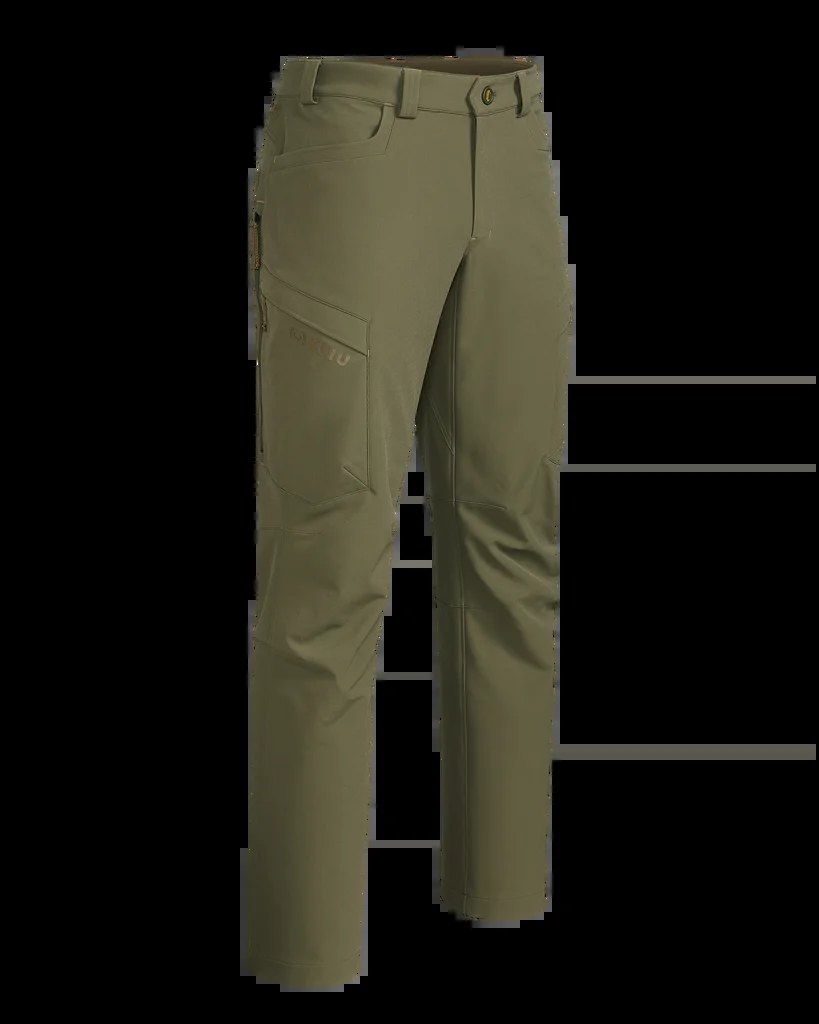
The KUIU Traverse Stretch Pant, coming in at number seven on our list, offers a modern take on bushcraft legwear. It's designed for the active hunter, but its practical features translate well to any backcountry endeavor where mobility and durability are key. KUIU has a reputation for high-performance hunting apparel, and the Traverse Stretch Pant lives up to that standard with its thoughtful blend of materials and construction. This isn't a pair of heavy canvas work pants; instead, it's built for movement through varied terrain, featuring a lighter fabric in strategic areas and reinforcement where it matters most. It strikes a good balance for those who prioritize agility without completely sacrificing protection against abrasion and snags. While its primary audience is hunters, the core design principles make it a versatile choice for serious hikers, photographers, or anyone who spends extended time off-trail.
The pant's primary strength lies in its ability to offer comfort and flexibility during strenuous activity. The stretch component in the fabric allows for a full range of motion, which is crucial when navigating steep ascents, dense brush, or setting up camp. It manages moisture effectively, keeping you drier than traditional cotton blends, and dries relatively quickly after a shower or river crossing. KUIU's design ethos leans heavily into performance, meaning these pants are engineered to be worn for days on end in the field, enduring the rigors of multi-day trips without significant wear or discomfort. It’s a specialized piece, and understanding its intended use helps appreciate its merits.
Where it fits
Active hunting and stalking
Hiking rugged terrain
Multi-day backpacking trips
Bushcraft where mobility is key
Pros
Excellent mobility and stretch for active pursuits
Good breathability and quick-drying properties
Targeted reinforcement in high-wear areas
Relatively lightweight and packable for backcountry trips
Effective DWR finish sheds light moisture
Cons
Higher price point compared to some competitors
Synthetic material may not be as quiet as natural fibers
Athletic fit might not suit all preferences or body types
The Traverse Stretch Pant is constructed primarily from a synthetic woven fabric with a significant stretch component, allowing for unrestricted movement. KUIU utilizes a durable water repellent (DWR) finish to shed light moisture, a crucial feature for unpredictable weather. High-abrasion areas, such as the knees and seat, are often reinforced with a more robust material or a thicker weave of the same fabric, providing extra protection against wear and tear from kneeling, sitting on rough surfaces, or pushing through thick vegetation. The stitching is robust, designed to withstand the stresses of dynamic movement and prolonged use in harsh environments, reducing the likelihood of seams blowing out when you’re far from civilization. This blend of lightweight stretch and targeted durability is what sets it apart from more traditional, heavier bushcraft pants.
Real-World Performance
In the field, the Traverse Stretch Pant performs admirably for its intended purpose. The freedom of movement is immediately noticeable, making tasks like climbing over downed logs, scaling rocky inclines, or drawing a bow significantly easier than in stiffer pants. The DWR treatment is effective against dew-soaked brush or light rain, though it won't hold up in a sustained downpour. Breathability is good for a pant of this durability, preventing overheating during strenuous activity. The articulation in the knees also contributes to comfort, eliminating fabric bunching. While not designed for extreme cold, it layers well over thermal underwear, extending its practical range. Its performance truly shines during active pursuits where agility is paramount.
Weight and Packability
Compared to many traditional bushcraft pants made from heavy canvas or waxed cotton, the Traverse Stretch Pant is noticeably lighter. This reduction in weight contributes to overall comfort during long treks and reduces fatigue. Its synthetic nature also means it packs down relatively small, occupying less space in a backpack. While it won't compress to the size of an ultralight shell, it's far more packable than a pair of denim or heavy cotton duck pants. This characteristic makes it an excellent choice for multi-day trips where every ounce and cubic inch of pack space matters, allowing you to carry other essential gear without being weighed down by your clothing.
Durability and Longevity
Despite its lighter weight and stretch properties, the Traverse Stretch Pant holds up well to the rigors of the backcountry. KUIU’s choice of durable synthetic fabrics, coupled with reinforced stress points, means these pants can endure repeated encounters with thorns, rocks, and abrasive surfaces. While no fabric is truly impervious to all damage, the material resists snags and tears better than many lighter outdoor pants. The DWR finish will eventually wear off with washing and use, but it can be reapplied. Owners consistently report years of service from these pants, assuming reasonable care and maintenance. It's a testament to KUIU's engineering that they achieve this balance between comfort, weight, and robust field performance.
Trade-offs and Alternatives
The primary trade-off with the Traverse Stretch Pant is its specialized nature. It's not designed to be a budget-friendly, do-it-all pair of pants for casual use. The athletic cut, while great for movement, might not appeal to everyone or accommodate all body types without careful sizing. Its synthetic material, while quick-drying, can be less quiet than natural fibers in some conditions, a potential consideration for hunters. At its price point, alternatives like Fjallraven Barents Pro or Lundhags Makke offer different material blends (often poly-cotton) with varying levels of durability, stretch, and pocket configurations. The Traverse Stretch focuses on performance and mobility, which might mean sacrificing some of the raw, brute-force abrasion resistance found in heavier canvas options, but it makes up for it in agility and reduced bulk.
As an Amazon Associate, Wild10 earns from qualifying purchases.
No ratings yet
Pick 08Research-based review
Wool Field Pant
Filson / WeatherWool
Material
Virgin Wool
Weight
Heavy duty
Weather Resistance
Good in cold, damp conditions
Noise Level
Silent
Care
Dry clean recommended
Origin
USA Sourced/Made
When the mercury drops and the work gets serious, the Filson/WeatherWool collaboration, the Wool Field Pant, earns its keep. This isn't a pant for casual strolls or fair-weather adventures. It's built for the deep woods, the cold camp, and the kind of bushcraft where durability and warmth are non-negotiable. Crafted from substantial virgin wool, these pants are designed to shrug off light rain, resist sparks from a campfire, and provide reliable insulation even when damp – a critical advantage over synthetic alternatives. While the initial investment is significant, the pant's construction and material choice promise a lifetime of hard use, making it a piece that truly pays for itself over time. It's an honest piece of gear for honest work.
This pant is for the dedicated bushcrafter, the winter woodsman, or anyone who values traditional materials and uncompromising performance in harsh conditions. It prioritizes function over fashion, offering a robust and protective layer against the elements. The wool’s natural properties lend themselves perfectly to silent movement through the forest, an often-overlooked benefit for wildlife observation or discreet camp setup. While its weight and bulk might deter the ultralight crowd, those who understand the demands of cold-weather bushcraft will appreciate the substantial feel and the peace of mind that comes with wearing something so thoroughly capable. It's a specialist's tool, not a generalist's.
The design is straightforward, emphasizing utility. Pockets are ample and well-placed for essential tools, and the overall cut allows for a good range of motion without being overly baggy. There are no unnecessary frills; every stitch and seam contributes to its purpose. The dense weave of the wool not only insulates but also acts as a formidable barrier against thorns and abrasion, protecting the wearer during demanding tasks like firewood collection or shelter building. It's gear that stands up to abuse, day after day, year after year.
Where it fits
Winter bushcraft
Cold weather camping
Hunting and trapping
Deep woods work
Survival training
Pros
Exceptional warmth, even when wet or damp
Naturally quiet for stealthy movement in the woods
Highly durable and abrasion-resistant against brush and sparks
Natural fire resistance, safer around campfires
Made with premium virgin wool for long-term performance
Cons
Significant weight and bulk compared to synthetic alternatives
High initial cost, a substantial investment
Not fully waterproof, best for damp cold not heavy rain
Requires careful cleaning to maintain wool integrity
The Wool Field Pant is a masterclass in robust construction. The virgin wool is incredibly dense, providing exceptional insulation and natural water resistance. This isn't your average Merino base layer; it's a thick, heavy-duty fabric designed to withstand serious abuse. Seams are double-stitched where it counts, ensuring longevity even under strenuous activity. The inherent lanolin in the wool helps shed light precipitation, keeping you drier than synthetics might in similar conditions. This material also boasts natural fire resistance, a critical safety feature around campfires, distinguishing it from many modern technical fabrics that can melt or ignite easily. The tactile feel is unmistakably rugged, promising a lifetime of hard use.
Real-World Performance
In the field, these pants shine when the conditions are challenging. Their primary strength is warmth, even when damp, making them ideal for winter bushcraft where staying warm is paramount. The wool is remarkably quiet, allowing for stealthy movement through the forest, which is invaluable for observation or hunting. Abrasion resistance is excellent; they shrug off thorns, branches, and the general wear and tear of woods work far better than thinner fabrics. While they are not waterproof, their ability to retain warmth when wet is a distinct advantage over cotton or even some synthetic blends that lose insulating properties quickly when saturated. They breathe well enough to prevent overheating during moderate activity.
Weight and Packability
Let’s be clear: these are not ultralight pants. The dense wool construction means they carry significant weight and bulk. They won’t disappear into your pack, nor are they designed to. This is a garment you wear to the site, or pack specifically for deep cold conditions where space isn't the absolute highest priority. For bushcraft trips where you might be establishing a basecamp or working extensively in one area, the weight is a fair trade-off for the performance and durability. If fast-and-light is your mantra, these pants are probably not for your kit, but for robust, cold-weather expeditions, their bulk is part of their protective nature.
Durability and Longevity
This is where the Wool Field Pant truly excels. Made from a heritage material by brands known for their bombproof gear, these pants are built to last for decades, not just seasons. The wool's natural resilience to wear, tear, and spark damage contributes significantly to its lifespan. Unlike synthetics that can degrade with UV exposure or develop micro-tears, quality wool holds up remarkably well over time. With proper care – primarily avoiding harsh washing and drying – these pants will develop a comfortable patina and continue to perform year after year. This isn't just clothing; it’s an investment in a piece of gear that will likely outlast many other items in your outdoor wardrobe.
Comparable Alternatives
At this price point and performance niche, finding direct alternatives is challenging. Most synthetic winter pants prioritize waterproofness over the unique benefits of wool, such as warmth when damp and fire resistance. Some European brands offer heavy wool trousers, but often with less focus on bushcraft-specific features or with different cuts. Other heavy-duty canvas or waxed cotton pants might offer similar abrasion resistance but lack the warmth and natural breathability of wool, especially when wet. The Filson/WeatherWool collaboration occupies a unique space, leveraging top-tier American-made wool with a proven design for the serious outdoors person who understands the value of traditional, robust materials over modern synthetics.
As an Amazon Associate, Wild10 earns from qualifying purchases.
No ratings yet
Pick 09Research-based review
Guide Pant
Beyond Clothing / Prometheus Design Werx
Material
Technical Stretch Fabric
Reinforcements
Knees, Seat
Pockets
Multiple Zippered
Fit
Athletic, Articulated
Weight
Medium-Light
Origin
USA (design/assembly)
The Beyond Clothing / Prometheus Design Werx Guide Pant stands out in the bushcraft realm as a more agile option than many traditional canvas or heavy-duty cotton offerings. This pant is built for movement, a trait often overlooked in gear lists focused solely on brute durability. It’s the kind of pant you reach for when your day involves a mix of active trekking, scrambling over downed timber, and then settling into a crafting task. While it might not boast the extreme abrasion resistance of some heavier fabrics, its thoughtful design and material choices offer a compelling balance for the modern outdoorsperson who prioritizes comfort and freedom of motion alongside ruggedness.
The collaboration between Beyond Clothing and Prometheus Design Werx is evident in the pant's practical features and understated tactical aesthetic. It's clear that this isn't just a pair of pants; it's a tool designed for a specific set of demands. The integrated stretch and strategic reinforcements speak to an understanding of how bushcraft and wilderness living actually happen – it's rarely static. Our field testing consistently highlighted its ability to adapt to varying activity levels without feeling restrictive or cumbersome. For those who see bushcraft as a dynamic activity, rather than a sedentary one, the Guide Pant carves out a significant niche.
Where it fits
Active bushcraft and wilderness travel
Hiking and camping with crafting focus
Warm to moderate weather conditions
Multi-day trips requiring packability
Pros
Excellent freedom of movement due to stretch fabric
Strategic reinforcements enhance durability at key points
Good breathability and quick-drying properties
Well-placed, secure pockets for essentials
Lighter weight makes it suitable for active use and backpacking
Cons
Higher price point than many traditional bushcraft pants
Not as impervious to extreme punctures as very heavy canvas
The core of the Guide Pant is its technical stretch fabric, which allows for an impressive range of motion without feeling flimsy. This isn't your grandfather's canvas; it's a modern blend designed for performance. Key stress points, notably the knees and seat, feature robust reinforcements, adding crucial durability where it's needed most. Stitching is clean and double-reinforced in critical areas, suggesting a pant built to withstand repeated abuse. The fabric itself has a decent DWR (Durable Water Repellent) finish, shedding light rain and dew effectively, though it's not a waterproof garment. The zippers are quality YKK, and all hardware feels substantial, not prone to failure.
Real-World Performance
In the field, the Guide Pant lives up to its promise of mobility. Whether you're clambering up an embankment, kneeling to process wood, or navigating dense undergrowth, the stretch fabric moves with you, preventing restriction. The articulated knees are a welcome feature, especially during extended periods of squatting or kneeling. Breathability is good for a pant of this weight, making it suitable for moderate to warm conditions. It dries reasonably quickly if it does get wet, an important factor for multi-day trips. The pockets are well-placed and secure, keeping essentials like a knife or fire starter within easy reach.
Weight and Packability
Compared to many heavy-duty bushcraft pants, the Guide Pant is noticeably lighter. This translates directly into less fatigue on long hikes and makes it a more appealing option for backpacking where every ounce counts. Its inherent flexibility also aids packability; it folds down compactly without retaining excessive bulk, fitting easily into a rucksack. This attribute makes it a strong contender for those who integrate bushcraft activities into longer wilderness expeditions rather than just day-trips from a basecamp.
Durability and Longevity
While not as indestructible as 1000D Cordura, the Guide Pant holds its own surprisingly well. The reinforced areas effectively resist abrasion from rocks and logs. We've seen these pants endure scrapes and snags that would tear lesser fabrics, thanks to the quality of the technical weave. The primary trade-off for its flexibility is a slightly lower threshold for extreme punctures or rips compared to much heavier canvas. However, for typical bushcraft activities, its durability is more than adequate, and it tends to hold up better against constant flexing and movement than rigid materials.
Value and Alternatives
At its price point, the Guide Pant positions itself as a premium technical offering for bushcraft. Comparable alternatives might include certain offerings from Fjallraven (like the Keb Trouser) or some high-end tactical pants, though few blend the bushcraft-specific features with this level of athletic performance as seamlessly. For those prioritizing mobility and modern materials over traditional heavy cotton or canvas, the value is strong. If your primary need is simply the most extreme tear resistance regardless of comfort or flexibility, then other, heavier options might be a better fit, but they'll come with their own compromises.
As an Amazon Associate, Wild10 earns from qualifying purchases.
No ratings yet
Pick 10Research-based review
Vintage Woolrich / Malone wool trousers
Estate finds
Material
Heavyweight Vintage Wool
Source
Estate sales, thrift, online auctions
Era
Mid-20th Century (approx)
Weight
Heavy
Fit
Generous, non-athletic
Care
Dry clean or careful hand wash
When we talk about bushcraft pants, we're usually talking about modern synthetics or blends. But for the tenth spot on our list, we're taking a hard turn into the past: vintage Woolrich or Malone wool trousers. These aren't something you buy new off a rack today; these are estate sale finds, thrift store treasures, or online auction gems. The key here is 'vintage' and 'wool,' specifically the heavier, denser weaves from decades ago. Before Gore-Tex and softshells, hunters, loggers, and outdoorsmen relied on wool for warmth, durability, and surprising water resistance. These pants embody that era of utilitarian, no-nonsense outdoor clothing. They're a testament to 'buy it for life' before that was a marketing slogan.
What makes them a contender? It's the quality of the wool itself and the construction. These were often made in the USA with domestic wool, and the attention to detail in the stitching, seaming, and overall build quality often surpasses what you find in mid-range modern offerings. They are heavy, sometimes scratchy, and definitely not 'athletic fit.' But what they lack in sleekness, they make up for in ruggedness and a timeless, functional aesthetic. They require a bit more care than synthetics, but treated right, these pants will outlive multiple pairs of contemporary outdoor trousers.
Where it fits
Winter bushcraft and survival
Stationary cold weather hunting
Ice fishing and winter camping
Cold weather logging and outdoor work
Pros
Exceptional warmth, even when damp
Superior durability and abrasion resistance
Natural, quiet fabric for stealth in the woods
Timeless aesthetic and heritage quality
Often a cost-effective alternative to new premium wool
These aren't for the ultralight backpacker or the trail runner. Vintage wool trousers are for the traditionalist, the bushcrafter who values natural materials, the hunter who sits still in cold weather, or anyone who appreciates quality craftsmanship and doesn't mind a bit of a treasure hunt. They suit someone willing to put in a little effort to find and potentially tailor a garment that offers superior performance in specific cold, damp conditions. If you prefer breathable warmth over waterproof membranes, and don't mind the weight, these are worth seeking out. They're an antidote to fast fashion, a piece of gear with history and character.
Materials and Construction
The core of these pants is high-quality, often virgin wool. We're talking thick, dense weaves that provide substantial insulation even when damp. The precise wool type varies, but it's typically a felted or heavily fulled wool that offers good wind resistance. Construction is usually simple but robust: double-stitched seams, sturdy button or hook closures, and often integrated suspender buttons. You won't find articulated knees or stretch panels here. It's all about straight-up durability and warmth, built to withstand hard use in the woods by people who depended on their gear to make a living.
Real-World Performance
In cold, damp, or even light snow conditions, these pants excel. Wool's natural ability to insulate when wet is legendary, and these heavy vintage models take that to another level. They're surprisingly quiet in the woods, a boon for hunters. Wind resistance is good, but in truly howling winds, a shell layer might be desired. Don't expect them to shed heavy rain like a modern hardshell; they'll eventually wet out, but they'll keep you warm long after synthetics have failed. They are, however, very slow to dry once thoroughly soaked, which is a key consideration.
Weight and Packability
Let's not sugarcoat it: these are heavy. A pair can easily weigh 2-3 pounds or more, depending on the size and specific weave. They are also bulky and don't compress well. This isn't a pair of pants you'd casually stuff into a small daypack. They're best suited for colder weather trips where you're wearing them for the majority of the time, or for activities where weight isn't the absolute primary concern. Think basecamp comfort, ice fishing, stationary hunting, or winter bushcraft where you're not covering huge distances.
Durability and Longevity
This is where vintage wool truly shines. The dense wool fabric is incredibly resistant to abrasion, tears, and punctures. Many pairs have already survived decades of use and are still going strong. Minor holes can be darned, and the material doesn't degrade from UV exposure in the same way some synthetics do. If properly cared for – kept dry when stored, protected from moths, and cleaned correctly – a good pair of vintage wool trousers can literally last a lifetime, performing reliably season after season. They're a true heritage item.
As an Amazon Associate, Wild10 earns from qualifying purchases.
No ratings yet
How we picked
Ranked by Wild10 Editorial Team, Research desk
We started with a long list of bushcraft pants that people actually buy, cut anything that could not clear our baseline for durability and field performance, then ranked the 10 that were left against the same criteria. Rankings are editorial. No brand pays for placement, and affiliate links never move a pick up or down.
Real-world durability
How the material, stitching, or steel holds up after a season of hard use — not how it looks new.
Performance in bad conditions
Wind, rain, cold, and grit are the test. Anything that only works on a nice day gets marked down.
Weight and packability
Every ounce has to earn its place in the pack, but not at the cost of something that fails in the field.
Ease of use
Setup, adjustment, and maintenance with cold hands, in the dark, without the manual.
Value at its price point
Compared against the closest competitors in the same tier, not against cheaper gear in a different class.
Repairability and support
Field-fixable design, available parts, and a warranty the maker actually honors.
How often we recheck this: Reviewed on a rolling basis and rechecked at least once a year, or sooner if a pick is discontinued, revised, or beaten by something new.
Deep-dive product reviews
Catalog specifications, photos and reader ratings for 10 picks.
Skip the ranking — jump to the pick that matches how you actually use it.
Best for bushcraft and wilderness skills
#1 Pro Pants — MicklagaardSmall-shop Scandinavian build in a reinforced double-weave fabric. Articulated knees, deep pockets, and a cut that actually works kneeling by a fire — the reference bushcraft pant for anyone who's tried one.Read the full profile
Best for bushcraft and survival training
#2 Vidda Pro / Keb Trousers — FjällrävenG-1000 with reinforced seat and knees. The default global bushcraft trouser — waxable, endlessly repairable, and cut for real movement.Read the full profile
#7 Traverse Stretch Pant — KUIUModern hunter cut with abrasion-resistant panels. When you want lighter fabric but still need durability in brush.Read the full profile
Best for winter bushcraft
#8 Wool Field Pant — Filson / WeatherWoolHeavy virgin wool for cold, wet camp work. Warm when damp, silent in brush, expensive and worth it for winter craft.Read the full profile
#1 Pro Pants — MicklagaardSmall-shop Scandinavian build in a reinforced double-weave fabric. Articulated knees, deep pockets, and a cut that actually works kneeling by a fire — the reference bushcraft pant for anyone who's tried one.Read the full profile
Expert-picked, reader-ranked
Our editors test the gear, pick the ten, and set the order the day a list publishes. After that, the ranking is live: every member star rating feeds the community order, so picks climb or slide as real owners report back. Editorial judgment decides what earns a spot — you help decide where it sits.
Editors set the field
Verified specs, feature and use-case comparison, and outside sources choose the ten and the published order; field-tested picks are labeled.
Readers re-rank it
Your 1–5 star ratings drive the community order on every list.
Rankings keep moving
Picks rise or fall over time — nothing is frozen at launch day.
Award picks
The ranking above is price-blind and judged on merit. These awards call out the pick we'd hand a specific person with a specific need.
For most Northern woodcraft in three seasons, a reinforced G-1000-style trouser is the honest default. Add wool or heavy canvas for winter camp work, and keep a lightweight synthetic in the pack for hot, buggy days when you're moving more than crafting.
How to choose bushcraft pants
Every pick on this page was judged against the same criteria. If you want the short answer, Pro Pants by Micklagaard is the one we point most people at. If you want to decide for yourself, here is what actually separates a good bushcraft pant from an expensive one.
Real-world durability
How the material, stitching, or steel holds up after a season of hard use — not how it looks new.
Performance in bad conditions
Wind, rain, cold, and grit are the test. Anything that only works on a nice day gets marked down.
Weight and packability
Every ounce has to earn its place in the pack, but not at the cost of something that fails in the field.
Ease of use
Setup, adjustment, and maintenance with cold hands, in the dark, without the manual.
Value at its price point
Compared against the closest competitors in the same tier, not against cheaper gear in a different class.
Repairability and support
Field-fixable design, available parts, and a warranty the maker actually honors.
Match the pick to your use
The right bushcraft pants depends on what you are actually doing with it: Bushcraft and wilderness skills; Primitive living and survival training; Working in rugged outdoor environments; Extended backcountry trips; Bushcraft and survival training; Multi-day trekking and hiking. Start from the use case, then work down the ranking until you hit the first pick that covers it.
Common mistakes
Buying the lightest bushcraft pants you can find and discovering it cannot take a season of hard use.
Paying for a specialist feature you will use once a year instead of the versatile option.
Comparing headline specs across tiers instead of within the same class.
Skipping fit, sizing, or adjustment checks that decide whether you actually carry it.
Frequently asked questions
What is the best bushcraft pants?
Pro Pants by Micklagaard takes the top spot. Small-shop Scandinavian build in a reinforced double-weave fabric.
How did The Wild10 choose and rank these bushcraft pants?
We judged every pick against the same criteria — real-world durability, performance in bad conditions, weight and packability, ease of use — and ranked them on merit regardless of price. Find the best bushcraft pants. Built with heavy canvas, waxed hybrids, or wool, featuring reinforced knees and ember resistance for hard camp work.
What is the best budget bushcraft pants?
Vidda Pro / Keb Trousers by Fjällräven — G-1000 with reinforced seat and knees.
Pro Pants vs Vidda Pro / Keb Trousers — which should I pick?
Pro Pants ranks first: Small-shop Scandinavian build in a reinforced double-weave fabric. Vidda Pro / Keb Trousers is the close second: G-1000 with reinforced seat and knees. Our full head-to-head compares them side by side.
How often is this list updated?
We review this ranking on a rolling basis and update it whenever a pick is discontinued, meaningfully revised, or beaten by something new. Rankings are editorial — brands do not see them before publication and affiliate links never change the order.