


From the north · Wildlife
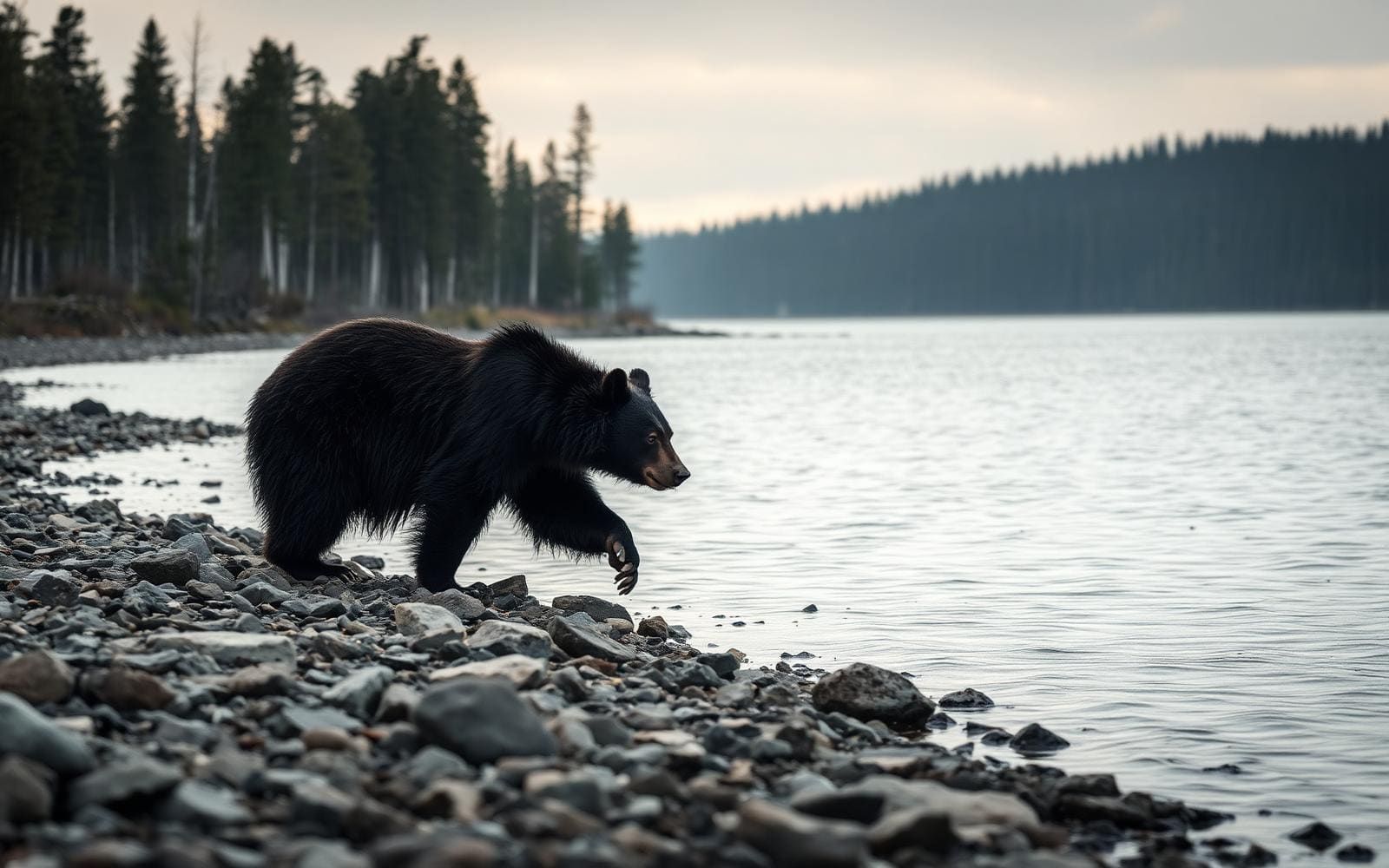
Black bear
The most widespread bear in North America — a shy, food-driven opportunist you will absolutely share the woods with.
Ursus americanus
- Weight
- 150–600 lb (70–270 kg)
- Shoulder height
- 2.5–3 ft on all fours
- Lifespan
- 18–25 yr wild
- Color
- Black, cinnamon, blond, blue-gray
- Diet
- ~85% plants, berries, nuts, insects, carrion
- Home range
- 10–250 sq mi
- Cubs
- 1–4 every 2 yr, born January in den
- Range
- Most of forested North America
- Seasons
- Spring (Apr–Jun) & fall
- Tag access
- OTC in most states
- Live weight
- 125–500+ lb
Regulations by region
Black bear rules where you're headed
Seasons, tags, limits, and legal methods for black bear are set jurisdiction by jurisdiction. Pick your state or province and we'll point you at the agency that writes the rules.
Jump to another species
Behavior at camp
Black bears are neophobic — new smells, new shapes, new sounds usually push them away, unless food has trained them otherwise. A camp that never rewards a visit stays boring; one that leaves grease on the ground trains the next bear that comes through. Bears never forget a food source: a cabin robbed once will be checked every spring for a decade.
Bluff vs. real charge
Bluff charges are common: huffing, jaw-popping, front-paw slaps, then breaking off. Real predatory approaches are silent, direct, and unhurried. Stand your ground, look big, make noise, and fight back if a black bear actually makes contact — do not play dead. Black bear predatory attacks are rare and almost always by lone males in low-food years.
Denning and cubs
Black bears den from October–April depending on latitude. Females give birth in January inside the den to blind, hairless cubs weighing under a pound. The cubs nurse on rich fat-based milk for months without the sow eating or drinking. Cubs stay with her through their second summer, then are chased off before her next breeding cycle.
Food storage
Hang food 12+ ft up and 6+ ft from any trunk, or use an approved bear canister. Cook and store food 100+ yards downwind of your sleep site. Sleep in clean clothes, not the ones you cooked in. Toothpaste, sunscreen, lip balm, and bacon grease all count as food.
Seasonal rhythm
Spring bears are lean and grass-focused. Summer bears eat everything from ant colonies to spawning suckers. Fall bears are in hyperphagia — 20,000+ calories per day, focused on berry patches and mast crops. Late-fall encounters at berry benches are the highest-risk window because bears are food-obsessed and slow to leave a productive patch.
About the black bear
There are roughly 900,000 black bears in North America and populations are stable or growing across most of that range. Tags are cheap, often over the counter, and many states allow two bears a year. Bear hunting is also the most method-diverse big-game pursuit on the continent. Depending on the state, you may hunt over bait, behind hounds, or by glassing green avalanche chutes and clear-cuts in the spring — and each method is a distinct skill set. It is a hunt with real judgment requirements: distinguishing a boar from a sow with cubs, judging size without a reference object, and knowing the rules on color phases, spot-and-stalk restrictions, and mandatory tooth submission.
Range and habitat
The best bear hunting follows the food: spring green-up in the mountain West, berry and salmon concentrations in the Northwest, and hard mast in the eastern hardwoods. Idaho & Montana: Spring spot-and-stalk on green logging roads and avalanche chutes. Colorado, Wyoming & Utah: Fall bears feeding hard in oak brush and berry patches. Maine, Wisconsin & Michigan: The densest eastern populations; classic bait and hound hunting. Pennsylvania, New York & West Virginia: Very large-bodied eastern bears in hardwood country. Alaska & British Columbia: Highest densities on earth, plus coastal blue and glacier phases. North Carolina & Arkansas: Sleeper states with big bears and public national forest.
Behavior and field method
Which method you use — spring spot-and-stalk, bait, or hounds — depends entirely on your state's regulations, but every method demands patience and careful judgment of the bear before you shoot. For spring spot-and-stalk, glass south-facing avalanche chutes, logging roads, and clear-cuts in the evening from across a canyon, looking for a black shape moving slowly on fresh green growth. Watch any bear for several minutes before committing — confirm it's a lone boar and not a sow traveling with cubs that may be out of sight in brush. Judge size by build rather than a reference object: a blocky head, small-looking ears set wide and low, a sagging belly, and a front leg that looks like it attaches at the elbow indicate a mature boar. Plan and execute the stalk using cover and wind, closing to a range you can shoot confidently, since bears absorb hits well and blood trails are often sparse due to fat and hair. For bait hunting, register and run a legal site for days ahead of your hunt, then sit downwind in a stand or blind through the last hour of daylight. For hound hunting, follow the pack on foot or by GPS collar until the bear trees, then make the shoot-or-pass call on size and sex. Take only a clean broadside or quartering-away shot with a good rest, wait before approaching, and follow up cautiously — a wounded bear in thick cover is genuinely dangerous.
Tracks, droppings, and sign
Bear sign is seasonal and food-driven. Find the food source that is hot right now — berries, acorns, salmon, spring green-up — and the sign leads straight to the bear. Tracks — Five toes on both front and hind feet with claw marks ahead of the pads. The hind track looks startlingly like a short, wide human footprint. Front pads run 4–5 inches wide; a front pad wider than 5 inches is a big bear. Toes arc in a shallow curve — a straighter toe line and much longer claws would mean grizzly. Droppings — Large tubular piles, often 1.5–2 inches thick. Berry season turns them purple-black and loose with visible seeds; acorn and nut diets make them firm and fibrous; a fish diet makes them loose and foul-smelling. Steaming scat means the bear is very close — back off and reassess. Claw marks & bite trees — Vertical claw rakes and bite marks on smooth-barked trees, usually 4–7 feet up, with hair caught in the sap. Bears mark the same trees on the same trails year after year. Feeding sign — Logs rolled and torn apart for grubs, stumps shredded, anthills excavated, berry bushes stripped with branches broken inward, and in the spring, grass and forb patches cropped hard at avalanche-chute edges. Beds & day nests — Shallow scraped depressions in duff under blowdowns and dense conifers, often with hair. Bears also build 'nests' of broken branches in fruit and nut trees.
In the field
Spring spot-and-stalk is the purest version of the hunt. Bears come out of the den lean and hungry and feed on the first green grass, which grows on south-facing avalanche chutes, logging roads, and clear-cuts. You glass those openings from across a canyon in the evening and stalk in. Judging the bear is the hard part. Without a reference object, a 150-pound bear and a 350-pound bear look identical at 400 yards. Look for a blocky head with small-looking ears set wide and low, a belly that hangs, and a front leg that appears to attach at the elbow rather than tapering — those indicate a mature boar. Bait hunting is a patience game: a legal, registered site refreshed for days or weeks, a stand or blind downwind, and long evening sits where the bear may appear in the last five minutes of light. Hound hunting is a physical, chaotic, and highly traditional method — following a pack on foot or by GPS collar over rough country until the bear trees, then making the decision to shoot or walk away. There is a real safety dimension. A wounded bear in thick cover is dangerous, and blood trails from bears are notoriously sparse because the fat and hair plug the wound. Shoot only when you have a clean broadside or quartering-away angle and a good rest.
Regulations, tags, and seasons
Bear tags are among the cheapest and most available big-game licenses in North America — the harder part is knowing which methods are legal where you hunt. Buy a hunting license plus a bear tag. Nonresident bear tags typically run $150–$350, far less than deer or elk in the same state. Check the legal methods for your unit: baiting is legal in some states and banned in others; hound hunting has its own permit and season structure; spot-and-stalk is legal everywhere bears are. Confirm season dates. Spring seasons generally run April through June; fall seasons run August through November, often overlapping deer and elk. Know the sow-with-cubs rule. Killing a sow accompanied by cubs is illegal virtually everywhere and is the mistake that ends bear hunts in a courtroom. Plan for mandatory checks. Most states require the hide, skull, or a premolar tooth to be submitted within a set number of days for age and harvest data. If baiting, register your bait site if required and follow the container, signage, and bait-type rules exactly — this is the most heavily regulated part of bear hunting.
Harvest and processing
Bears do not bleed like deer — heavy fat and hair plug the wound and blood trails are thin. Shot placement and patience are everything. Place the shot tight behind the front shoulder, one-third up the body. A bear's vitals sit lower and further forward than a deer's, and the long hair makes the body look bigger than it is. Do not expect a blood trail. Mark the exact spot of the shot, listen for the death moan, and be prepared to grid-search with a light. Wait at least 30 minutes on a marginal hit, and never trail a wounded bear into thick cover alone or in the dark. Approach from behind and above, gun ready, and touch an open eye with a long stick before you set anything down. Take your photos and check tags immediately — many states require sealing, a tooth submission, or a check-in within days. Skin before you gut if you want the hide. Bear fat holds heat brutally and the meat sours quickly with the hide on. Skinning a bear for a rug or a mount is different work than skinning for meat — decide before the first cut, because you cannot undo it.
Meat care and what you take home
Bear meat is dark, rich, and closer to pork than to venison — spring bears feeding on grass are mild, and fall bears on berries and acorns are outstanding. Bears feeding on salmon or garbage are not worth eating. Always cook bear to a minimum internal temperature of 160°F. Trichinella is real and bear is the most common source of human trichinellosis in North America. Rendered bear fat is prized for pastry and frying and keeps for months. Save it — it is one of the best byproducts in hunting.
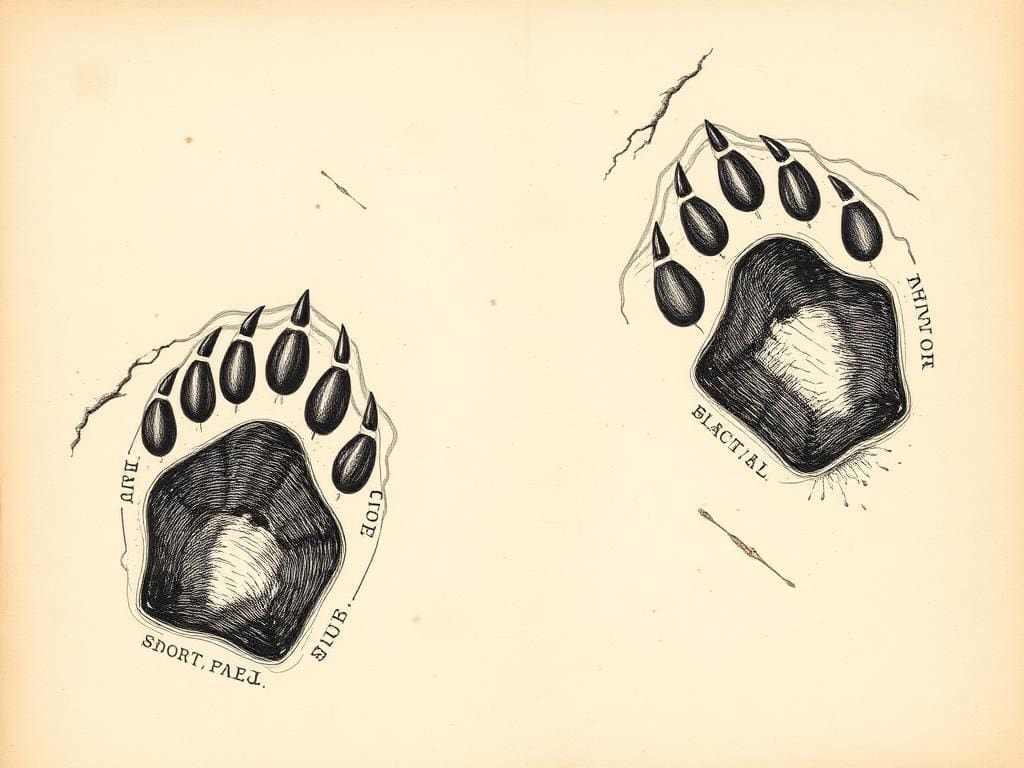
Reading the tracks
How to identify black bear sign
- Size
- Front 4–5 in wide; hind 5–7 in long — much smaller than a grizzly
- Gait
- Flat-footed shuffle; hind print often overlaps or lands slightly behind the front on the same side
- Best substrate
- Damp trail dust, creek mud, and old snow along berry benches.
What to look for
Five toes in a shallow arc across the top of the pad, with short claw marks close to (or missing behind) the toes. Hind print resembles a small barefoot human print.
Don't confuse with
Grizzly (bigger, straighter toe line, long claw dots well ahead). If claws register 2+ in ahead of the toes, it's not a black bear.
Male vs. female
How to tell a male from a female
Male
Boars are 40–60% heavier than sows (typically 250–600 lb), with a massive blocky head, thick neck matching or exceeding the head width, and a scarred muzzle from years of fighting. They travel alone.
Female
Sows are smaller (150–250 lb) with a proportionally narrower head, longer-looking muzzle, and a neck clearly thinner than the head. In summer a sow is almost always accompanied by 1–4 cubs of the year or yearlings.
At a distance
The reliable at-distance tell is company: a bear with cubs is a sow, always. A large solitary bear crossing a road or working a berry patch alone in June is almost certainly a boar. In profile, a boar's head looks glued onto the shoulders; a sow's head sits on a visible neck.
Field notes
- Tracks: 5 toes in a shallow arc, no claw marks in soft mud (grizzly shows long claw dots well ahead of toes).
- A pile of shredded stumps and ant-cavity mining is classic black-bear feeding sign.
- Bear scat full of berry seeds and blue-purple in color means you're on a fresh food source — reroute.
- Rifle or bow: Any deer-class rifle works — .270, .308, .30-06 and up with a controlled-expansion bullet. Archers should use a heavy arrow and a strong fixed broadhead; bears have heavy hide, fat, and hair.
- Binoculars: You are looking for a black spot moving slowly across a green slope, sometimes at two miles. Tripod-mounted glass again does the heavy lifting.
- Skinning knives & hide care: Caping a bear for a rug takes time and a sharp small blade. Salt or freeze the hide quickly; hair slips fast in warm weather.
- Rubber gloves & disease awareness: Wear gloves handling the carcass, and cook all bear meat to 160°F — trichinellosis is a genuine, documented risk in bear meat.
- Game bags & pack: A bear yields less usable meat than its weight suggests, but the fat and hide add bulk. One to two heavy loads for an average bear.
Plan around this species
Where this matters in planning
Black bears are the animal most likely to enter camp. Almost every incident is a food-storage failure. Plan food, cooking, and firearm access as one system.
- Build Your 10
Add bear-hang cord, food storage, and a defensive tool to your ten essentials.
- Clothing Builder
Pick layers that don't retain food smells and let you move quietly at dawn and dusk.
- Gear categories
Compare bear canisters, spray holsters, and hard-sided food storage.
- Camp Craft
Bear-hang, canister use, cook triangle.
- Shelters
Where to pitch (and not pitch) in black-bear country.
- Useful Fauna Knowledge
Read bear sign before you set camp.
- Bushcraft Tools & Weapons
Bear spray vs. firearm — carry, deploy, practice.
Where you'll find it
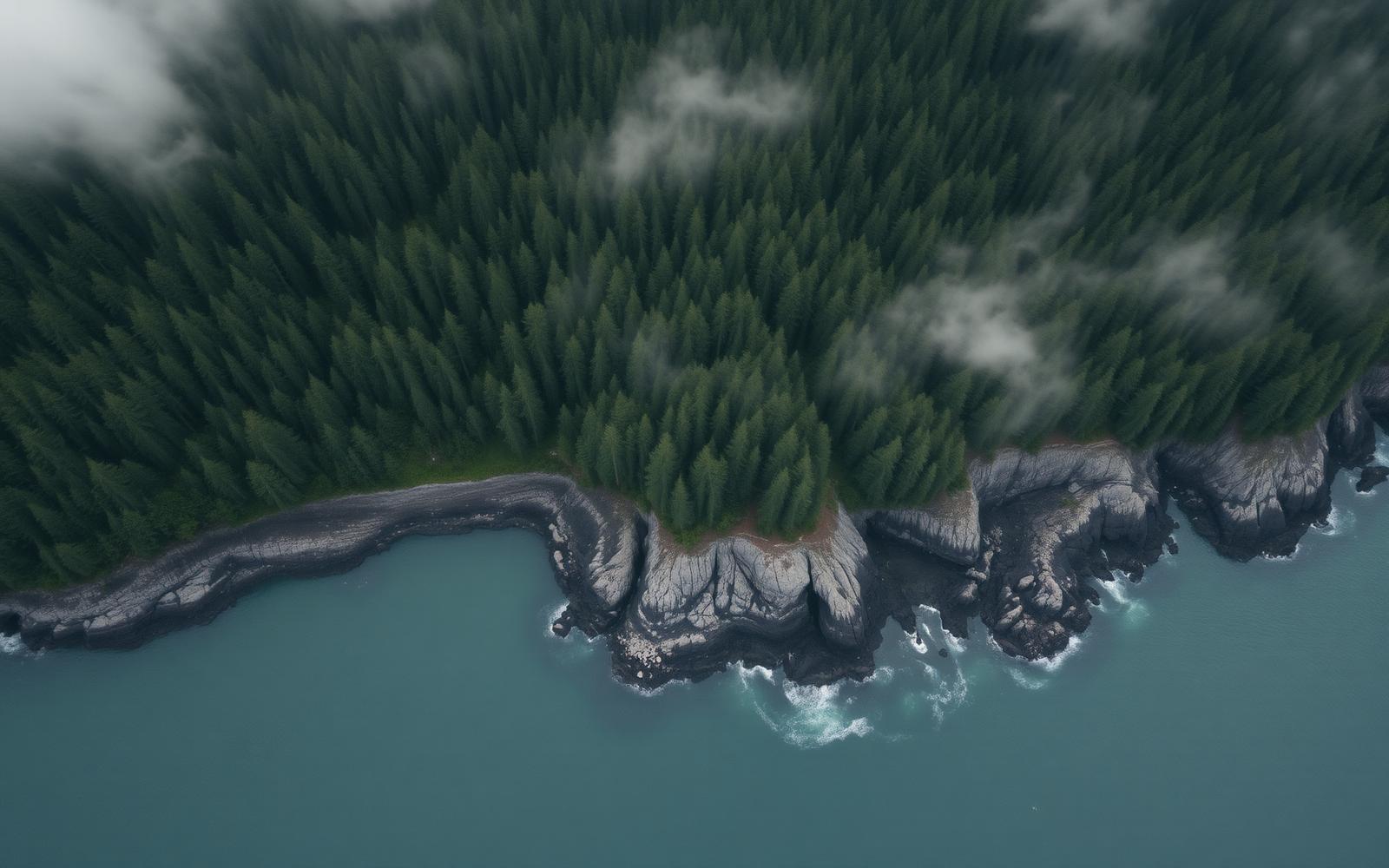
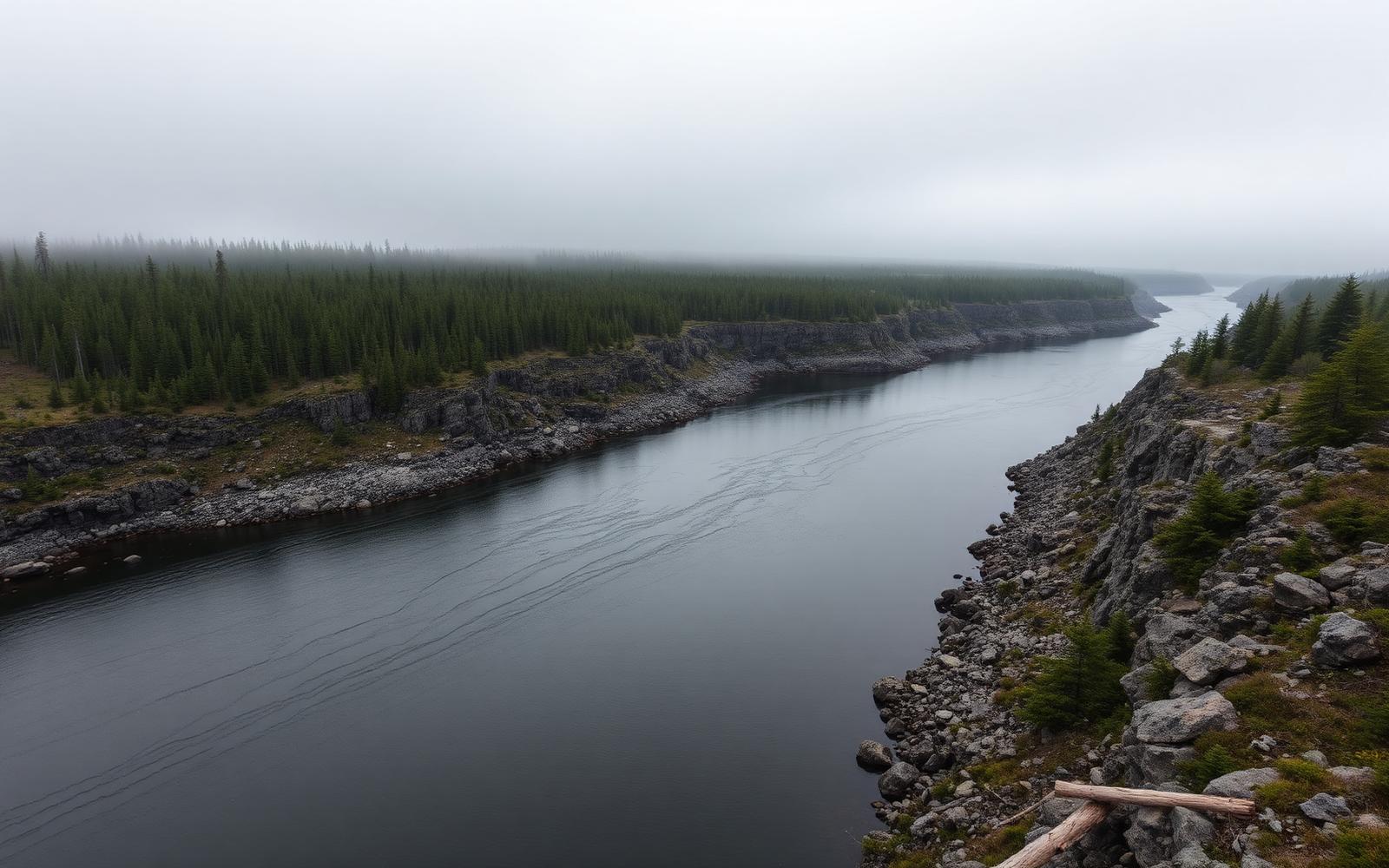
Filming locations with black bear

On screen
Alone seasons where contestants encountered black bear
Black bear questions, answered
- Is black bear hunting dangerous?
- Statistically, no more than any other big-game hunt, but a wounded bear in thick brush demands care. Take only well-angled shots, wait before following, and track wounded bears in daylight with a partner.
- Spring or fall?
- Spring offers better visibility, prime hides, and glassing on open green slopes. Fall bears are heavier with more fat and better meat but harder to find, and you can hunt them incidentally while chasing deer or elk.
- How do I tell a boar from a sow?
- Boars have blocky heads, ears that appear small and set wide, a straight or sagging belly line, and they swagger. Sows look leggier with pointed faces and proportionally larger ears. Always watch a bear for several minutes before shooting — cubs may be out of sight in the brush.
- Do you eat bear?
- Yes, and it is excellent when handled well and cooked thoroughly to 160°F. Some states legally require you to salvage bear meat; leaving it is wasteful and often illegal.
- What's the cheapest way to hunt a bear?
- An over-the-counter tag in Idaho, Montana, Colorado, or Maine plus a DIY spring spot-and-stalk hunt on national forest. A nonresident tag plus license is often under $400 total.
Official sources and further reading
- Idaho Fish & Game — black bear
Over-the-counter tags, unit rules, and mandatory check requirements.
- CDC — trichinellosis
Why all bear meat must be cooked to 160°F.
- Maine IFW bear hunting
Bait, hound, and still-hunt regulations in the densest eastern bear state.
- Bear Trust International
Bear biology, population research, and conservation.